24 Living Dining Room Ideas for a Stylish Flow
These living dining room ideas turn two busy rooms into one calm, stylish space for meals and movie nights. If your sofa sits close to your dining table, you already have the hardest part done. A few smart links can tie both zones together without a big budget.
Inside you will find 24 ways to link a living area and a dining area, from shared rugs and matching wood tones to lighting zones, low dividers, and clever storage that serves both sides. I tried the shared rug and pendant pairing in my own open space last year, and the two rooms felt like one home instead of two halves pushed together. These ideas suit renters, small apartments, and family homes alike, especially if you love hosting dinners but still want a soft spot to relax after. Pick two favorites, start with the cheapest change, and build from there.
Open Layout Flow
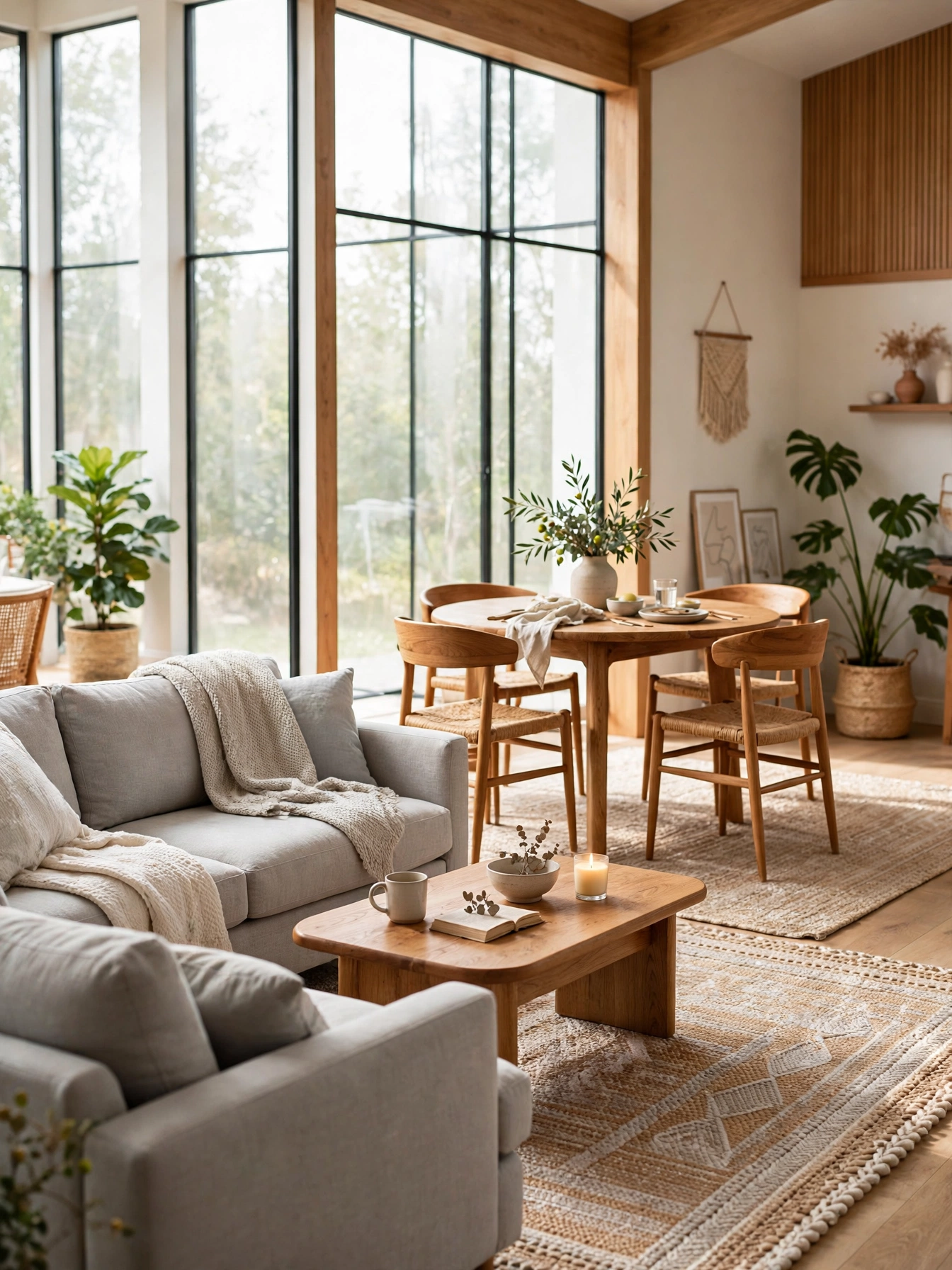
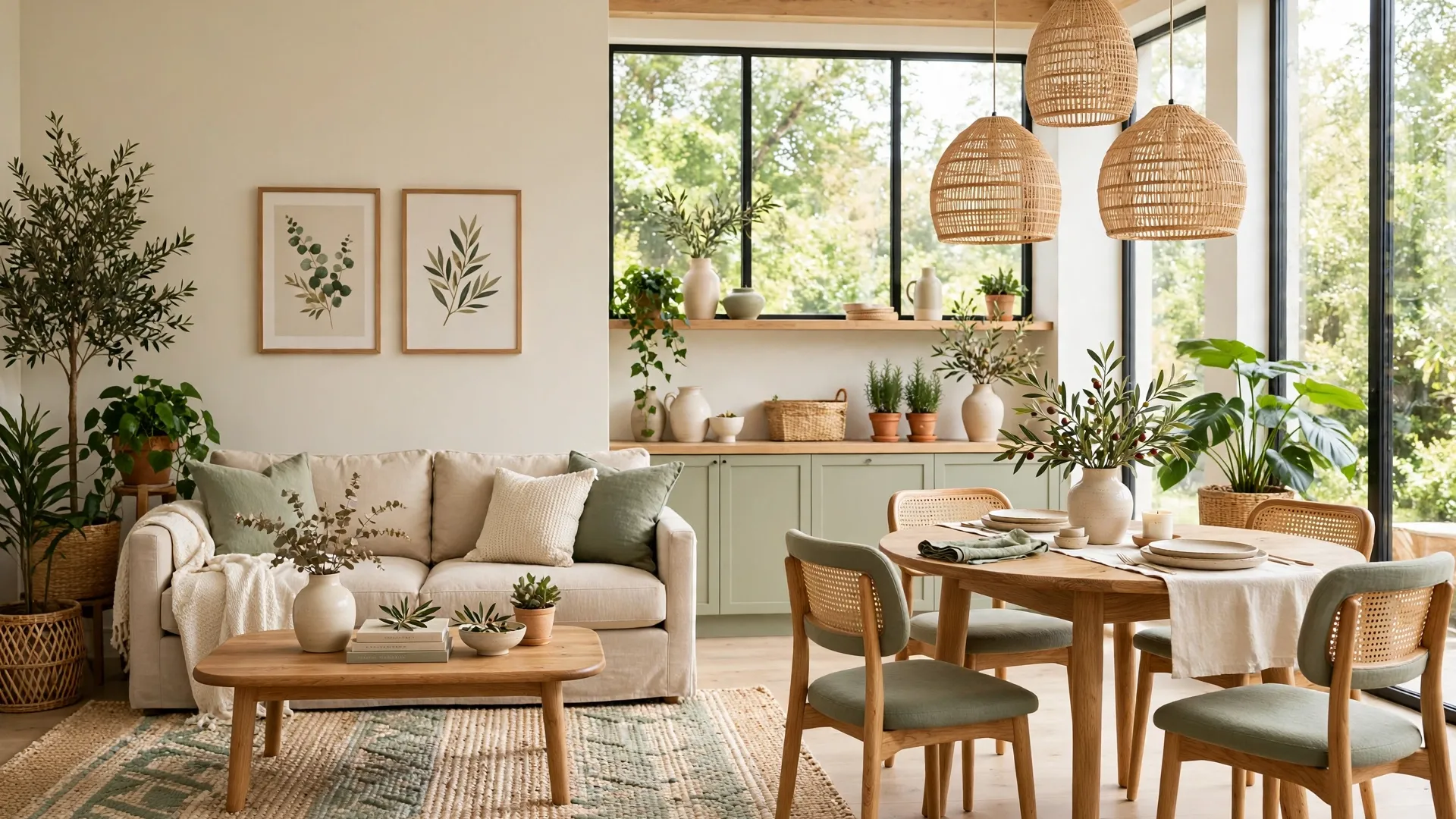
An open layout works best when your eye can travel easily from the sofa to the dining table without hitting a visual wall. Keep the walking path clear, choose low furniture near the middle of the room, and let one floor finish run through both zones so the space reads as a single room.
This approach suits small homes best, since it makes every square foot count. These living dining room ideas start with flow, not furniture, so move the table a little closer first, then step back and check the walkway before you buy anything new.
Shared Rug Anchor
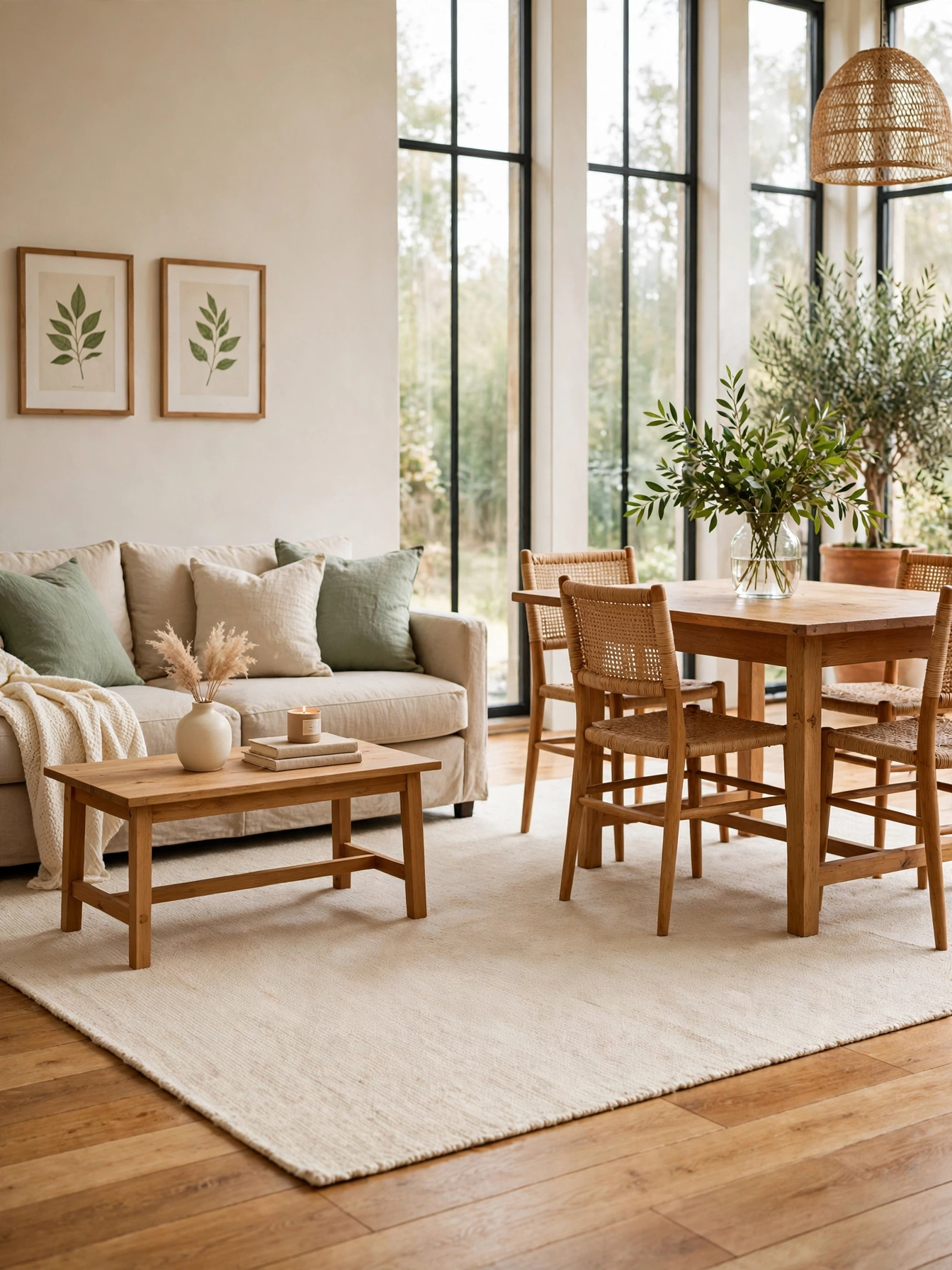
- One large rug under the sofa and chairs, or one under the dining table, never two clashing rugs side by side.
- Pick a flat weave or low pile so dining chairs slide easily and crumbs stay easy to clean.
- Let the rug color echo a cushion or curtain in the living zone for a soft link.
A shared rug is the fastest way to make two zones feel planned. It marks where each area begins and ends without walls or screens, and it warms up hard floors under bare feet. Choose a washable rug if you eat with kids, since spills wipe off fast and the rug still looks fresh.
Matching Wood Tones

Quick Tip: Match the wood tone of your dining table to a living room piece, like a coffee table or media unit, for an instant link.
Wood tones are the quiet glue between a living area and a dining area. When the table, the coffee table, and one shelf share the same warm oak or walnut finish, the eye reads the whole room as one set. You do not need matching furniture sets, just one repeated tone. Try a wood tray on the coffee table that echoes the dining table, or swap a dark lamp base for a wood one. Small repeats like these cost little and make the space feel calm and pulled together, even in a rented home.
Pendant Pairing
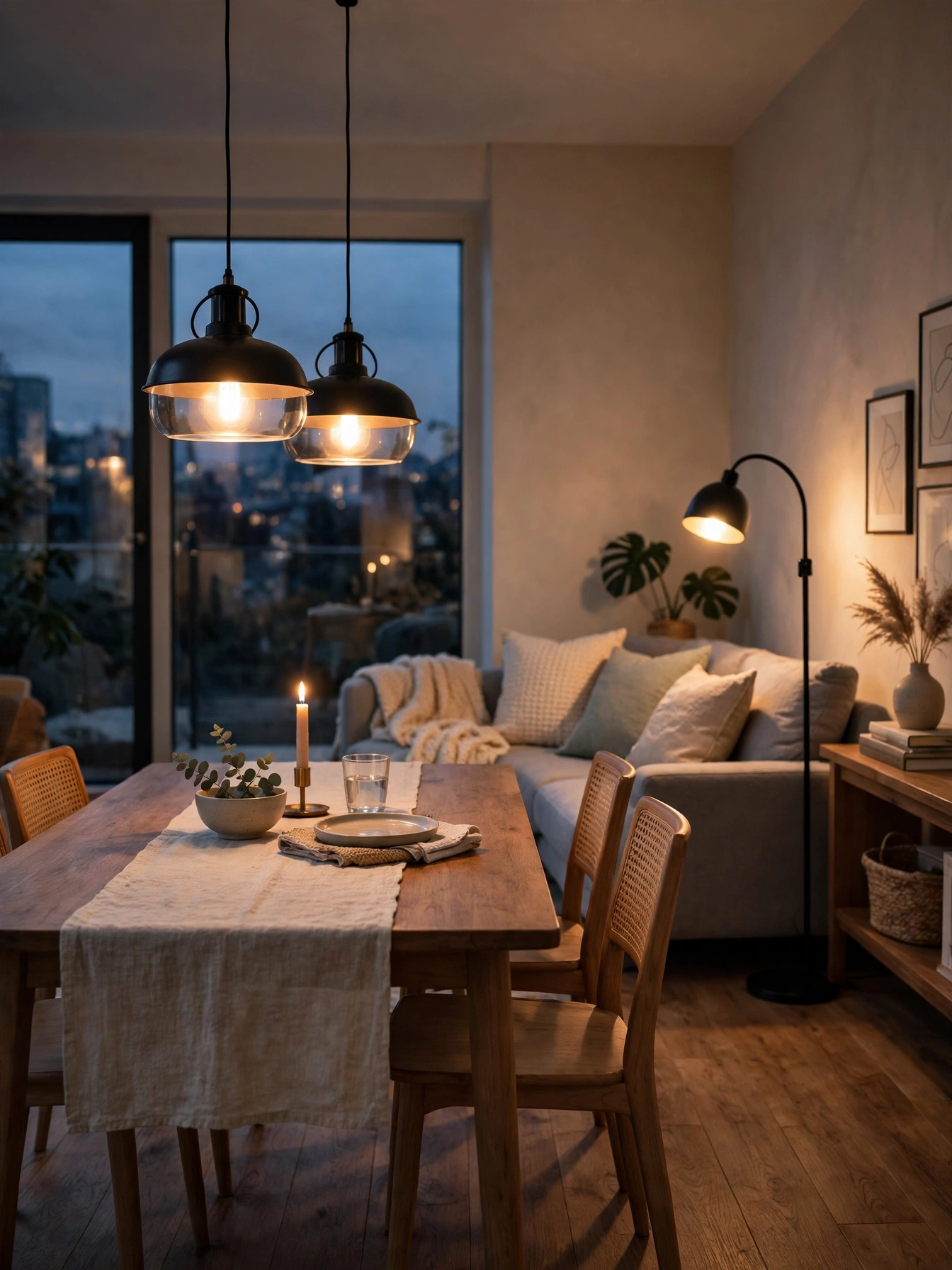
BEFORE: A single ceiling light over the dining table left the living side dim, and the two zones felt like separate rooms at night.
AFTER: Two matching pendants over the table plus a warm floor lamp by the sofa tie the lighting together, so both areas glow at the same level.
Pendants do more than light a meal, they mark the dining zone and set its mood. Hang them low enough to feel close to the table, about 75 cm above the surface, and keep the bulbs warm. A matching floor lamp on the living side repeats the glow, and dimmers on both sides let you shift from bright family dinners to soft evenings with one touch.
Low Console Divider
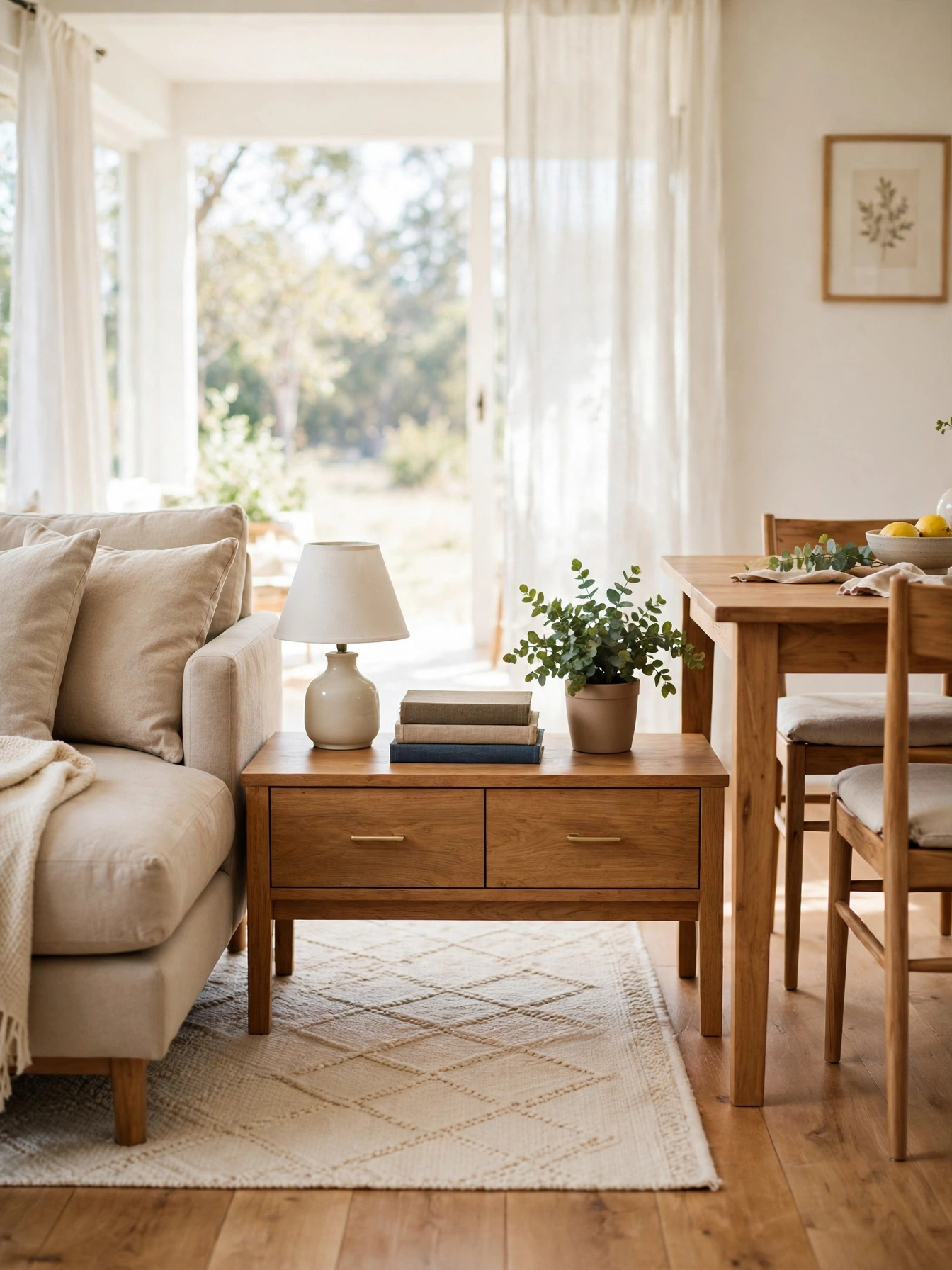
- Place a low console or open shelf unit between the sofa back and the dining table.
- Keep it below eye level so light and conversation still flow across.
- Style the top with a small lamp, books, and one plant.
- Leave the lower shelf open for baskets or dining linens.
A low divider gives each zone its own edge without closing the room off. It also adds storage where open spaces often lack it, and it creates a handy spot for serving dishes during dinner. Choose an open back if you want the divider to feel light, or a solid back if you need to hide dining clutter from the sofa side.
Unified Color Palette

| Choice | Living Side | Dining Side |
|---|---|---|
| Wall color | Warm white | Warm white |
| Accent | Sage cushions | Sage placemats |
| Metal | Brushed brass | Brushed brass |
One palette across both rooms stops the eye from splitting the space in two. Pick one main neutral, one soft accent, and one metal, then repeat each one on both sides. The rooms can still feel different through texture and shape, but the shared colors keep them tied together in a calm, easy way.
Round Dining Table
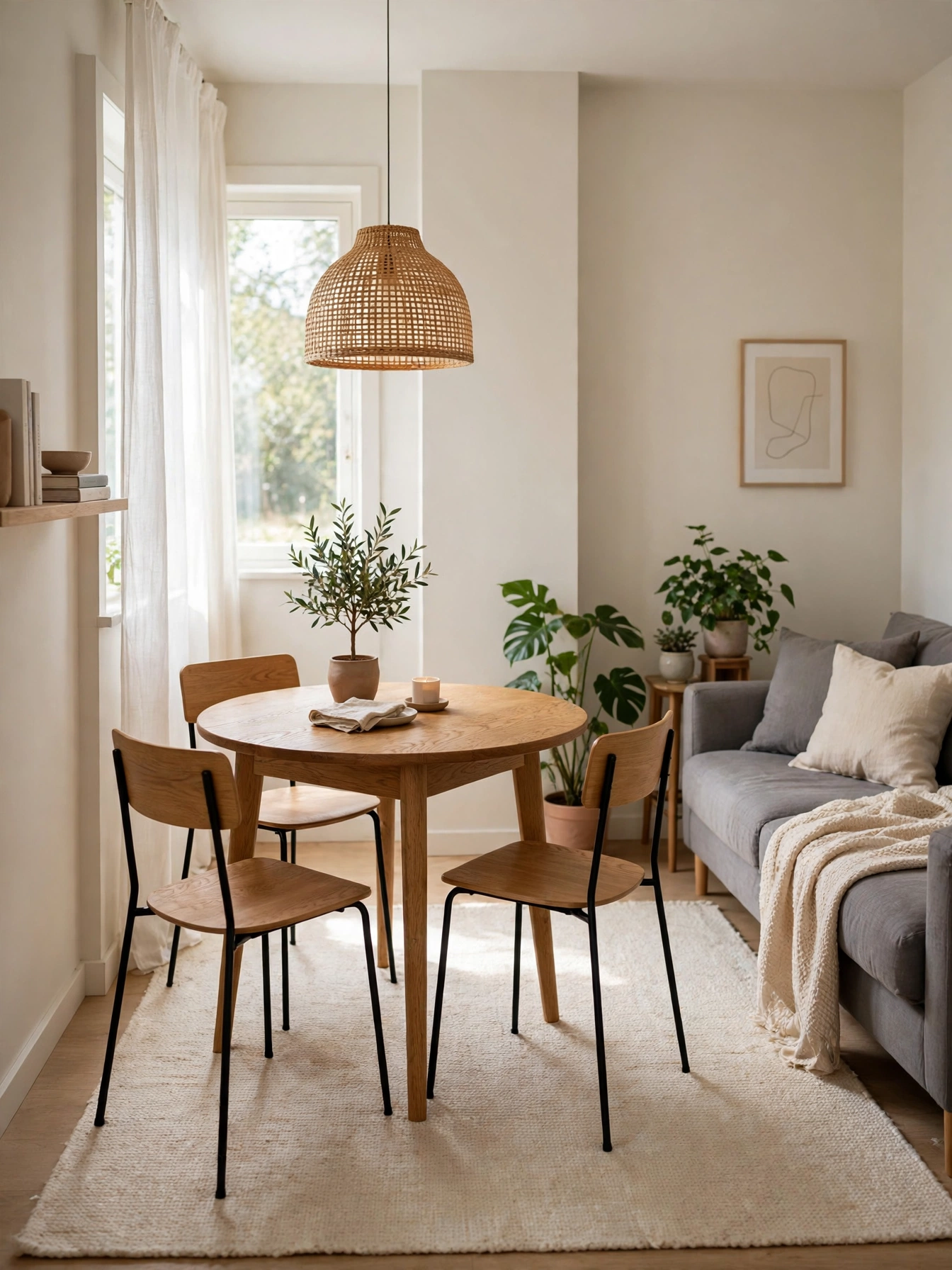
DO:
- Choose a round table if your space is tight, since it softens corners and seats more people.
- Pair it with slim chairs that tuck fully under the table.
DON’T:
- Do not pick a heavy rectangular table that blocks the path between sofa and kitchen.
- Do not add bulky chairs that crowd the living side.
A round table suits open living and dining rooms because it has no sharp corners jutting into walkways. It also invites conversation, since everyone can see each other, and it leaves room for a chair to pull out without hitting the sofa. In small flats, a 110 cm round table often seats four with ease and still leaves space to move.
Statement Wall Art
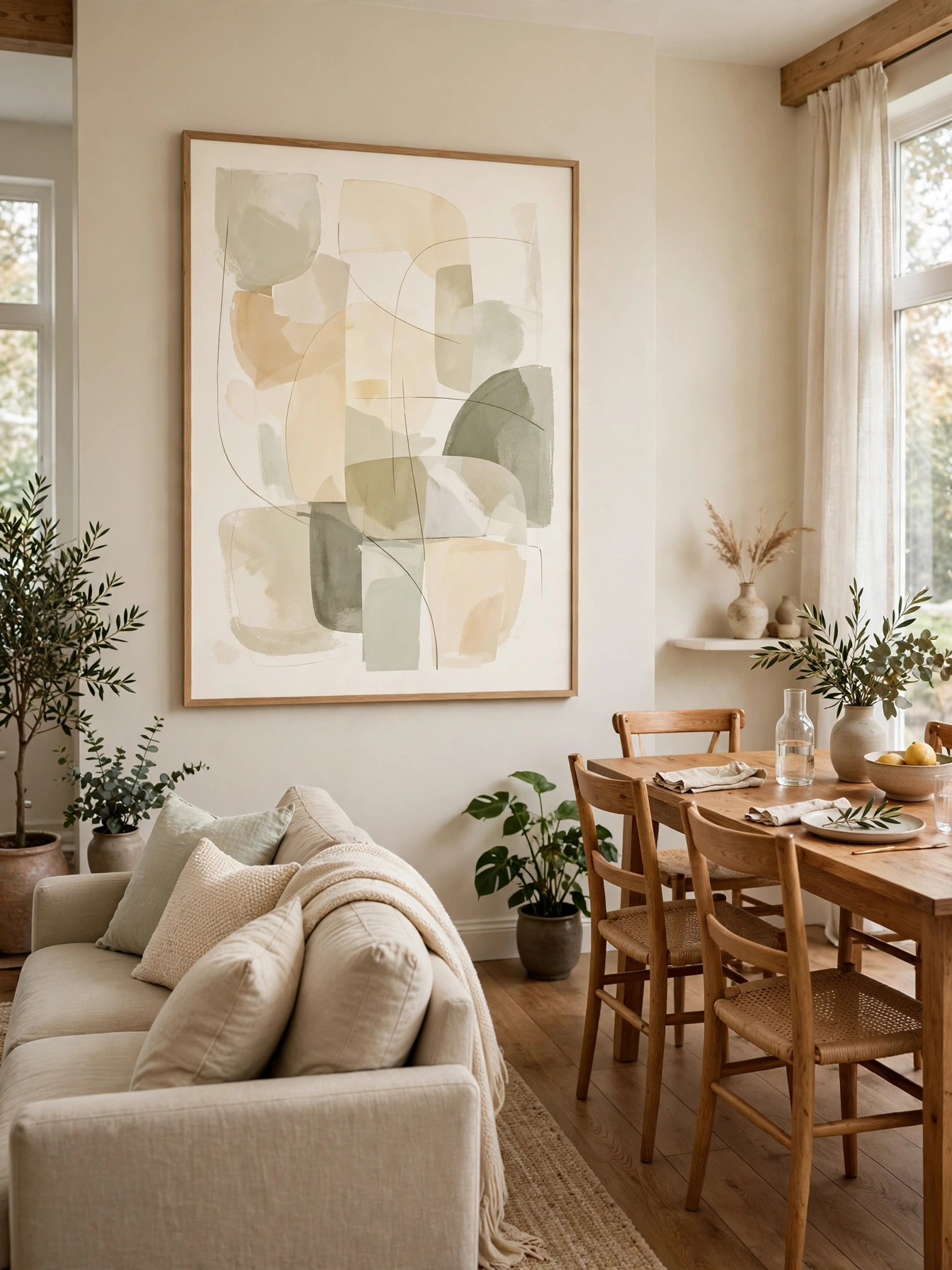
Quick Facts:
- Cost: 40 to 150 dollars for one large print
- Time: One afternoon to hang
- Skill Level: Easy
- Best For: Blank walls between the two zones
One large piece of art on the shared wall pulls both rooms into a single story. Pick a print with colors from both zones, then hang it where it can be seen from the sofa and the table. A big canvas beats a row of small frames here, since it reads as one bold choice and fills the gap between living and dining without clutter.
Layered Lighting Zones

Good lighting in a shared room works in layers, not one bright ceiling light. Give the living side a floor lamp and a table lamp, give the dining side pendants or a chandelier, and let each zone dim on its own so dinner feels warm and reading feels bright.
Warm bulbs around 2700K suit both sides and keep skin tones soft at the table. Start with the dining pendants, since they set the mood for meals, then add one lamp near the sofa and test the room at night before you buy more.
Bench Dining Seating
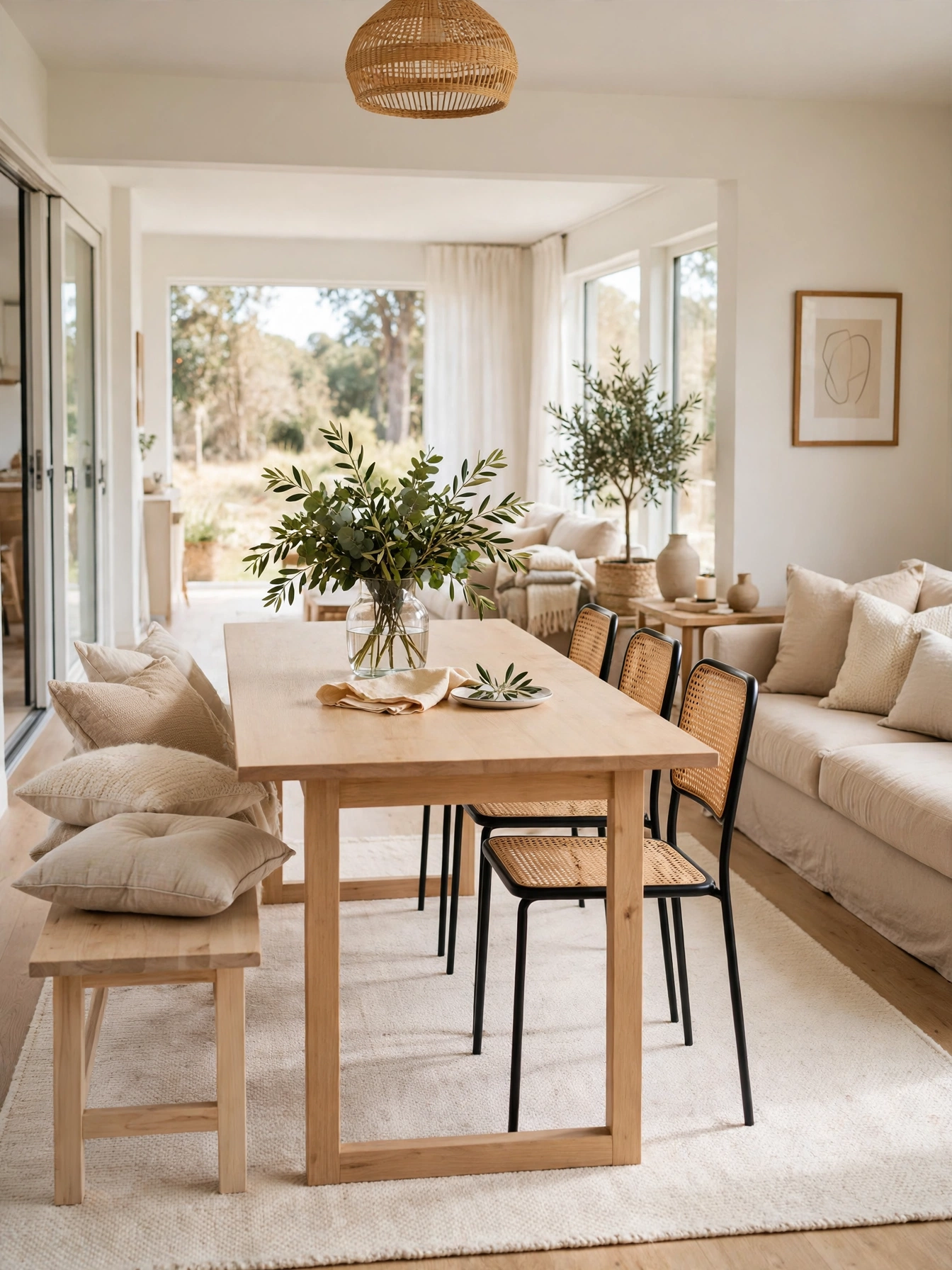
- Slide a bench along one side of the table to seat three people where two chairs would fit.
- Tuck the bench fully under the table when not in use to free the walkway.
- Add a slim cushion in a living room fabric so the bench links both zones.
A bench is a smart pick for a living dining combo because it saves space and seats guests without extra chairs. It doubles as a perch for bags or books when dinner ends. Choose a bench with a wood frame and washable cushion, then push it in after meals so the room opens up again.
Glass Partition Screen
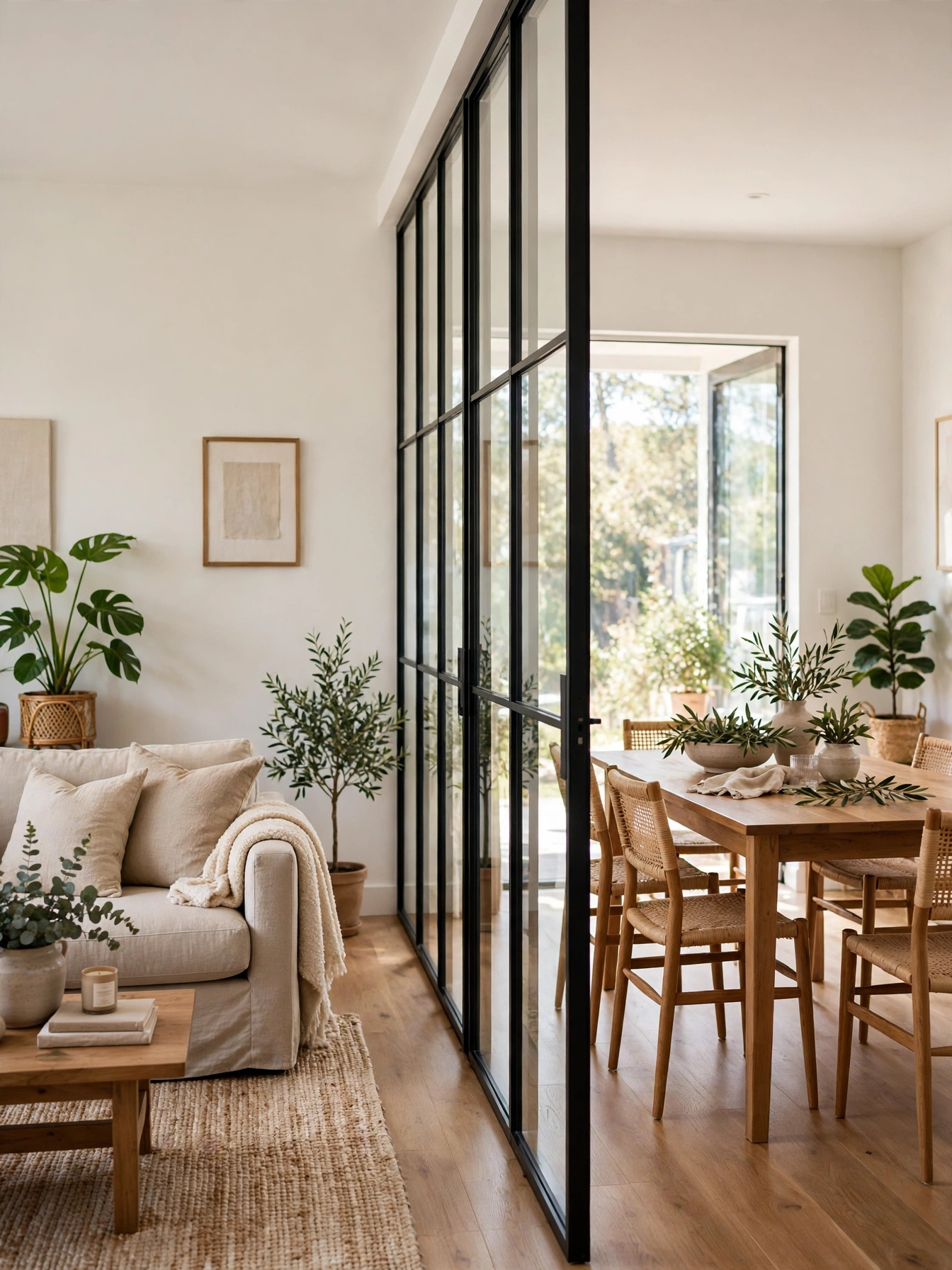
Quick Tip: A glass screen or open shelving divider keeps light flowing while giving the dining area a clear edge.
Glass partitions suit open rooms because they divide without darkening. A slim black frame screen between the sofa and the table marks the dining zone, cuts cooking noise a little, and still lets daylight reach the living side. If glass feels too formal, try an open shelf unit with plants and books instead, which gives the same edge with a softer look. Either choice keeps the two areas linked while giving each one a clear place to be, and both are easy to move if you rearrange the room later.
Cohesive Curtain Pair
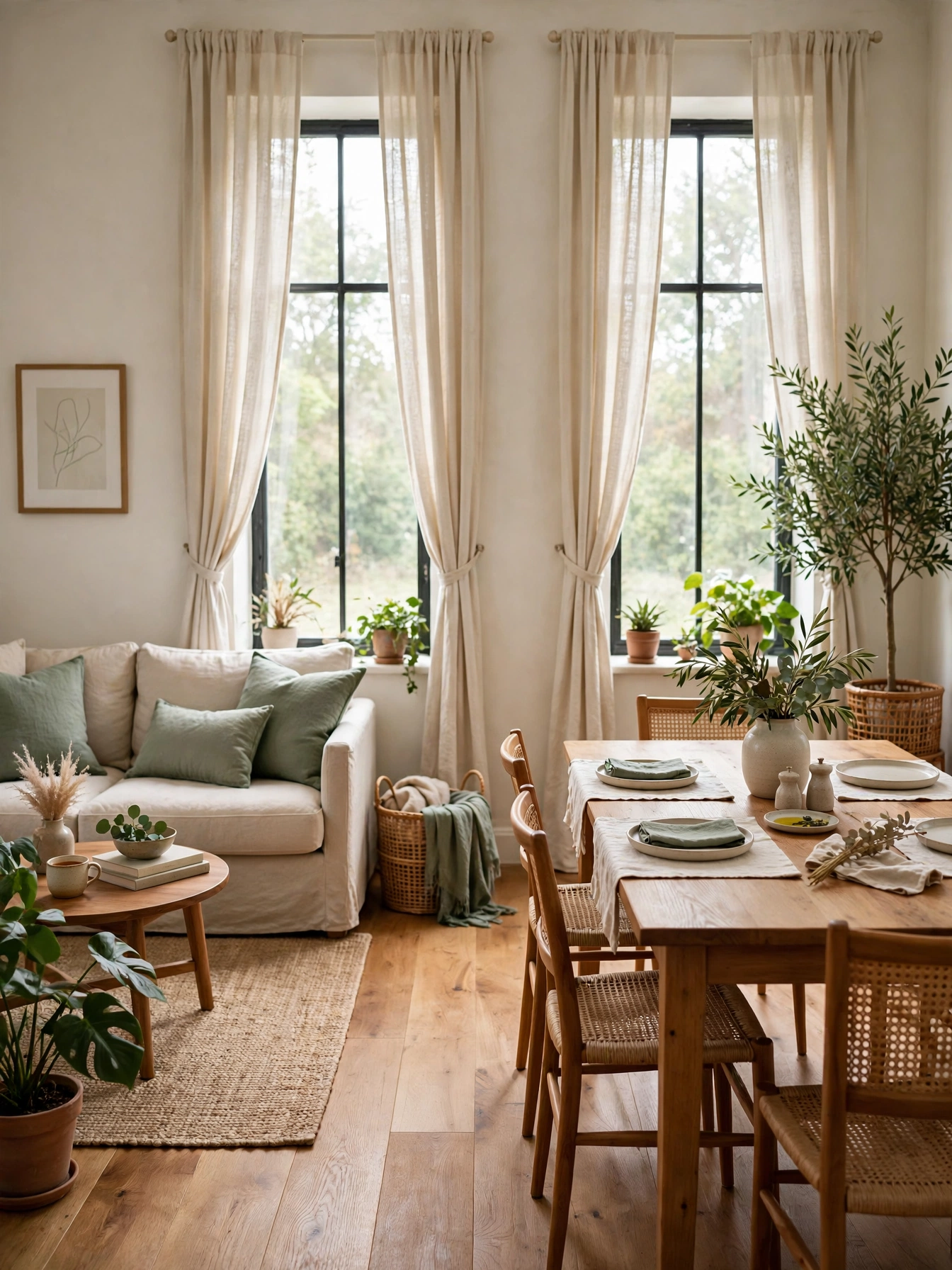
BEFORE: Mismatched curtains, one floral by the sofa and one plain by the table, made the shared room feel patched together.
AFTER: Matching linen curtains in one soft tone on both windows pull the whole wall together, and the room feels calm from every seat.
Curtains are one of the easiest links between living and dining zones, since both windows usually share one wall. These living dining room ideas work best when the fabric repeats, so pick one color and one length for every window, then let cushions or placemats carry the accent. Hang the rod high and wide so the windows look taller and the light stays generous.
Double Duty Sideboard

- Place a sideboard along the wall between the living and dining zones.
- Store dining linens and plates on one side, books and games on the other.
- Top it with a lamp and a vase that match the living room style.
- Use it as a serving station when guests come for dinner.
A sideboard earns its place in a shared room by serving both zones at once. It hides dining clutter, gives the living side a styled surface, and turns into a buffet at dinner time. Pick one with sliding doors if space is tight, since swinging doors need room to open, and keep the top simple so it never looks crowded.
Warm Neutral Base
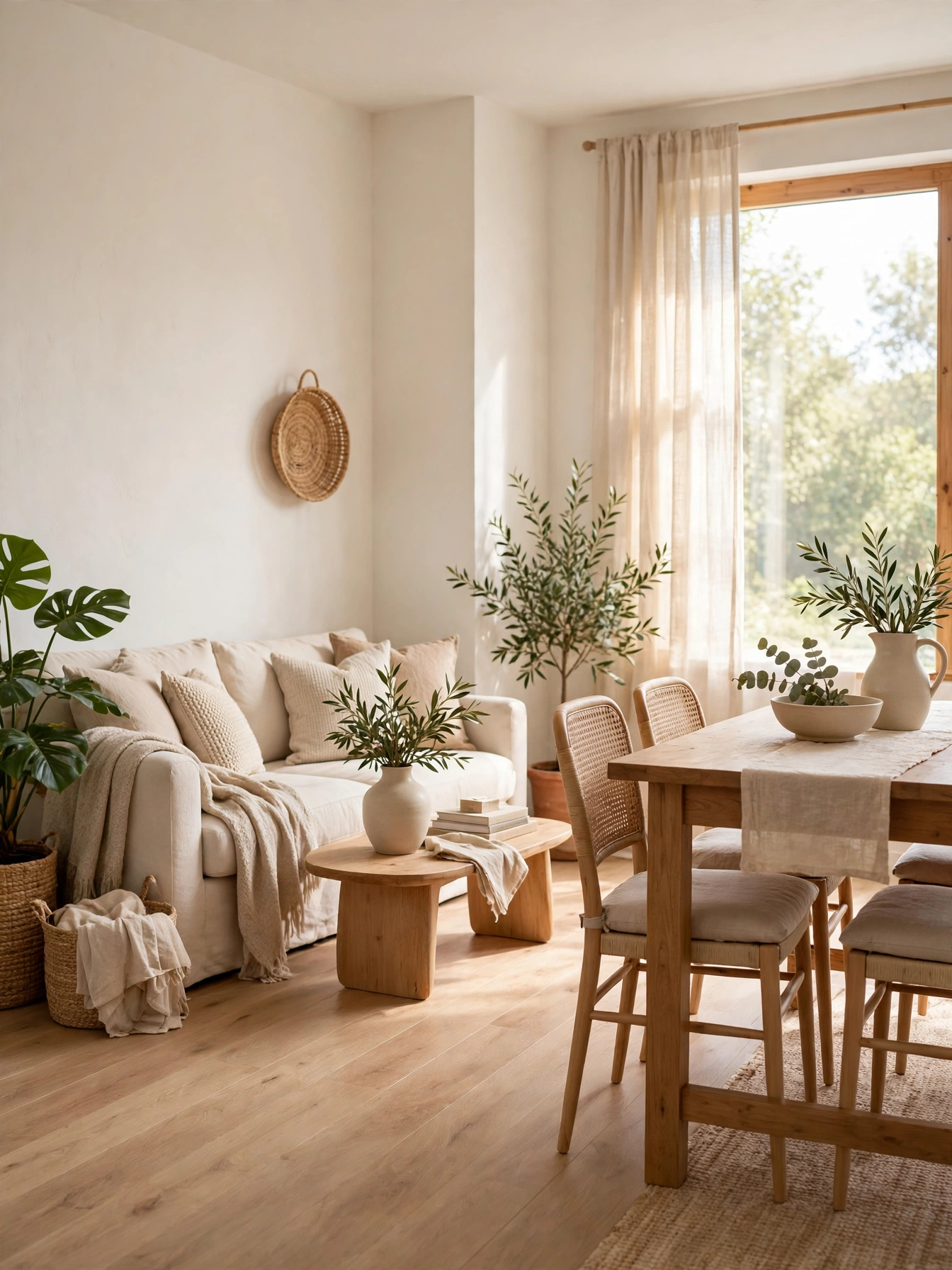
| Finish | Living Side | Dining Side |
|---|---|---|
| Walls | Warm white | Warm white |
| Floor | Light oak | Light oak |
| Textiles | Cream sofa | Cream chairs |
A warm neutral base lets both rooms share one quiet background, so bolder pieces stand out without clashing. Cream walls, light wood floors, and soft beige textiles make the whole space feel larger and calmer. Add color through cushions, art, and tableware instead, since those are cheap to swap when seasons or tastes change.
Greenery Room Bridge

DO:
- Place one tall plant near the boundary between sofa and table to soften the join.
- Repeat small plants on the dining table and the coffee table.
DON’T:
- Do not crowd the walkway with pots that block the path.
- Do not mix too many plant types, or the room will feel busy.
Plants are a gentle way to link two zones, since the same green can appear on both sides. A tall olive tree or fiddle leaf near the join draws the eye across the room, while small herbs on the table add life to meals. Pick low care plants if you are new to them, and keep pots in matching tones so the greenery feels planned, not random.
Rug Layering Trick

Quick Facts:
- Cost: 60 to 180 dollars for a second rug
- Time: 30 minutes to layer and adjust
- Skill Level: Easy
- Best For: Defining the dining zone inside an open room
Layering a smaller rug over a large one marks the dining area without walls. Pick a flat weave rug for the top layer so chairs slide well, and keep the pattern simple if the base rug is bold. The overlap adds depth and warmth, and it lets you change the dining look later by swapping just the top rug.
Slim Bar Cart

A slim bar cart is a small hero in a shared room, since it serves drinks at dinner and then rolls near the sofa for evenings. Pick a two tier cart with a brass or wood frame, stock it with glasses and one bottle, and keep the top clear for pouring.
The cart also works as a side table when guests arrive, holding extra plates or a dessert tray. Choose wheels that lock, so it stays put on hard floors, and style it lightly so it never looks like a shop shelf.
Matching Metal Finishes

- Repeat one metal, like brushed brass or matte black, on both sides of the room.
- Use it on pendant lights, curtain rods, chair legs, and lamp bases.
- Keep the finish the same, since mixed metals can split the room visually.
One metal repeated across both zones acts like a thread that stitches the room together. It is a detail, but the eye notices it in the pendants, the curtain rod, and the sofa legs. Stick to one finish for big pieces, then add a second metal only in tiny accents if you want contrast.
Gallery Wall Link
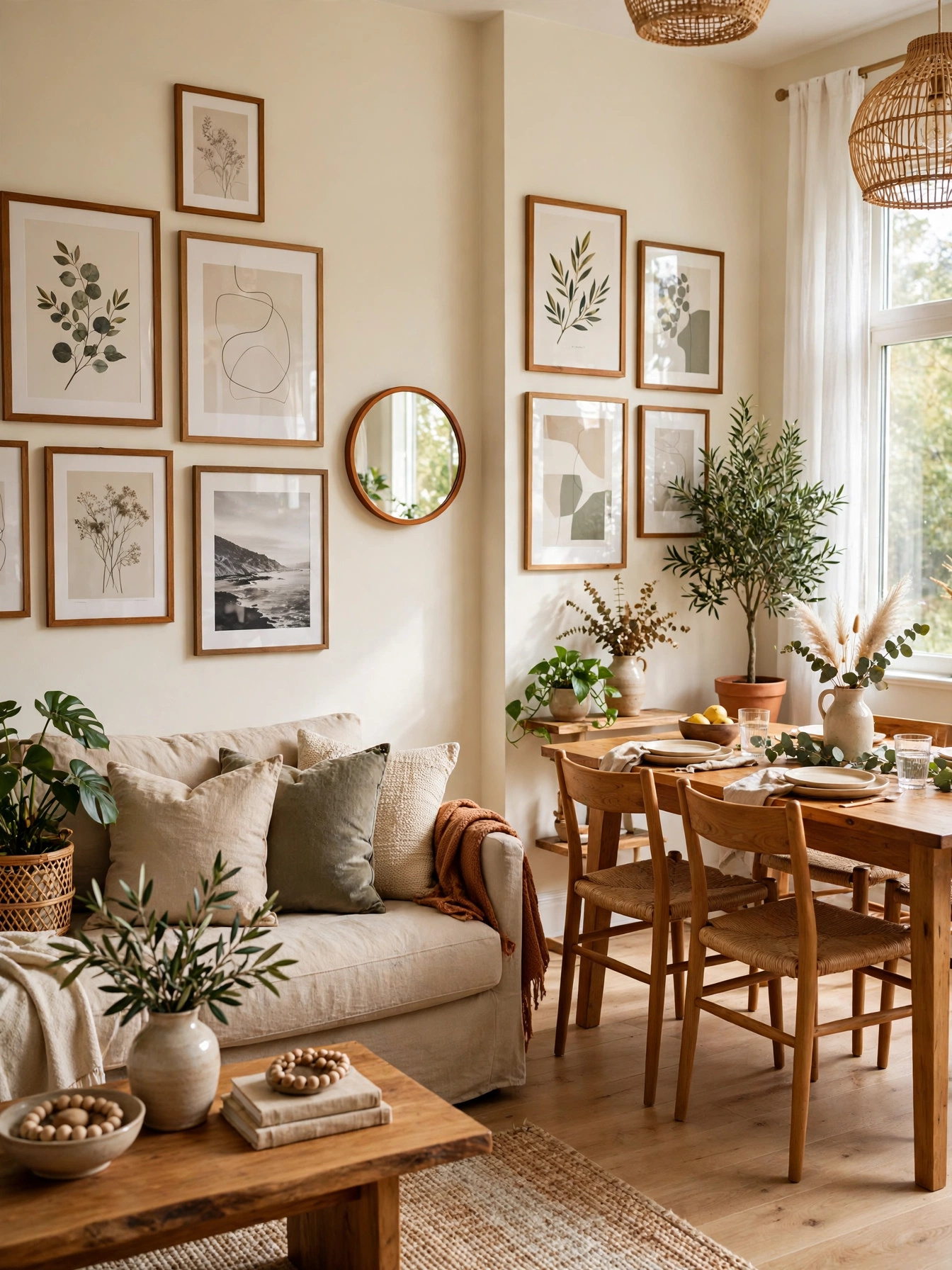
Quick Tip: Run one gallery wall across the boundary between the two zones so the art itself links them.
A gallery wall that spans the join between living and dining makes the boundary disappear. Mix framed prints, a small mirror, and one textile piece in a single frame style, then keep the gaps even so the wall reads as one display. Start with three large frames and build out slowly, hanging the lowest piece at eye level from the sofa. The shared wall art gives both rooms one visual story, and it is easy to refresh by swapping a print or two when you want a change.
Soft Textile Mix
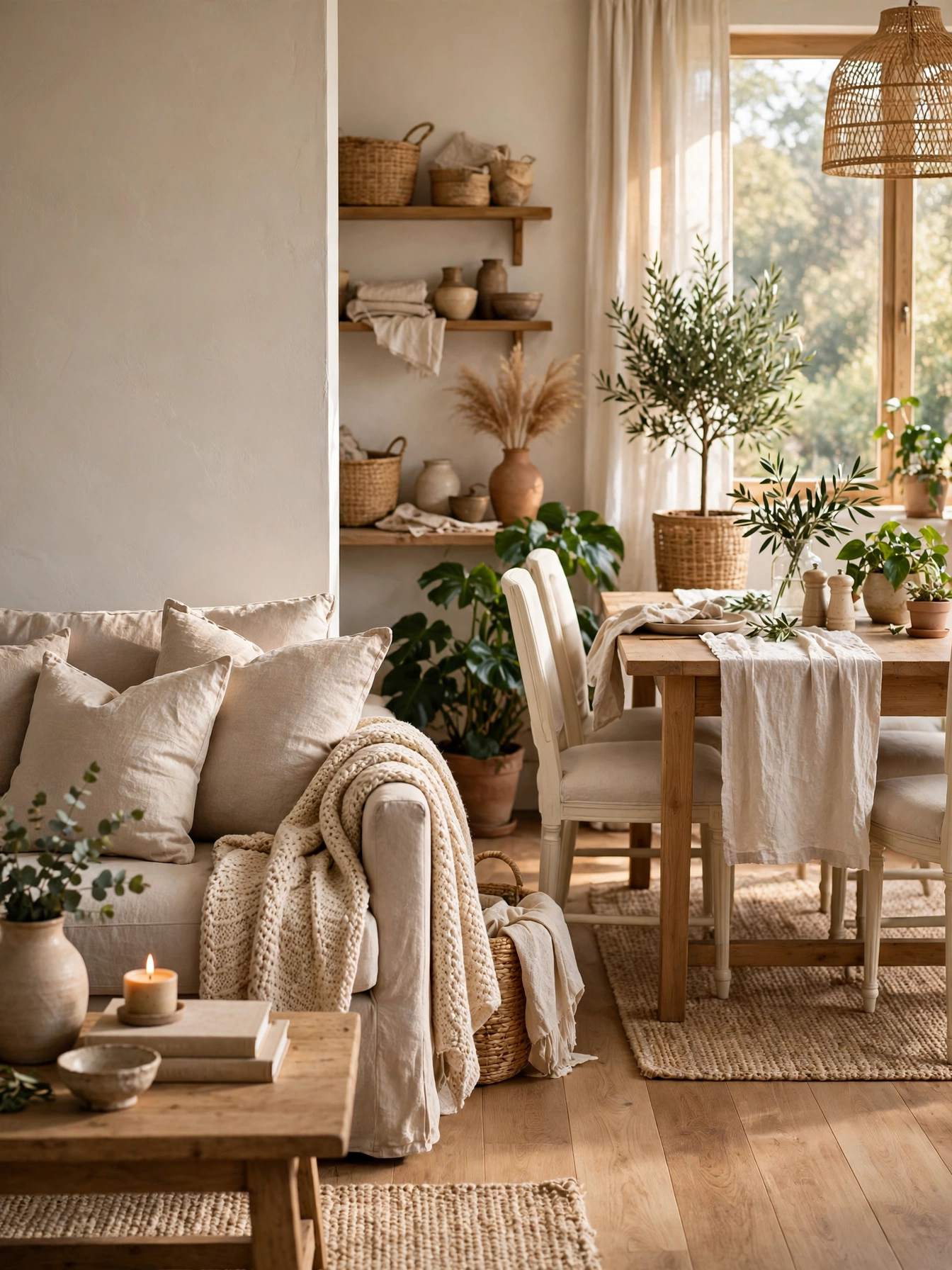
BEFORE: Bare chairs and a plain sofa made the shared room feel cold, and meals at the table felt stiff and formal.
AFTER: Soft cushions on the sofa, a linen runner on the table, and a knit throw over one chair make both zones feel warm and easy to sit in.
Textiles soften a shared room faster than any furniture change. Mix linen, cotton, and one knit or velvet piece so the two zones share a touch, not just a color. Washable covers matter near the table, so pick fabrics you can clean after a spill and still love after a year of use.
Floating Shelf Display
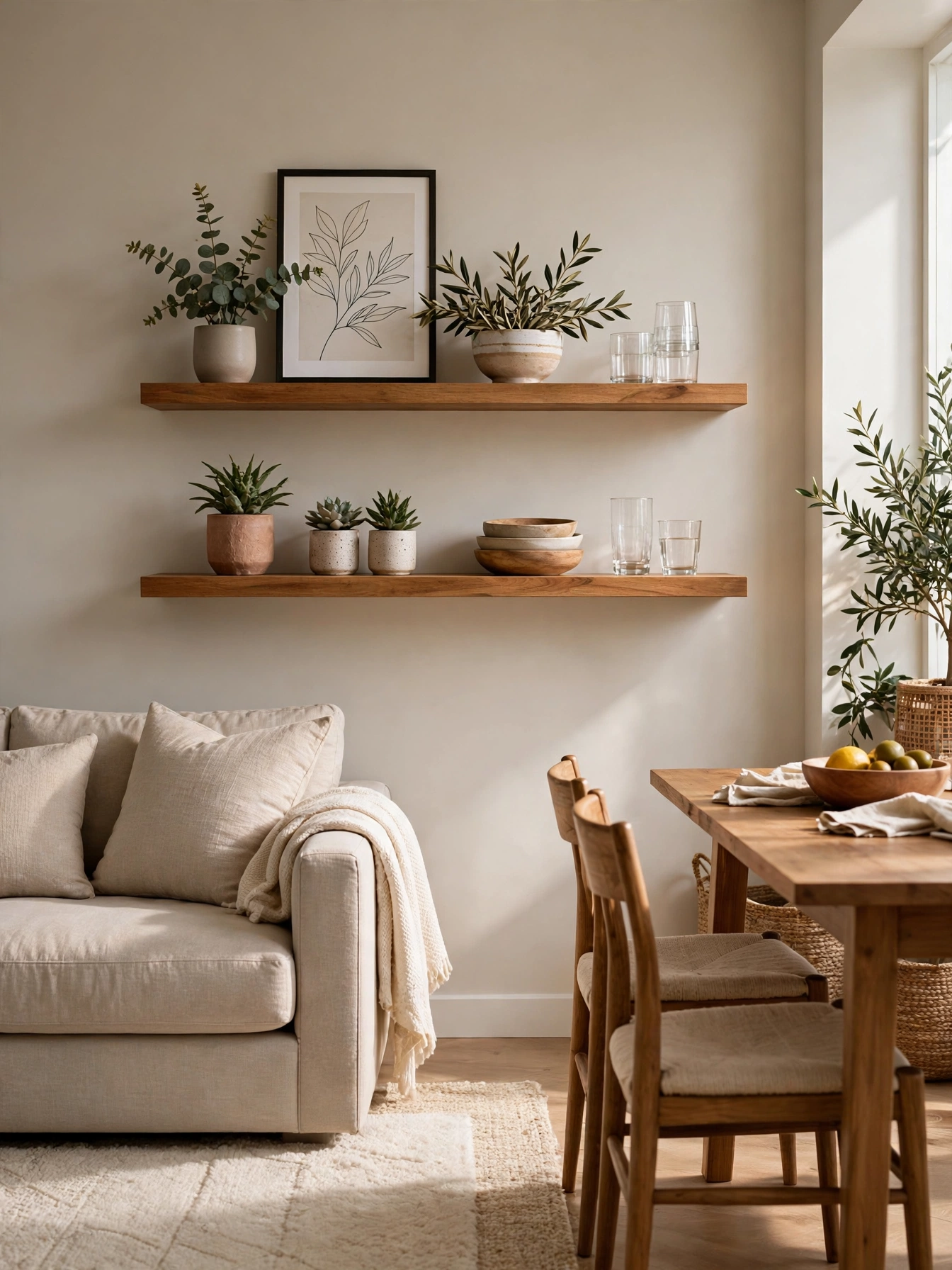
- Fix two floating shelves on the wall between the living and dining zones.
- Style the upper shelf with plants and small art.
- Keep the lower shelf for dining glasses and serving bowls.
- Leave one third of each shelf empty so the display breathes.
Floating shelves link two zones because they hold pieces from both worlds at once. Plants and art from the living side sit next to glasses and bowls from the dining side, and the mix tells one story. Keep the shelves shallow, about 20 cm deep, so they never crowd the walkway, and dust them weekly since open shelves show every speck.
Symmetrical Sofa Placement

| Choice | Living Side | Dining Side |
|---|---|---|
| Seating | Sofa faces table | Chairs face sofa |
| Light | Floor lamp | Pendants |
| Rug | Large soft rug | Flat weave rug |
Symmetry calms a shared room, since the eye loves balance. Place the sofa so it faces the dining table, not away from it, and match the chair count on each side of the table. The two zones then mirror each other gently, and the room feels planned from every seat, even when the furniture styles differ a little.
Candlelit Dinner Corner

DO:
- Set a small candle cluster on the dining table for warm evening light.
- Use flameless candles if kids or pets share the room.
DON’T:
- Do not place tall candles where they block views across the table.
- Do not leave real flames burning when you leave the room.
Candles turn an ordinary weeknight meal into a small occasion, and they cost almost nothing. A cluster of three candles in glass holders gives the dining corner a soft glow that the living side can enjoy too. Keep the holders low and steady, group them on a tray for safety, and light them only when you sit down to eat.
Open Shelf Styling
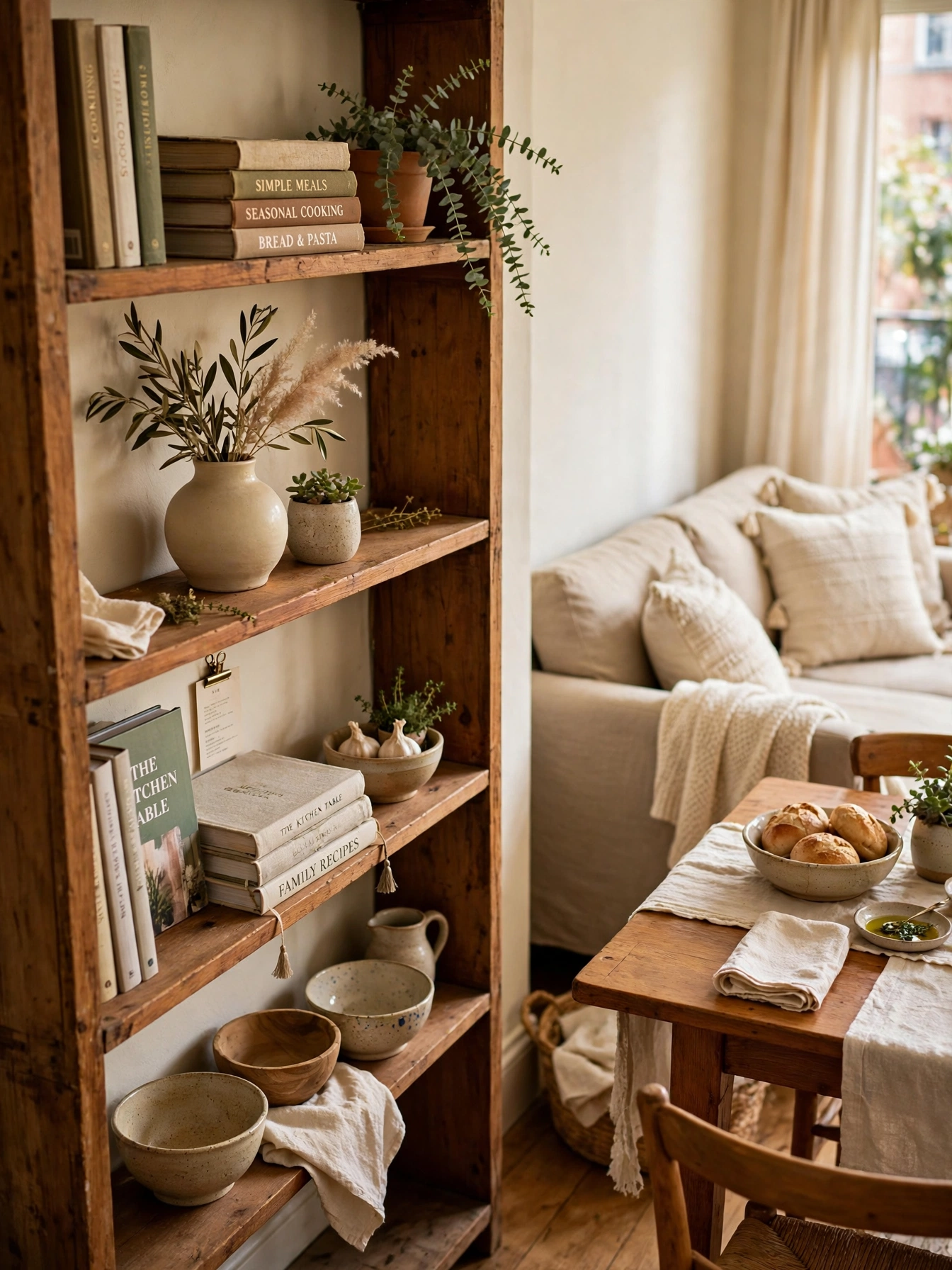
Quick Facts:
- Cost: 30 to 120 dollars for shelf styling pieces
- Time: One hour to style
- Skill Level: Easy
- Best For: Open plan living and dining rooms
Open shelves give a shared room its personality, since they show the pieces you love from both zones. These living dining room ideas end with shelves because they tie the story together: mix cookbooks, plants, and one vase on each shelf, keep the colors calm, and leave breathing room so the display feels styled, not stuffed.
Conclusion
The best living dining room ideas are the simple ones that make both rooms feel connected, calm, and easy to use every day. A shared rug, matching tones, and warm light do more than any big purchase. Start small, keep what you love, and let the two spaces grow together one change at a time.
I still love how my own living and dining corners flow now, and guests always gather where the light is warmest. Your next step is simple: choose one idea from this list and try it this weekend. Save this post on Pinterest and share it with a friend who is styling an open space too.