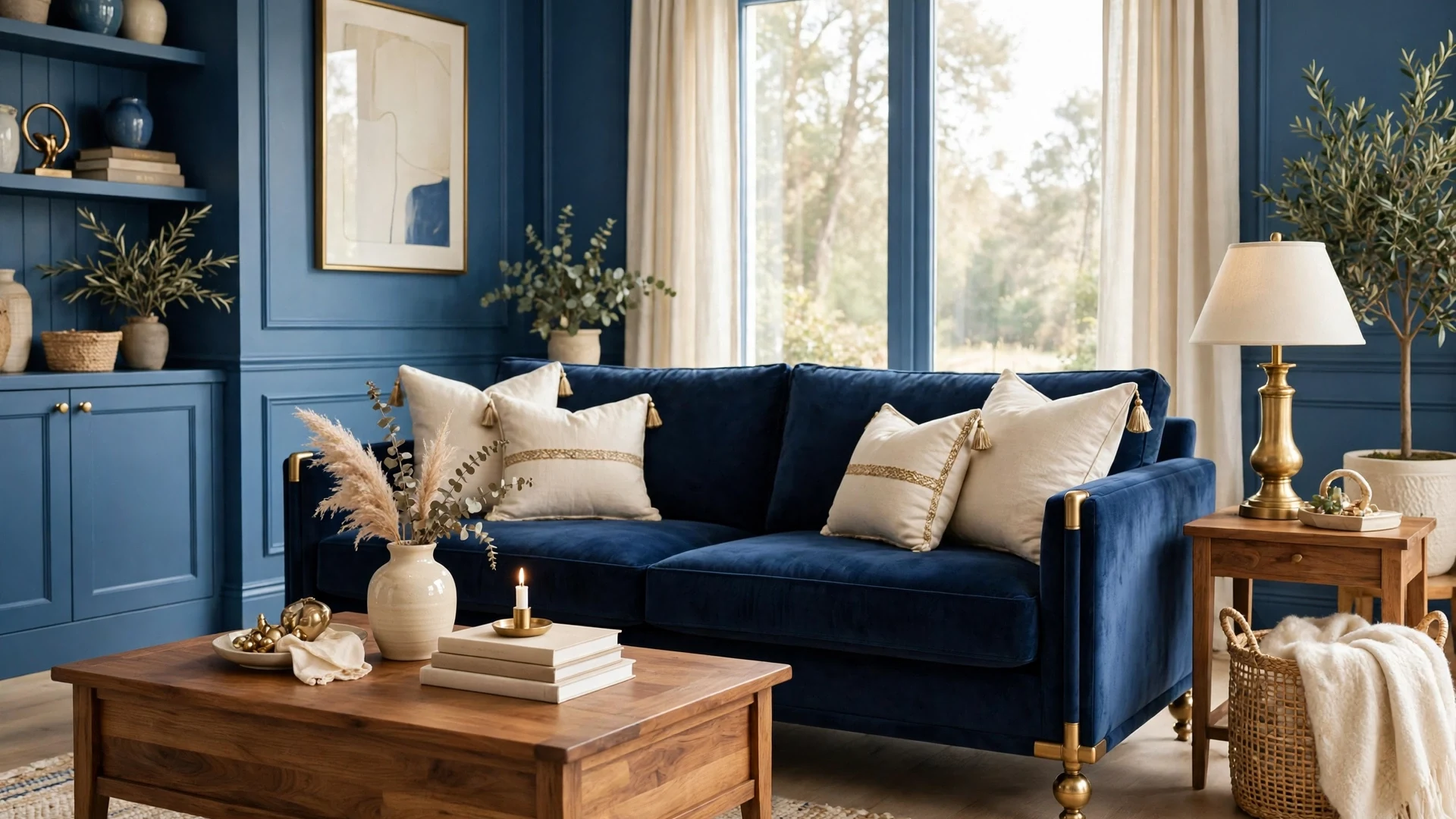
22 Blue Living Room Ideas That Make a Stunning Impact
Blue living room ideas have a way of making a room feel both calm and confident at the same time. From deep navy sofas to the softest pale walls, blue can be gentle, bold, or somewhere in between, and it suits almost every style of home.
In this guide you will find twenty two ways to use blue well, covering sofas, walls, curtains, rugs, and small accents you can add in an afternoon. I have tested blue in my own living room over the years, from a safe pale wash to a brave navy wall, and the lessons stuck. Whether you rent a small flat or own a large family home, there is a shade and a plan here that fits your space, your light, and your budget.
Navy Sofa as the Anchor

A navy sofa gives a living room instant structure, because the eye reads it as the main event and everything else can stay simple. Keep walls warm white or cream so the dark blue feels rich rather than heavy. Add cushions in cream, tan, or soft rust to warm the seat line. What makes it work: navy hides daily marks well, so it suits busy homes. In a north facing room, pick a navy with a warm base and add a cream throw.
Pale Blue Walls That Feel Airy
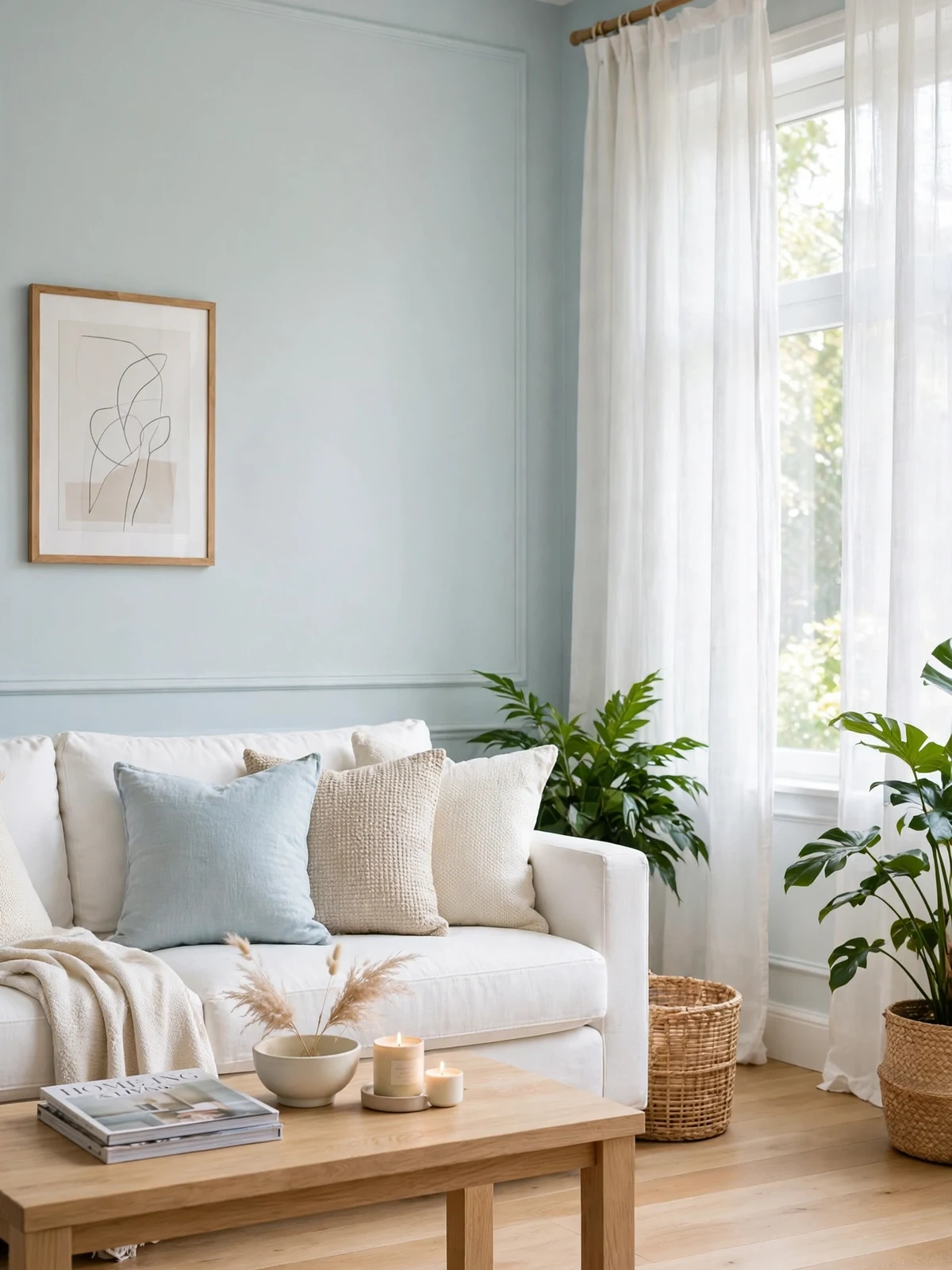
Pale blue walls make a room feel bigger and calmer without the cold edge that plain white can have. Choose a shade with a grey base for a grown up feel, or a clear sky tone for a fresher look. Pair with white woodwork and light wood floors to keep the airy mood. Best for: south facing rooms, where strong sun can make pale blue look icy, so balance it with warm cream textiles. A woven rug in oatmeal stops the floor from feeling bare.
One Bold Blue Accent Wall
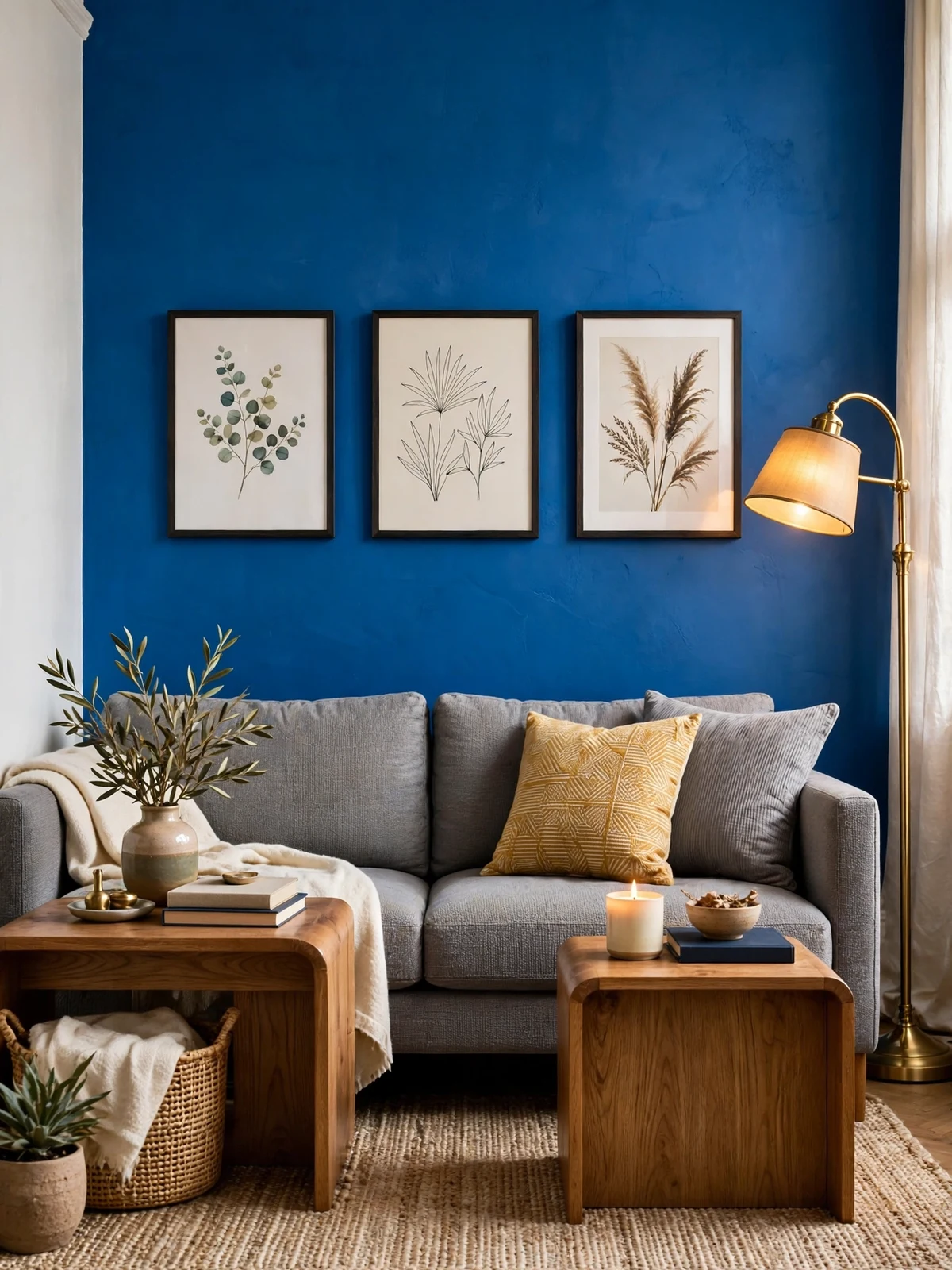
One bold accent wall gives you the drama of dark blue without darkening the whole room. Paint the wall behind the sofa, keep the other walls warm white, and repeat the blue in one cushion or a throw. A mid to deep tone like ink or peacock reads best. The key rule: stop the color at one wall only, so the room still feels open. Warm lighting matters here, so choose warm white bulbs and a brass or wood lamp to soften the depth.
Cobalt Pieces for Instant Energy

Cobalt is blue at full volume, and a little goes a long way. Try it on an armchair, a pair of cushions, or a glossy vase against a calm grey or white base. Cobalt loves company from warm metals and natural textures, which stop it from feeling sharp. Use the small dose rule: two or three cobalt pieces, spaced around the room, beat one loud cluster. In dull north light, cobalt stays bright and cheerful, which makes it a smart pick for darker homes.
Dusty Blue for a Calm Mood

Dusty blue has a soft grey base that makes it feel calm, grown up, and easy to live with. It works on sofas, walls, and curtains without shouting. Pair it with cream, clay, and natural linen so the room feels warm, not washed out. What makes it work: dusty blue changes gently through the day, looking soft at noon and deeper by lamp light. It suits south and north light alike, but test a sample first, because some dusty shades lean green in warm sun.
Blue and White Coastal Mix

Blue and white is the classic coastal mix, and it works far from the sea too. Start with white or soft cream walls and a light sofa, then layer navy and mid blue in stripes, cushions, and a rug. Rattan, driftwood tones, and woven baskets add the relaxed texture this look needs. Keep it fresh, not themed: skip the anchors and shells, and let stripes and texture do the work. This palette loves bright light and stays cheerful in summer and winter alike.
Blue Velvet for a Luxe Touch
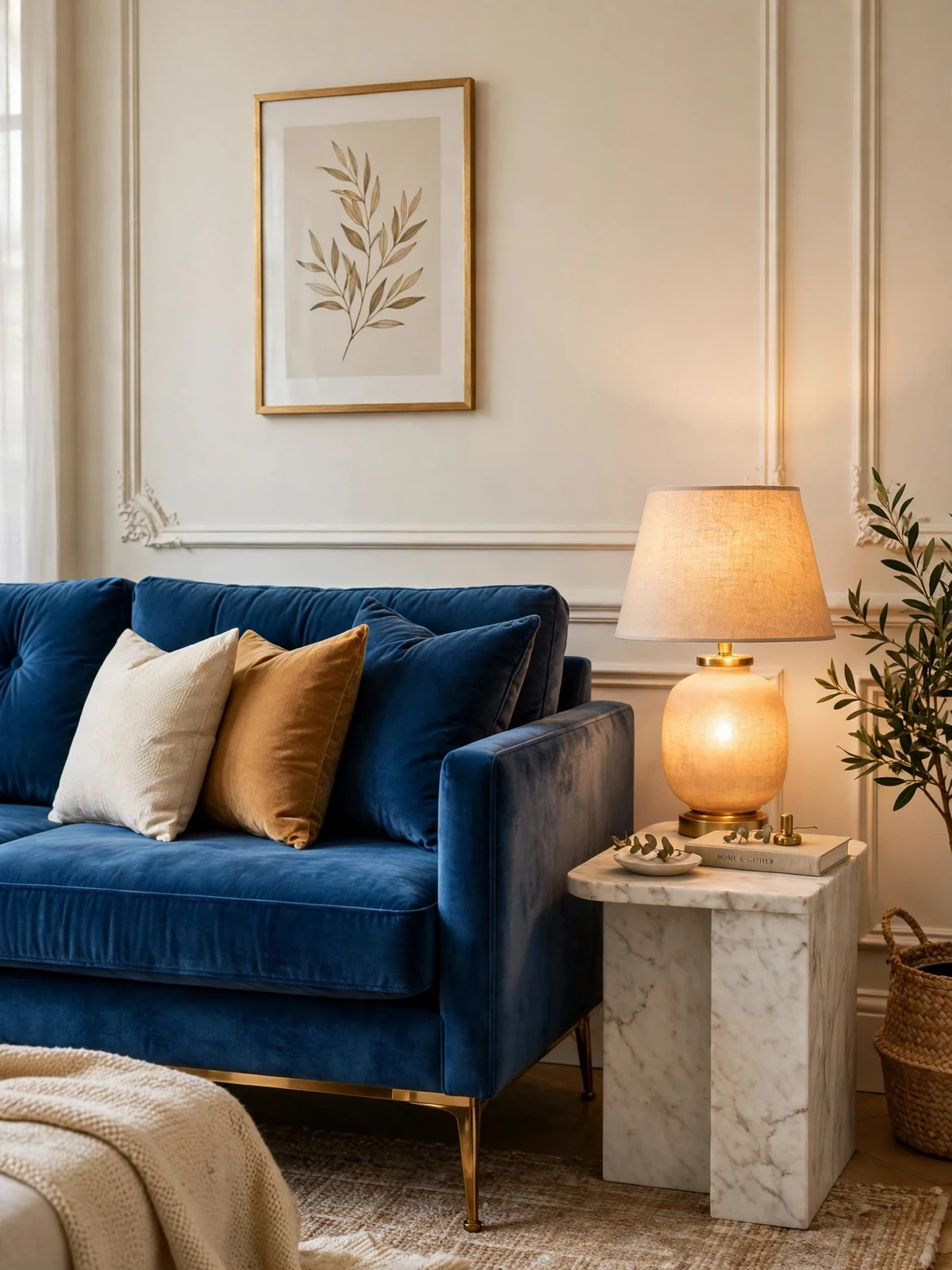
Blue velvet brings a soft sheen that changes with the light, so a plain sofa suddenly looks expensive. Deep sapphire and teal blues work best in velvet, because the pile shows off their depth. Keep the rest of the room matte, linen, wood, and wool, so the shine stands out. Best for: evening rooms and lamp lit corners, where velvet glows. Velvet marks more than flat weaves, so pick a busy family sofa in a washable fabric and save velvet for an armchair.
Denim Tones for Casual Comfort

Denim tones bring the ease of your favorite jeans into the living room. Mix faded, mid, and dark denim blues across a sofa, cushions, and a throw for a layered, lived in feel. Denim pairs well with worn leather, warm wood, and white walls. The casual secret: mix your blues on purpose, because matching shades exactly makes denim look flat. This palette suits busy family rooms, hides wear kindly, and works in any light, though warm lamps keep the darker tones cozy at night.
A Blue Patterned Rug Underfoot
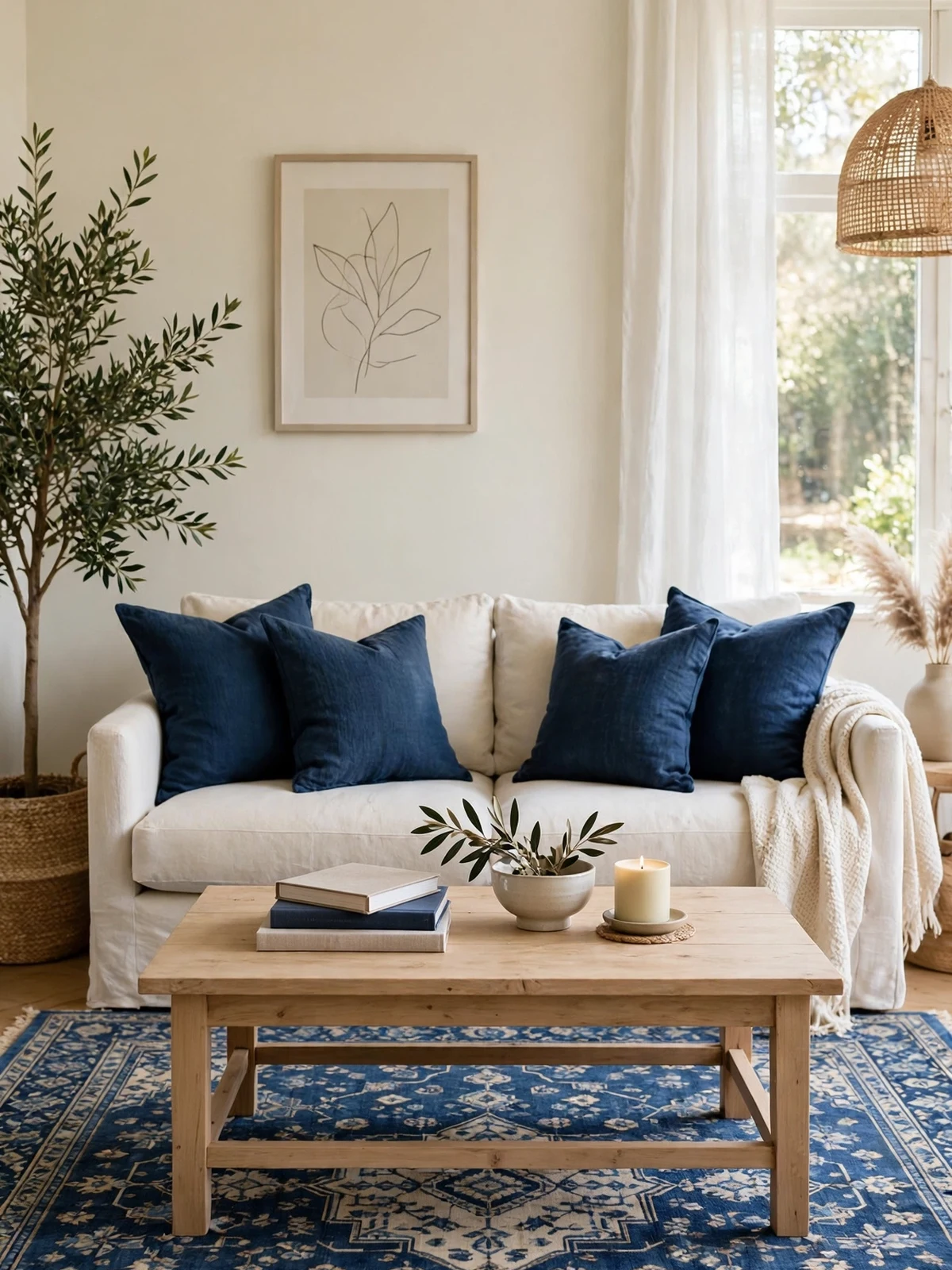
A blue patterned rug is the fastest way to set a color scheme without painting anything. Persian style, faded vintage, or simple geometric patterns all work, and the pattern hides crumbs and pet hair between cleans. Let the rug lead, then pull two of its blues into cushions and curtains. Size matters most: the front legs of the sofa and chairs should sit on the rug. Patterns also forgive dull light, because the mix of tones keeps the floor lively in any weather.
Cushions Only Blue for Renters
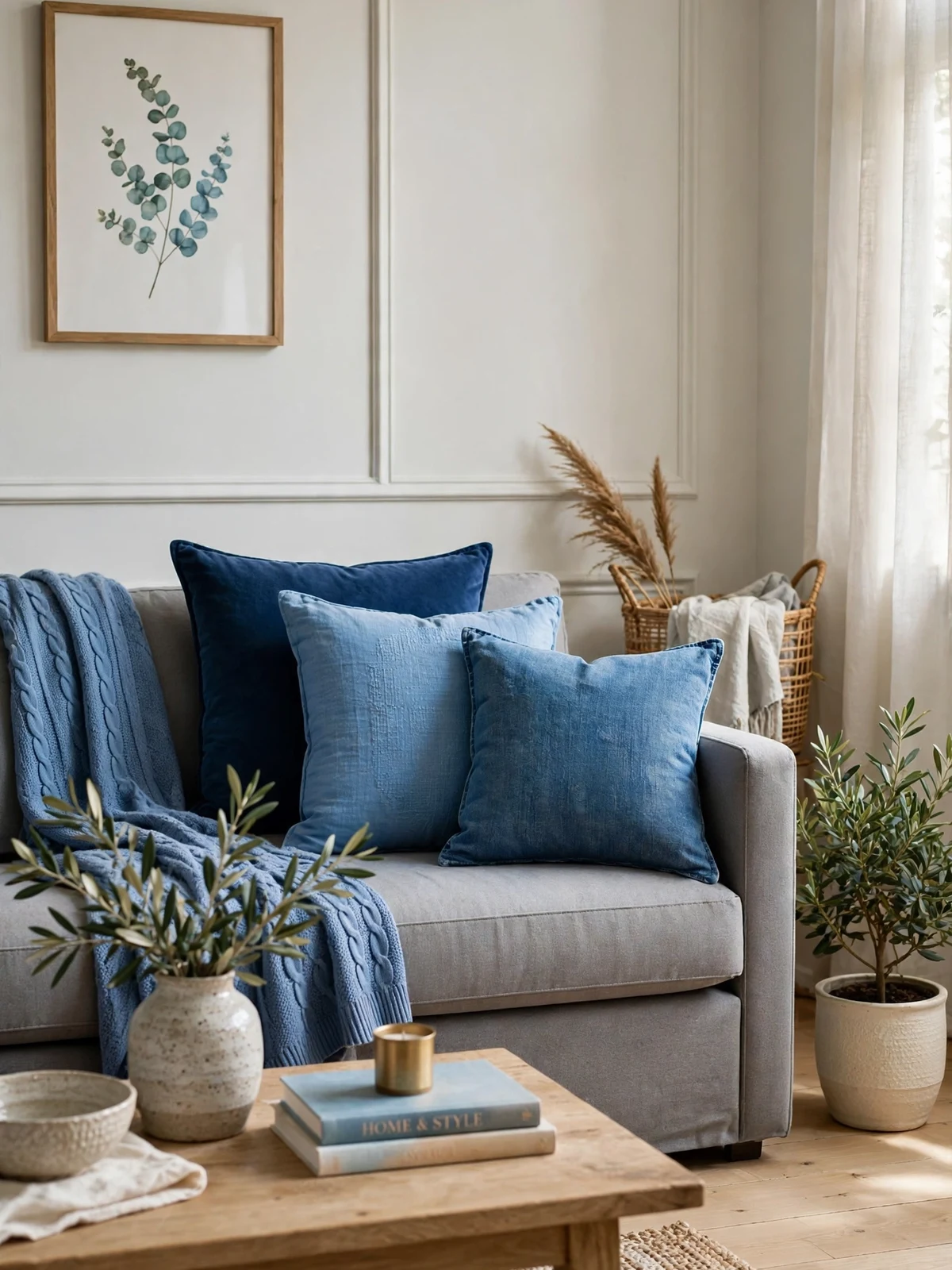
If you rent, cushions are your whole color plan, and blue makes it easy. Buy covers in three blues, one dark, one mid, one pale, and mix plain, striped, and patterned designs. Add a blue throw over one arm of the sofa to widen the effect. What makes it work: repeating blue in small, spaced doses tricks the eye into seeing a designed room. Keep the base neutral, and when you move, the whole scheme packs into one box. Cost stays low, impact stays high.
Blue Curtains That Frame the Light
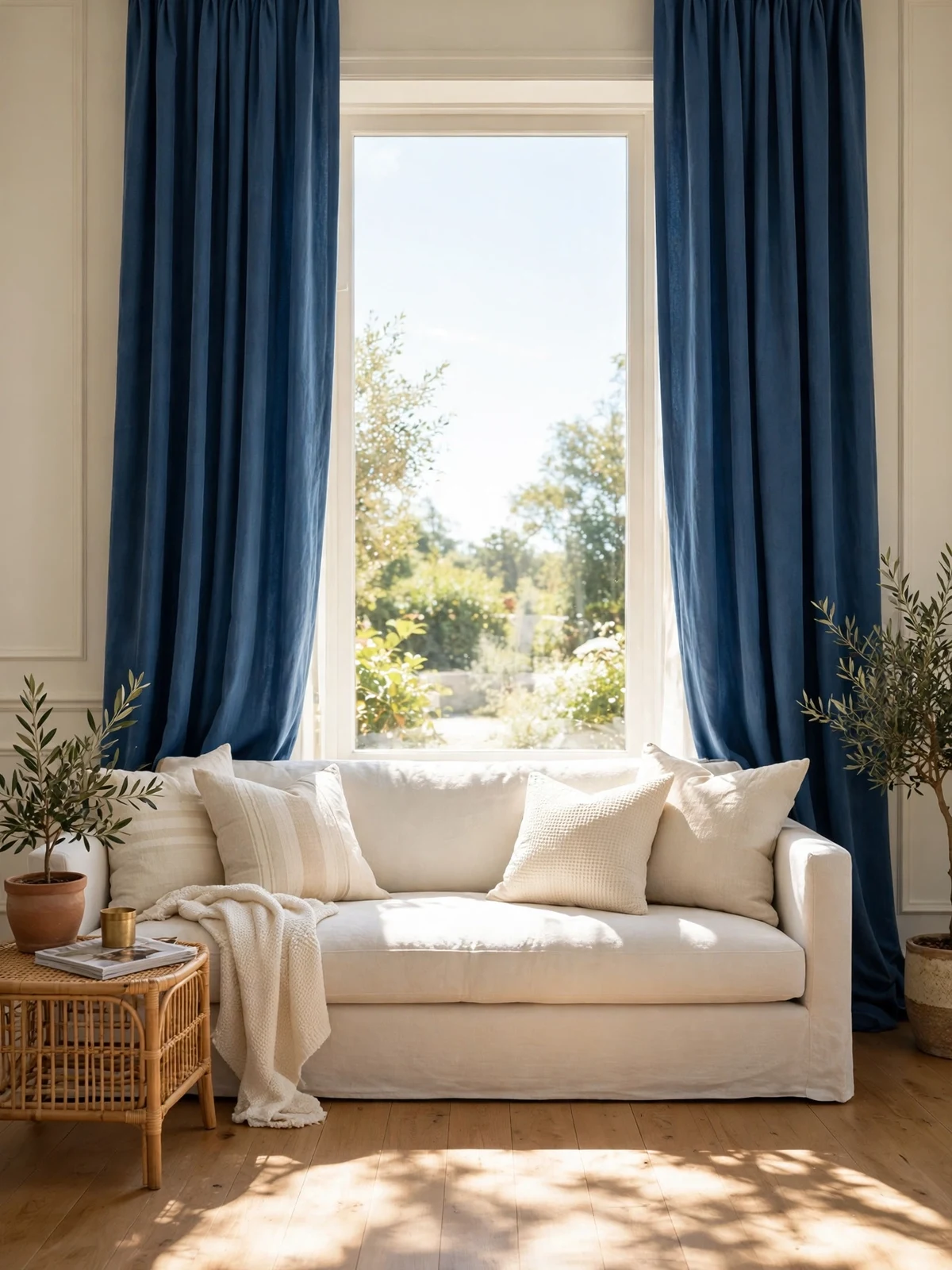
Blue curtains frame a window like a picture and set the mood of the whole wall. Pale blue linen keeps things soft and lets light glow through, while deep navy or velvet curtains add evening drama. Hang them high and wide so the window looks taller. Match the light: in bright south facing rooms, mid and deep blues hold their color well. In darker rooms, choose lighter blues and line them in white so they never look like a dark block by day.
Teal Leaning Blues for Depth

Teal leaning blues sit between blue and green, which gives them a depth that pure blue sometimes lacks. Teal suits walls, sofas, and cabinets, and it flatters warm skin tones in evening light, so people look good sitting in it. Pair teal with ochre, cream, and walnut for a rich but calm scheme. Balance is everything: teal can turn cold in north light, so add warm textiles nearby. In sunny rooms teal looks jewel like, while in shade it leans moody, so plan lamps with care.
Blue With Brass Warmth
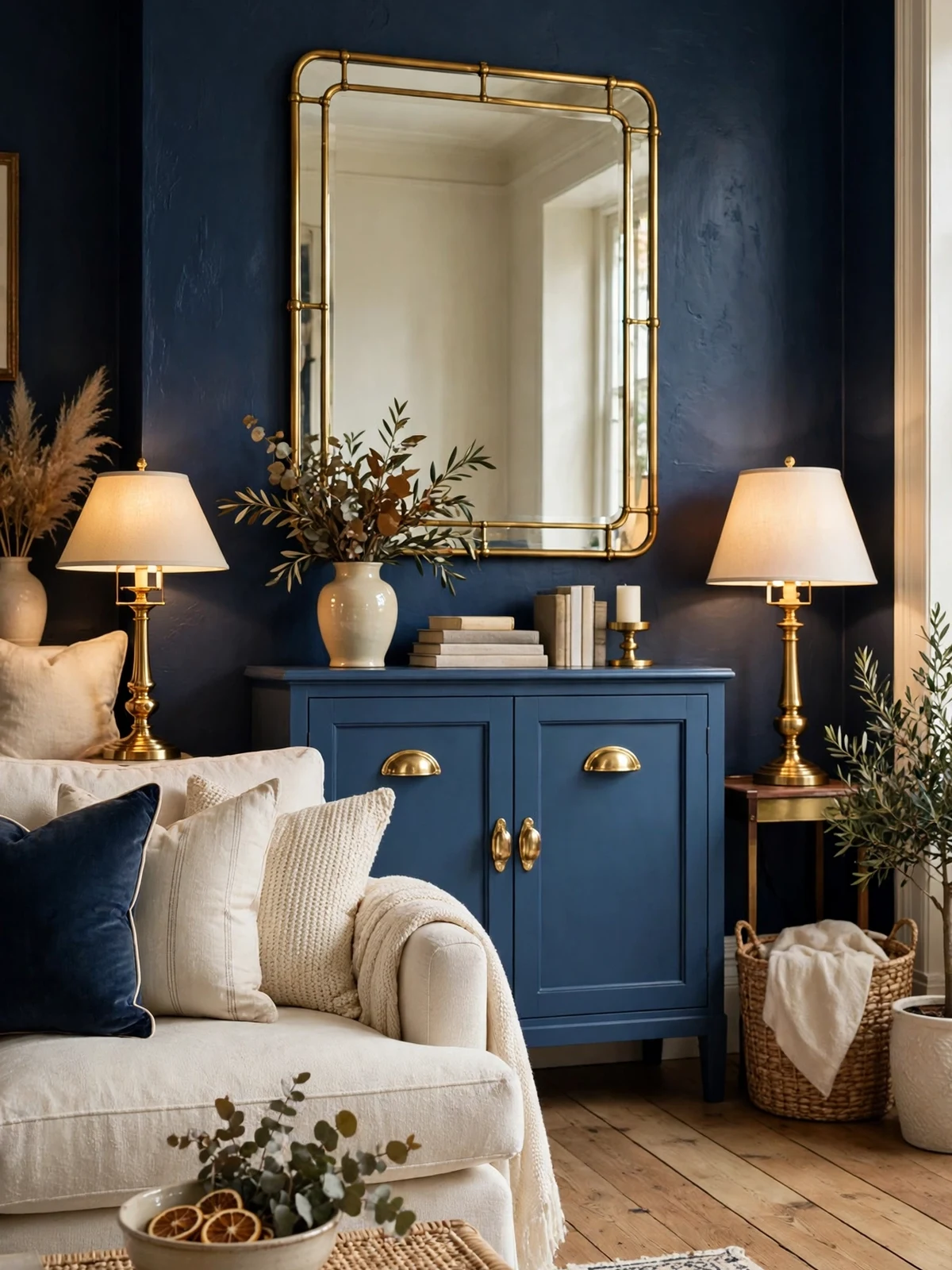
Brass is the easiest way to warm up blue, because its golden tone sits opposite blue on the color wheel and makes both look richer. Add brass through lamps, a mirror frame, picture frames, or cabinet handles rather than one big statement. This pairing suits navy, teal, and dusty blue alike. Keep the finish soft: brushed or aged brass feels calmer than mirror shine. Warm metal plus warm light bulbs will stop even the deepest blue room from feeling cold at night.
Blue With Warm Wood Tones
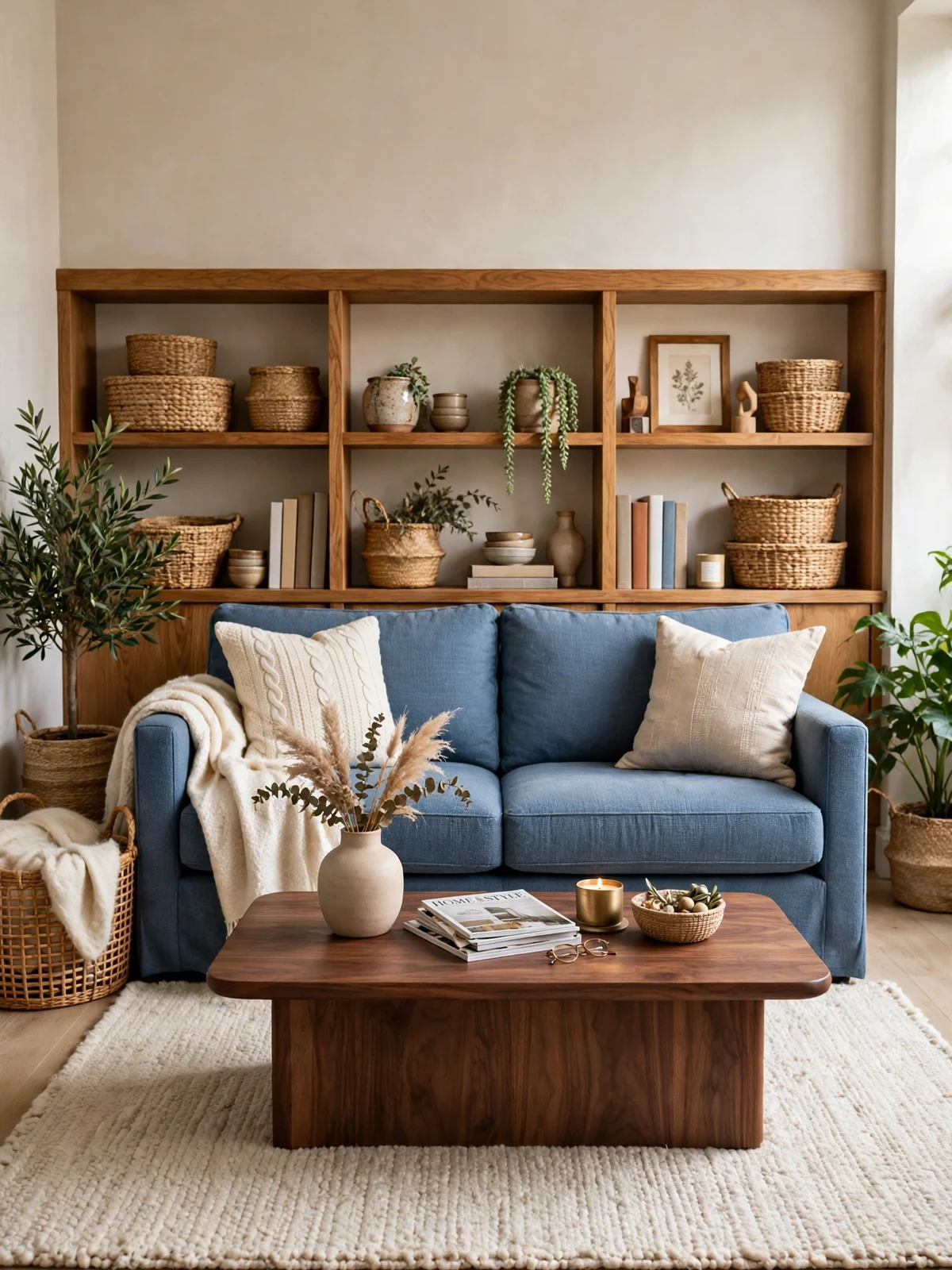
Warm wood is blue’s oldest friend. Honey oak, walnut, and teak all carry orange and brown warmth that balances blue’s cool base, so the room feels settled instead of chilly. Use wood for the coffee table, shelves, or floor, and let blue lead on the sofa and textiles. A simple guide: the cooler the blue, the warmer the wood should be. Pale blues like mid oak, while navy and teal can handle deep walnut. This pairing works in every light and never dates.
Blue With Black Contrast
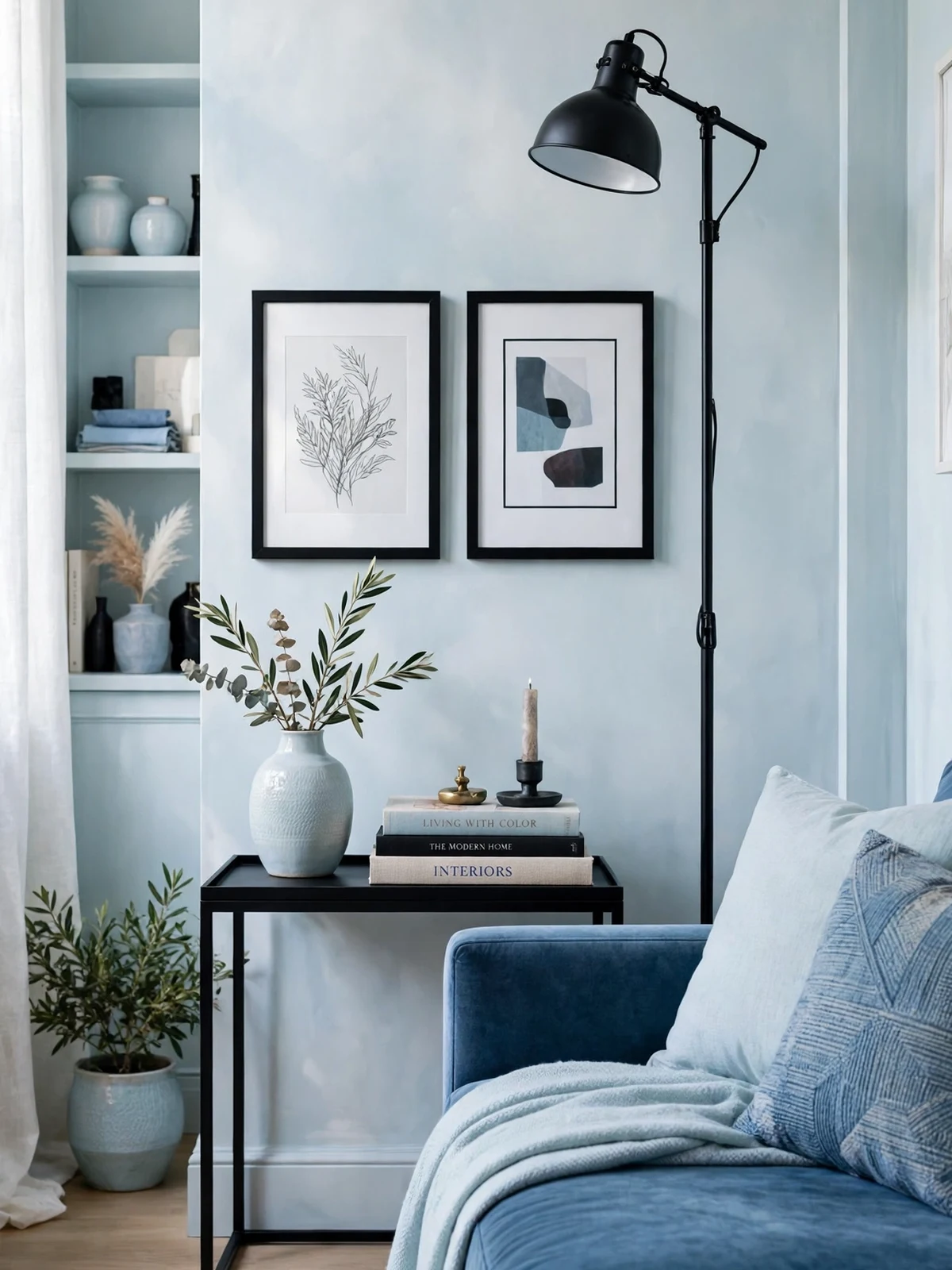
A touch of black gives blue rooms their edge. Without contrast, soft blues can drift into looking sweet or flat, but a black lamp, frame, or side table sharpens the whole scheme. Use black in thin lines rather than big blocks, a floor lamp stem, picture frames, a metal table. The contrast rule: three black accents, spaced apart, are enough. This mix loves bright rooms, where the dark lines stay crisp, and it makes pale blue feel modern instead of cottage soft.
Two Tone Blue Layering

Layering two blues, one pale and one deep, gives a room depth that a single shade cannot. Try pale blue walls with a navy sofa, or a dusty blue sofa with cobalt cushions. Keep everything else quiet in cream, wood, and white so the blues can talk to each other. Stay in one family: choose blues that share the same base, both warm or both cool, so they do not fight. This approach suits any light, because the pale tone lifts what the deep tone grounds.
Blue Art and Ceramics on Display

Art and ceramics let you test blue before you commit to paint or fabric. A large blue print above the sofa sets the palette in one move, and grouped blue vases or bowls add color at shelf height. Mix glossy and matte finishes so the display feels collected, not matched. Start with what you own: check cupboards for blue glass and pottery first. This route suits renters and cautious decorators, and it works in any light, because small pieces never darken a room the way walls can.
Small Room Blue Rules That Work
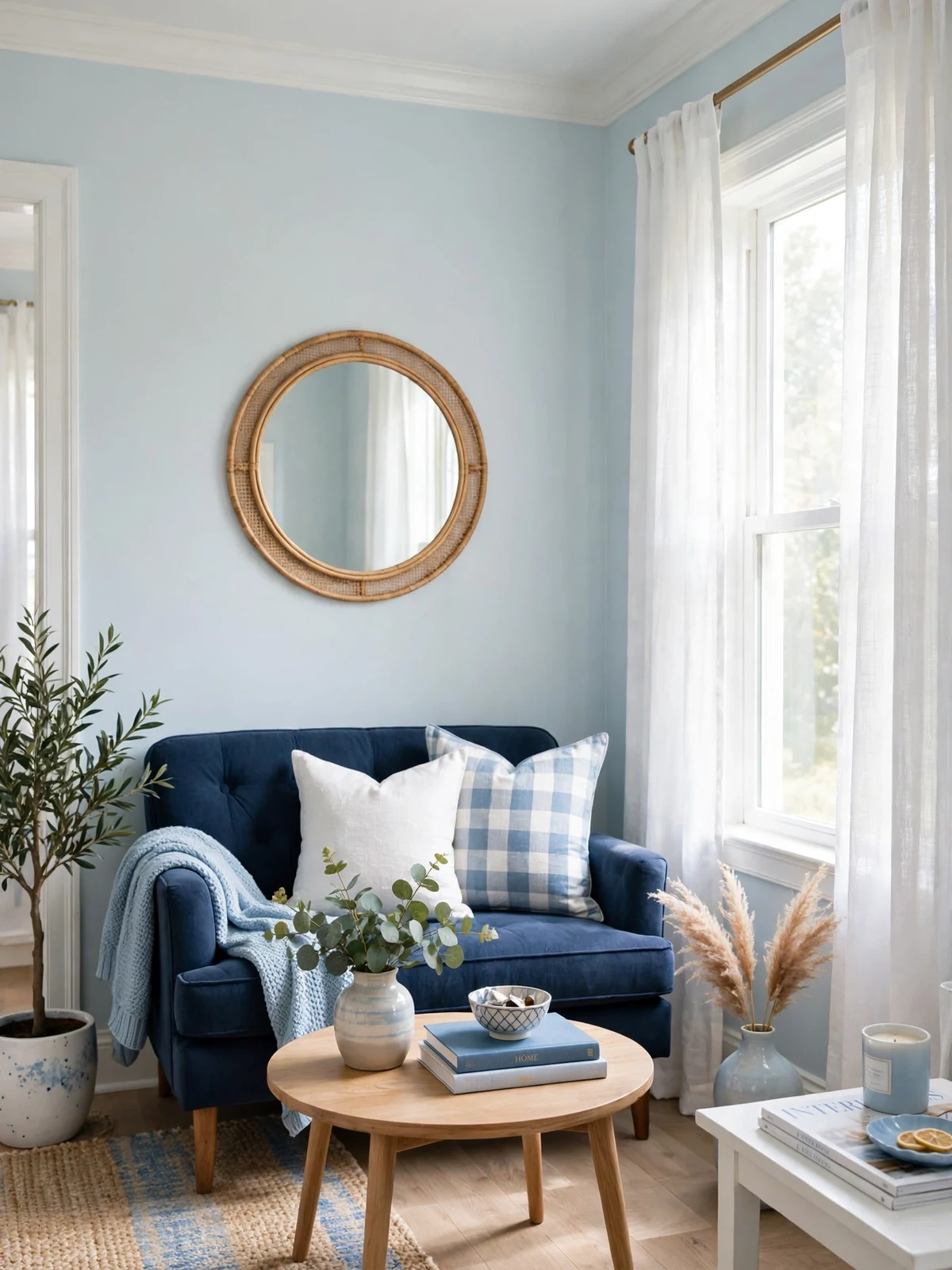
Small rooms can carry blue well if you follow a few rules. Keep one blue as the lead, use it on the biggest piece, and repeat it twice more in small items. Pale and dusty blues open a room up, while dark blue works if the light is good and the ceiling stays white. The mirror trick: hang a mirror opposite the window to double the light. Avoid many competing blues in a tiny space, because the room will feel busy long before it feels bold.
Dark Blue in a Bright Room
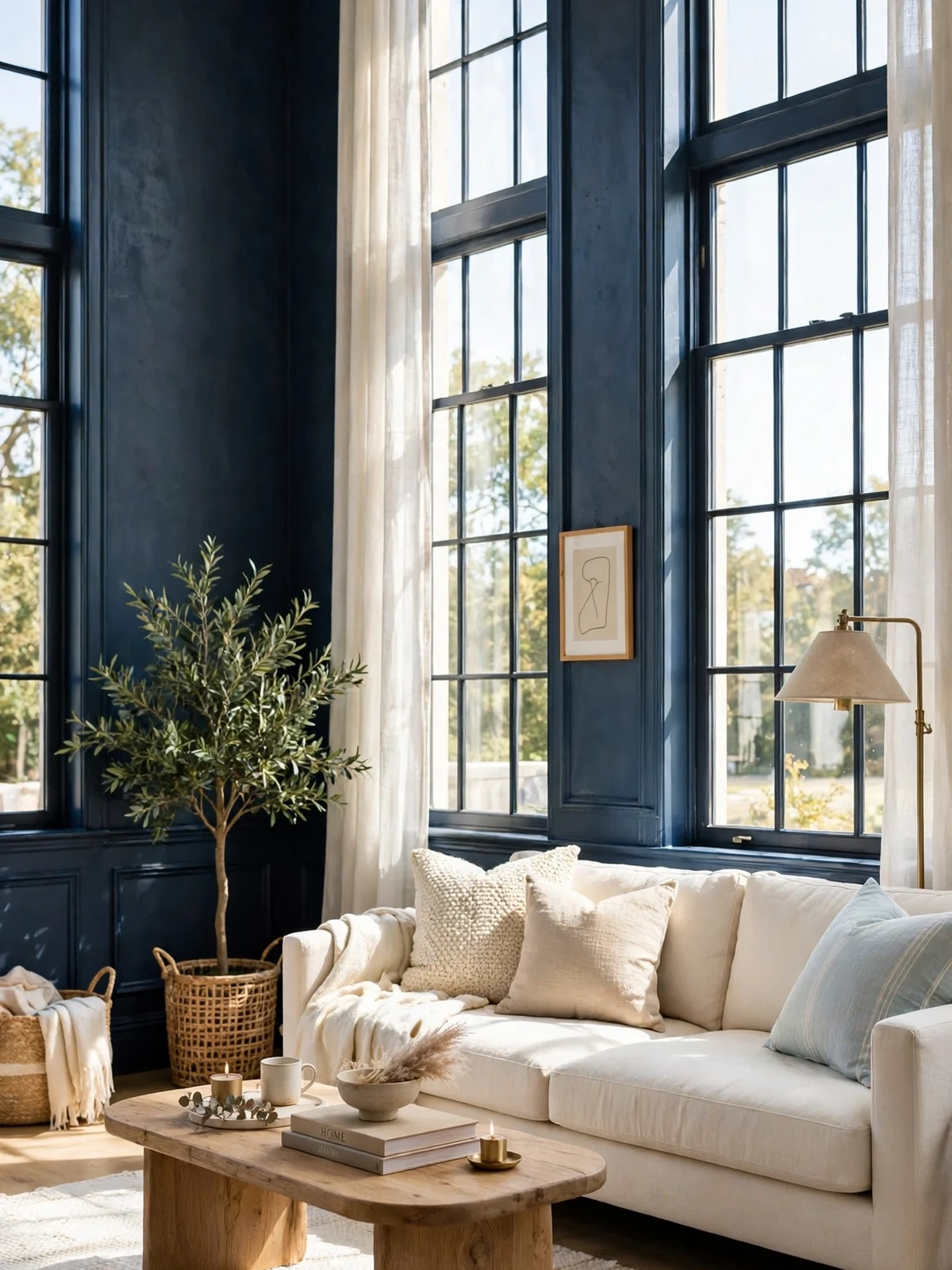
If your room gets strong daylight, dark blue walls are a gift rather than a risk. Sunlight stops navy and ink tones from feeling heavy, and the color looks rich from morning to evening. Balance the walls with a cream sofa, a pale rug, and light curtains so the contrast stays crisp. Check the evening too: dark blue changes after sunset, so warm lamps and a few candles matter. Avoid this look in a dim room, where the same paint can swallow what little light there is.
Royal Blue Accents in Small Doses

Royal blue is confident and bright, so small doses work better than whole walls for most homes. Try it in cushions, a stool, a vase, or the inside of a bookcase for a surprise of color. Royal blue pairs well with cream, grey, and warm wood, and it enlivens dull corners fast. One piece per view: from any seat, you should see royal blue once or twice, not five times. In strong sun it can look electric, so keep it to shaded corners there.
Painted Blue Cabinets and Built Ins

Painted blue cabinets and built ins give a living room a tailored, library like feel. Bookcases, media units, and window seat bases all take paint well, and blue hides scuffs better than white. Mid blues like dusty and denim feel calm, while navy reads classic with brass handles. Prep makes the finish: sand, prime, and use a satin or eggshell paint made for woodwork. This is a weekend project with a big payoff, and the color can repeat in one cushion to tie the room together.
Blue Throws and Textiles in Layers
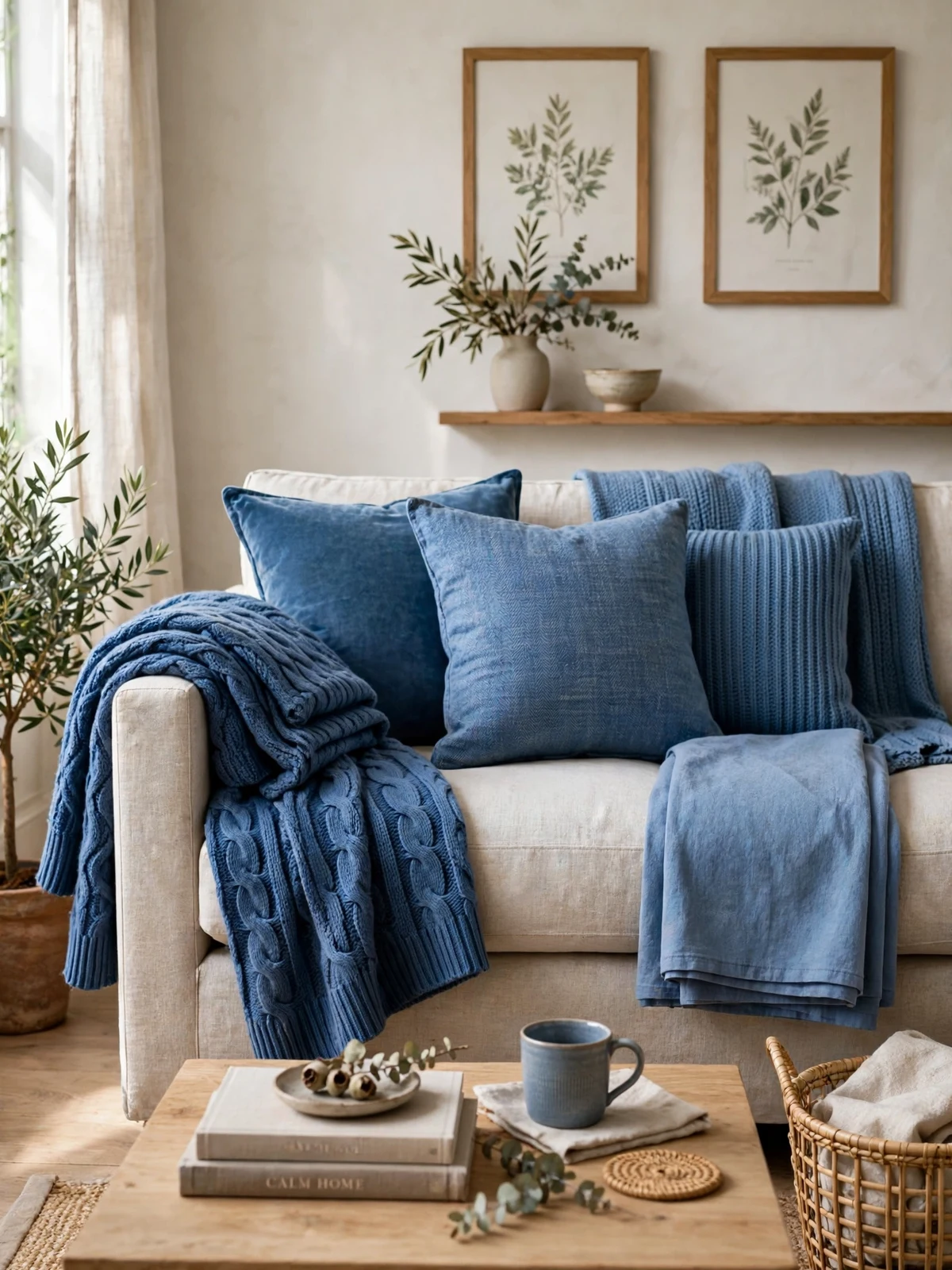
Throws are the cheapest layer of blue you can buy, and layering them looks richer than one blanket alone. Fold a deep navy throw over one sofa arm, drape a paler one across a chair, and keep textures mixed, wool, cotton, and knit. Layer by tone: place the darkest throw where the light is strongest, so it never looks black. Textiles also soften echo in hard floored rooms. When the season changes, swap the heavy wool for light cotton and the same blue scheme feels new again.
Conclusion
The best blue living room ideas share one simple secret, they respect the light in the room and pair blue with something warm. Pick a shade you love, repeat it in two or three places, add wood, brass, or cream, and the room will feel finished rather than decorated.
What surprised me most was how forgiving blue is, even a few cushions changed the whole mood of my sofa. So start small this week, order two cushion covers or a throw in your chosen shade and live with it first. Save this list to Pinterest and share it with anyone planning a blue room.