
25 Sage Green Living Room Ideas for Ideal Color Balance
Sage green living room ideas with the perfect amount of color start with one simple truth: sage is calm, but too much of it can turn a room cold, while too little leaves it feeling unfinished and plain.
Inside you will find 25 ways to place sage with intention, from a single cushion to a full painted wall, plus the pairings that keep it warm: cream, oak, rattan, brass, blush and terracotta. Each idea shares a simple ratio or pairing tip you can copy. After painting my own living room twice, once too pale and once too deep, I learned that balance matters more than the exact shade. These ideas suit renters testing the color, small rooms that need softness, and anyone who loves green but fears a cold finish.
Sage Green Sofa as the Color Anchor

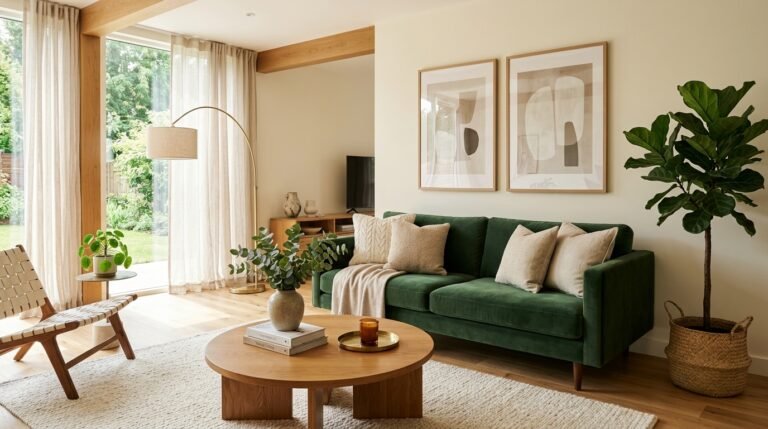
Let the sofa carry the whole color story. A sage sofa gives you roughly thirty percent sage in one move, which is enough presence without painting a single wall. Keep the walls warm white and the rug pale so the green reads rich rather than heavy. Add cream cushions and one tan leather pillow to pull warmth back into the seat. A single strong anchor beats sage scattered everywhere. If the sofa fabric looks grey in the shop, hold it against warm white card, because true sage should still look gently green.
Full Sage Walls With Warm White Trim

Painting every wall sage works when the trim does the balancing. Warm white on the ceiling, skirting and door frames keeps the green from closing in, and it stops the room feeling like a box of one flat color. Choose a mid tone sage, not the palest sample on the card. Cream upholstery and honey oak furniture sit inside the same warm family, so nothing fights. Best for: north facing rooms that need color depth but still feel icy with blue based paints and grey sofas.
One Sage Accent Wall Only

One wall is the safest full commitment. Paint the wall behind the sofa in a mid sage and leave the other three walls warm white, giving you about twenty five percent sage across the room. The eye lands on the green, then rests on the pale sides, so the space stays airy. Repeat the color once, in a cushion or a plant pot, so the wall does not look like an accident. One echo of the color is enough. This balance suits open plan rooms where four green walls would swallow the kitchen end too.
Sage in the Curtains Only

Curtains are a quiet way to test sage at full height. Two long linen panels bring a soft column of color on one side of the room while every wall stays neutral. Because the fabric moves and folds, the green looks lighter than the same shade on a wall. Pair with a cream sofa and one terracotta cushion to keep the palette warm. What makes it work: the curtains frame the light source, so the green glows instead of sitting dull in a corner. Renters can take them to the next home too.
Cushions Only for the Smallest Dose

If you are unsure about sage, start with cushions only. Three cushions in mixed textures, linen, velvet and a small stripe, give you a five percent dose that still reads clearly against a warm white sofa. Keep the rest of the palette cream and light wood so the green stays the only cool note. Mixed textures make a small dose feel deliberate. Swap one cushion to blush in spring if you want a softer mix. This is the cheapest test there is, and if the shade feels wrong, only the covers need to change.
Deep Sage for a Moody Corner
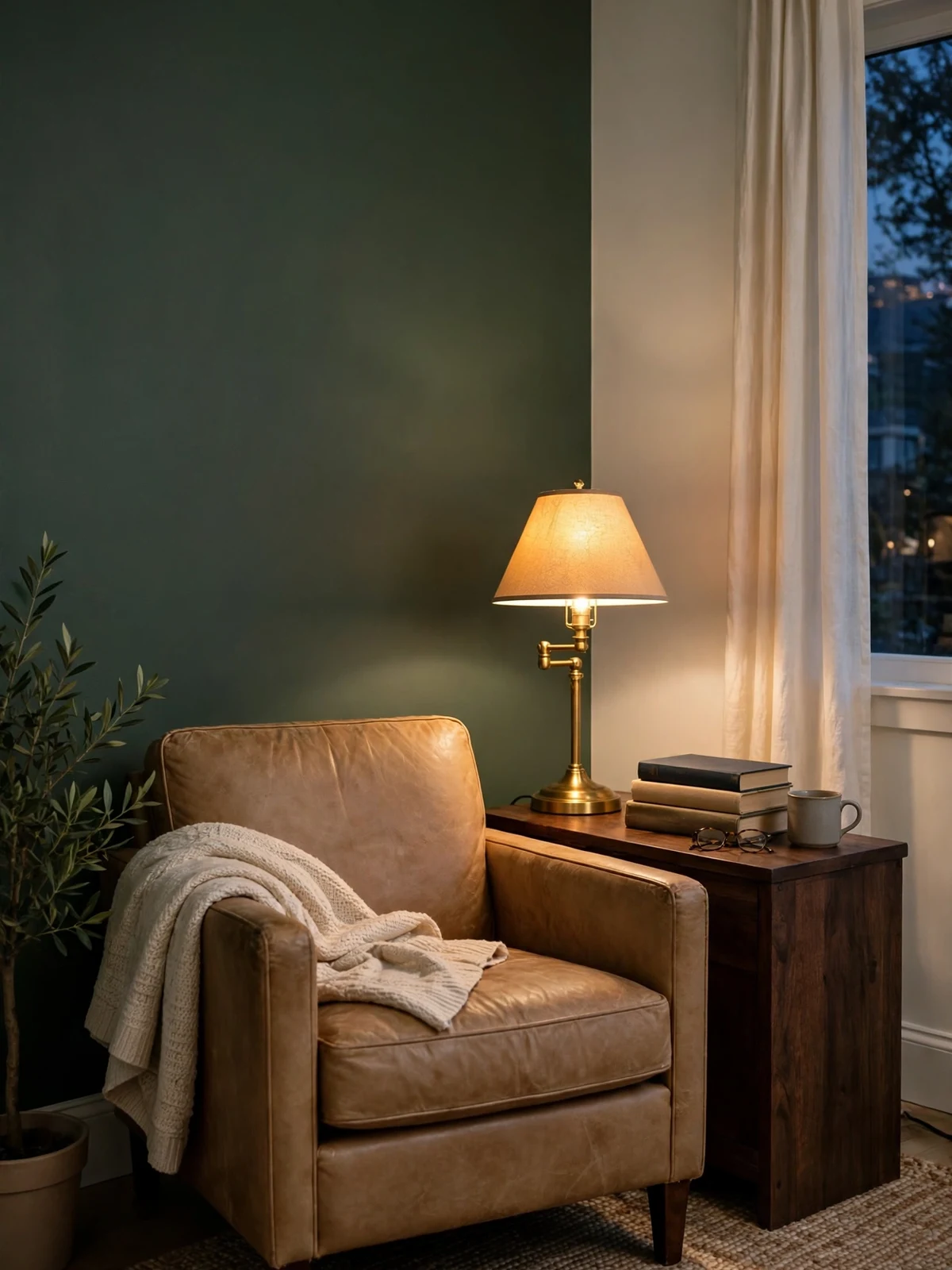
A small corner can take the deepest sage you love. Use it on one short wall or inside an alcove, then set a reading chair against it. Deep sage at ten percent of the room feels rich instead of gloomy because the other walls stay pale. Tan leather and brass warm the depth instantly, and a lamp with a warm bulb keeps the corner glowing after dark. Best for: a snug, a bay window seat, or the wall behind a bookcase in an otherwise light and simple room.
Pale Sage in a Bright Sunny Room
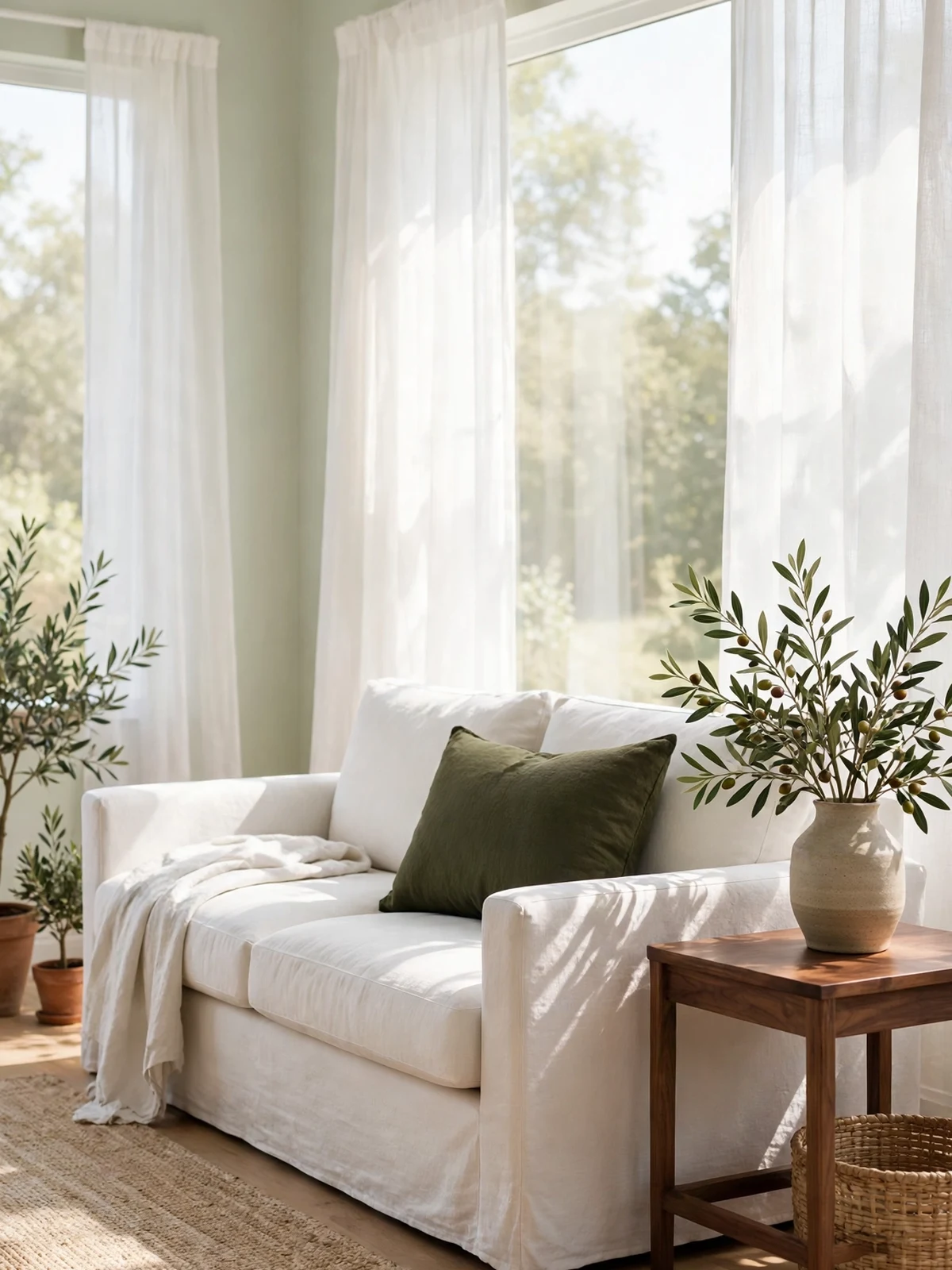
Bright rooms can handle the palest sage without it washing out. Strong daylight lifts a soft sage so it reads as a gentle tint rather than a blank off white. The trick is contrast: keep at least one deeper note, such as an olive cushion, a walnut side table or a black framed print, so the room keeps its edges. What makes it work: pale walls plus one dark accent equals calm with definition. Without that accent, pale sage in full sun can fade to nothing by midday.
Sage and Cream for a Soft Neutral Base
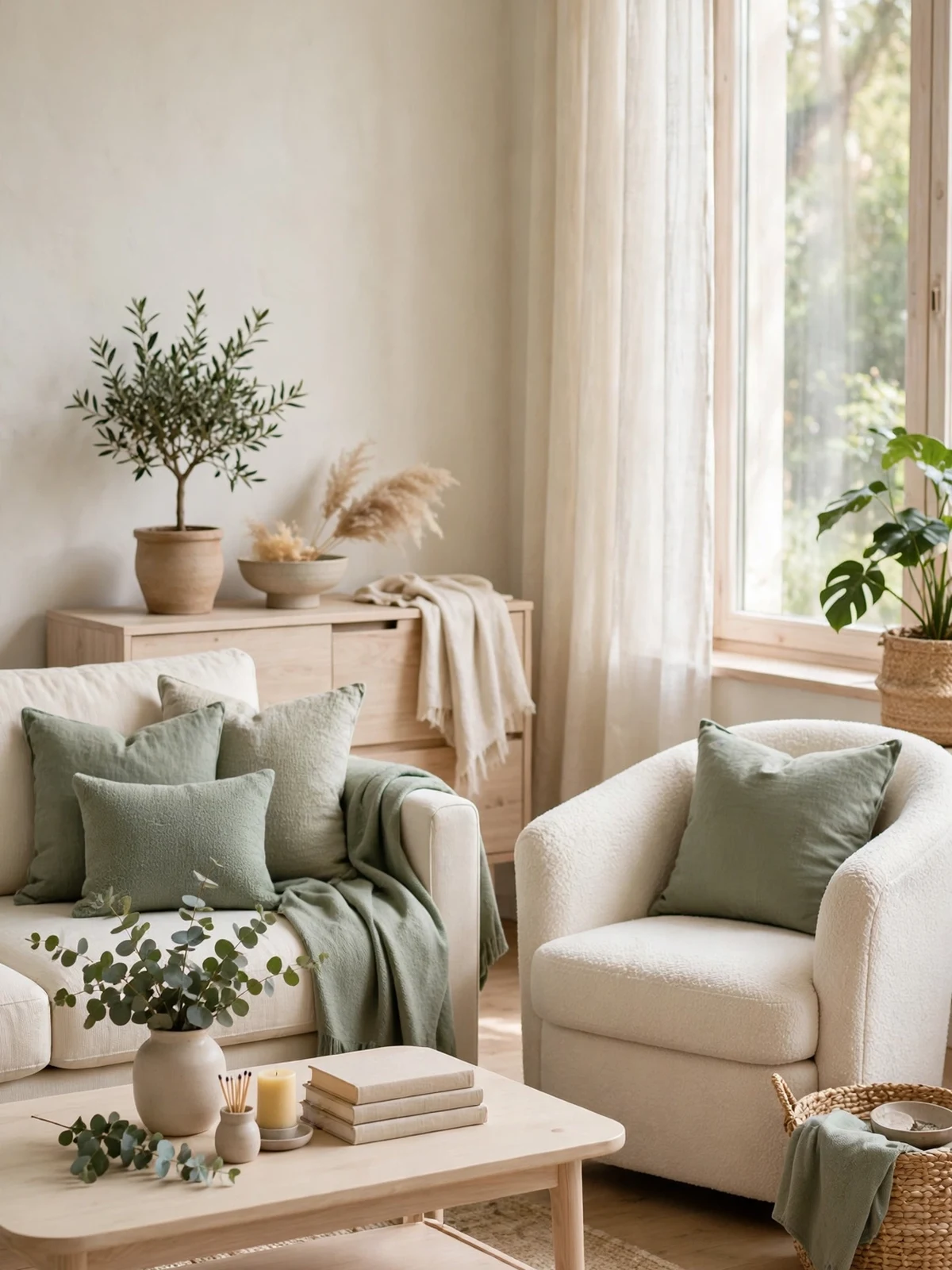
Sage and cream is the easiest balanced pairing to live with. Cream has a yellow base, so it cancels the grey side of sage and keeps the room feeling sunny. Aim for roughly sixty percent cream, thirty percent sage and ten percent wood tones. Use sage on the larger soft pieces, such as curtains or a rug border, and cream on the sofa. Cream is the warmth sage cannot give itself. This mix suits almost any light, which is why it is the pairing I suggest to friends who are nervous about color.
Oak and Rattan to Warm Up Sage

Wood is the fastest warmth you can add to sage. Light oak shelves, a rattan chair and a woven basket bring honey tones that sit opposite green on the warm side of the palette. You do not need much: two or three natural pieces can balance a full sage wall. Keep metal finishes minimal here so the wood story stays clear. What makes it work: every cool surface gets a warm neighbor. A sage wall beside oak shelving looks intentional, while the same wall beside chrome and glass can feel chilly.
Brass Accents That Stop Sage Looking Flat

Flat is the main risk with sage, and brass fixes it in small doses. A floor lamp, two picture frames and a side table in brushed brass add about five percent warm metal, and that glint makes the green look richer by contrast. Choose brushed or aged brass rather than shiny gold, which can fight the softness of the color. Keep the bulbs warm white. Best for: rooms that already have sage in place but feel dull on cloudy days, when the green turns grey and lifeless without any warm reflection nearby.
Black Accents in Small Sharp Doses

A little black gives sage its outline. Think five percent or less: a floor lamp, two frames and a slim side table. Black stops pale sage looking washed out and makes mid sage look crisp and modern. The mistake is spreading it everywhere, which turns a soft room harsh. Keep black pieces thin and tall rather than chunky, so they draw lines instead of blocks. Black should underline the green, never compete with it. Pair with warm white walls so the contrast stays between the accents and the sage, not the whole room.
Blush Pink as the Gentle Counterpoint

Blush and sage balance each other beautifully because blush brings the warmth that sage lacks, while sage stops blush looking sugary. Keep blush small, around ten percent: two cushions, a throw or a single chair. The sofa or wall stays sage, the walls stay warm white. This pairing loves natural textures, so add light wood and a woven rug to ground the softness. What makes it work: the two colors are similar in depth, so neither shouts. It is a calm mix for bedrooms turned sitting rooms and quiet, bookish spaces.
Terracotta to Balance the Cool Side

Terracotta is the strongest warm partner sage has. Clay pots, a rust cushion or a terracotta vase pull the green away from its grey side and toward an earthy, sun baked feel. Because terracotta is strong, ten percent is plenty against thirty percent sage. Keep the base cream so the two colors do not wrestle. Best for: rooms that feel cold even after adding wood, or homes with terracotta tiles and brick that need a color friend. The pairing also hides dust and dog hair better than most, which matters in real homes.
The 60 30 10 Sage Formula

When in doubt, use the classic formula. Sixty percent of the room stays a warm neutral, usually cream walls and the main sofa. Thirty percent is sage, spread over two or three medium items such as curtains, an armchair and a rug. Ten percent is your accent, brass, black or terracotta. The formula works because sage never has to carry the room alone. If a space feels off, count the percentages honestly. Most unbalanced sage rooms are actually fifty percent sage with no warm accent at all, and fixing the ten percent fixes everything.
Sage Green Cabinetry and Built Ins

Painted joinery is a smart middle dose of sage. Built in bookcases or a media cabinet in mid sage give you a strong block of color that stops at the furniture line, leaving the upper walls pale and the room tall. Inside the shelves, mix cream ceramics, wood bowls and books with pale spines so the green does not swallow the styling. Brass sconces above the shelves add the warm glint this much green needs. Best for: period rooms with alcoves, or anyone who wants color that looks built in rather than decorated on.
Two Tone Sage Light Above Deep Below
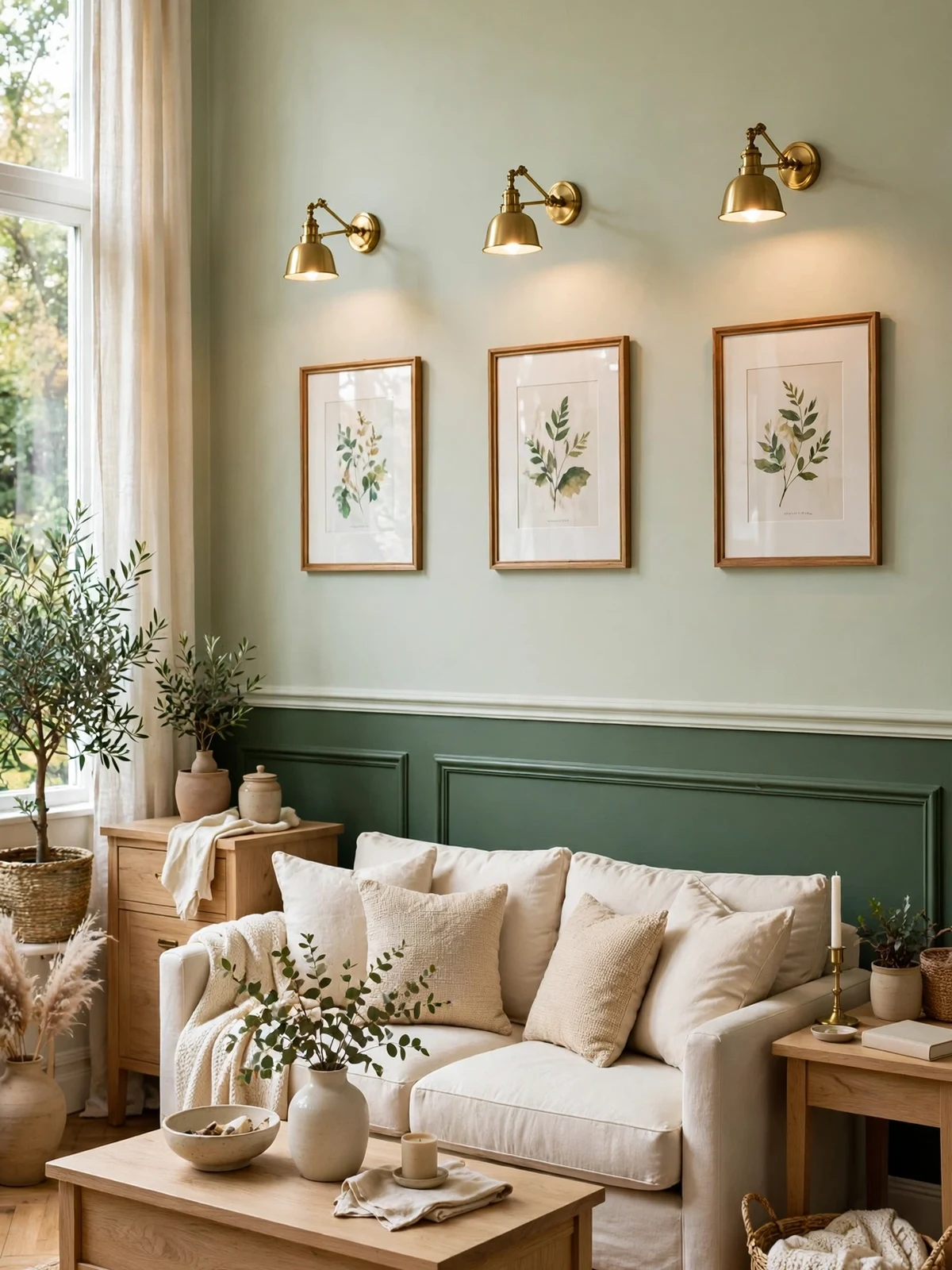
Two tones of the same color give depth without new hues. Paint below a picture rail or dado line in deep sage, and above it in a pale tint of the same family. The deep base grounds the furniture, the pale top keeps the ceiling feeling high. Roughly twenty percent deep and twenty percent pale is a balanced split. Keep the sofa cream so the two greens stay the story. What makes it work: the eye reads it as one color decision, so the room feels designed rather than decorated in stages.
Sage Rug to Ground a Neutral Room

A rug is the lowest risk big dose of sage. A faded sage rug under a cream sofa covers a wide area, yet most of it hides under furniture, so the visible dose stays gentle. It grounds a neutral room that feels floaty and gives you a color base to echo in two cushions. Choose a washed, vintage style finish rather than a solid block, because the faded pattern forgives crumbs and fading. A rug lets you live with the color before painting anything. If you love it after a month, then consider the curtains.
Patterned Sage Without Overdoing It

Pattern spreads sage softly because the color shares space with cream inside the print itself. One botanical cushion and a striped throw can carry a whole scheme while each item is only half green. The rule is one pattern family per room: botanical or stripe, not both competing. Rest the pattern against plain sage and plain cream so the eye gets breaks. Best for: traditional rooms and anyone who finds flat color blocks too modern. A patterned dose also ages gracefully, since the cream inside the print keeps it linked to your neutral base.
Sage and White for Rental Friendly Balance

Renters can still get the balance right without painting. Keep the landlord white walls, then layer sage through textiles only: curtains, a throw, three cushions and a small rug. That is about fifteen percent sage, enough to change the mood of the room. Warm the white with cream and light wood textiles so the green does not turn the walls blue by comparison. What makes it work: everything sage can leave with you. This layered approach also lets you change the dose by season, adding the rug in winter and folding it away in summer.
Leather and Sage for Warm Contrast
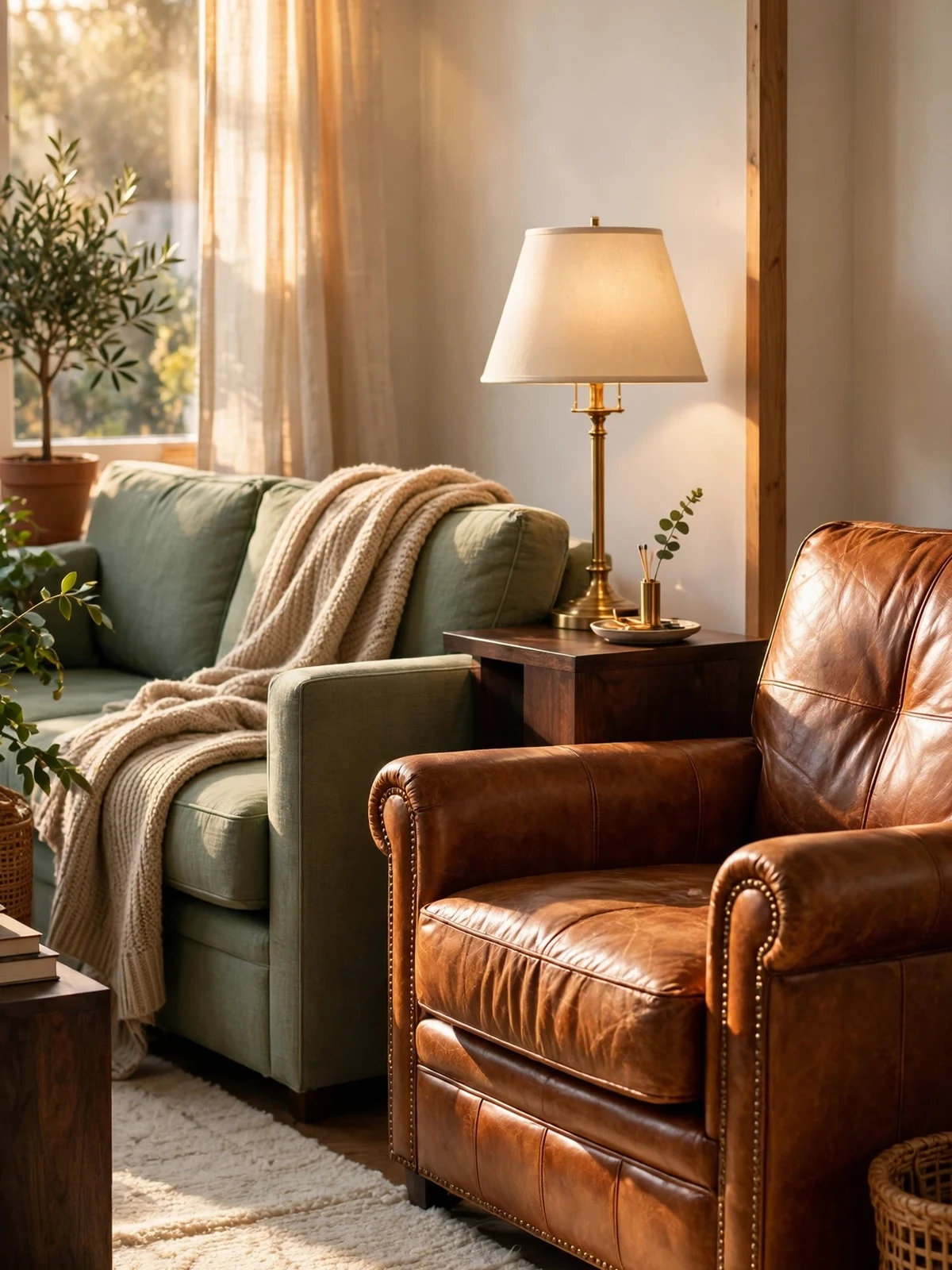
Cognac leather is the warmest seat you can put next to sage. The orange brown tone sits opposite green, so each makes the other look richer. One leather armchair against a sage sofa is a balanced split, roughly equal color weight in the seating. Keep the rug cream and the walls warm white so the two strong pieces have space. Leather brings the sunset tones sage is missing. This pairing suits family rooms because both materials hide wear well, and it only improves as the leather darkens with age and use.
Sage in a Tiny Living Room Done Right
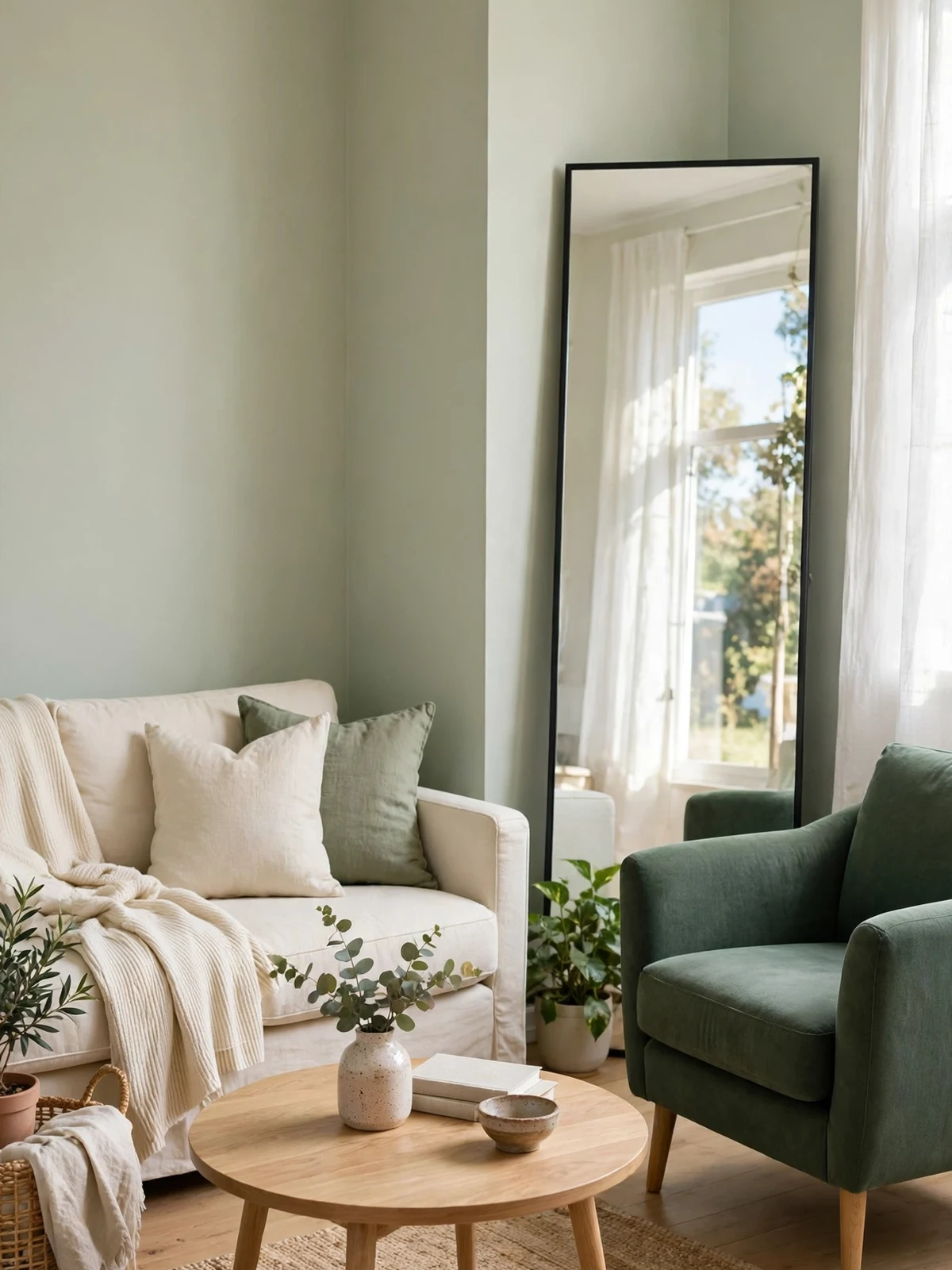
Small rooms need sage in lighter tones and fewer places. Pale sage on the walls, a cream sofa and one deep sage armchair gives color without crowding. That is about thirty percent pale, ten percent deep, and the contrast between the two stops the pale walls looking flat. Choose legs on furniture so the floor shows through, and a round coffee table to keep edges soft. Best for: flats and cottages where a dark scheme would shrink the room. A tall mirror on the sage wall doubles the light and the color in one move.
Layered Sage Tones in One Room
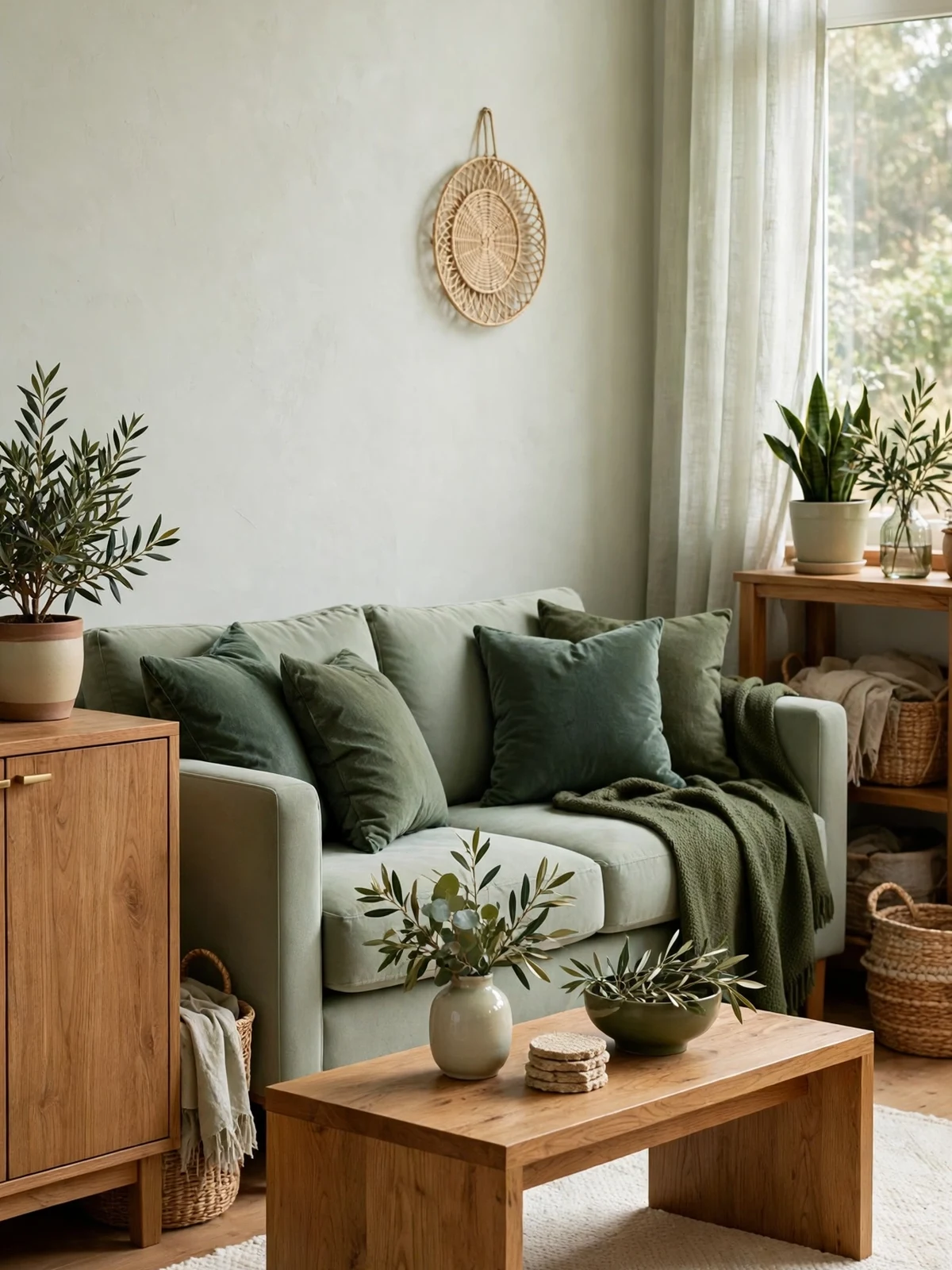
Layering three tones of sage creates depth that one flat shade cannot. Pale sage on the walls, mid sage on the sofa and deep sage in the cushions gives you a gentle gradient the eye reads as richness. The total green can reach fifty percent here, so the balance must come from texture and warmth: a cream rug, oak furniture and one brass lamp. Keep each tone clearly different, because tones that are too close just look like a matching mistake. What makes it work: the layers share one family, so nothing clashes, ever.
Greenery That Extends the Palette

Plants are sage with life in them. An olive tree, a trailing pothos and a fiddle leaf fig spread green through a room in the most natural dose of all, and their tones sit close to sage without matching it exactly. Place the tallest plant where a painted wall would go, and let smaller ones echo your cushions. Keep pots in terracotta, cream or woven baskets so the warmth rule still holds. Plants let you adjust the green dose by moving a pot. They also soften the edges of a room that paint alone leaves hard.
Evening Light and Lamp Warmth With Sage
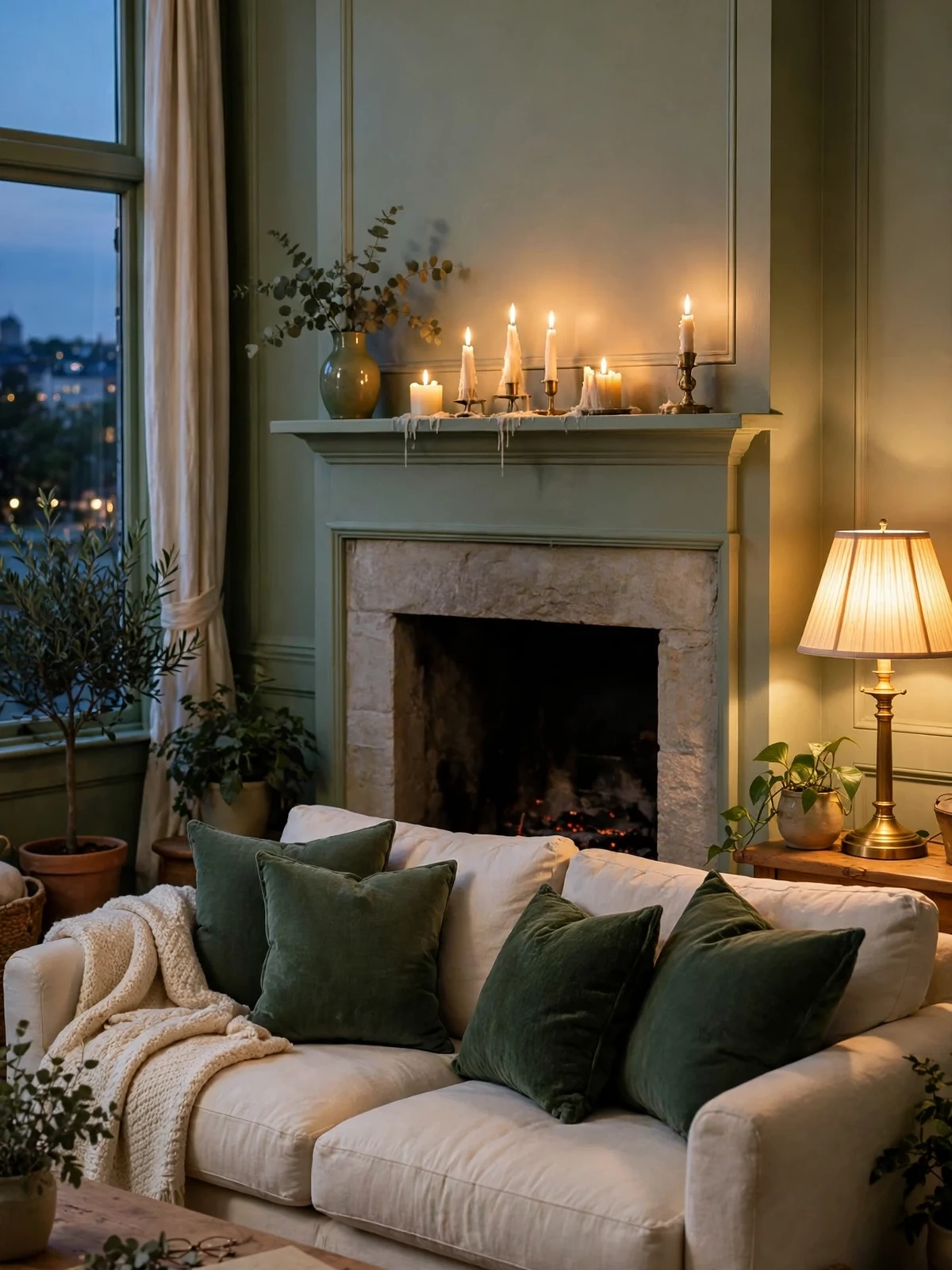
Judge your sage balance at night, not at noon. Under cool daylight bulbs, sage can turn grey and chilly, while warm bulbs around 2700K bring back its green heart. Place three light sources at different heights, a floor lamp, a table lamp and candles or a mantel light, so the color glows in layers. If the room only looks right in sunshine, the balance is wrong. Best for: anyone who uses the room mainly in the evening. Swapping bulbs is the cheapest color correction you will ever make.
Sage Ceiling for a Bold but Balanced Finish
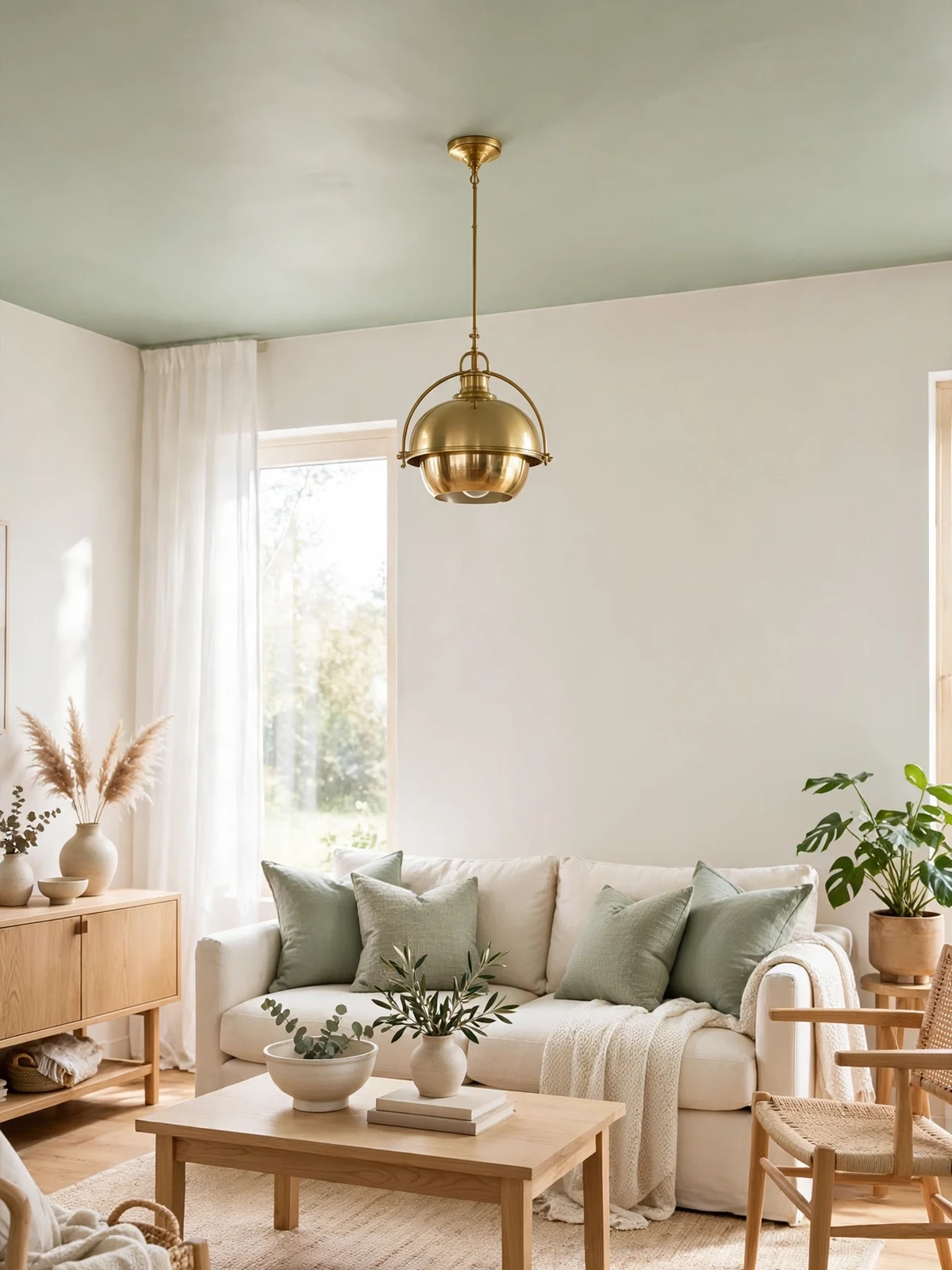
A painted ceiling is the boldest dose, and it balances when everything below stays light. Soft sage overhead reads like a sky tint and makes tall rooms feel cosier, while warm white walls keep the space bright. Echo the color once at floor level, in cushions or a rug, so the ceiling connects to the room. Keep the shade pale; a deep green ceiling can feel heavy by evening. What makes it work: the color sits where eyes rest least. It is a designer trick that costs one tin of paint.
Conclusion
The best sage green living room ideas with the perfect amount of color treat sage as a measured ingredient, not a flood. One anchor, a warm pairing and a dark accent will carry any room. Start with the dose that feels safe, live with it, then add more only where the room feels flat.
In my own room, the turning point was not a new paint color but one rattan chair and warmer bulbs. Your next step is simple: pick one idea, note its ratio, and shop your home first before buying anything new. Save this list to your living room board and share it with a friend who loves sage.