
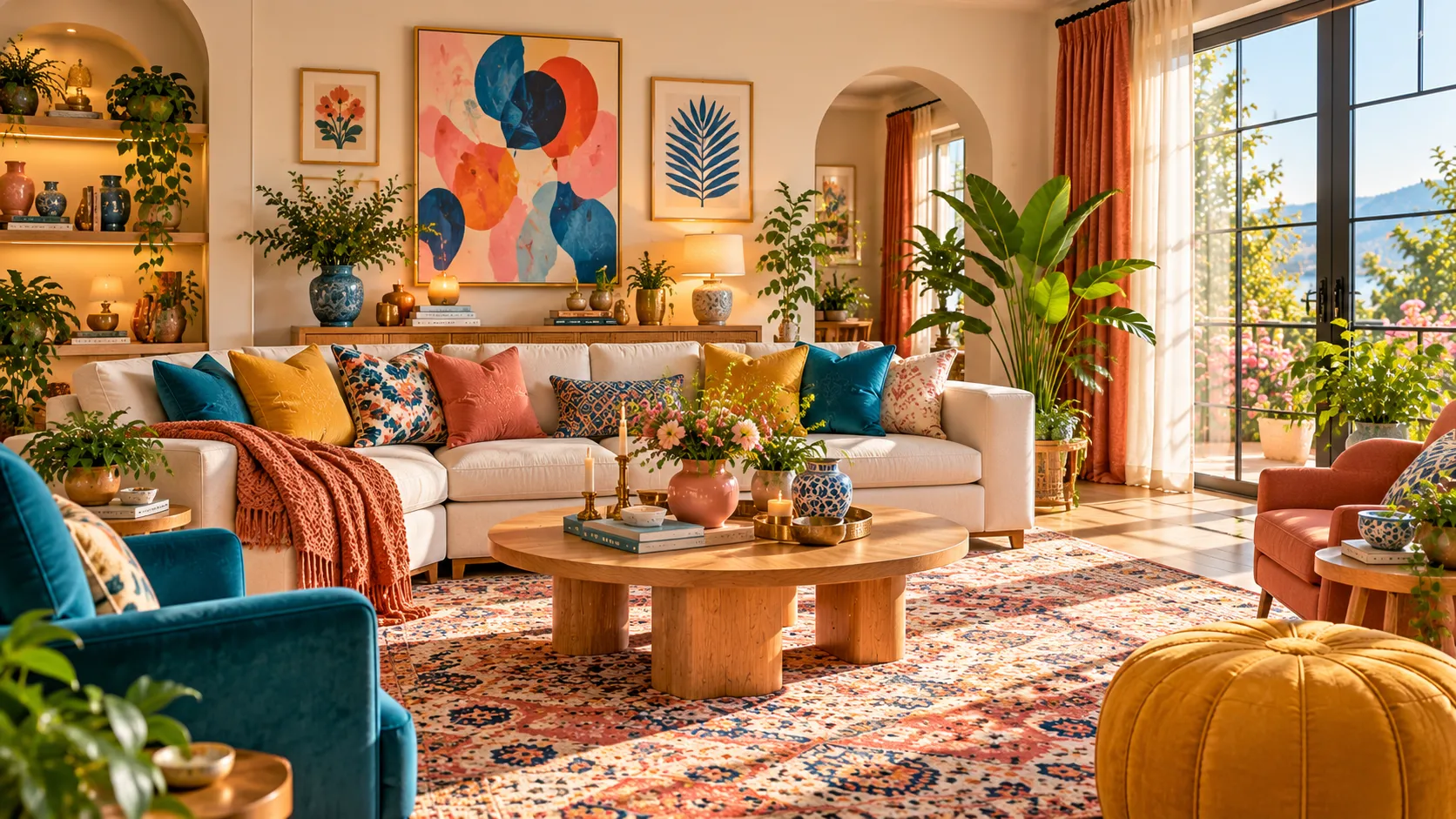
21 Colorful Living Room Ideas for a Vibrant Refresh
Ready to bring more personality and energy into a room that feels a little too plain? Colorful living room ideas can make your space feel warmer, brighter, and much more personal without requiring a complete makeover.
The trick is knowing where to introduce color and how to keep different shades working together. From bold sofas and patterned rugs to colorful pillows, artwork, painted walls, and small decorative accents, there are plenty of ways to create a vibrant room at different budgets. In my experience, even one strong color change can make a familiar living room feel noticeably fresher. Whether you love rich jewel tones, cheerful pastels, earthy shades, or playful color combinations, these ideas will help you find an approach that suits your home and feels comfortable for everyday life.
Colorful Accent Wall
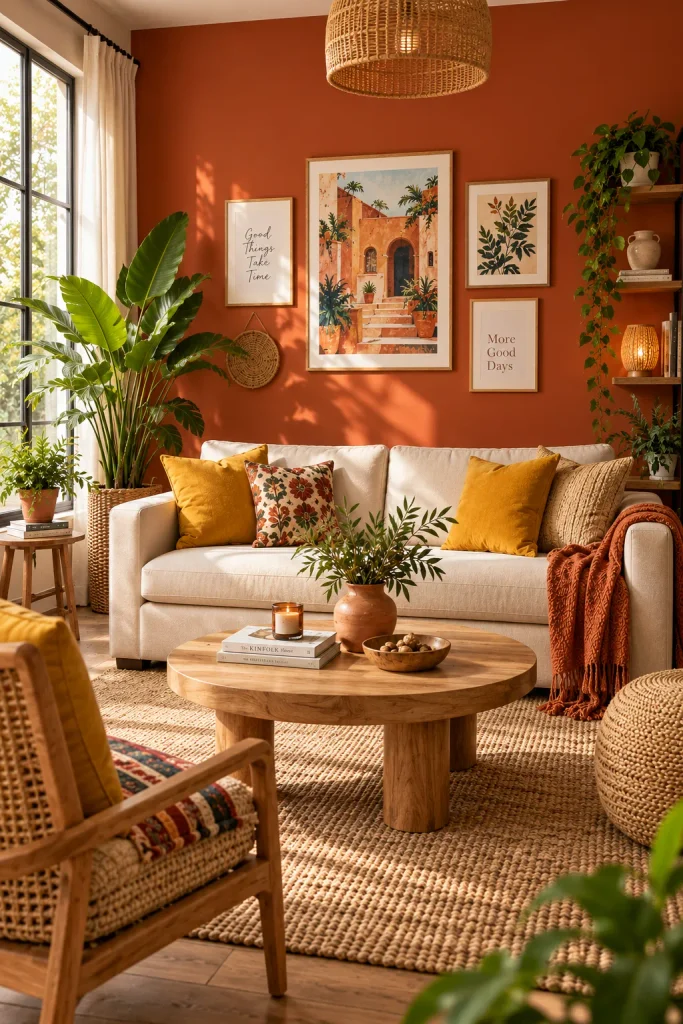
A bold accent wall can bring color into a living room without requiring every piece of furniture to change. Terracotta, coral, cobalt blue, or deep green can create a strong backdrop while neutral seating keeps the room balanced. Choose one wall that naturally draws attention, such as the wall behind the sofa.
I’ve noticed that a single saturated wall often feels more intentional than several unrelated bright colors scattered around the room. Repeat a small shade from the wall in pillows, artwork, or a vase so the room feels connected. Matte paint usually gives richer depth and photographs beautifully for Pinterest.
Jewel Tone Sofa
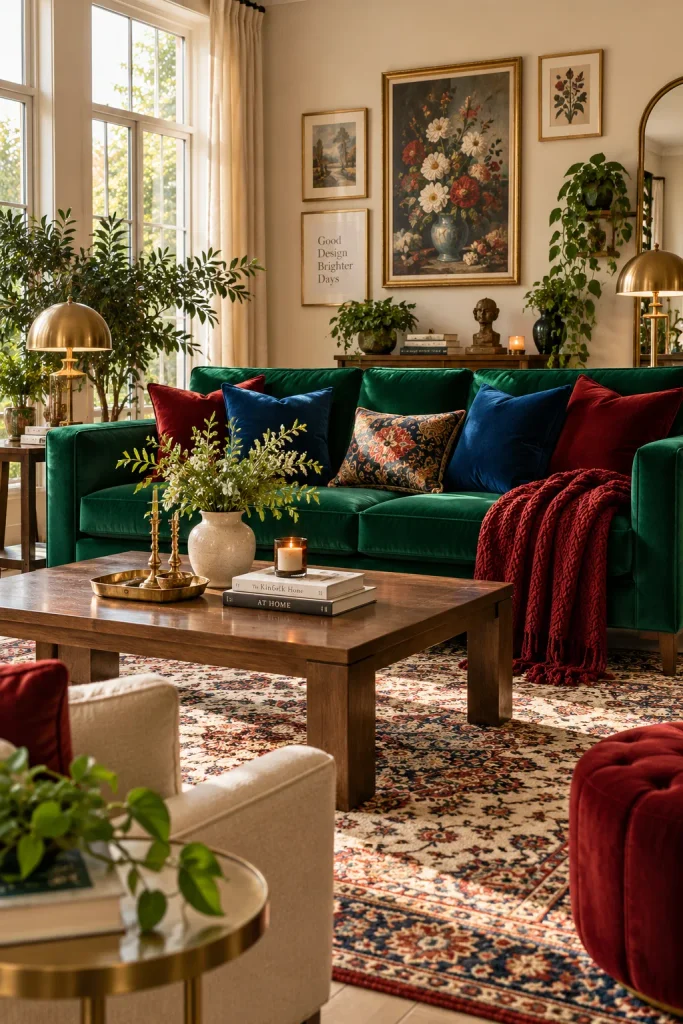
- Choose emerald, sapphire, ruby, or amethyst for a rich focal color.
- Keep larger surrounding pieces neutral so the sofa remains the visual anchor.
- Add two or three accent shades through cushions, artwork, or small decor.
- Use textured fabrics such as velvet, linen, or boucle to create visual depth.
- Leave some neutral space around the sofa to prevent the room from feeling crowded.
A jewel-toned sofa works especially well when you want colorful living room ideas that feel sophisticated rather than chaotic. Start with one strong furniture color, then repeat it subtly throughout the room. A neutral rug and light walls help the saturated upholstery stand out while keeping the overall space comfortable and livable.
Colorful Gallery Wall
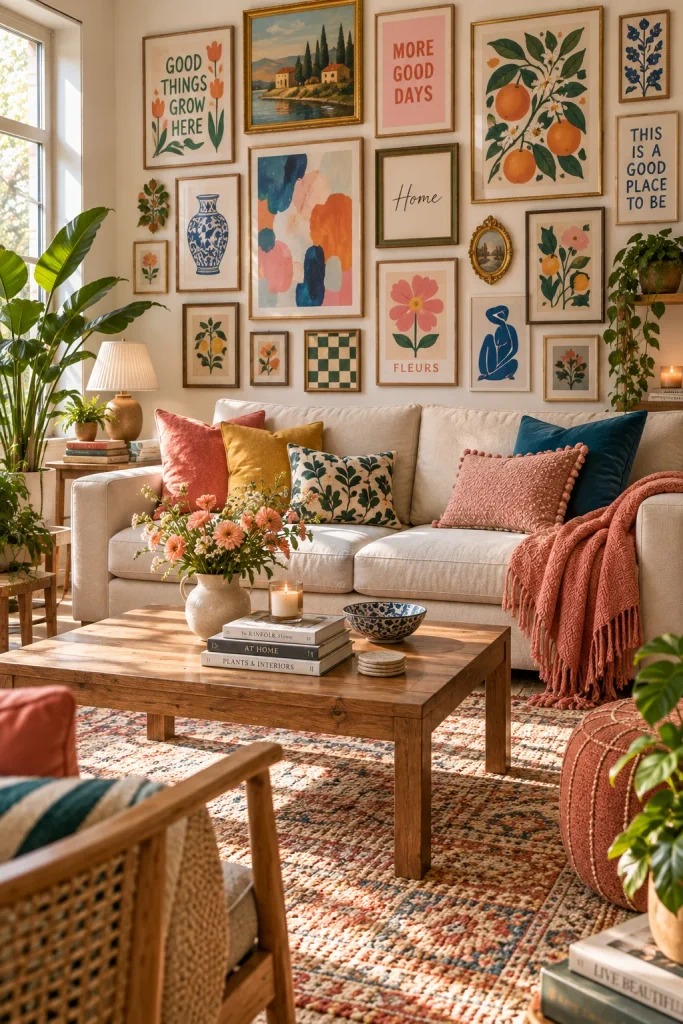
Quick Tip:
Choose artwork with two or three shared colors before hanging anything. Lay the frames on the floor first and adjust the spacing until the arrangement feels balanced. This simple step makes a mixed gallery wall look intentional instead of randomly assembled.
A colorful gallery wall adds personality without committing you to brightly colored furniture. Mix large and small frames, but repeat at least one shade across several pieces. In my experience, keeping the largest artwork near eye level makes the arrangement easier to read, while smaller pieces can fill gaps around it.
Colorful Throw Pillows
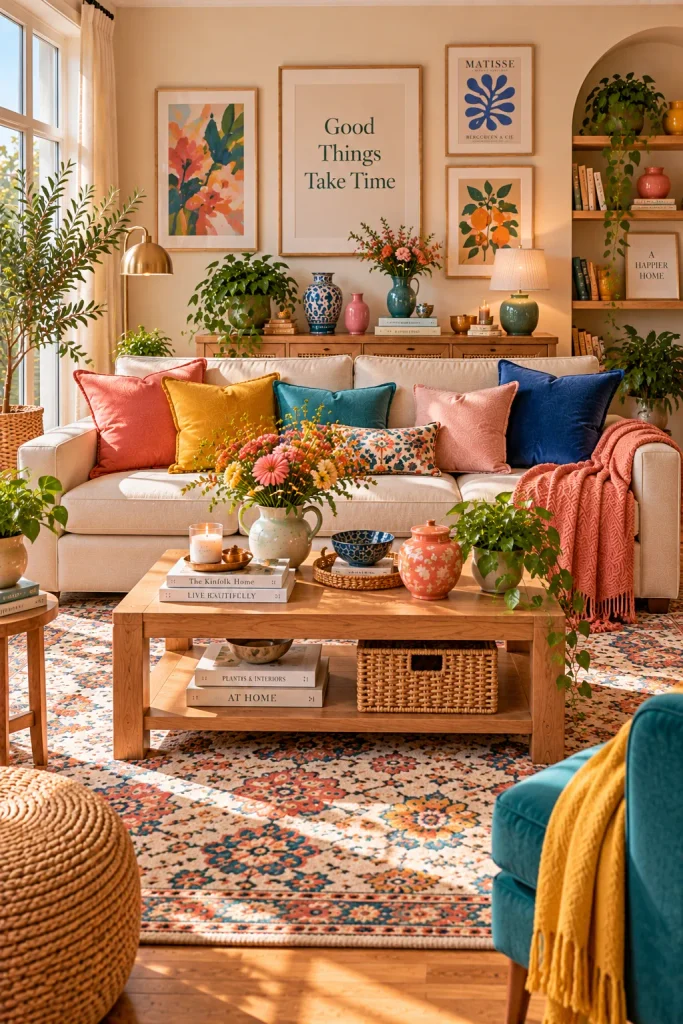
BEFORE:
The sofa feels plain because every cushion uses the same neutral fabric and shape. The room has color nearby, but nothing visually connects those accents to the seating area.
AFTER:
Mixing several colorful pillows creates an inviting focal point without replacing the sofa. Different patterns and textures add depth while keeping the larger furniture neutral.
Start with one dominant shade, then add two supporting colors in smaller amounts. Use solid, striped, floral, or geometric covers to create contrast. Keeping one neutral pillow in the mix prevents the arrangement from becoming visually heavy. This approach also makes seasonal updates easy because covers can be changed without buying new furniture.
Rainbow Bookcase Styling
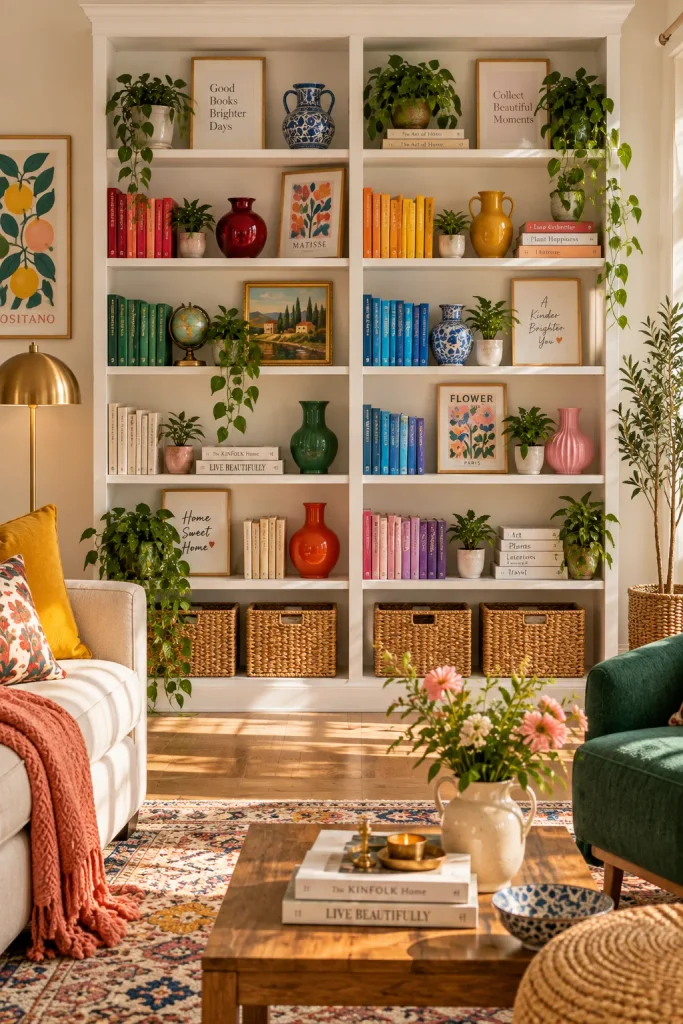
- Sort by color: Group books into loose color families such as blue, green, yellow, pink, and red.
- Break up rows: Place books vertically and horizontally instead of lining everything up uniformly.
- Add small accents: Mix in vases, framed art, candles, and plants between book groups.
- Leave breathing room: Keep a few shelf sections partially empty so the colors remain easy to see.
A rainbow bookcase brings personality to the room while making everyday storage part of the decor. Avoid forcing every item into a strict color order. A slightly relaxed arrangement usually feels more natural, especially when your collection includes different book sizes, finishes, and decorative pieces.
Colorful Patterned Rug
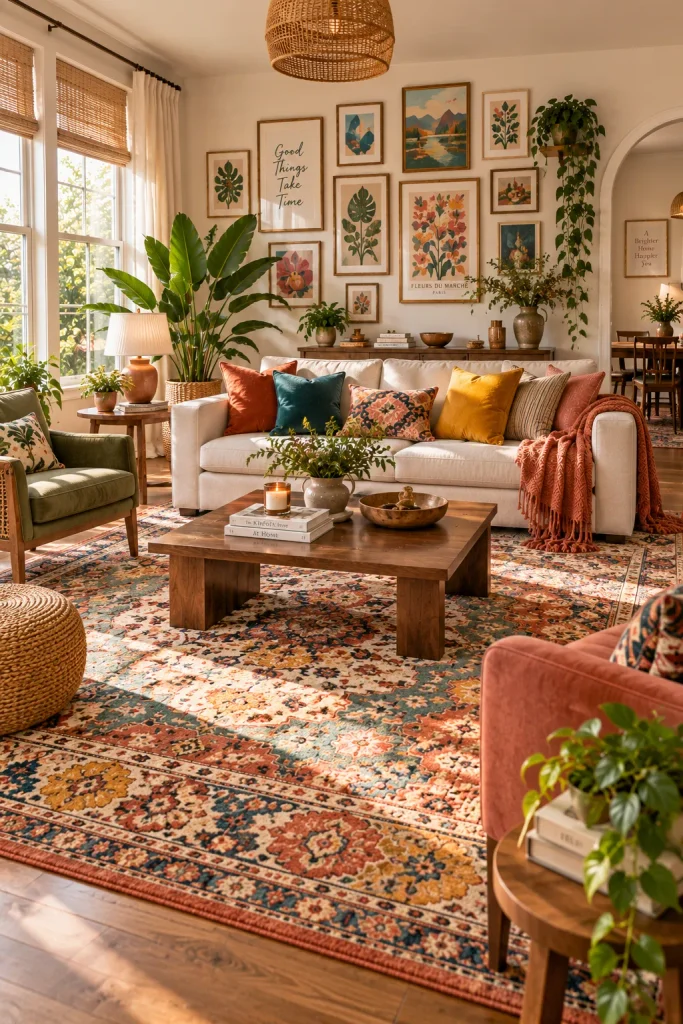
| Comparison Point | Option A: Neutral Rug | Option B: Patterned Rug |
| Visual impact | Subtle and calm | Strong and colorful |
| Best furniture match | Bold furniture | Simple or neutral furniture |
| Maintenance of style | Easy to change accents | More visually committed |
| Color coordination | Fewer limits | Repeat rug colors nearby |
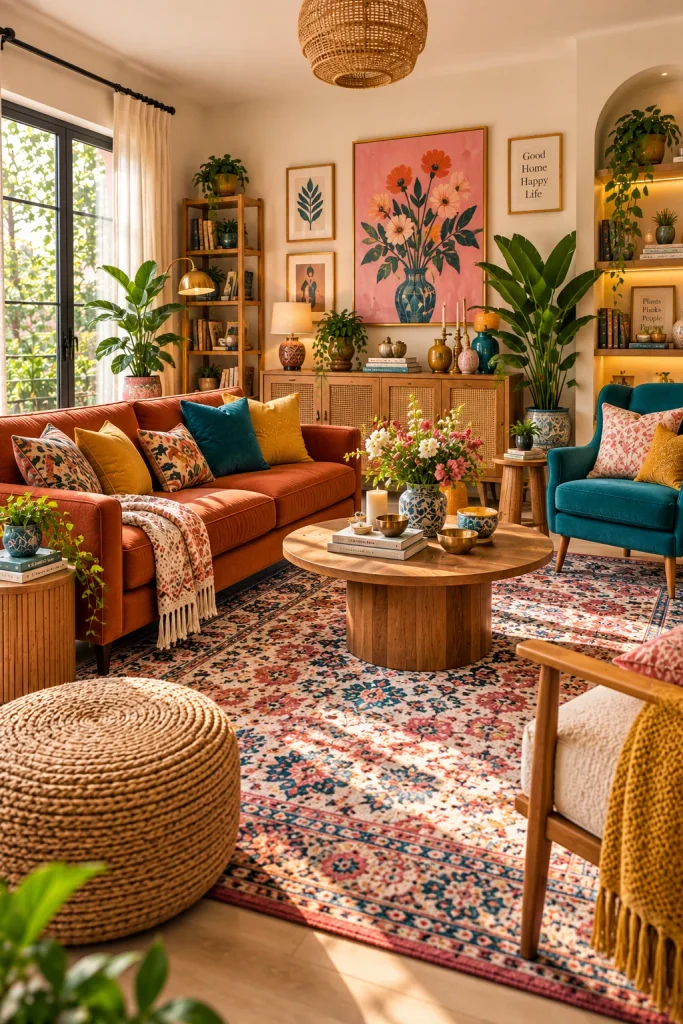
A patterned rug can become the foundation for the entire color palette. Pull two or three shades from the rug for pillows, artwork, or curtains rather than matching every item exactly. I’ve seen this work especially well in neutral rooms because the rug introduces several colors without making the walls or furniture feel overwhelming.
Colorful Accent Chairs
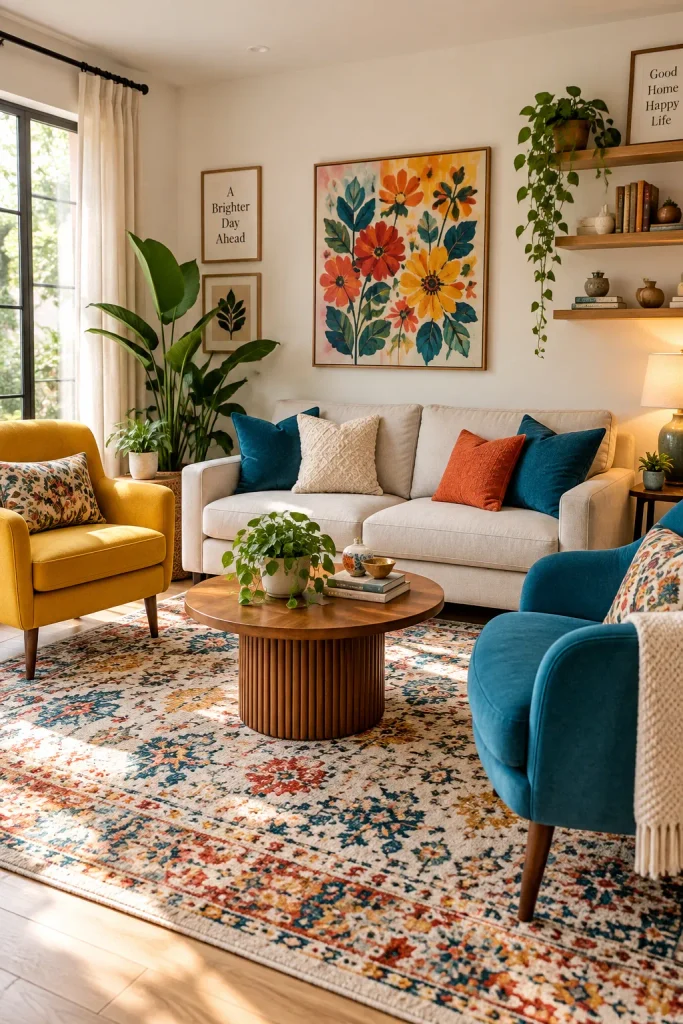
DO:
- Choose chairs with one strong color each.
- Repeat their shades in smaller accessories.
- Keep the main sofa neutral for balance.
- Position chairs where their color is visible from the room entrance.
DON’T:
- Use several unrelated saturated colors without repetition.
- Choose oversized chairs that block the room’s walking path.
- Match every accessory exactly to the upholstery.
- Forget to check how the fabric looks in natural and evening light.
Accent chairs are an easy way to introduce stronger color without replacing your main seating. A mustard chair can warm up cool interiors, while teal or blue adds a fresher feel. For smaller rooms, choose lighter visual frames and keep surrounding furniture simple so the seating adds personality without consuming too much visual space.
Colorful Layered Curtains
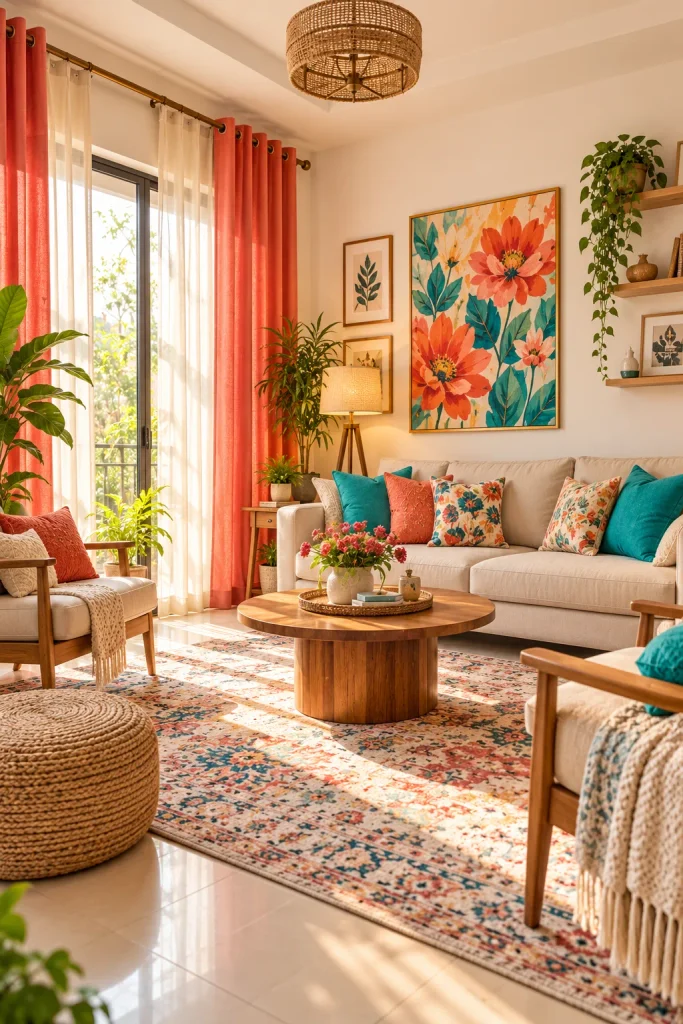
Cost: Moderate | Time: One afternoon | Skill Level: Beginner | Best For: Neutral living rooms
Colorful curtains can change the room’s mood while also framing the windows as a major design feature. Choose a shade already found in your rug or artwork for an easy connection. Hang panels close to the ceiling and let them reach the floor to create a taller, more finished appearance.
Two-Tone Painted Walls
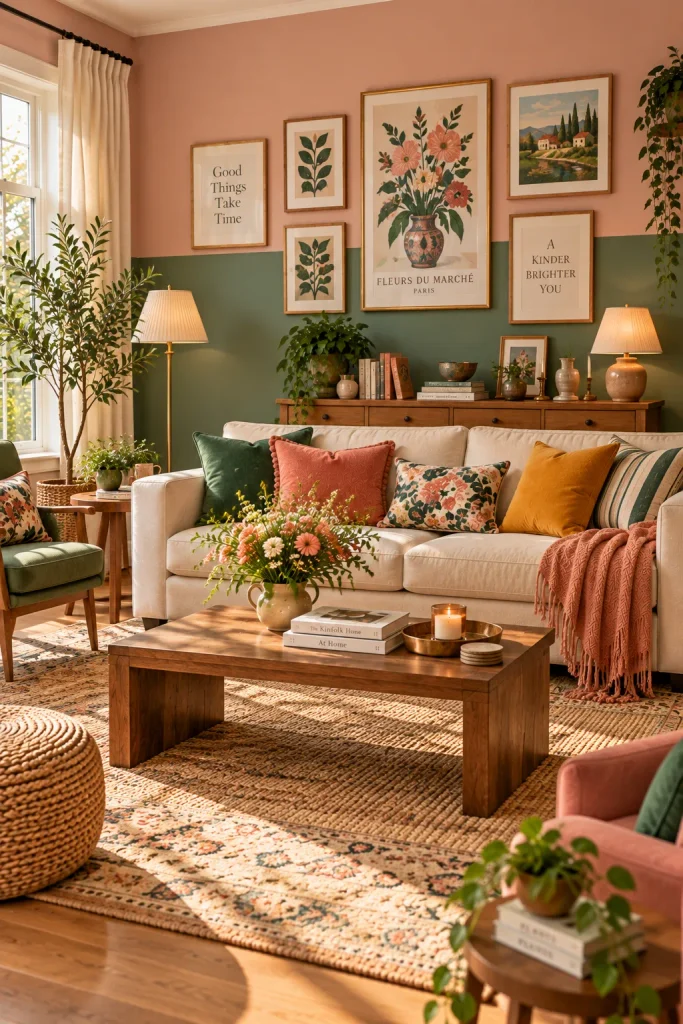
BEFORE:
Plain walls leave the living room feeling visually flat, even though the furniture and accessories have plenty of personality. The space needs stronger color without becoming cluttered.
AFTER:
A two-tone paint treatment creates architectural interest and gives the room a defined color story. The darker lower section adds visual weight while the lighter upper shade keeps the space feeling open.
Use painter’s tape to create a clean dividing line, then test both shades beside your existing furniture before committing. A darker color below the midpoint can ground the room, while a lighter upper section reflects more daylight. This approach works particularly well when you want noticeable color but prefer a controlled, minimalist arrangement.
Colorful Coffee Table Decor
- DO: Group colorful objects in varying heights for a layered display.
- DO: Repeat one or two room colors on the tabletop.
- DO: Use a tray to keep smaller decorative pieces organized.
- DO: Leave part of the table surface clear for everyday use.
- DON’T: Cover the entire tabletop with accessories.
- DON’T: Mix too many competing patterns in one small area.
- DON’T: Use fragile pieces where children or pets could easily knock them over.
- DON’T: Choose decor that is too tall for comfortable conversation.
A colorful coffee table arrangement gives you a low-cost way to refresh the room without changing major furniture. Combine books, ceramics, flowers, and natural textures for contrast. Keep the tallest item toward one side and lower pieces nearby to create an attractive composition that still leaves enough space for drinks and daily living.
Bright Botanical Accents
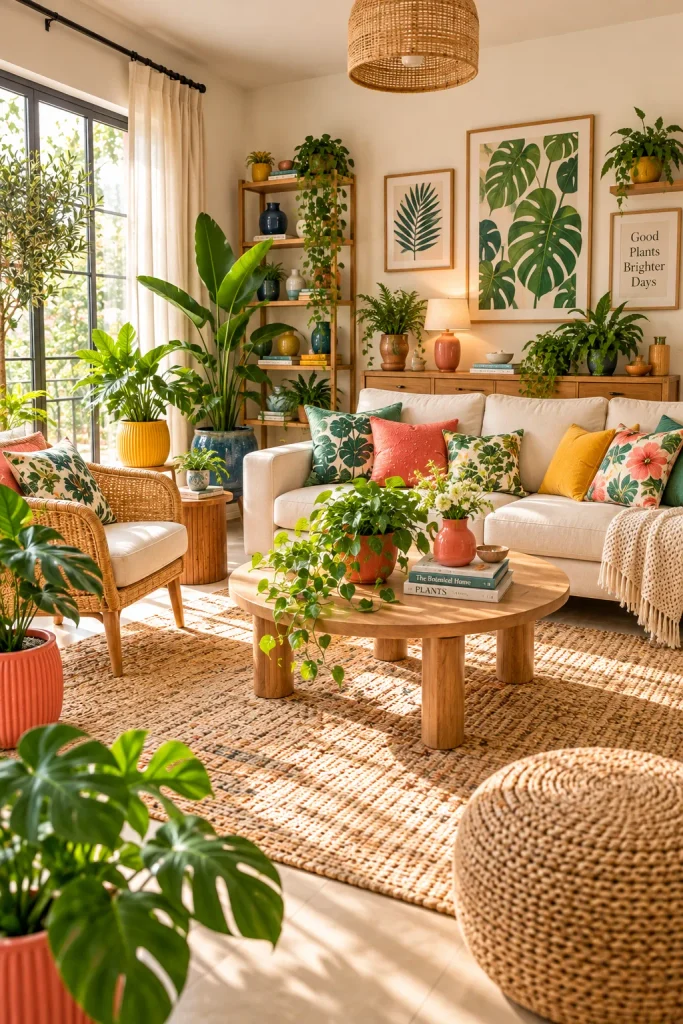
Cost: Low to Moderate | Time: One to two hours | Skill Level: Beginner | Best For: Nature-inspired rooms
Works In: Small or large living rooms | Result: Fresh color with natural texture
Plants bring green into the room naturally, while colorful pots and botanical prints can introduce brighter shades without relying heavily on painted surfaces. I’ve noticed that repeating green through several heights, from tabletop plants to taller floor varieties, helps a colorful room feel connected rather than visually scattered.
Pink and Green Pairing
Blue and Yellow Accents
- Choose a base: Start with a neutral sofa or wall color to give the brighter shades room to stand out.
- Layer blue: Use navy, denim, or powder blue across furniture, artwork, and textiles.
- Add yellow carefully: Introduce mustard or golden yellow through cushions, lamps, flowers, or ceramics.
- Repeat both shades: Echo each color at least twice so the palette feels intentional.
- Soften the contrast: Add cream, beige, or warm wood between the stronger colors.
Blue and yellow create a lively palette without requiring a complete room makeover. Navy gives the scheme depth, while yellow adds warmth and brightness. For smaller spaces, keep the larger surfaces lighter and concentrate stronger colors in accessories. That balance helps the room feel cheerful while remaining comfortable for everyday use.
Colorful Ceiling Paint
Quick Tip:
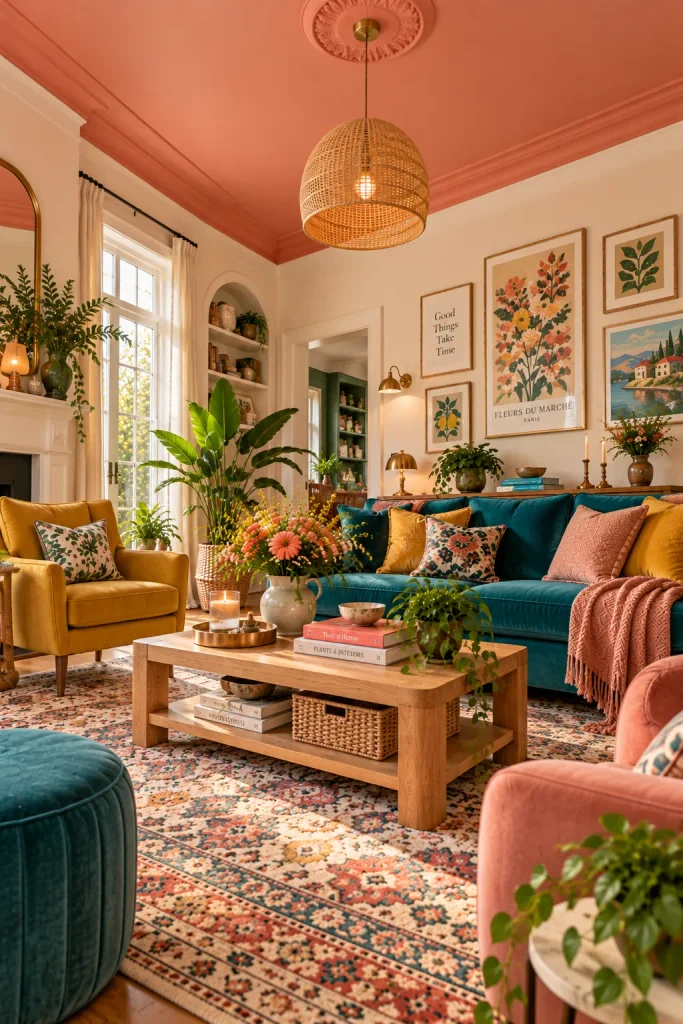
Treat the ceiling as part of your color palette rather than an isolated surface. Choose a shade already present in your rug, artwork, or cushions for a coordinated result. Test a large paint sample first because overhead lighting can make the color appear noticeably different throughout the day.
A colorful ceiling adds interest without taking up floor space or crowding the furniture arrangement. Softer shades work well when you want a subtle effect, while deeper tones create a more dramatic room. Keep the walls and larger furnishings relatively calm so the painted ceiling remains the intentional focal point.
Eclectic Color Layers
Colorful Fireplace Mantel
- DO: Choose three to five decorative pieces in related colors.
- DO: Vary the height and shape of objects across the mantel.
- DO: Repeat one mantel color somewhere else in the room.
- DO: Keep a little empty space so each piece remains visible.
- DON’T: Fill every inch of the mantel surface.
- DON’T: Use objects that are all the same height.
- DON’T: Mix too many unrelated accent colors.
- DON’T: Place heat-sensitive decorations too close to a working fireplace.
A colorful mantel can become the visual anchor of a living room with very little expense. Start with one larger artwork or mirror, then build around it using ceramics, candles, flowers, or small framed pieces. In my experience, odd-numbered groupings often create a more relaxed arrangement than perfectly symmetrical displays.
Colorful Floor Lamps
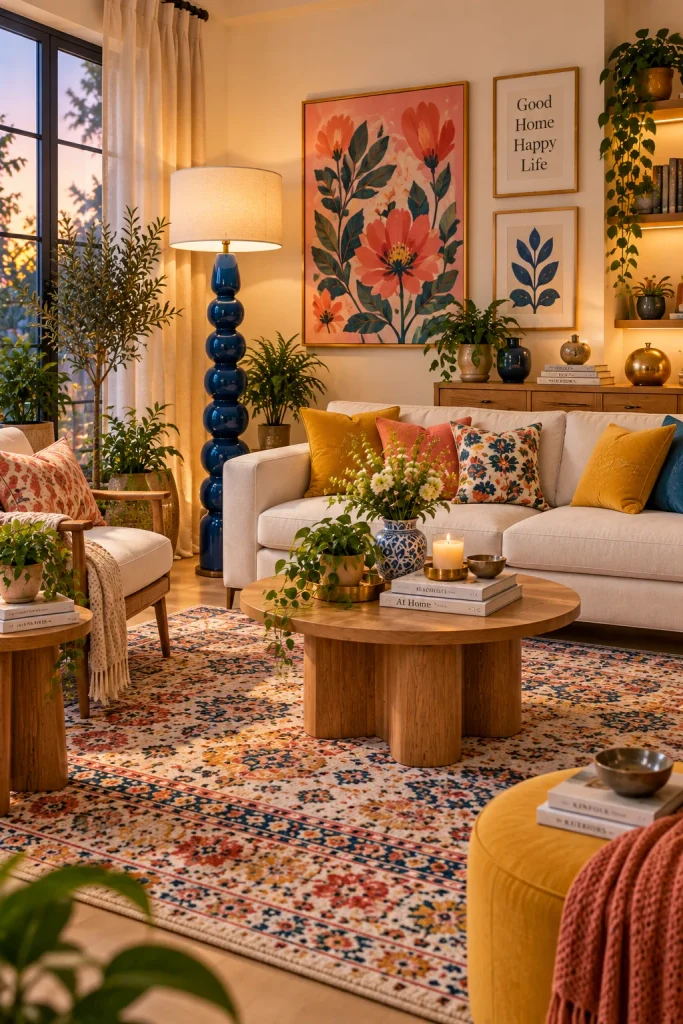
- Pick the color: Select a lamp shade or base that repeats a color already present in the room.
- Choose the location: Place it beside a sofa, reading chair, or empty corner that needs visual interest.
- Layer the lighting: Combine the floor lamp with ceiling or table lighting for a softer evening atmosphere.
- Balance the room: Repeat a small amount of the lamp color in nearby artwork or textiles.
A colorful floor lamp adds both function and personality, making it especially useful in rooms that feel flat after sunset. Look for an adjustable shade if you want focused reading light. For a stronger decorative effect, choose a sculptural base in a saturated shade and let the rest of the corner remain relatively simple.
Colorful Ottoman Seating
| Comparison Point | Option A: Neutral Ottoman | Option B: Colorful Ottoman |
| Visual impact | Quiet and understated | Strong focal accent |
| Styling flexibility | Works with many palettes | Best with repeated accent colors |
| Practical use | Seating and surface | Seating and decorative feature |
| Room effect | Keeps attention elsewhere | Adds personality to the seating area |
A colorful ottoman gives you flexible seating while introducing another layer of color at a lower visual height. Choose a shade that appears elsewhere in the room rather than adding an entirely new hue. A round shape can soften rooms filled with straight furniture, while a rectangular ottoman can provide a practical extension of the sofa.
Colorful Window Nook
DO:
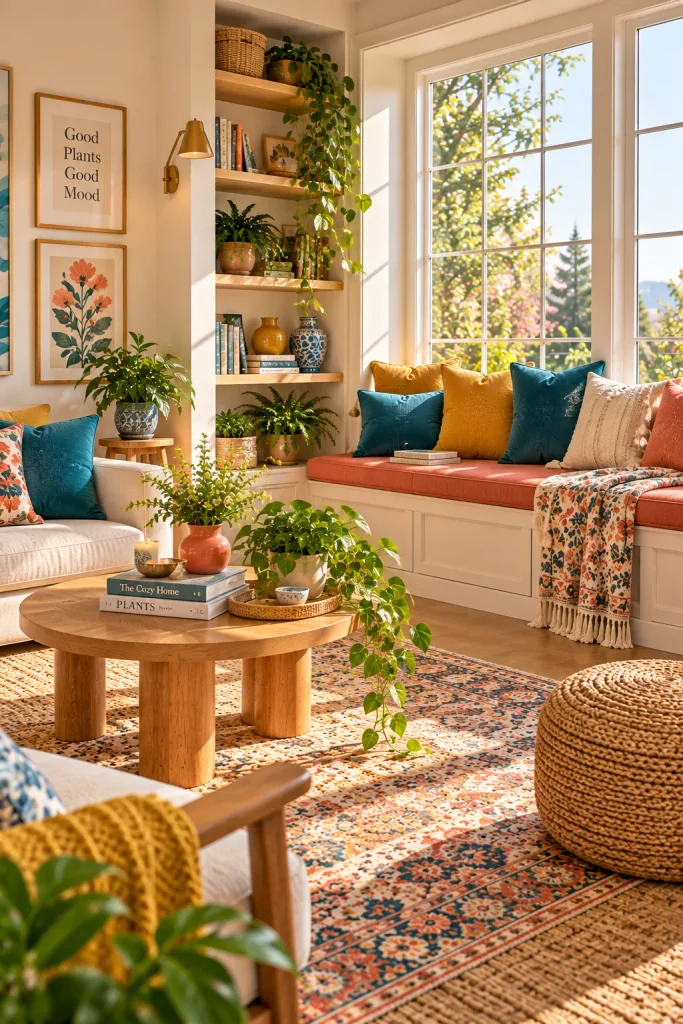
- Use the window area for a small bench, chair, or reading seat.
- Add cushions that repeat colors from the main living room.
- Choose washable fabrics for everyday comfort.
- Keep the area lightly decorated so natural light remains the focus.
DON’T:
- Block the window with oversized furniture.
- Use heavy curtains that eliminate useful daylight.
- Add too many cushions to a narrow bench.
- Ignore the walking path around the seating area.
A window nook can introduce color while creating a practical spot for reading, relaxing, or enjoying morning light. Even a small corner can work with a colorful cushion, compact chair, and patterned throw. Keep the palette connected to the rest of the room so the nook feels like part of the same design.
Looking for a softer, more timeless approach to living room decorating? Learn how to create a farmhouse living room that feels chic with warm neutrals, natural wood, cozy textures, and simple styling ideas.
Colorful Accent Cabinet
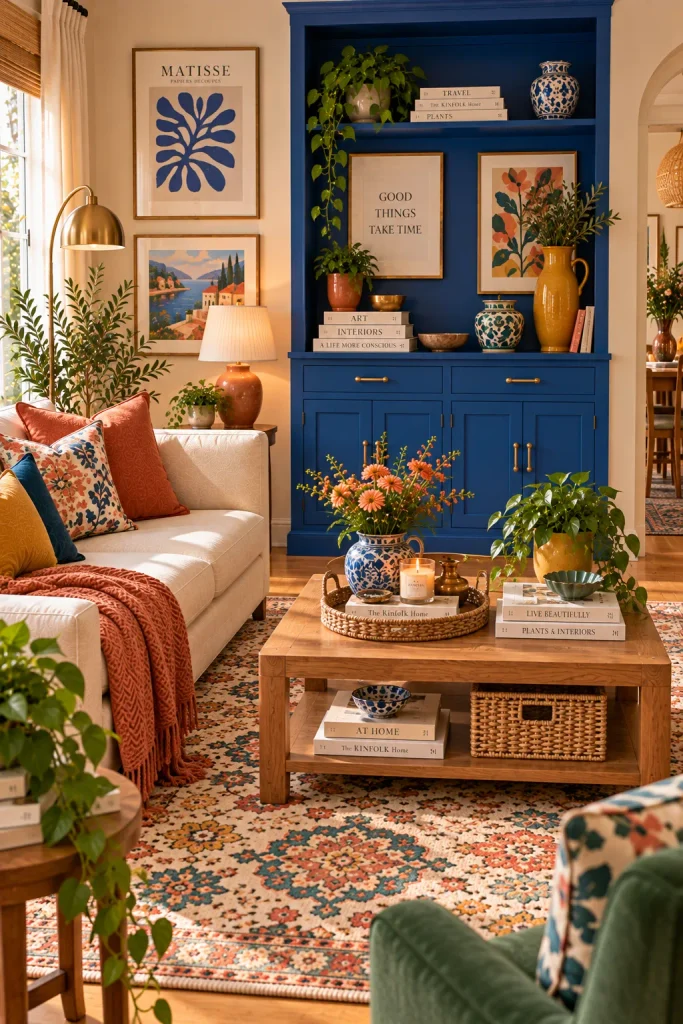
Cost: Moderate | Time: One weekend | Skill Level: Beginner to Intermediate | Best For: Furniture refreshes
Works In: Living rooms with neutral walls | Result: Bold color without repainting
A painted cabinet can bring a strong accent shade into the room while providing useful storage. Choose a piece with clean lines if your space already has several patterns. For a budget-friendly update, repaint an existing cabinet after properly cleaning and preparing the surface. New hardware can add another small layer of contrast.
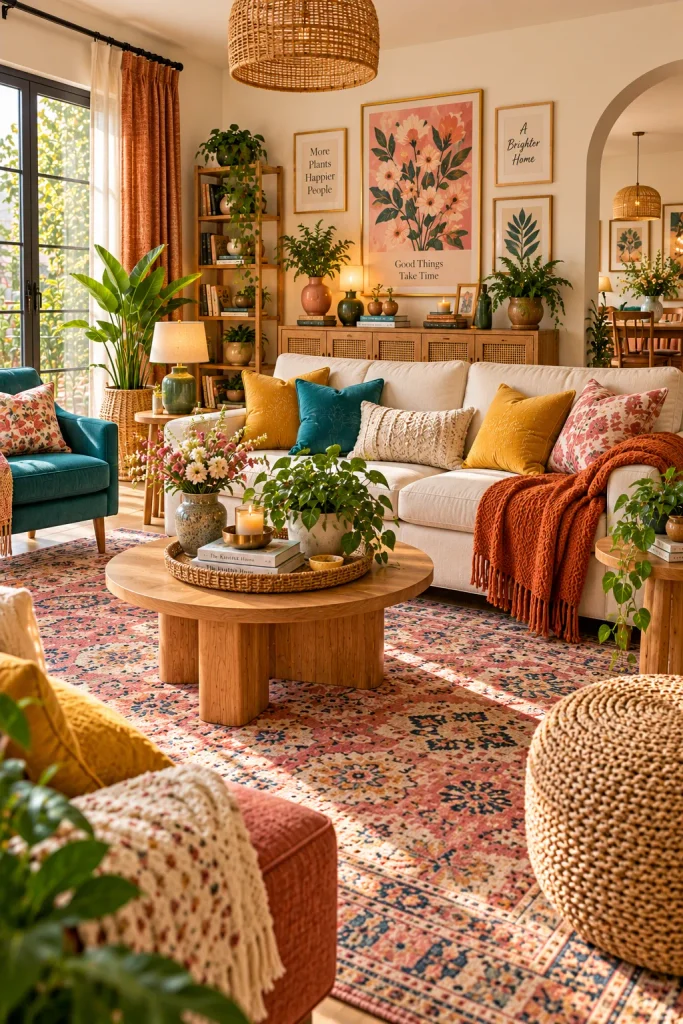
Colorful Layered Textiles
Conclusion
Adding color does not mean filling every corner with bright shades. The most inviting rooms often combine one or two stronger colors with neutral furniture, natural textures, and carefully chosen accents. These colorful living room ideas give you plenty of ways to start small or make a bolder change.
I’ve seen how simple updates, such as new cushions, a patterned rug, or a fresh accent wall, can completely shift the way a space feels. Pick one idea that fits your style and budget, then build from there. Save this post on Pinterest for your next decorating project, and share it with someone looking for fresh living room inspiration.
One Comment