
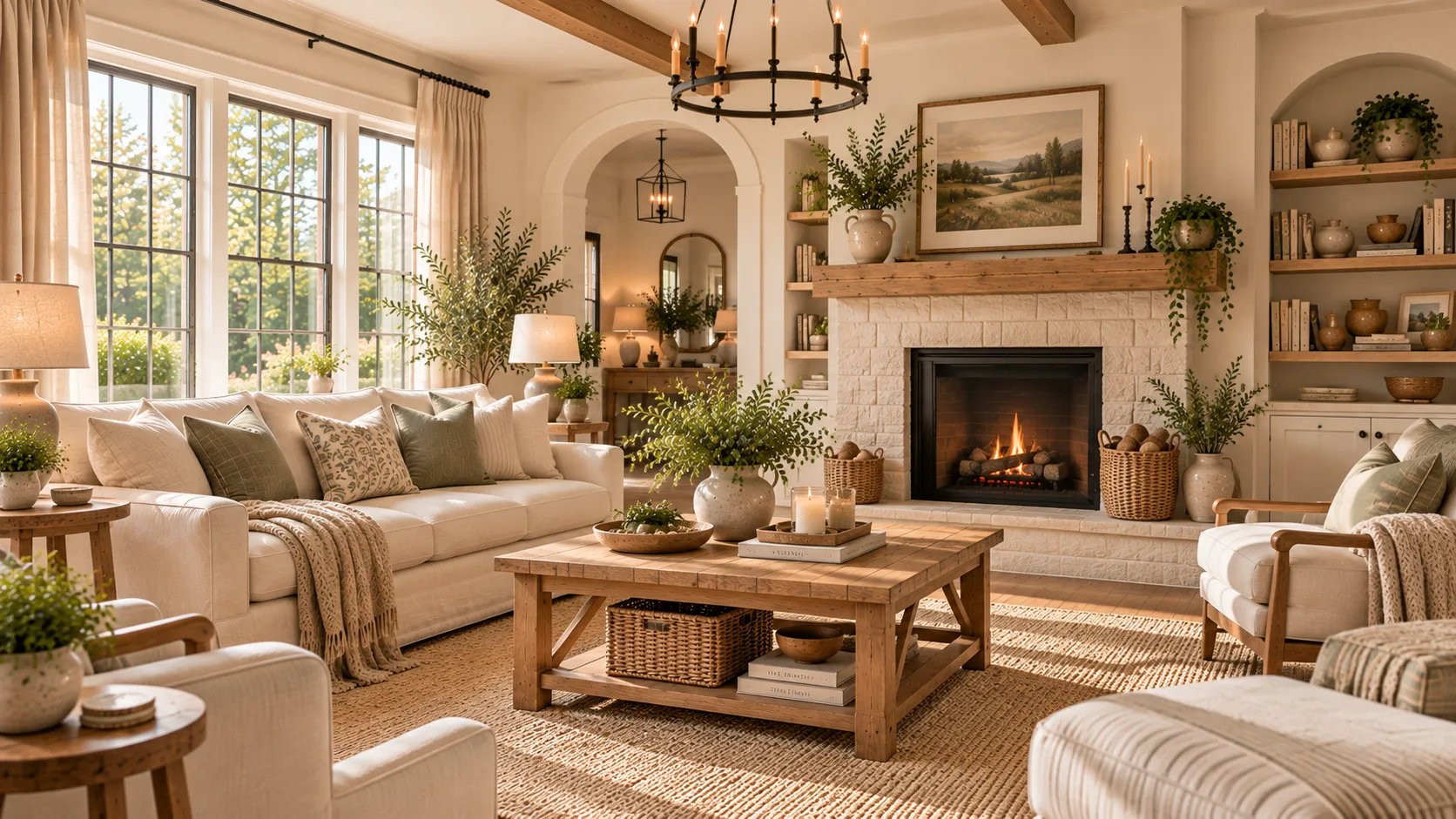
How to Create a Farmhouse Living Room That Feels Chic
Want a farmhouse living room that feels cozy and welcoming without looking dated or overly rustic? How to Create a Farmhouse Living Room That Feels Chic can be much easier when you know which elements to prioritize.
This guide walks you through choosing warm neutrals, comfortable furniture, natural wood, cozy textures, thoughtful lighting, and simple decor. You will also learn how to mix old and new pieces without making the room feel cluttered or themed. In my experience, the biggest challenge is knowing when to stop adding decor. I’ve noticed that a few well-chosen details often create a more polished result than a room filled with farmhouse accessories.
Start With the Right Farmhouse Style Foundation
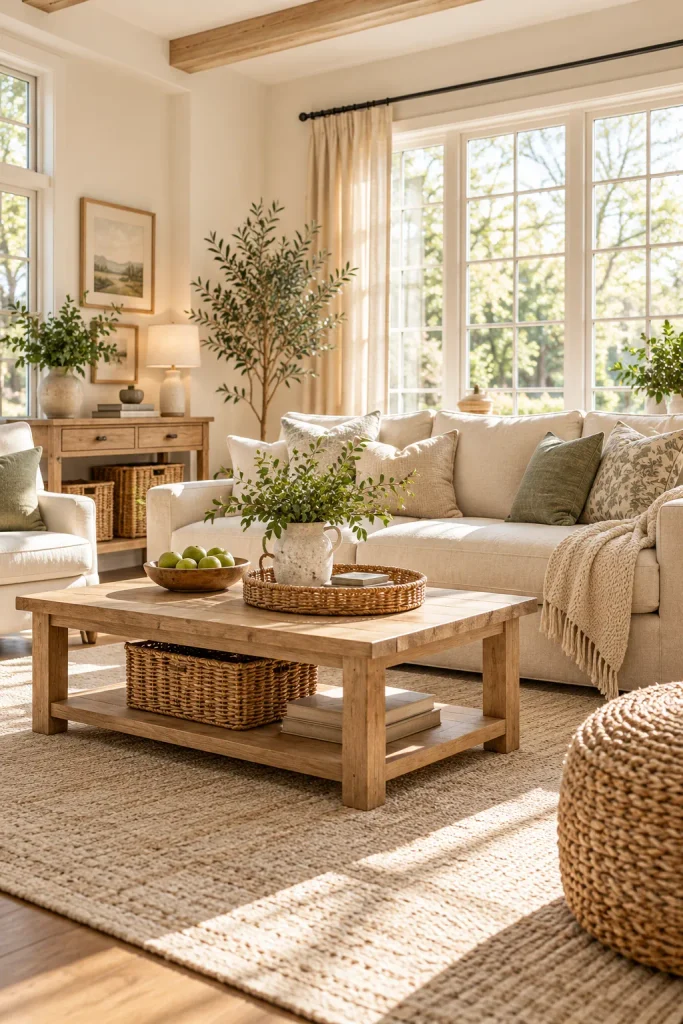
A chic farmhouse living room starts with balance. The goal is to combine the warmth of traditional farmhouse decorating with cleaner shapes and fewer decorative distractions. Think comfortable seating, natural materials, soft neutral colors, and a few rustic details that give the room character without making it feel themed.
Start by choosing three words to guide your decorating decisions, such as warm, relaxed, and refined. Every major piece should support those qualities. Natural wood, soft fabrics, simple furniture, and understated accessories create the foundation for a room that feels welcoming while still looking polished.
Choose a Warm, Neutral Color Palette
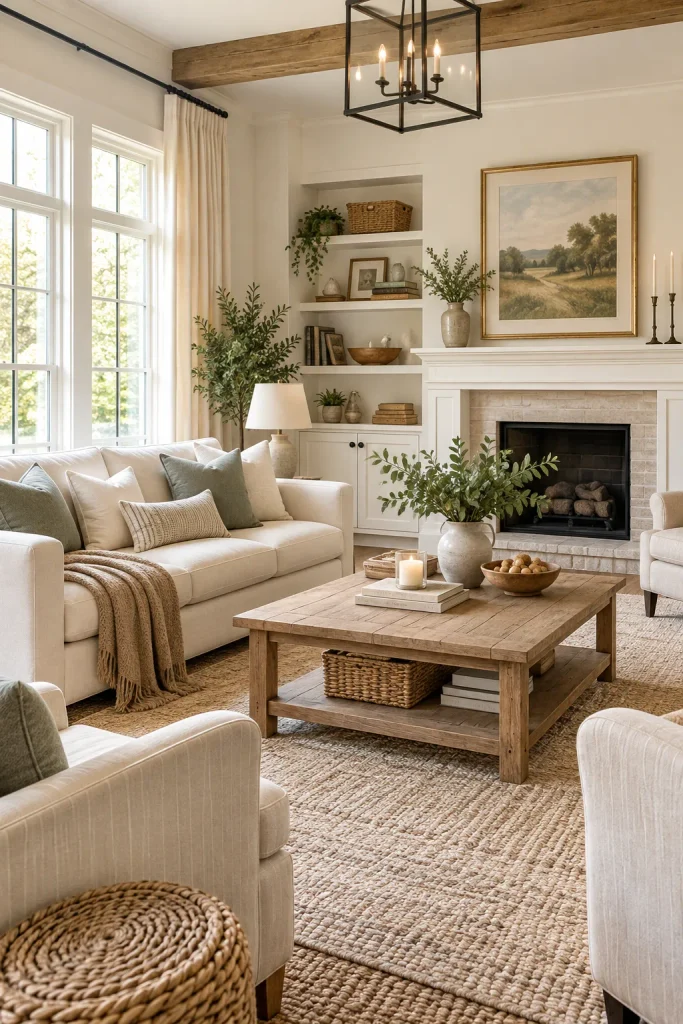
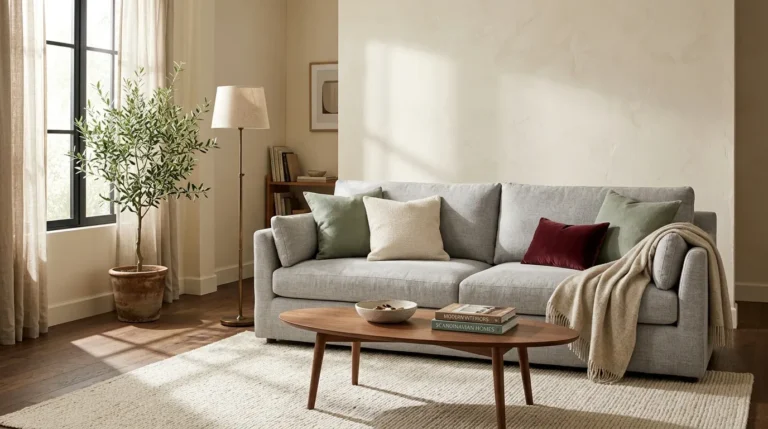
The right color palette keeps farmhouse interiors feeling fresh instead of flat. Begin with one warm neutral as your main backdrop, then introduce slightly darker shades through furniture, textiles, and accessories. This creates depth while keeping the relaxed character that makes farmhouse spaces so comfortable.
- Start with warm white or cream walls. These shades create a soft backdrop and work well with natural materials.
- Choose one secondary neutral. Beige, taupe, or soft gray can appear on sofas, rugs, curtains, or accent chairs.
- Add earthy accents. Use muted brown, sage green, clay, or charcoal in small amounts for visual contrast.
- Repeat colors around the room. If you use sage green in a pillow, repeat a similar tone in artwork or greenery.
- Keep the palette controlled. Three to five related shades are usually enough to make the room feel layered without becoming busy.
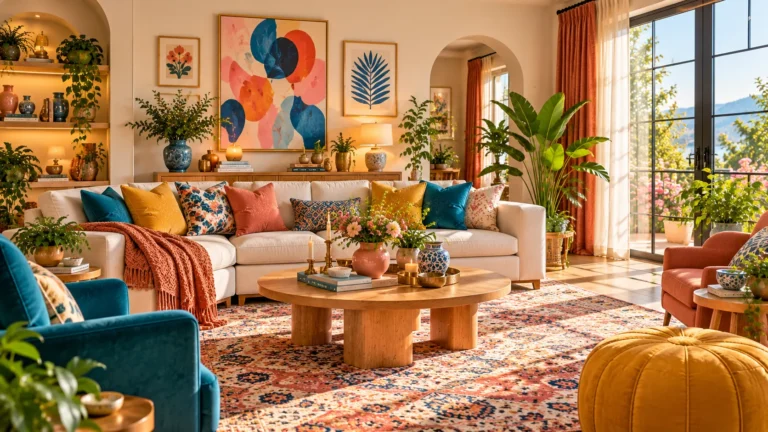
If you want to explore bolder color combinations beyond the classic farmhouse palette, these colorful living room ideas offer plenty of inspiration for adding personality while keeping your space balanced.
Pick Comfortable Furniture With Simple Shapes
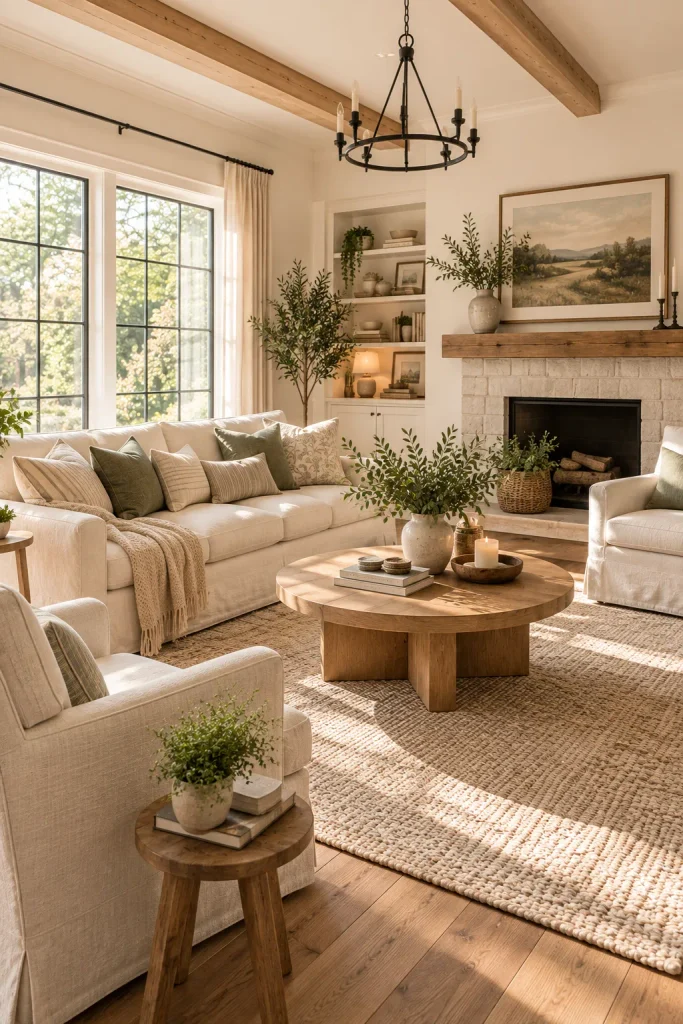
Quick Tip: Choose comfort first, then refine the look with fabric, shape, and color. A beautifully styled sofa that feels uncomfortable will quickly become a frustrating choice. Look for pieces with relaxed proportions, durable upholstery, and simple silhouettes that can support everyday living.
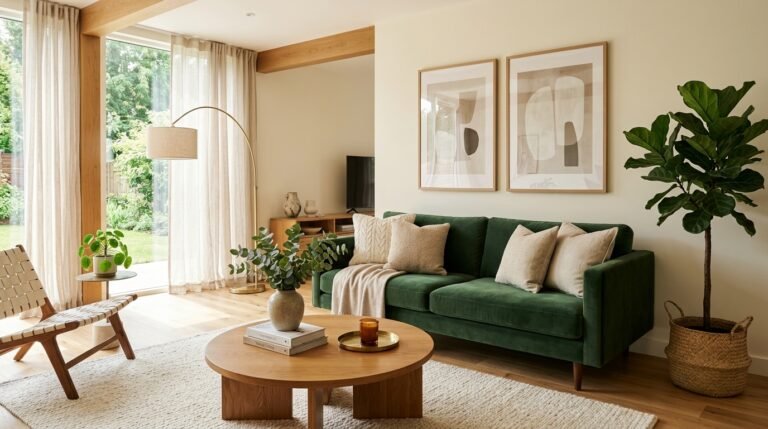
For the main seating area, start with a comfortable sofa in cream, oatmeal, beige, or another warm neutral. Add one or two chairs with uncomplicated profiles rather than heavily ornate designs. A wood or mixed-material coffee table can anchor the arrangement while keeping the overall look casual. Leave enough walking space around each piece so the room remains practical, not just photogenic.
Add Natural Wood for Warmth and Character
Common Mistake: Using too many different wood finishes can make the room feel visually scattered. Another common problem is choosing heavily distressed wood for every major piece, which can push the style toward rustic rather than chic.
The Fix: Choose one main wood tone, such as light oak, natural pine, or medium walnut, and repeat it throughout the room. Add one or two contrasting wood pieces for interest, but keep the overall finish coordinated.
Natural wood works especially well on pieces that already have a practical purpose. Try a wooden coffee table, console, shelving unit, picture frames, or cabinet. If your room has a fireplace, a simple wood mantel can become a strong focal point. In my experience, repeating the same wood tone in several smaller details often creates more cohesion than buying several large rustic pieces.
Layer in Cozy Farmhouse Textures
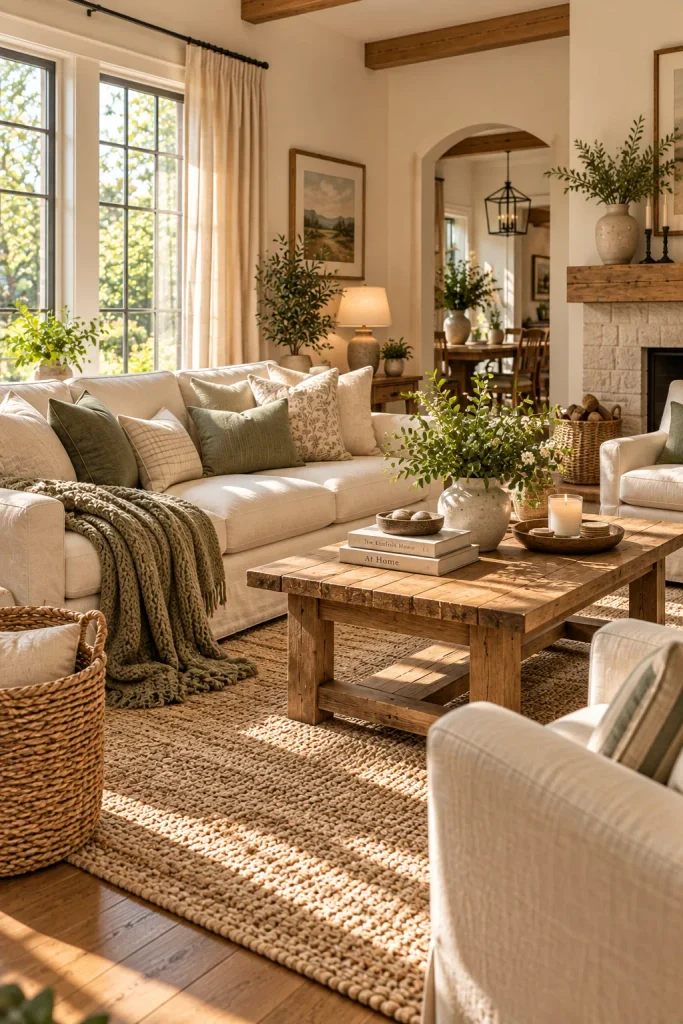
What You Need:
- Linen cushions: Add a relaxed, slightly rumpled texture to the sofa.
- Cotton throws: Bring softness and practical comfort to seating.
- Jute or woven rug: Introduce natural texture under the furniture.
- Woven baskets: Provide useful storage while adding visual warmth.
- Wool or chunky-knit blanket: Create a cozy layer for cooler evenings.
Texture keeps a neutral farmhouse room from looking one-dimensional. Mix smooth upholstery with rougher woven materials and soft textiles rather than using one fabric everywhere. Place a textured rug beneath the seating area, layer a few cushions on the sofa, and keep a throw within easy reach. These small layers make the room feel comfortable and lived-in.
Mix Old and New Decor for a Chic Look
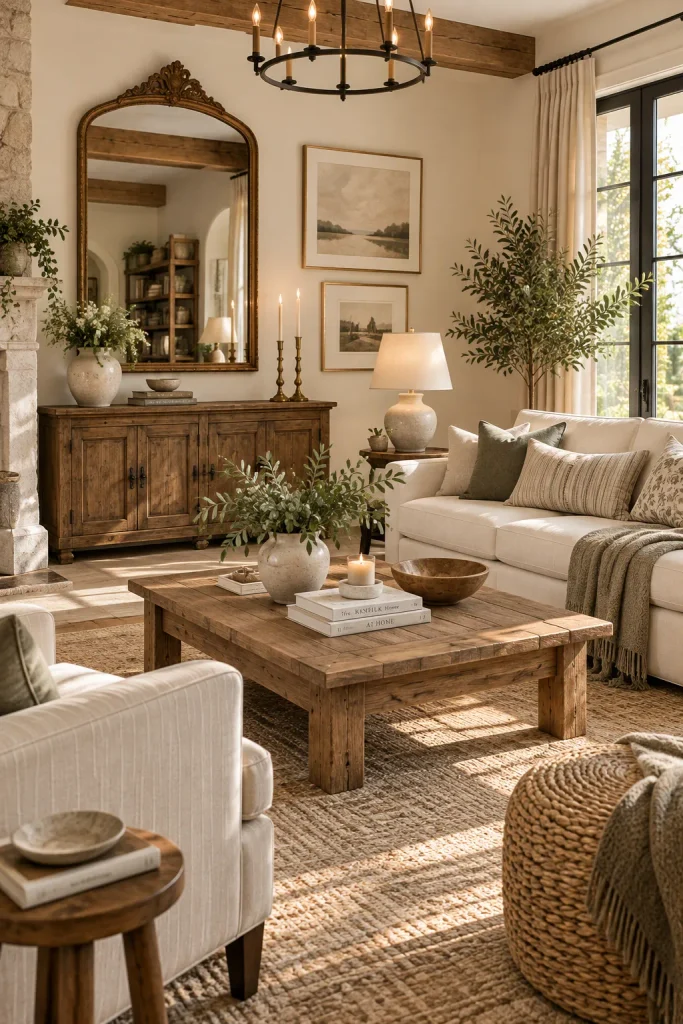
Before: A room filled only with brand-new matching furniture can look polished but lack personality. Everything may coordinate perfectly, yet the space can feel more like a showroom than a home.
After: Mixing a few vintage-inspired pieces with newer furnishings adds contrast and character. An aged mirror, antique-style cabinet, old-looking frame, or secondhand accent table can give modern furniture a more collected appearance.
Keep the combination intentional by limiting older pieces to a few noticeable accents. Pair a vintage wood table with a clean-lined sofa, or place an aged mirror above a simple console. The contrast between worn and new surfaces gives farmhouse decorating more depth while preventing the room from becoming overly rustic or dated.
Style the Coffee Table, Shelves, and Mantel
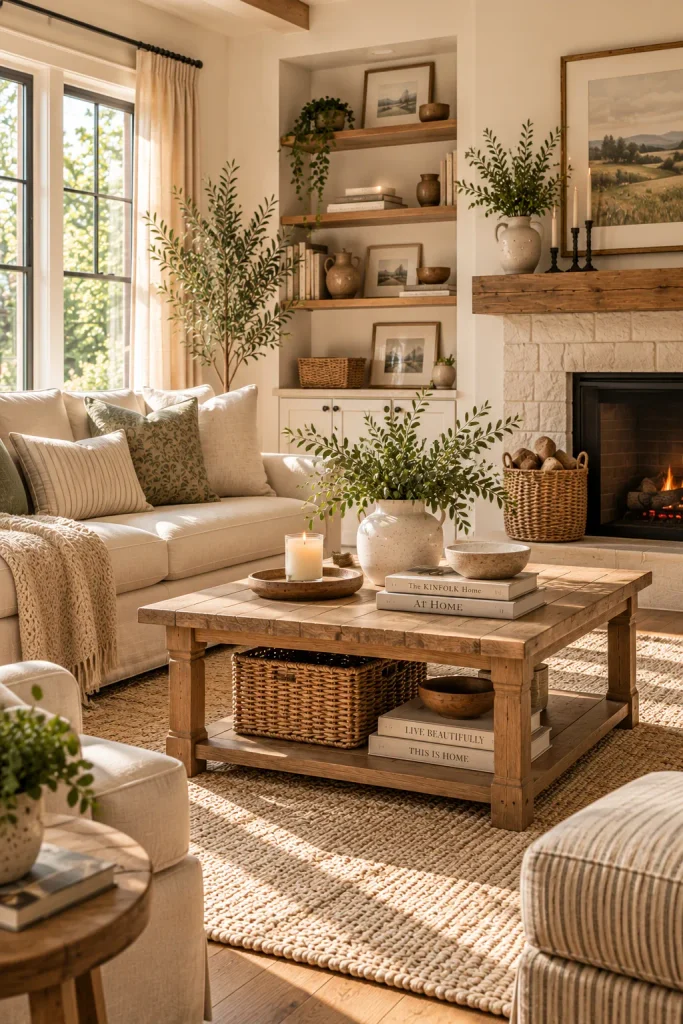
Do This:
- Create height: Stack two or three books beneath a small vase or decorative object.
- Add greenery: Use a simple plant or fresh branches to bring natural color into the arrangement.
- Group similar objects: Place ceramics, candles, or small accessories in loose groups instead of scattering them everywhere.
- Leave breathing room: Keep some shelf and tabletop space empty so the display feels intentional.
Avoid This:
- Overfilling every surface: Too many objects can make the room look cluttered.
- Using identical decorations: Matching accessories often make the arrangement feel staged.
- Ignoring scale: Tiny objects can disappear on a large mantel or coffee table.
- Blocking useful surfaces: Keep everyday areas practical enough for drinks, books, and family use.
A simple styling formula works well: combine something tall, something low, something textured, and something natural. On a coffee table, this might mean a vase, books, woven tray, and greenery. For shelves, vary the height of objects between levels and step back occasionally to check the arrangement from across the room.
Use Lighting to Make the Room Feel Warm
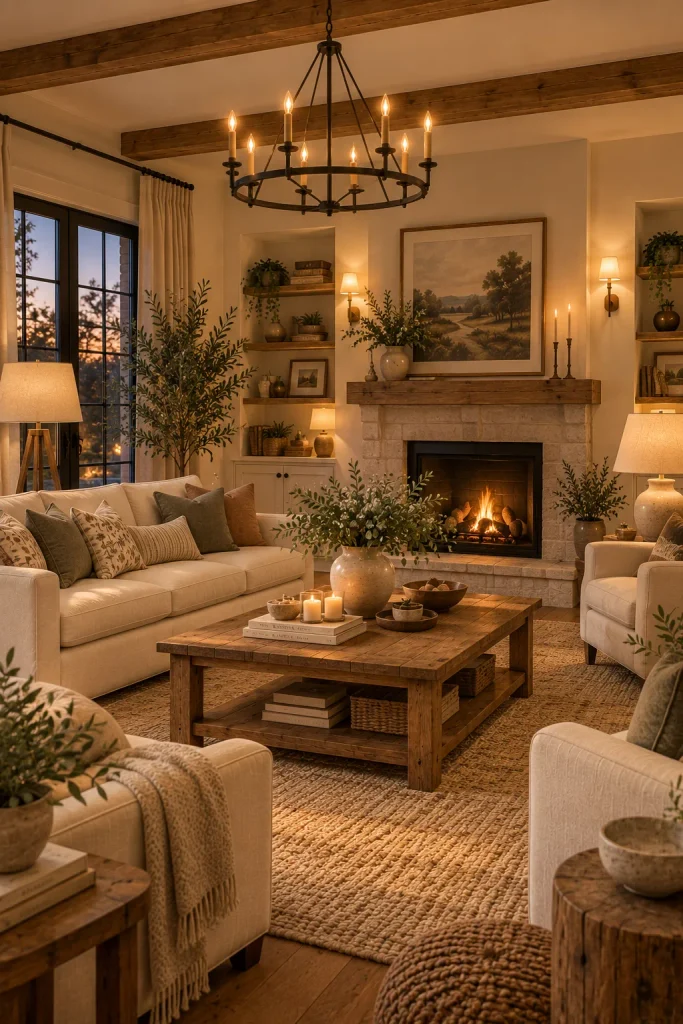
Time Needed: 20 to 30 minutes | Difficulty: Easy | Cost: Low to Medium
Best For: Creating a warmer evening atmosphere and highlighting farmhouse textures
Pro Tip: Use warm-toned bulbs throughout the main living area rather than mixing noticeably different light colors.
Result: A softer, more welcoming room after dark
Good lighting should come from several levels rather than one ceiling fixture alone. Add a table lamp beside the sofa, a floor lamp near a reading chair, or sconces around a fireplace or artwork. Warm bulbs can soften cream walls and natural wood while making linen, woven baskets, and other textures more noticeable.
Add Farmhouse Decor Without Overdoing It
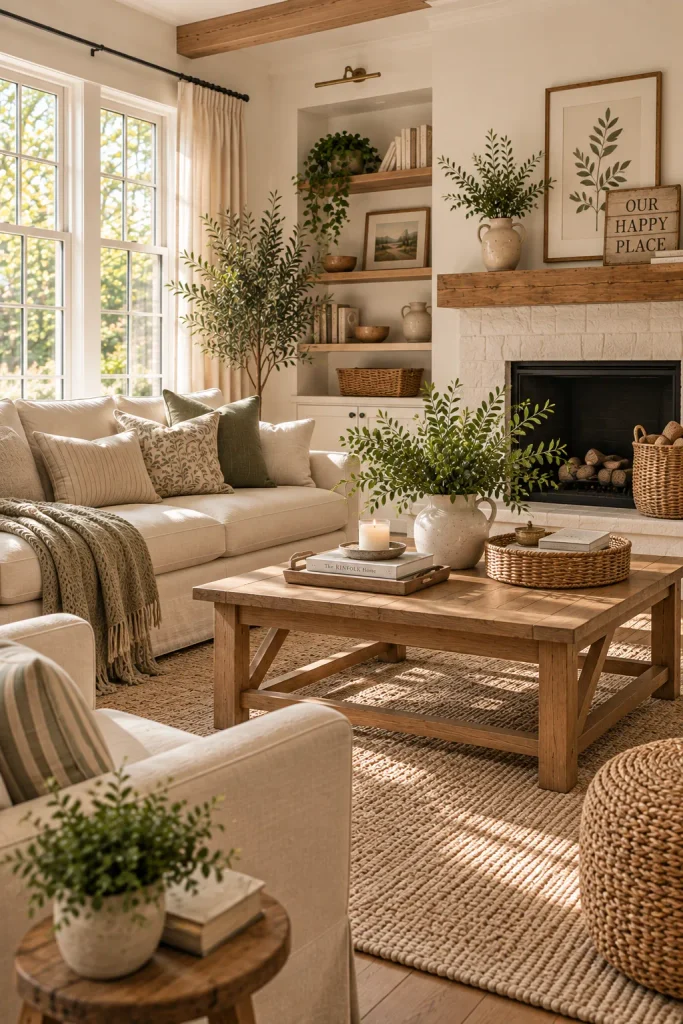
A chic farmhouse room usually needs fewer themed accessories than you might expect. The goal is to suggest the style through materials, colors, and a handful of recognizable details rather than covering every surface with farmhouse decorations.
Choose one or two statement accents, such as a vintage-style sign, ceramic pitcher, woven basket, or botanical print. Then let the furniture, wood tones, fabrics, and neutral palette carry the rest of the look. If an accessory feels overly themed or competes with several other decorations, remove it and see whether the room feels calmer.
Common Farmhouse Living Room Decorating Mistakes to Avoid
Common Mistake: Choosing too many matching farmhouse pieces can make the room feel themed instead of personal. Another frequent issue is using beige for nearly everything, which removes the contrast needed to give a neutral space dimension.
The Fix: Mix finishes, shapes, and subtle colors while keeping the overall palette connected. Choose distressed or vintage-inspired pieces selectively, and always consider how each item functions in your everyday routine.
A few practical checks can prevent most decorating problems. Make sure furniture allows comfortable movement, rugs are large enough to connect the seating area, and surfaces are not overloaded with accessories. I’ve noticed that rooms often feel more polished after removing a few unnecessary pieces rather than adding more.
Finish the Room With Personal Details
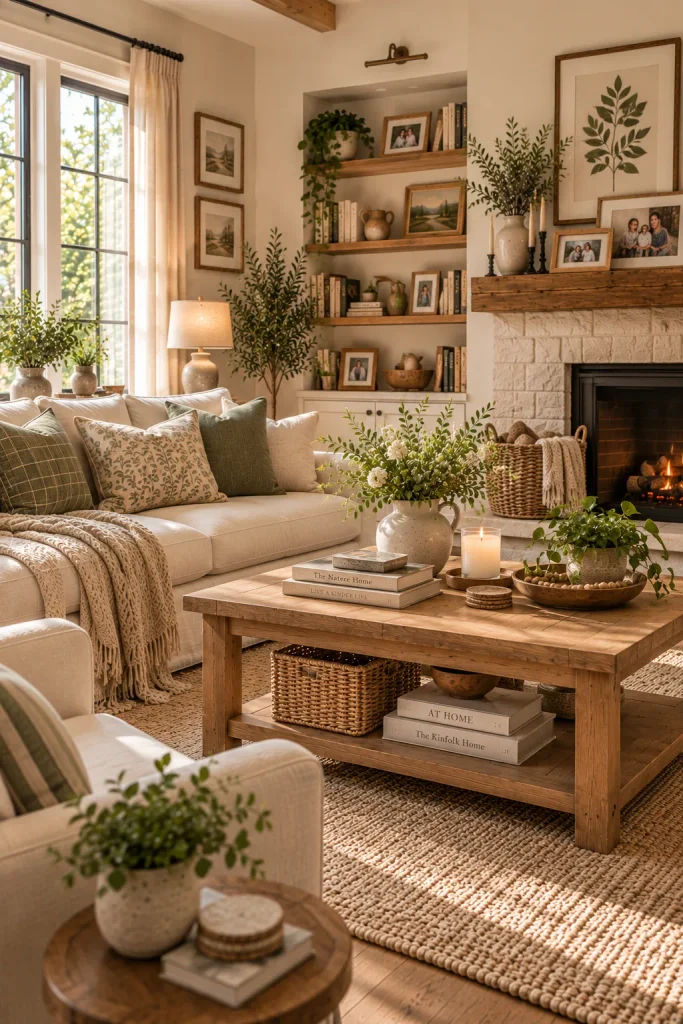
What You Need:
- Family photos: Add meaningful memories through simple wood or neutral frames.
- Favorite books: Display books you actually enjoy rather than decorative titles chosen only for color.
- Plants: Bring natural greenery into empty corners or onto shelves.
- Personal artwork: Choose pieces that reflect your taste and complement the room’s palette.
- Collected objects: Use pottery, baskets, or small keepsakes that have personal meaning.
Personal details are what keep farmhouse decorating from feeling like a staged display. Give favorite objects a visible place, but avoid filling every empty corner. A few meaningful pieces can say much more than a large collection of generic accessories. The finished room should feel connected to the people who actually live there.
A Simple Formula for a Chic Farmhouse Living Room
Before: Starting without a plan can lead to random purchases, too many similar decorations, and a room where the furniture does not feel connected. It is easy to focus on individual farmhouse pieces without considering how they work together.
After: A simple decorating formula gives every decision a clear purpose. You can build the room around neutral colors, comfortable furniture, natural wood, layered textures, restrained decor, warm lighting, and personal accents.
For a practical approach, start with the largest pieces first, then build the room in layers. Use a warm neutral foundation, add comfortable seating, introduce natural wood, bring in two or three contrasting textures, and finish with lighting and meaningful accessories. This keeps the process manageable while creating a room that feels cohesive, comfortable, and distinctly yours.
CONCLUSION
Creating a stylish farmhouse living room does not require replacing everything you own. With warm neutral colors, comfortable furniture, natural wood, layered textures, thoughtful lighting, and personal accents, you can build a space that feels both relaxed and refined. How to Create a Farmhouse Living Room That Feels Chic is ultimately about finding the right balance for your home and lifestyle.
Save this guide on Pinterest so you can return to these ideas while decorating. Try the steps at your own pace, and share it with someone planning a farmhouse-inspired space. I’ve seen how making one thoughtful change can completely shift the result. Start with one area today and build from there.
One Comment