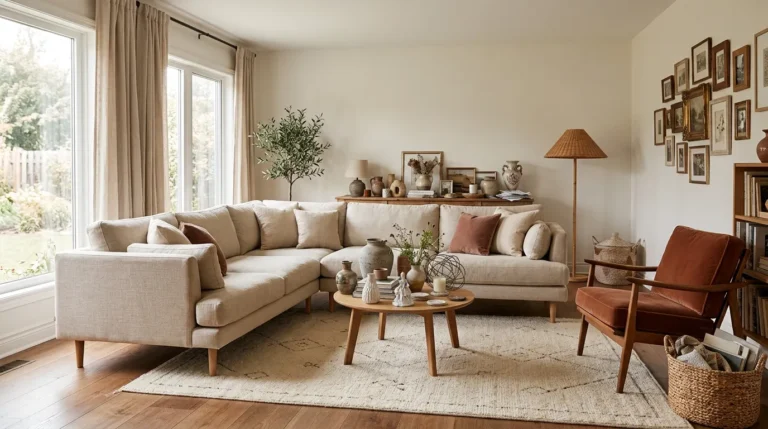
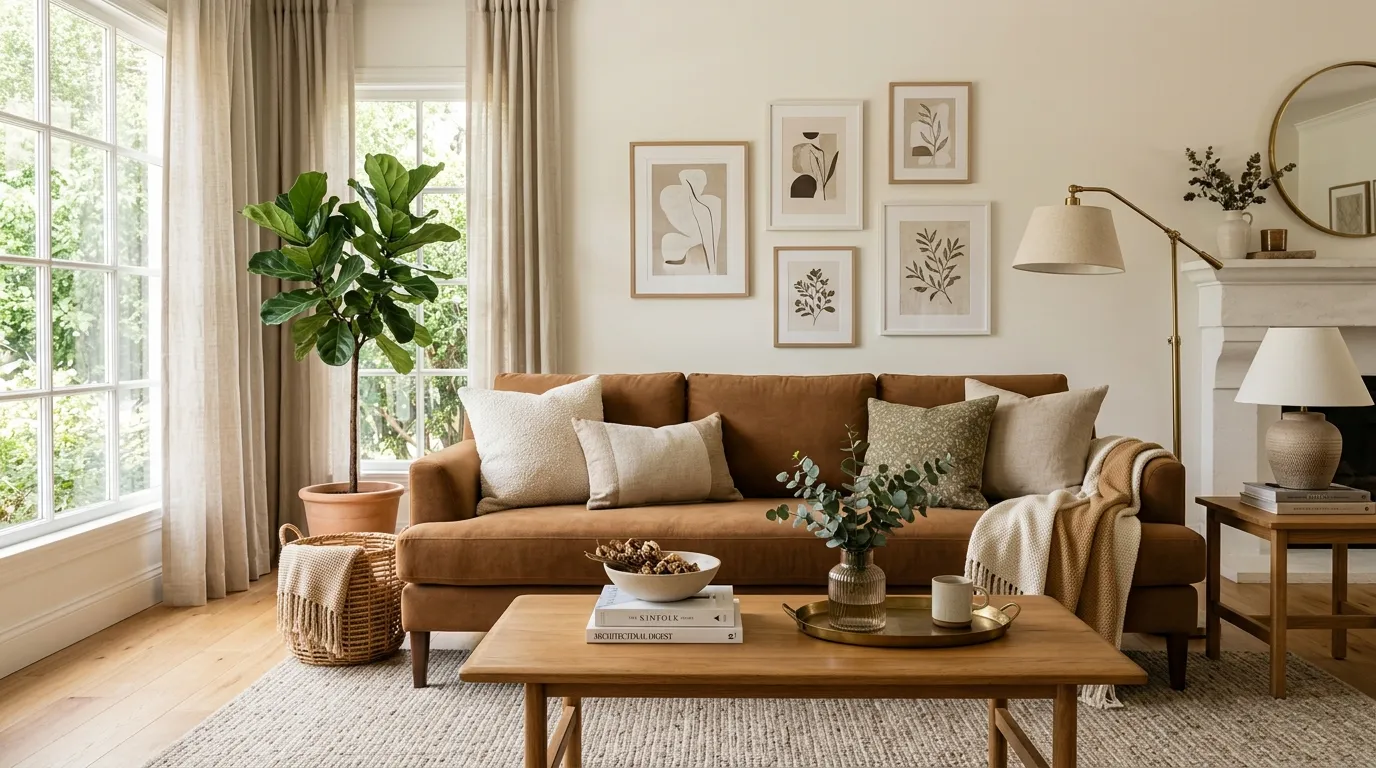
23 Brown Couch Living Room Ideas You’ll Adore Today
A brown couch can be the warm, inviting anchor your living room needs, but choosing the right colors and decor around it can feel tricky. These brown couch living room ideas show how to make your sofa feel stylish, balanced, and beautifully connected to the rest of the space.
Whether you have a deep chocolate sectional, a caramel leather sofa, or a simple medium-brown couch, small decorating choices can change the entire mood of the room. You’ll find ideas for cushions, rugs, lighting, artwork, greenery, wood accents, and more. In my experience, the easiest rooms to refresh often start with one strong furniture piece and a few carefully chosen supporting details. Use these ideas to find a look that fits your home and feels comfortable enough for everyday living.
Warm Neutral Layers
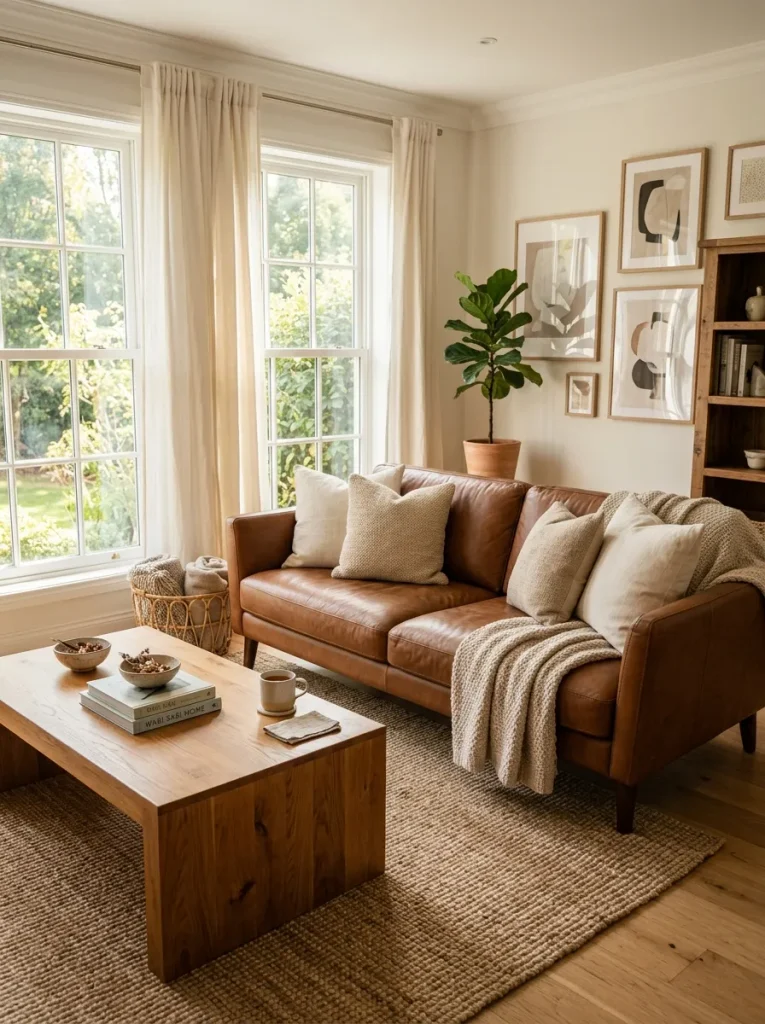
A brown sofa becomes especially inviting when surrounded by warm neutrals. Pair it with cream, oatmeal, beige, and soft taupe rather than adding several competing colors. These shades keep the room light while allowing the deeper upholstery to anchor the seating area naturally.
I’ve noticed that layered textures make neutral rooms feel finished without looking overdecorated. Add a chunky throw, woven basket, linen cushions, and a softly patterned rug. The result feels relaxed and collected, while the brown seating remains the visual centerpiece.
Cream Accent Pillows
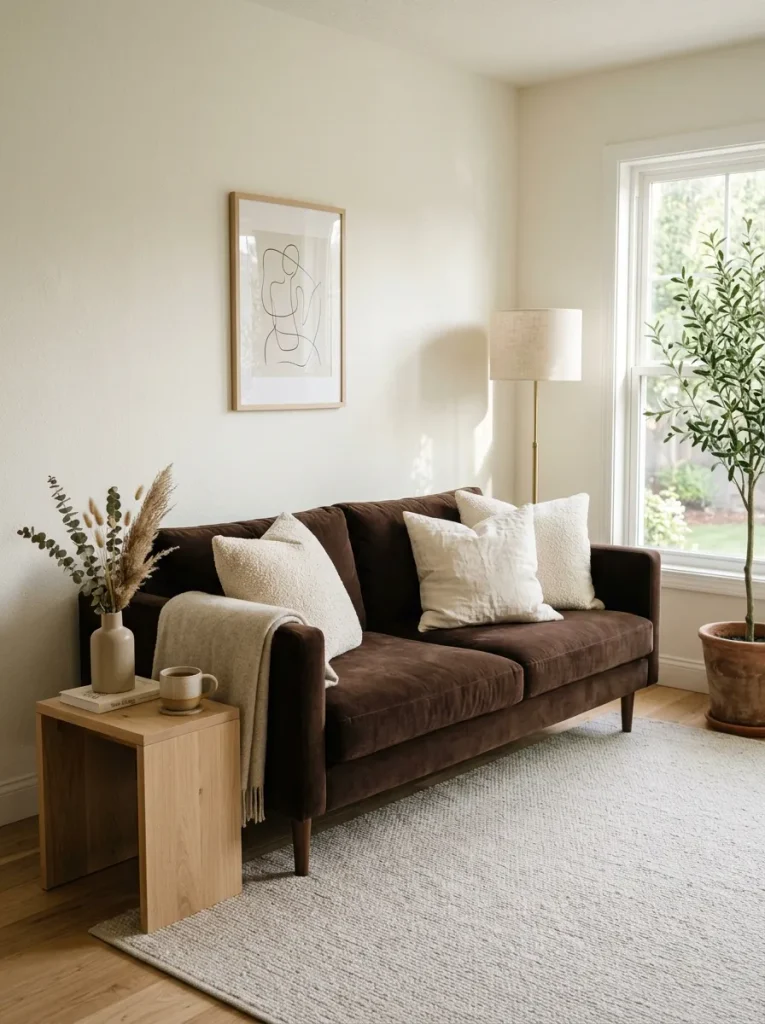
Cream pillows bring instant contrast to darker upholstery without making the room feel stark. Mix two or three shapes, such as square linen cushions, a textured lumbar pillow, and one boucle accent. Keeping the palette restrained helps the sofa look intentional rather than visually heavy.
- Choose cream, ivory, or warm white instead of icy white.
- Mix smooth linen with boucle or knitted textures.
- Use different pillow sizes to create depth.
- Repeat cream elsewhere through curtains, rugs, or artwork.
- Keep bold patterns limited to one accent pillow.
For smaller rooms, this combination helps break up a large brown seating piece. A light rug underneath can reinforce the contrast and make the entire seating zone feel more open. For a richer look, add a small brass lamp or warm wood table nearby.
Earthy Green Accents
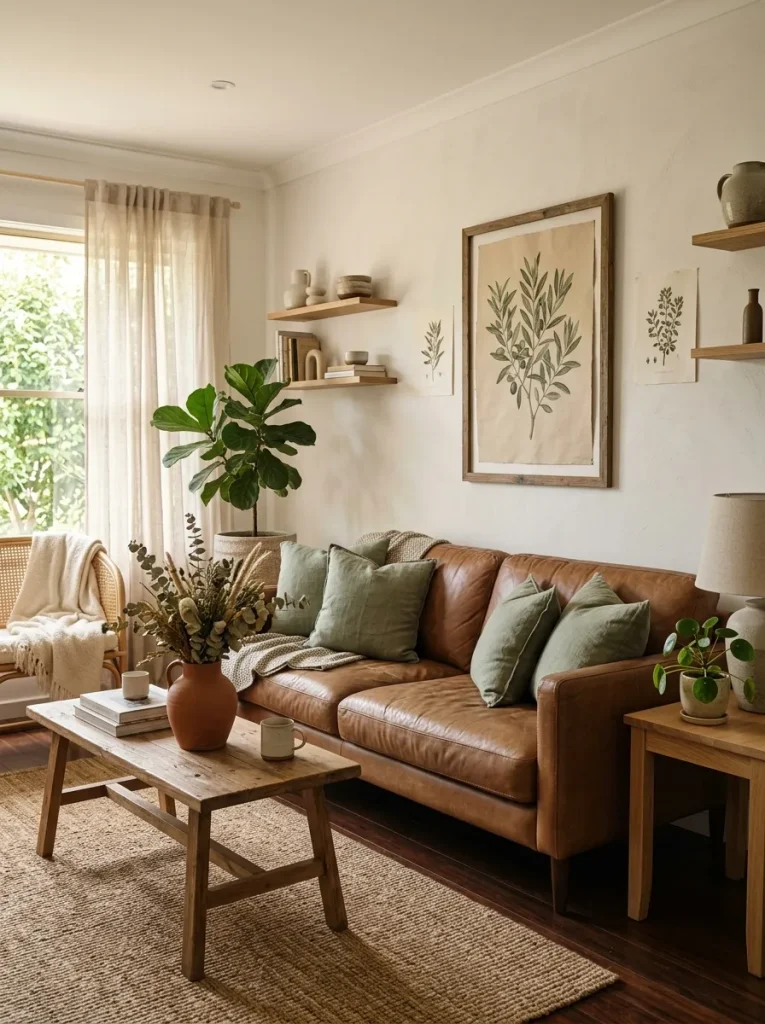
Brown and muted green create a grounded palette that feels connected to nature. Start with sage, olive, or moss green through cushions, artwork, or a small accent chair. These softer shades complement brown upholstery without competing with its warm undertones.
Quick Tip: Repeat the green in at least two places so it feels intentional. A cushion paired with botanical artwork or a leafy plant is enough to create visual connection without covering the room in green.
I’ve seen this pairing work particularly well with leather sofas because the organic colors soften the stronger presence of the leather. Add rattan, unfinished wood, or terracotta accessories to reinforce the earthy character. Keep the larger furniture pieces neutral so the accents remain easy to change later.
Leather and Light Wood
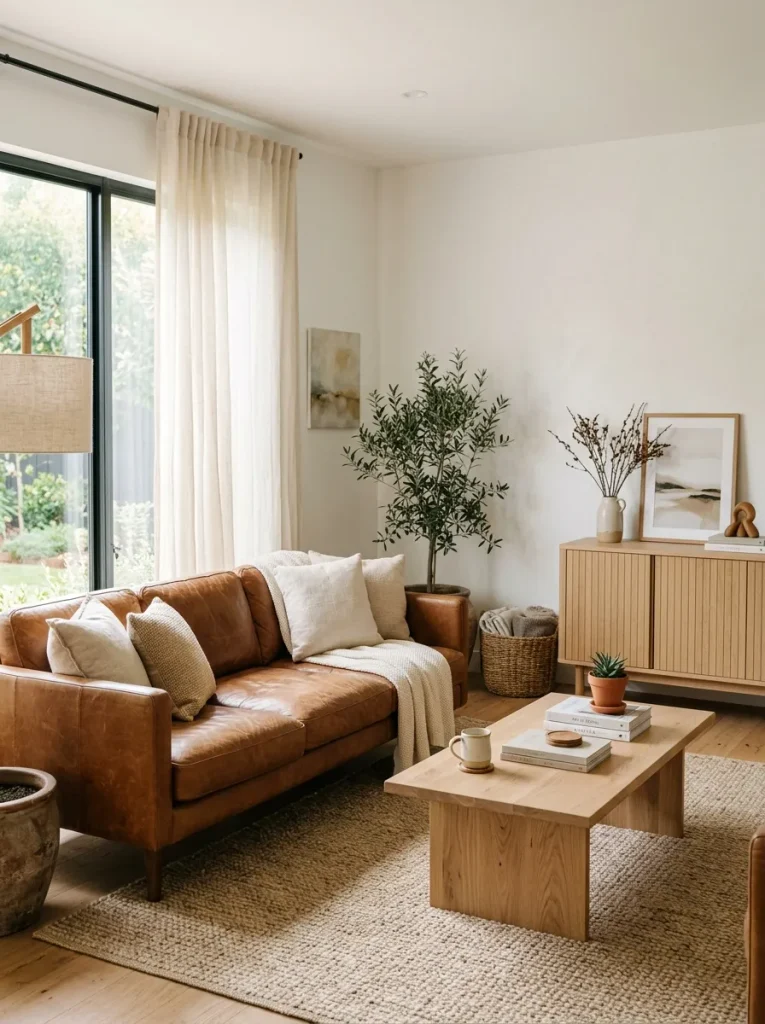
BEFORE: A dark leather sofa can make a living room feel visually dense when every surrounding piece is equally dark. Heavy furniture and deep flooring may leave little contrast around the seating area.
AFTER: Pale wood furniture introduces brightness while keeping the room warm. The lighter surfaces create separation around the brown couch, making the seating area feel more balanced and spacious.
A simple oak coffee table is often enough to shift the whole mood. In my experience, choosing furniture with visible wood grain adds warmth without requiring extra decoration. Keep accessories restrained, then soften the setup with a cream rug or woven basket for a natural finish.
Textured Throw Layers
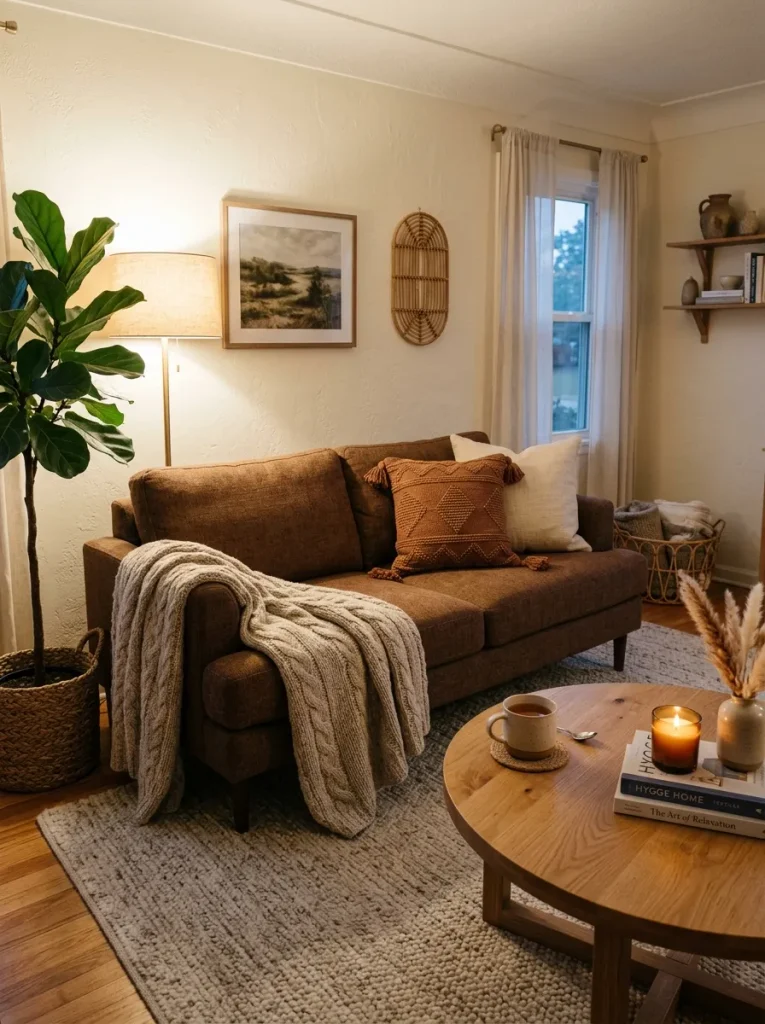
- Start with the throw: Drape a chunky knit or woven blanket loosely over one sofa arm.
- Add contrasting texture: Pair it with linen, boucle, or velvet cushions rather than matching every fabric.
- Repeat a warm shade: Bring in rust, camel, tan, or muted terracotta through one small accessory.
- Keep the base calm: Use a neutral rug and curtains so the layered textiles remain noticeable.
A brown couch already provides visual warmth, so texture can do more than additional color. I’ve noticed that a casually draped throw makes seating feel more inviting while hiding minor wear on frequently used furniture. Choose washable fabrics if the sofa gets daily family use.
Brown and Charcoal Contrast
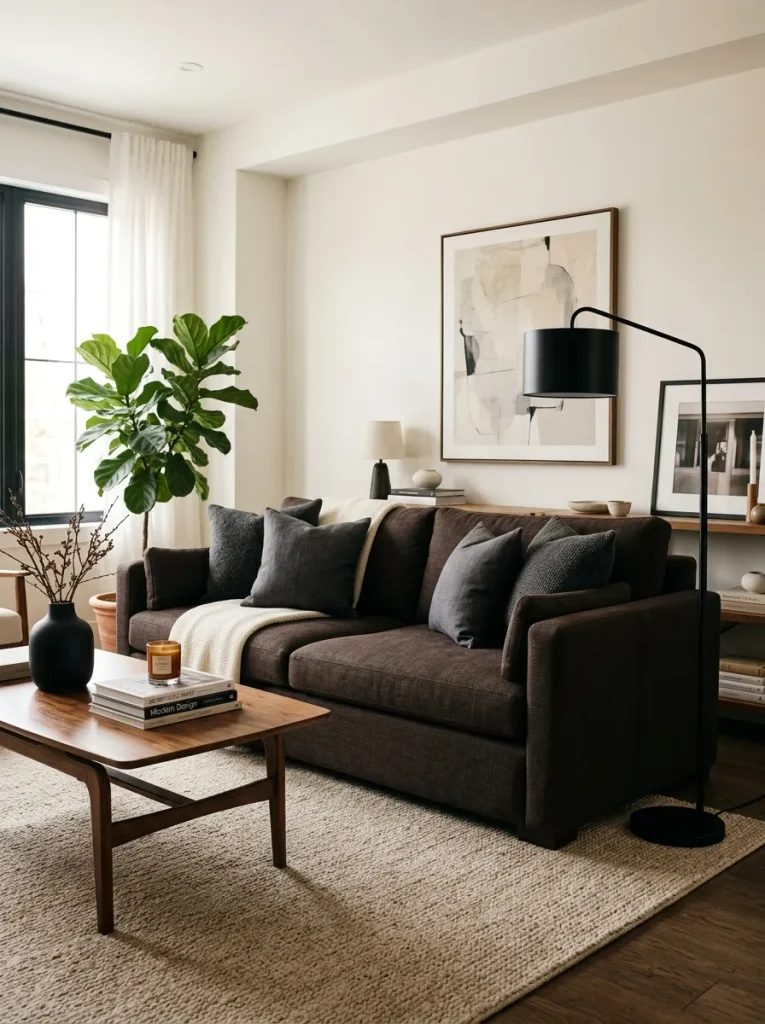
| Feature | Option A: Soft Contrast | Option B: Strong Contrast |
| Accent Color | Warm beige | Charcoal gray |
| Metal Finish | Brushed brass | Matte black |
| Rug | Cream or taupe | Gray and beige |
| Mood | Light and relaxed | Moody and modern |
| Best For | Small or bright rooms | Spacious rooms |
Charcoal can give brown upholstery a more sophisticated edge, but balance matters. Use lighter flooring, walls, or textiles to prevent the palette from becoming too dark. A beige rug beneath the seating area can soften the contrast while black accents, such as a lamp or frame, add definition.
Rust Color Accents
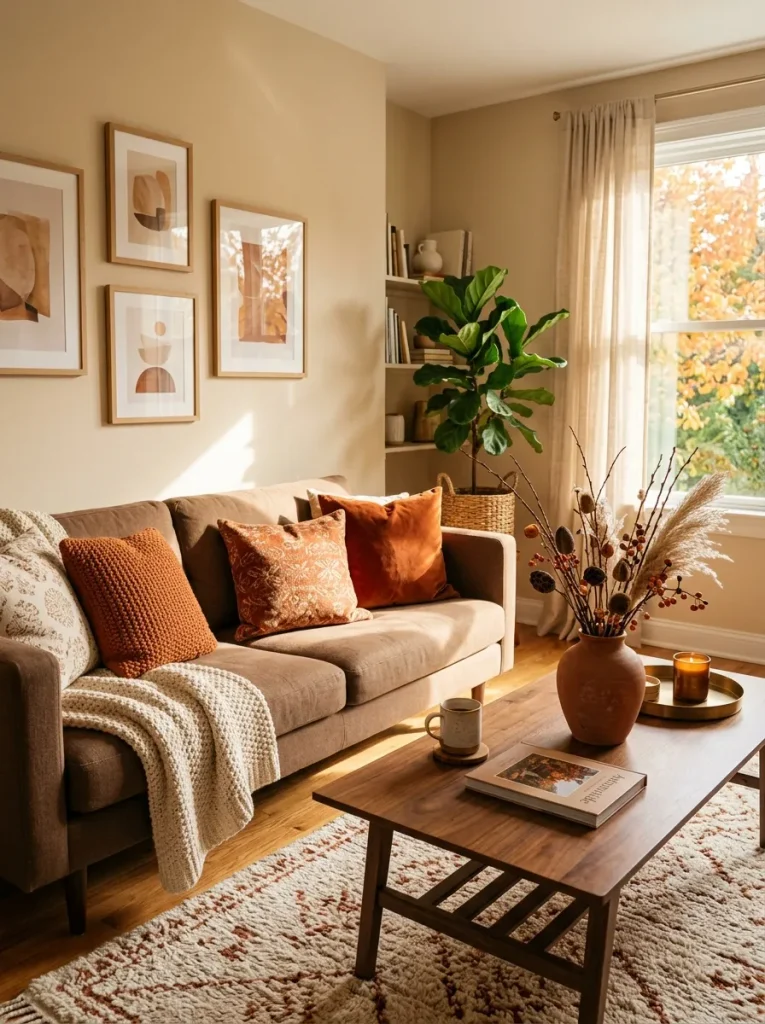
DO:
- Pair rust with cream, camel, or warm beige.
- Repeat the rust shade in two or three small accessories.
- Choose muted terracotta rather than bright orange.
- Add natural wood to connect the warm tones.
DON’T:
- Mix several competing orange shades.
- Cover the entire sofa with rust-colored accessories.
- Use cool gray as the dominant background.
- Add too many saturated decorative pieces.
Rust accents bring out the warmth already present in brown upholstery. A pair of cushions, a ceramic vase, or a small artwork can provide enough color without overwhelming the room. For a subtle seasonal update, swap rust accessories with cream or olive pieces later while keeping the main furniture unchanged.
Natural Rattan Details
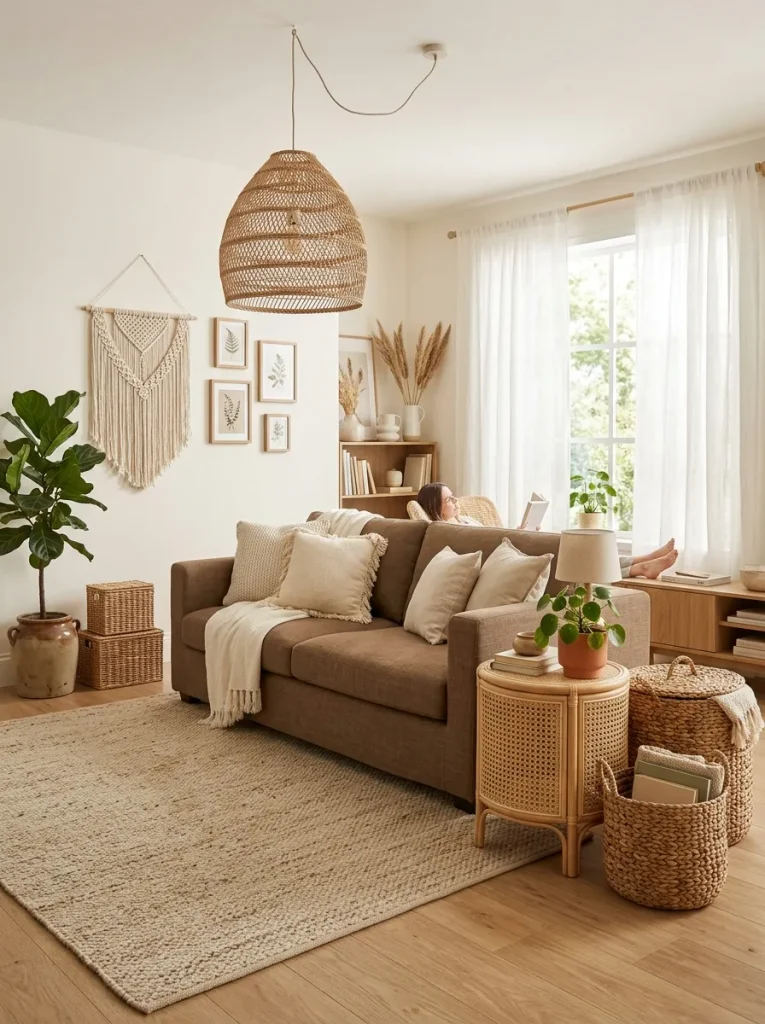
Cost: Moderate | Time: One afternoon | Skill Level: Beginner
Best For: Warm, organic interiors | Works In: Small and large living rooms
Rattan adds visual texture while keeping a brown sofa from feeling too heavy. Start with one woven basket or cane side table, then repeat the material through a pendant shade or decorative tray. I’ve noticed that natural fibers work especially well when the rest of the palette stays soft and uncluttered.
Gallery Wall Above Sofa
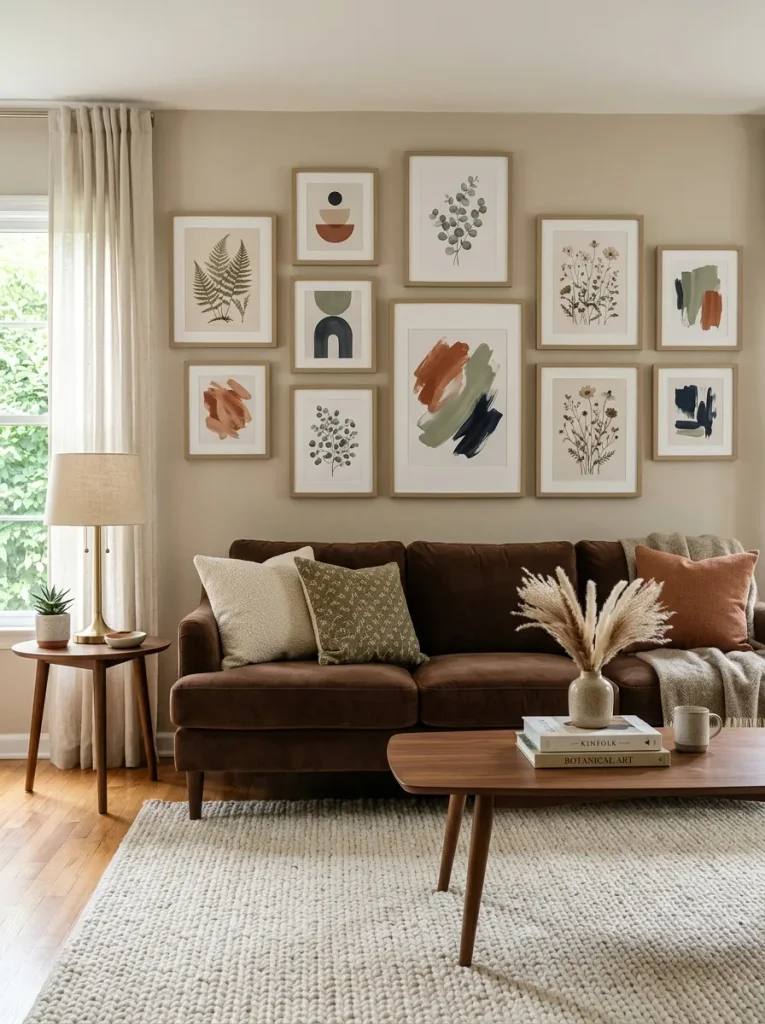
A blank wall can make even well-furnished seating feel unfinished, so a gallery arrangement gives the room a clear focal point. Choose artwork with cream, tan, olive, rust, or muted black tones to connect naturally with the brown upholstery.
Before: The wall above the sofa feels empty, while the furniture appears visually disconnected from the surrounding space.
After: A coordinated gallery wall draws the eye upward and links the seating area with the rest of the room. Keep frames aligned around a central visual line, leaving roughly two to four inches between pieces for a cohesive arrangement.
Use three to seven artworks rather than filling every inch of wall. A mix of botanical prints, abstract shapes, and simple photography can add personality while maintaining a calm palette. For renters, lightweight frames and removable hanging strips make the update easier to reverse later.
Cream Area Rug
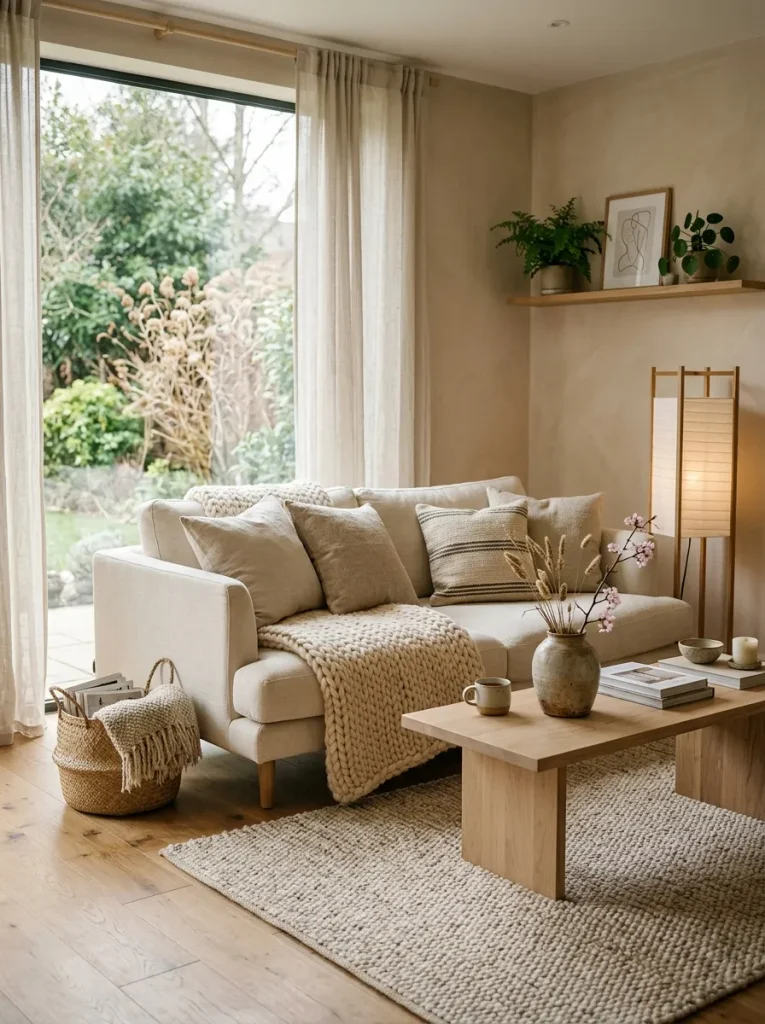
- Size first: Choose a rug large enough for at least the front legs of the sofa to sit on it.
- Create contrast: Select cream, ivory, or warm beige against medium or dark brown upholstery.
- Add texture: Wool, jute, or a low-pile woven design can make the seating zone feel richer.
- Coordinate nearby pieces: Repeat the rug’s light tone in cushions, curtains, or artwork.
A light area rug gives brown furniture a visual lift while defining the seating zone. It also helps connect separate pieces into one arrangement instead of leaving them floating around the room. For busy households, choose a patterned cream rug that can disguise everyday marks better than a completely solid surface.
Warm Brass Lighting
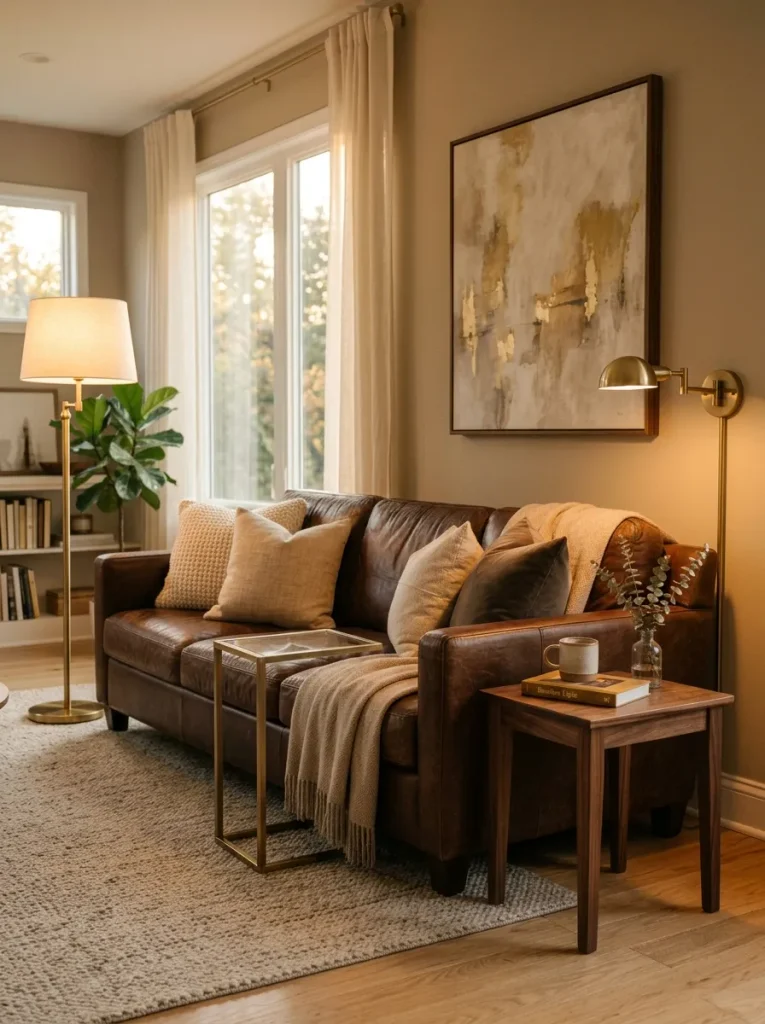
Quick Tip: Choose warm bulbs around 2700K to 3000K for a cozy evening atmosphere. Position a floor lamp beside the sofa or use a brass table lamp to create a useful reading light without relying only on overhead fixtures.
Warm brass works beautifully against brown because both materials carry golden undertones. I’ve noticed that even a simple brass lamp can make a neutral seating arrangement feel more intentional. Balance the shine with matte ceramics, woven fabrics, and wood so the room feels layered rather than overly polished.
Black Accent Furniture
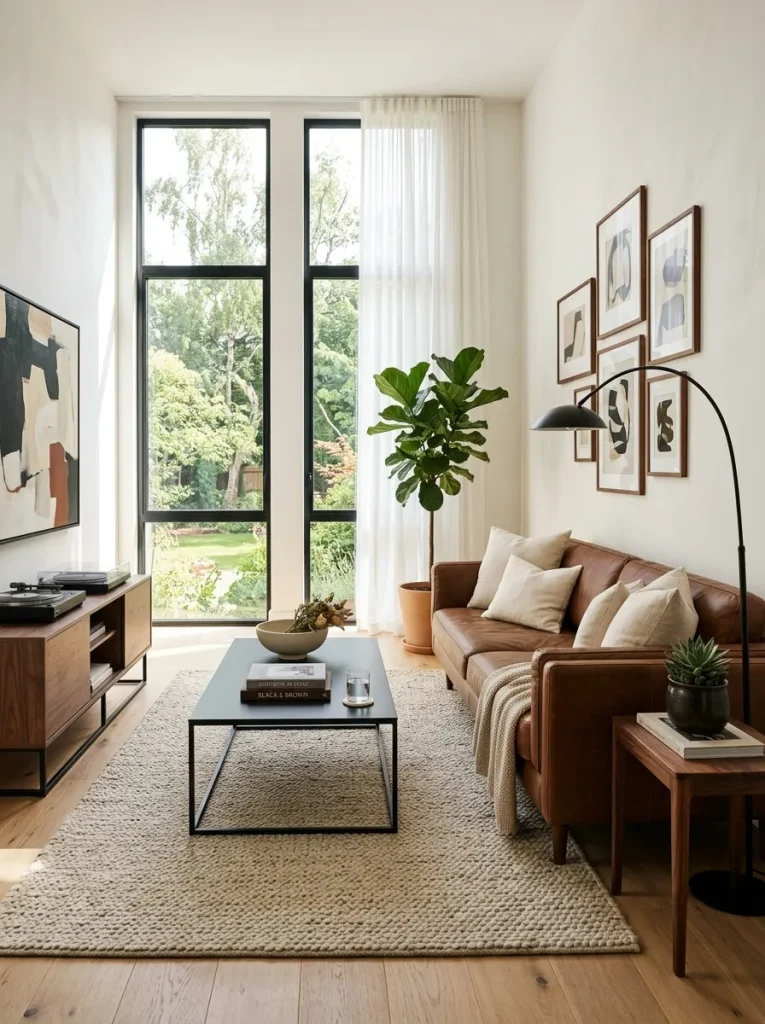
BEFORE: Brown seating surrounded by similar wood tones can look warm but lack definition. The room may also feel visually flat when accessories blend into the furniture.
AFTER: Small black elements introduce crisp contrast and give the arrangement stronger visual structure. A black coffee table, lamp, picture frame, or side table can create this effect without making the room feel dark.
Keep black accents limited to a few deliberate pieces. A matte finish usually feels softer than glossy surfaces and pairs naturally with leather, linen, and wood. If your room receives little daylight, offset the darker details with cream walls, a pale rug, and light-colored curtains.
Beige Curtain Panels
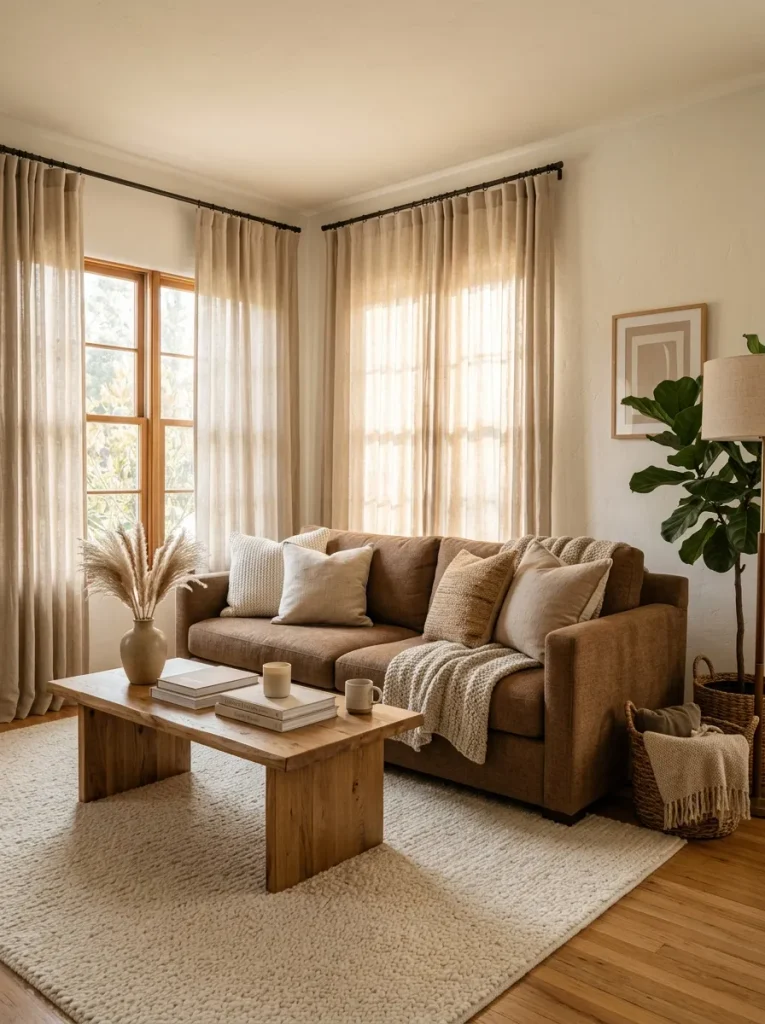
- Measure the wall: Extend the curtain rod beyond the window frame so the panels can open fully and expose more glass.
- Choose warm beige: Linen or linen-look fabric works well with brown upholstery and keeps the palette soft.
- Hang them high: Position the rod closer to the ceiling to create a taller visual line.
- Let them reach the floor: Full-length panels give the room a more finished appearance.
Brown seating often looks richer when framed by light fabric. Beige curtains soften strong furniture tones while allowing plenty of natural light to move through the room. For a relaxed look, choose lightly textured panels rather than shiny fabric, especially if your sofa already has a noticeable leather or velvet finish.
Soft Blue Accents
| Element | Option A: Dusty Blue | Option B: Navy Blue |
| Overall Effect | Soft and airy | Rich and dramatic |
| Best Accent | Linen cushions | Velvet cushions |
| Supporting Colors | Cream and beige | Ivory and camel |
| Ideal Room | Bright or small | Spacious or well-lit |
| Mood | Relaxed | Sophisticated |
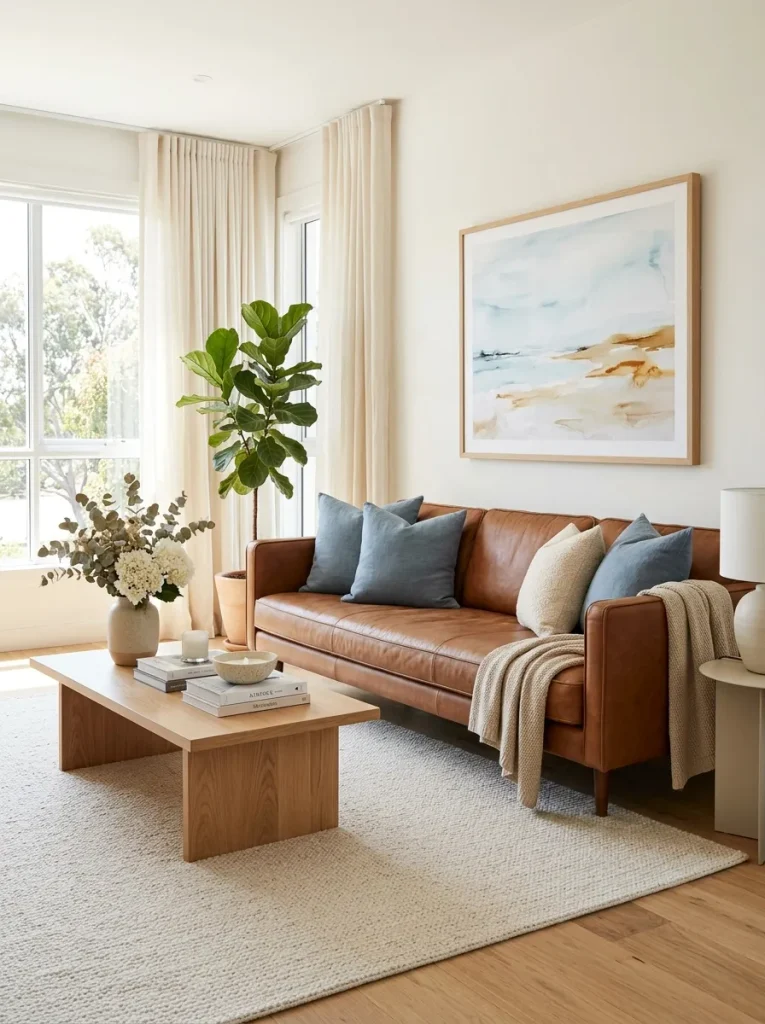
Blue can cool down the warmth of brown upholstery without creating a harsh contrast. For most rooms, muted dusty blue is easier to balance than a very saturated shade. Add cream or ivory nearby to keep the palette open, then repeat the blue in artwork or a small decorative object.
Layered Neutral Cushions
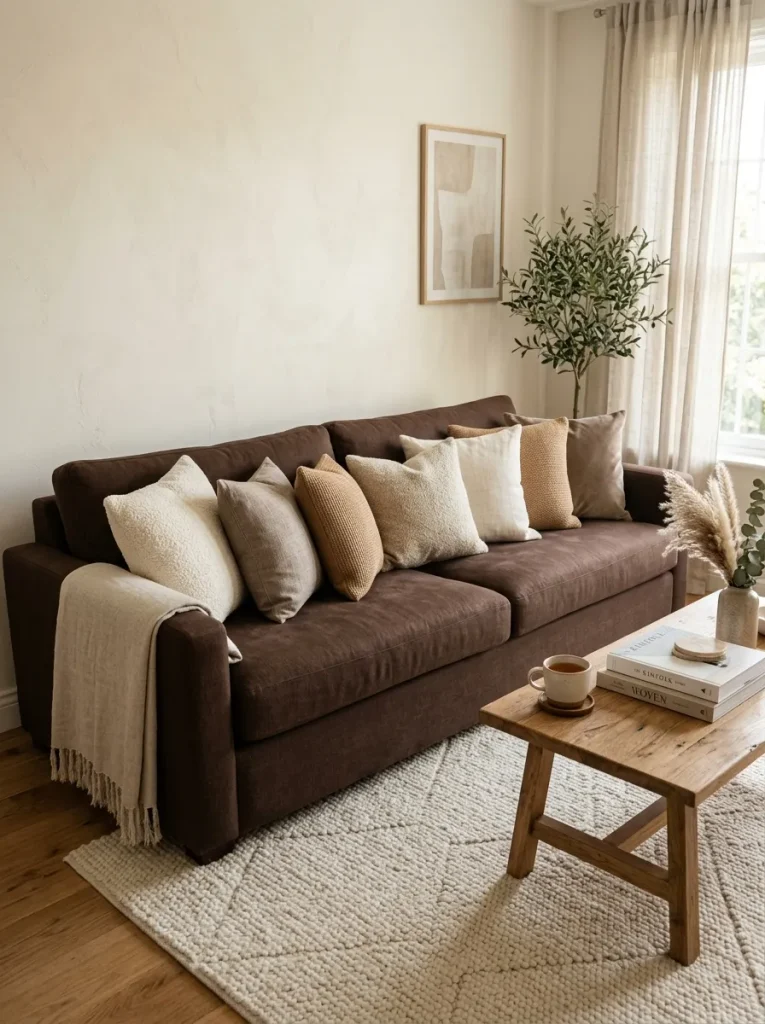
DO:
- Mix ivory, beige, taupe, and camel cushions.
- Combine linen, boucle, cotton, and woven textures.
- Use two or three cushion sizes for depth.
- Keep the strongest pattern on one cushion.
DON’T:
- Match every cushion to the same fabric.
- Use too many dark brown accessories.
- Fill the sofa so completely that seating becomes uncomfortable.
- Mix several unrelated accent colors.
Layered neutrals make brown seating feel softer and more comfortable without changing the main furniture. Start with larger cushions at the back and add smaller textured pieces toward the front. A single patterned lumbar cushion can provide enough visual interest while keeping the arrangement practical for everyday lounging.
Wooden Coffee Table
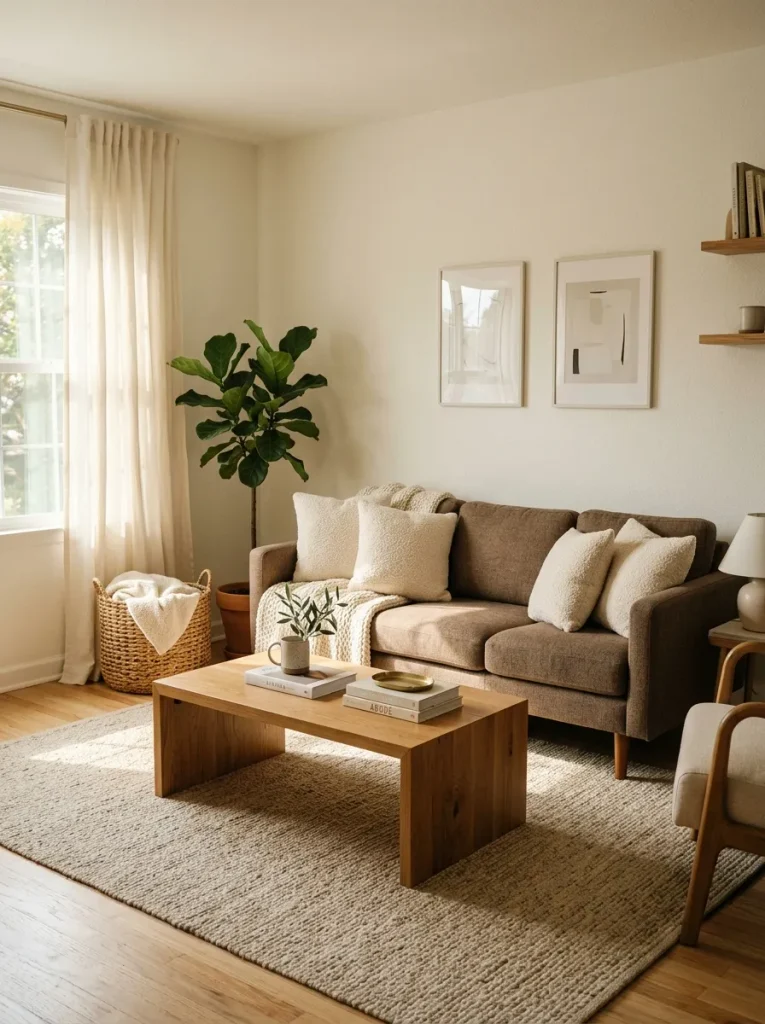
- Choose oak, walnut, or acacia to complement the sofa’s warm undertones.
- Pick a rounded table if the seating area has many straight edges.
- Leave enough walking space around the table for comfortable movement.
- Add a tray to organize candles, books, or small decorative objects.
- Repeat the wood tone in one other piece for visual continuity.
A wooden coffee table gives brown seating a natural partner without introducing another strong color. Look for visible grain and a finish that is slightly lighter or deeper than the sofa. I’ve noticed that simple wood tables also make it easier to change cushions and accessories seasonally without disrupting the room’s foundation.
Terracotta Decor
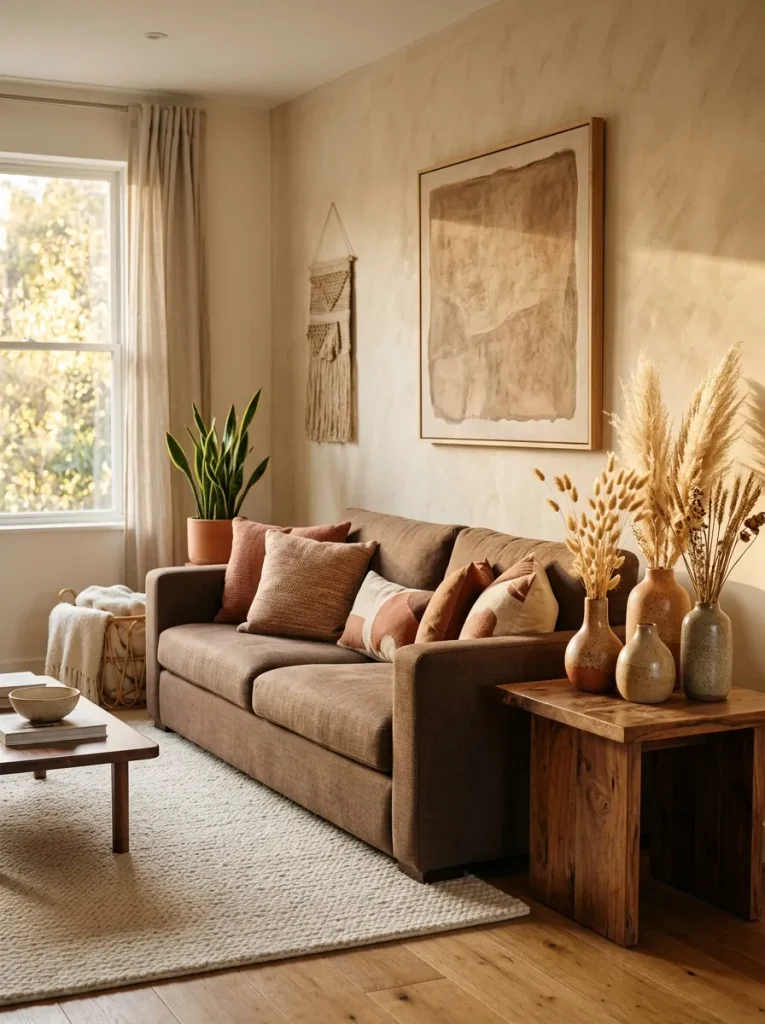
Quick Tip: Keep terracotta concentrated in small accessories rather than large furniture pieces. A ceramic vase, two cushions, or a small piece of artwork can introduce enough earthy color while allowing the brown sofa to remain the main anchor.
Terracotta works especially well with warm brown because the colors share earthy undertones. Pair it with cream, sand, and natural wood to keep the room balanced. If the sofa is already dark, use terracotta sparingly and add plenty of lighter surfaces so the overall arrangement stays bright and comfortable.
Cozy Reading Corner
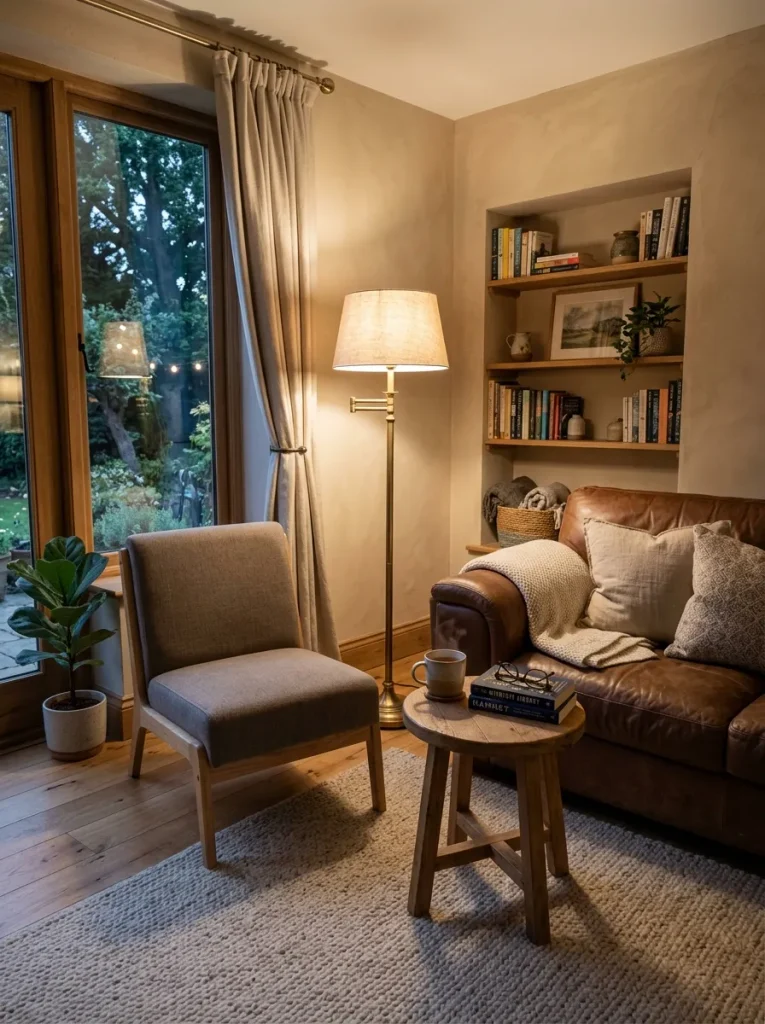
BEFORE: The space beside the sofa sits unused, creating an awkward gap that contributes little to the room. The main seating area handles all the visual and functional attention.
AFTER: A small reading corner gives the unused area a clear purpose. Add a comfortable chair, compact side table, and adjustable floor lamp, keeping the colors connected to the brown sofa.
Leave enough clearance between the chair and coffee table for easy movement. A small basket can hold books or blankets without adding bulky storage. This setup works particularly well in larger living rooms where the sofa alone leaves too much empty floor around the main seating arrangement.
Olive Green Cushions
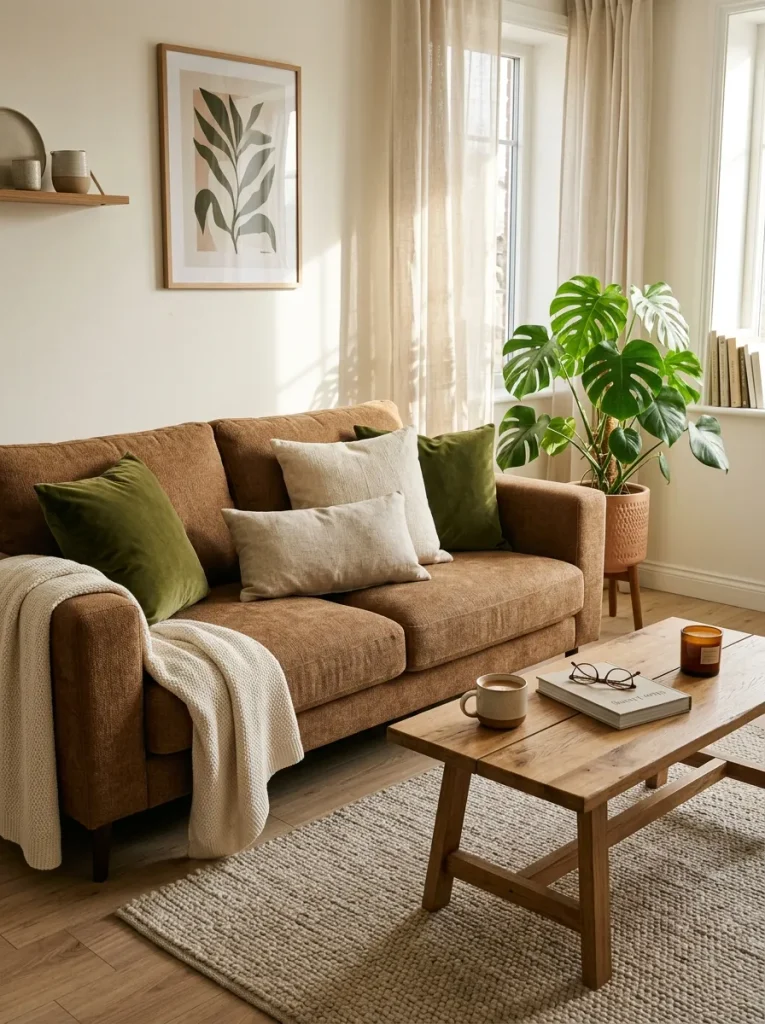
Cost: Low | Time: 15 minutes | Skill Level: Beginner
Best For: Earthy interiors | Works In: Neutral or warm-toned rooms
Result: Softer contrast with natural character
Olive green gives brown upholstery a fresh botanical accent without creating a sharp color clash. Start with two olive cushions and balance them with cream or beige pieces. I’ve noticed that repeating the green through a plant, artwork, or small vase makes the color feel connected rather than randomly added.
Soft White Walls
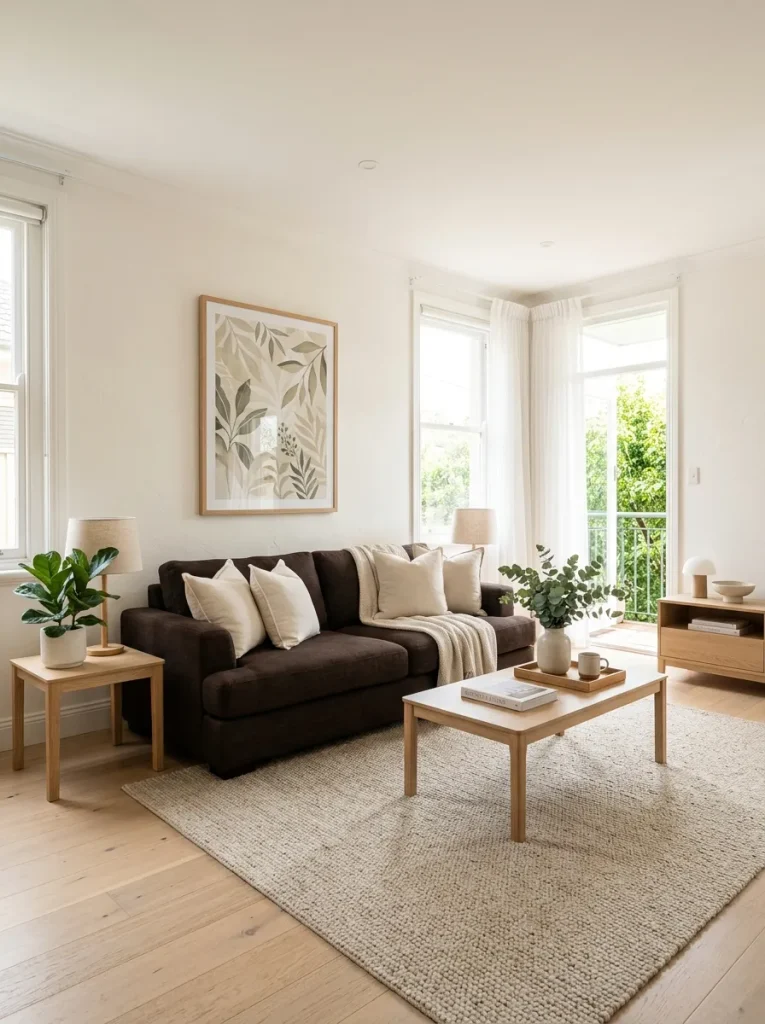
Dark seating can look dramatically different against a soft white backdrop. Warm white walls provide enough contrast to define the sofa while avoiding the stark feeling that some cool whites create. Keep nearby furniture light or medium-toned, then add natural textures to prevent the room from feeling too plain.
For a balanced palette, choose whites with cream, ivory, or subtle beige undertones. Test a paint sample beside the sofa before committing because natural and artificial lighting can change how the wall color appears. This simple background also gives you more freedom to change accent colors later.
Patterned Accent Rug
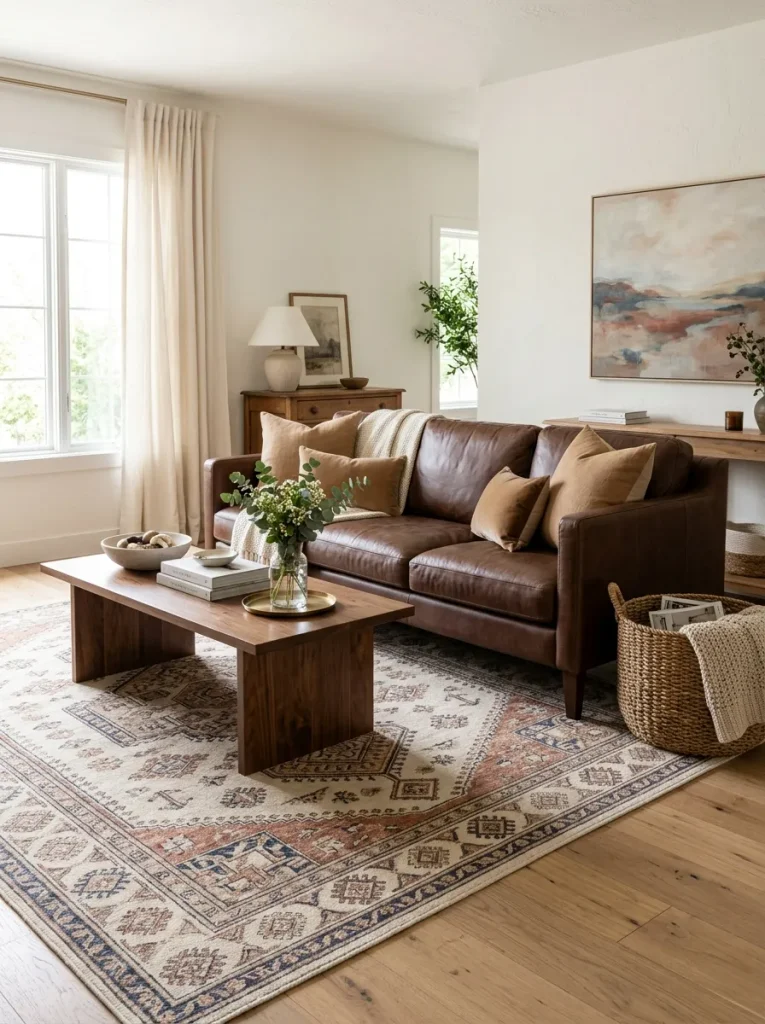
- Start with the palette: Choose patterns containing brown, cream, beige, rust, olive, or muted blue.
- Check the scale: Larger rooms can handle bolder motifs, while smaller spaces benefit from finer patterns.
- Anchor the furniture: Place the rug beneath the front legs of the sofa and nearby chairs.
- Keep accessories calmer: Let the rug provide the strongest pattern in the seating area.
- Repeat one shade: Echo a rug color in cushions or artwork for a connected look.
A patterned rug can make brown seating feel more layered without adding another large piece of furniture. Geometric, vintage, or subtle botanical designs all work well when their colors connect with the existing palette. For everyday spaces, a low-pile patterned rug is also practical because small marks are less noticeable.
Vintage Leather Styling
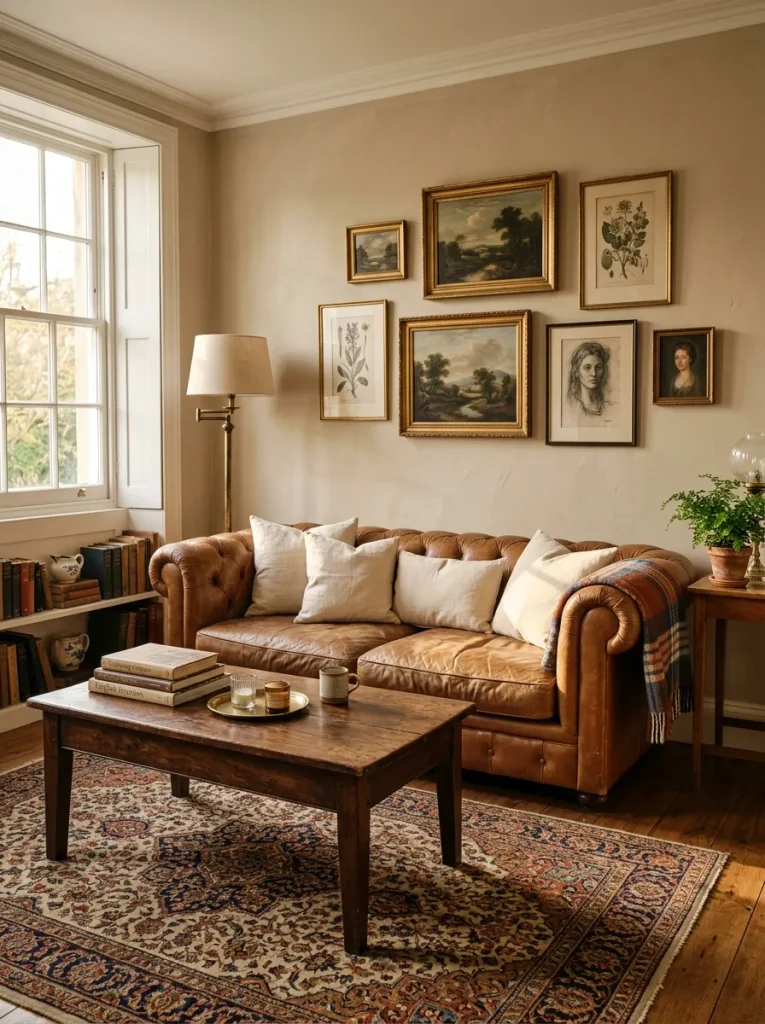
| Feature | Option A: MinimagVintage | Option B: Collected Vintage |
| Leather Finish | Smooth caramel | Distressed brown |
| Rug | Simple patterned | Persian-inspired |
| Accessories | Few statement pieces | Layered antiques |
| Wood | Light walnut | Dark aged wood |
| Overall Feel | Clean and relaxed | Rich and traditional |
Vintage styling works best when the room has a few pieces with visible character rather than a collection of unrelated antiques. Let the leather remain prominent, then add aged wood, warm brass, and one patterned rug. The goal is a lived-in arrangement that feels authentic rather than overly themed.
Neutral Gallery Art
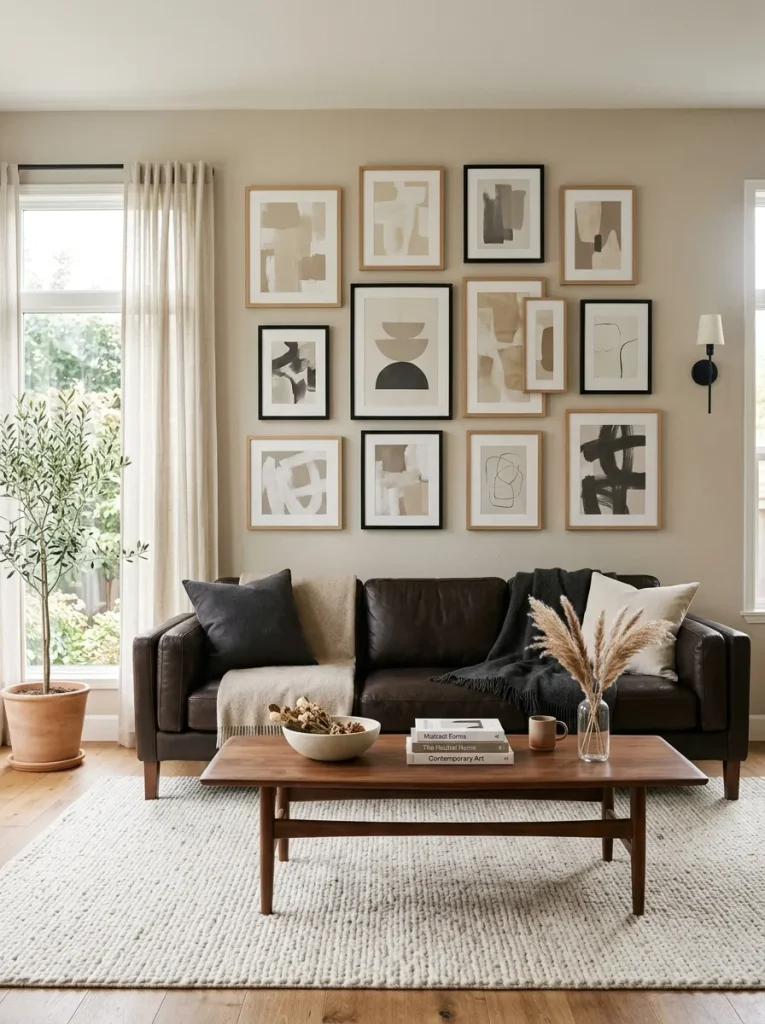
DO:
- Choose artwork with cream, beige, taupe, brown, or muted black.
- Mix abstract prints with simple line drawings or photography.
- Keep frame finishes limited to two complementary materials.
- Center the arrangement visually over the sofa.
DON’T:
- Fill every frame with the same type of artwork.
- Use colors that compete strongly with the sofa.
- Hang the entire arrangement too close to the ceiling.
- Make every frame identical if you want a collected look.
Neutral artwork adds personality while keeping attention on the furniture and room architecture. A mix of organic shapes and simple prints works particularly well with brown upholstery because the palette stays connected. Leave consistent spacing between frames, then step back several feet before making final adjustments to the arrangement.
Conclusion
A brown sofa gives you a wonderfully versatile starting point for creating a warm and welcoming living room. From soft neutrals and earthy greens to patterned rugs, natural textures, and contrasting accents, these brown couch living room ideas offer plenty of ways to personalize your space without replacing your main furniture.
Start with one idea that fits your current room, then build gradually around it. I’ve seen how small changes like new cushions, better lighting, or a lighter rug can completely shift the way a space feels. Save this post on Pinterest so you can revisit your favorite ideas, try one this week, and share the article with someone planning their own living room refresh.