21 Fresh Living Room Ideas With a Green Couch to Try
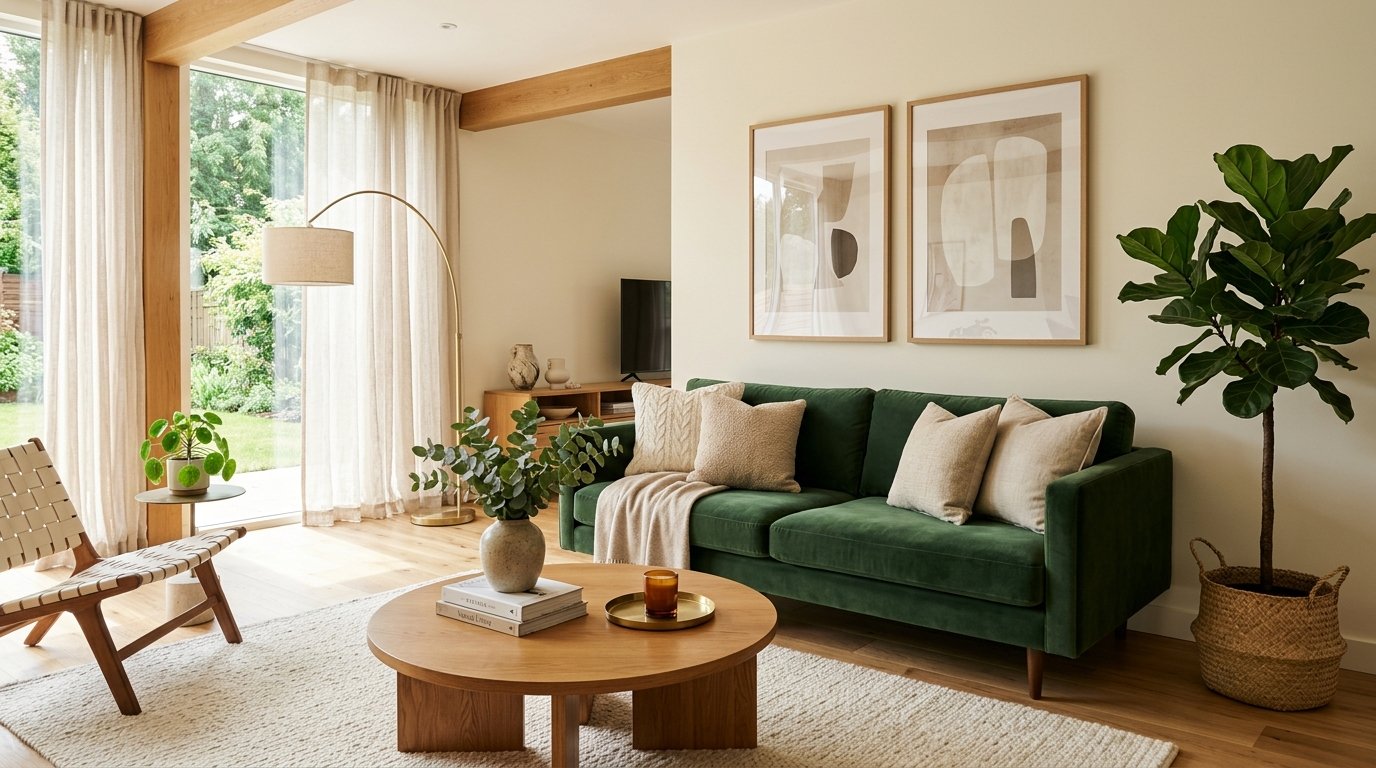
Green seating can become the feature that makes a living room feel warm, fresh, and full of character. The challenge is knowing what colors, textures, and furniture choices will make it work without creating a cluttered look. These living room ideas with a green couch offer practical inspiration for styling different spaces, from compact apartments to larger family rooms. You’ll find approachable ways to pair green upholstery with wood, cream, brass, plants, patterns, and layered lighting. In my experience, the easiest rooms to style start with the sofa as the anchor and build outward with a small, repeatable color palette. Keep reading for ideas you can actually use.
Living Room Ideas With a Green Couch
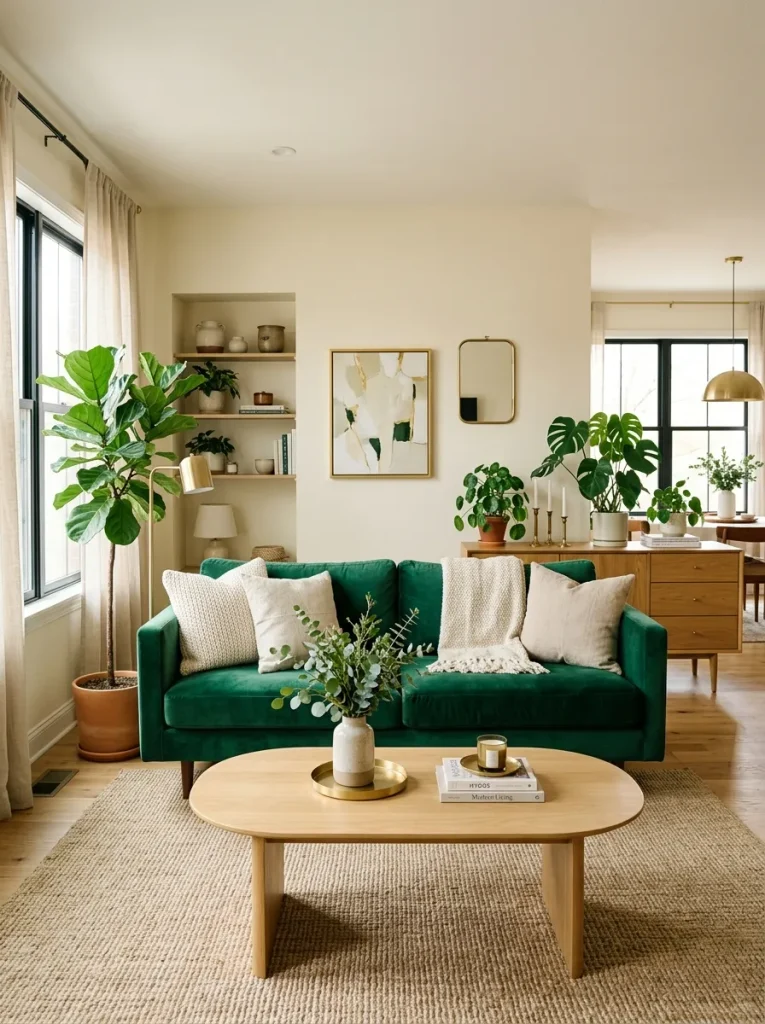
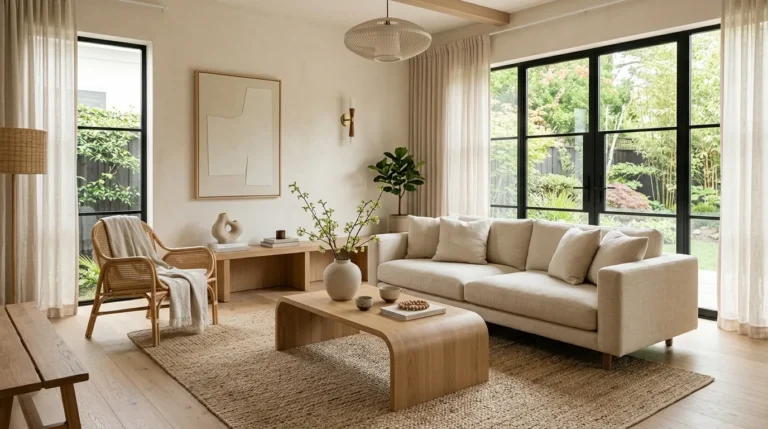
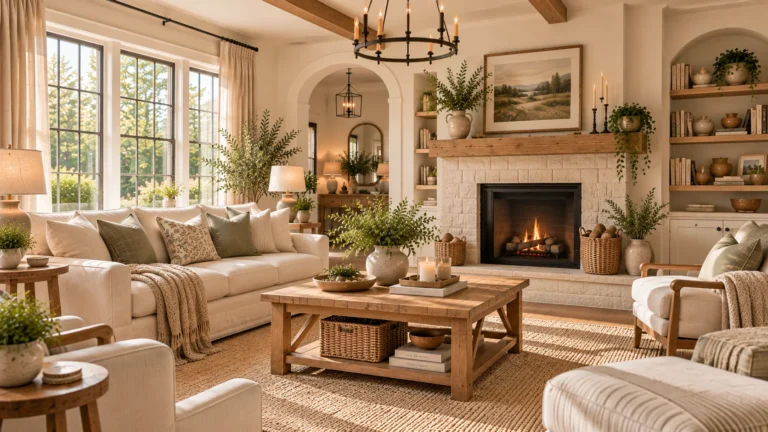
The right styling can make a green sofa feel surprisingly easy to decorate around. Start with warm neutrals such as cream, beige, and light wood to soften the deeper color. A textured rug and simple linen curtains keep the room relaxed while allowing the couch to remain the main visual anchor.
I’ve noticed that green sofas look especially balanced when nearby accessories repeat just one or two related tones. Add olive cushions, a leafy plant, or muted artwork rather than filling the room with competing colors. This approach creates a collected look without making the space feel overly coordinated.
Layered Neutral Textures
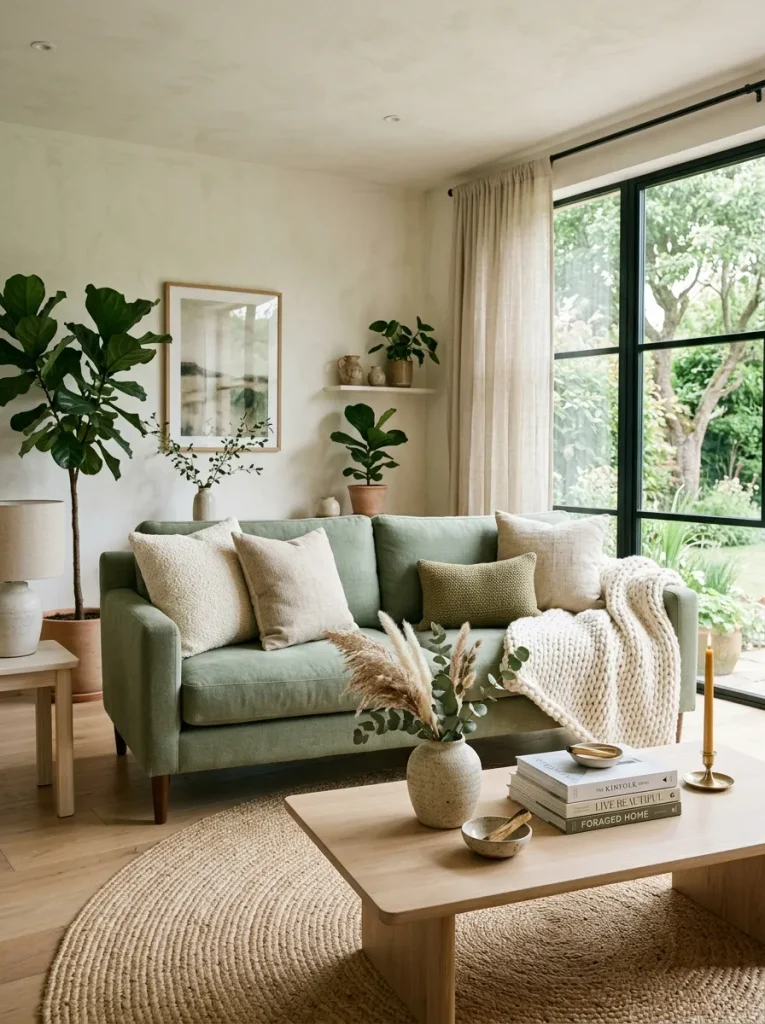
- Choose an ivory or beige rug with visible texture to ground the seating area.
- Mix boucle, linen, cotton, and woven materials for depth without adding more strong colors.
- Add a light wood coffee table to bring warmth beside the green upholstery.
- Keep wall decor simple with botanical prints, pottery, or neutral abstract art.
- Repeat cream and tan shades in small accessories for a connected look.
Layered textures help a green sofa feel softer and more inviting, especially in rooms with simple architecture. Instead of adding many decorative colors, build interest through materials. A woven basket beside the couch, a nubby rug underfoot, and linen cushions can make the entire seating area feel thoughtfully finished.
Warm Wood Accents
Quick Tip:
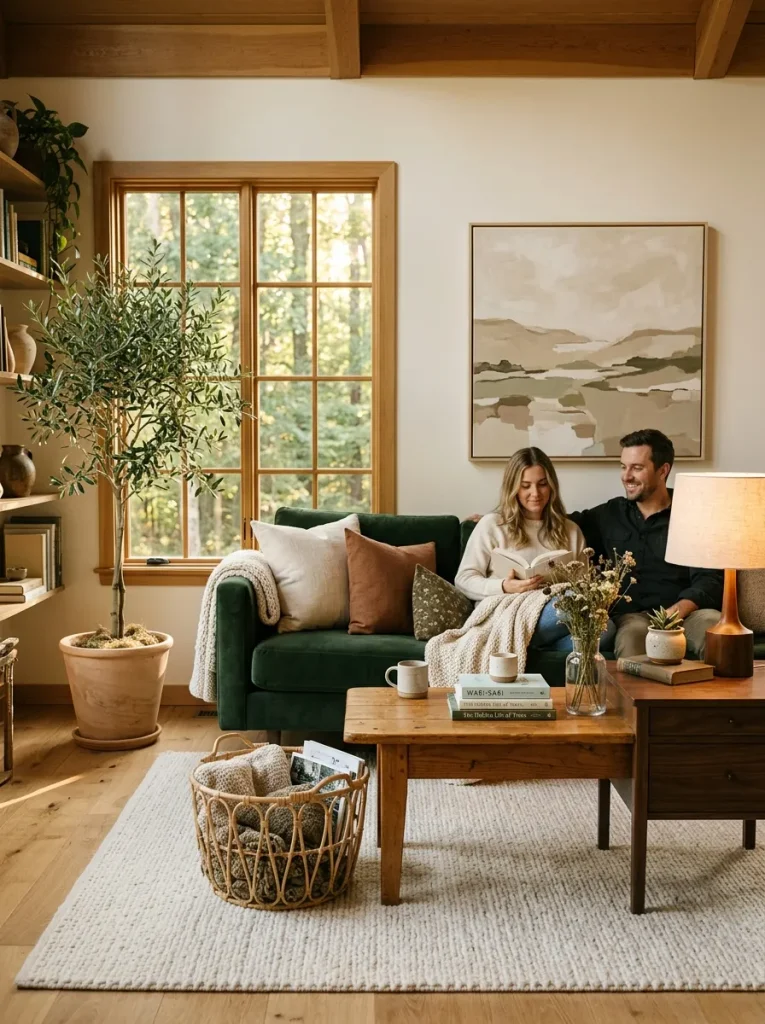
Use two or three wood tones at most so the room stays visually calm. Choose warmer woods such as oak, walnut, or teak to complement green upholstery. If the couch is a dark shade, lighter wood furniture can keep the seating area from feeling visually heavy.
Green and wood naturally create an earthy combination that works especially well in relaxed living rooms. Place a wood coffee table near the center, then repeat the material through a side table, picture frames, or decorative tray. The result feels warm and grounded without relying on excessive decoration.
Cream Wall Contrast
BEFORE:
Dark furniture and cool gray walls can make a green couch feel heavier than expected. The room may lack contrast, especially when the floor and accessories are also dark.
AFTER:
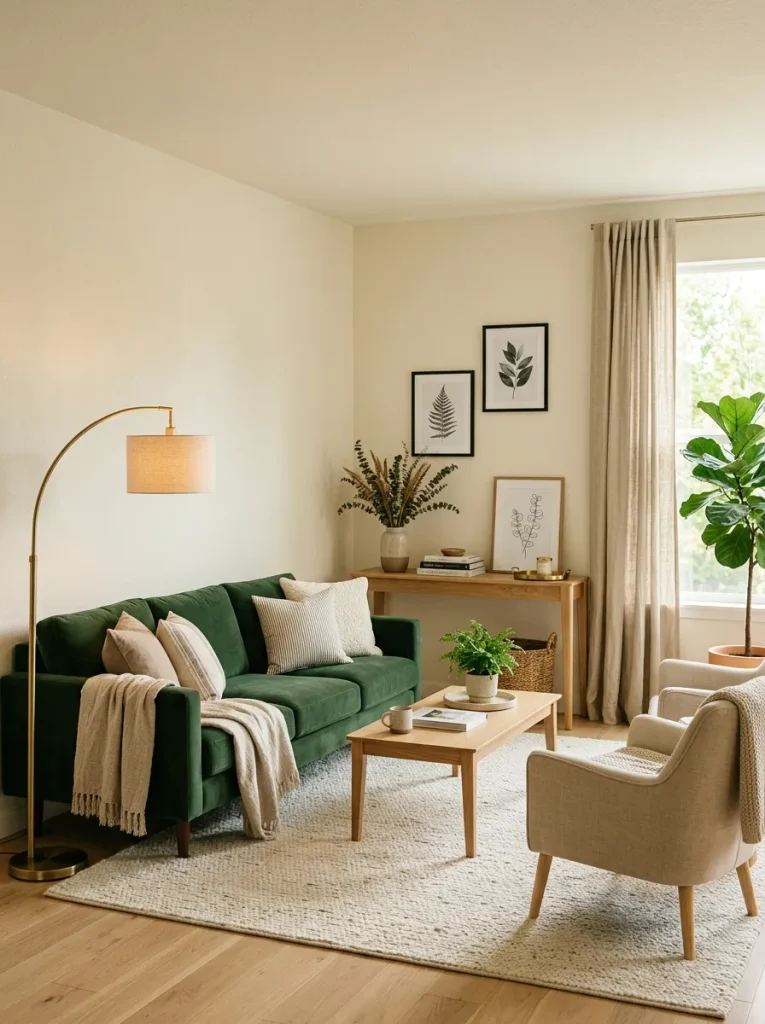
Warm cream walls immediately create breathing room around the sofa. Add ivory textiles and light wood furniture to keep the seating area bright while preserving the richness of the green upholstery.
A lighter backdrop works particularly well with emerald, forest, and deep olive sofas. In my experience, warm white paint feels more inviting than stark white beside saturated green. Keep larger surfaces light, then introduce darker accents through lamps, frames, or small tables for controlled contrast.
Botanical Greenery
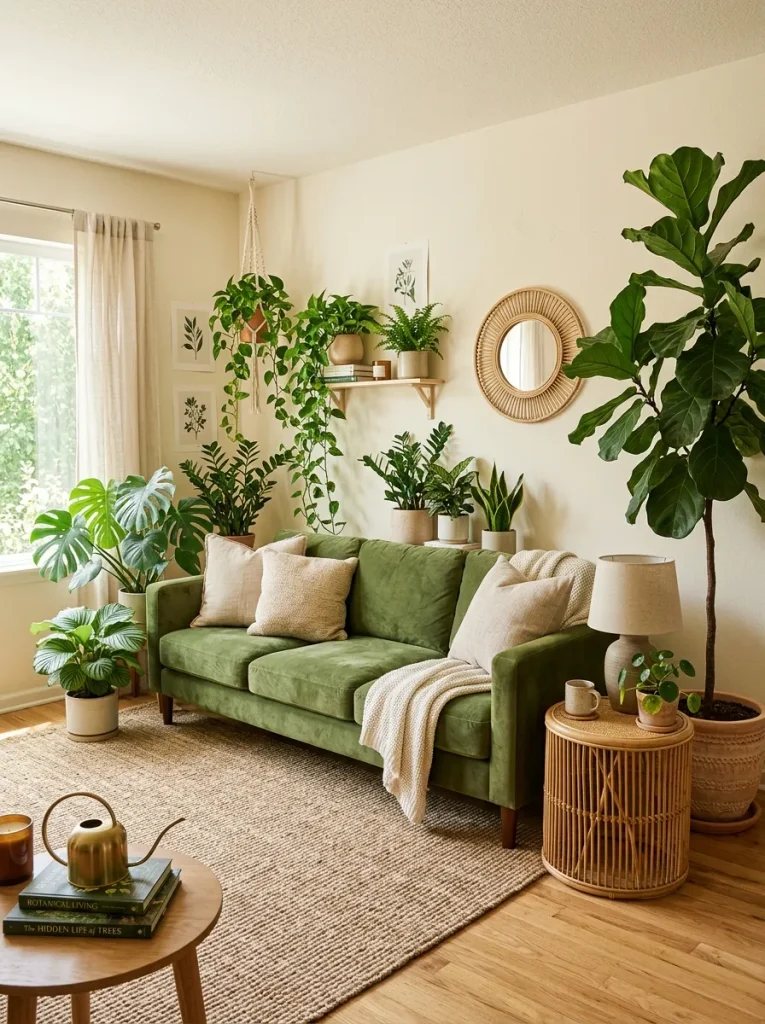
- Choose varied plant heights: Place one tall plant near the couch and smaller plants on shelves or tables.
- Mix leaf shapes: Combine broad leaves with delicate trailing greenery for visual variety.
- Use simple planters: Terracotta, cream ceramic, and woven baskets complement green upholstery without competing with it.
- Leave breathing room: Keep plants around furniture edges rather than filling every empty corner.
Natural greenery reinforces the earthy character of green seating while adding texture and movement. Position taller plants beside the sofa instead of directly behind it, so the upholstery remains visible. For darker couches, plants with lighter green leaves can provide a subtle contrast that keeps the arrangement fresh.
Brass Accent Details
| Feature | Option A | Option B |
| Metal finish | Brushed brass | Polished chrome |
| Overall feel | Warm and refined | Cool and contemporary |
| Best green tones | Olive, sage, forest | Mint, teal, gray-green |
| Supporting colors | Cream, tan, walnut | White, gray, black |
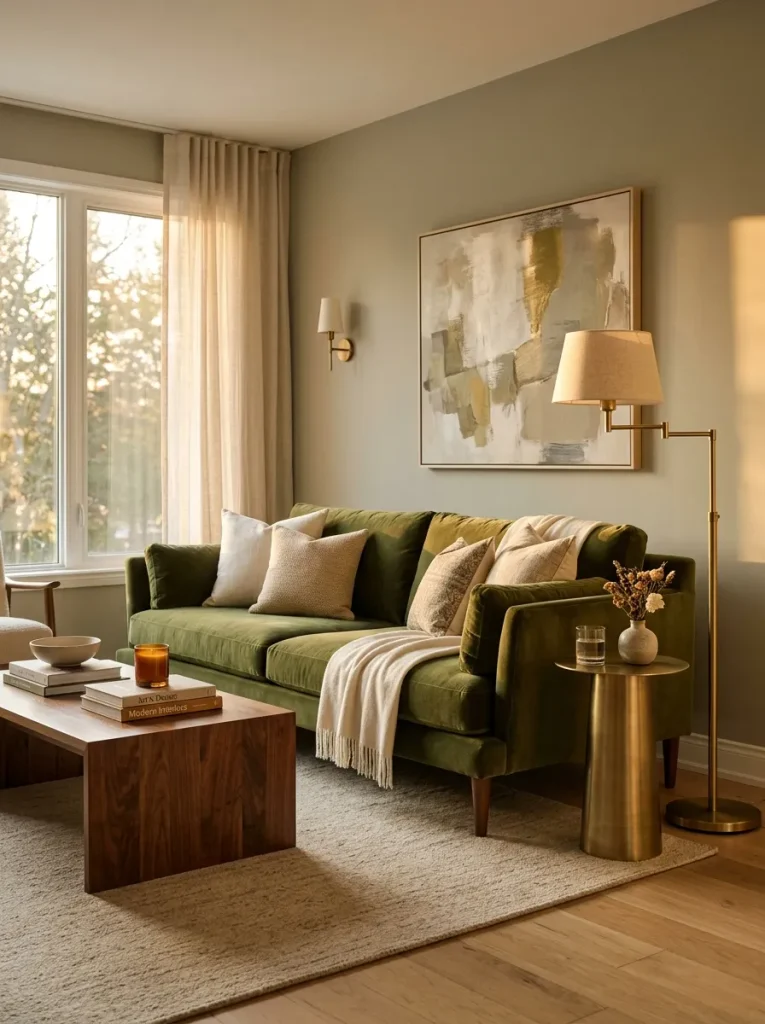
Brass brings warmth to green upholstery without requiring bold decorative colors. A brass lamp, mirror frame, or small tray is enough to introduce the finish. Keep the metal consistent across two or three pieces so the room feels intentional rather than decorated with unrelated metallic details.
Layered Earthy Tones
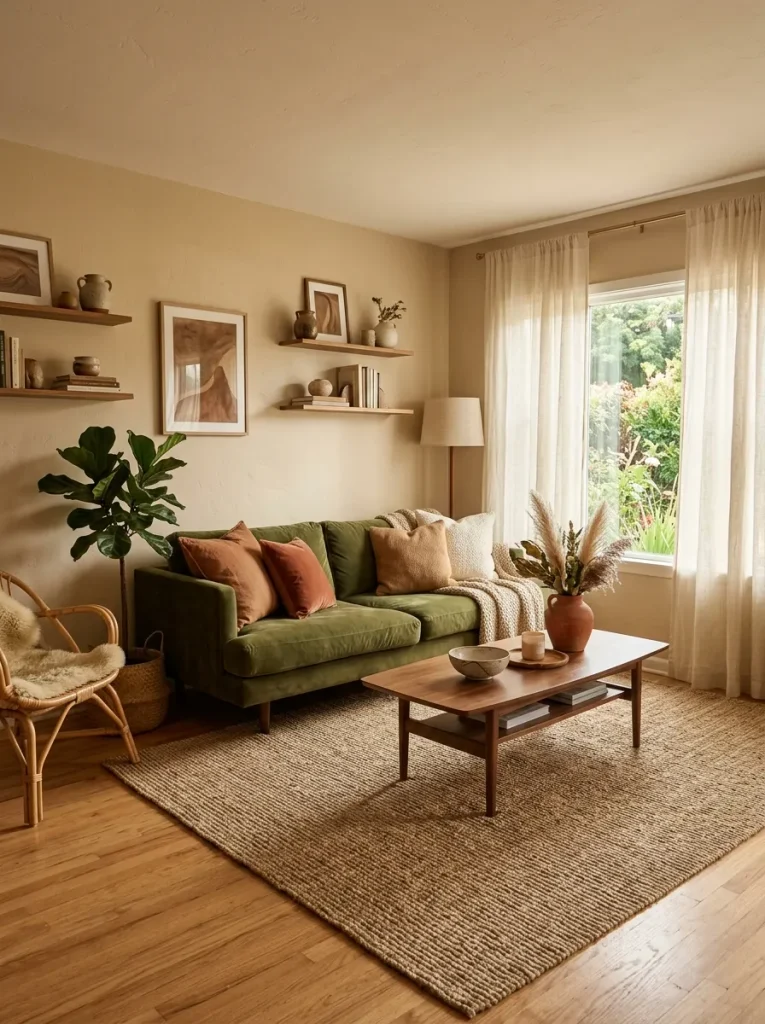
DO:
- Pair green upholstery with terracotta, camel, rust, or warm beige accents.
- Repeat earthy colors through cushions, artwork, rugs, or ceramics.
- Keep the largest furniture pieces in simple neutral or wood finishes.
- Use natural textures to soften stronger accent colors.
DON’T:
- Mix too many saturated colors in the same seating area.
- Choose cool blue-gray accessories without testing them beside the couch.
- Overload the room with matching earthy patterns.
- Ignore the undertone of your specific green fabric.
Earthy colors make a green couch feel connected to the rest of the room rather than isolated. Start with one warm accent shade, then repeat it in two or three smaller details. A rust cushion and terracotta vase can be enough to warm an olive sofa without making the palette feel busy.
Small Space Layout
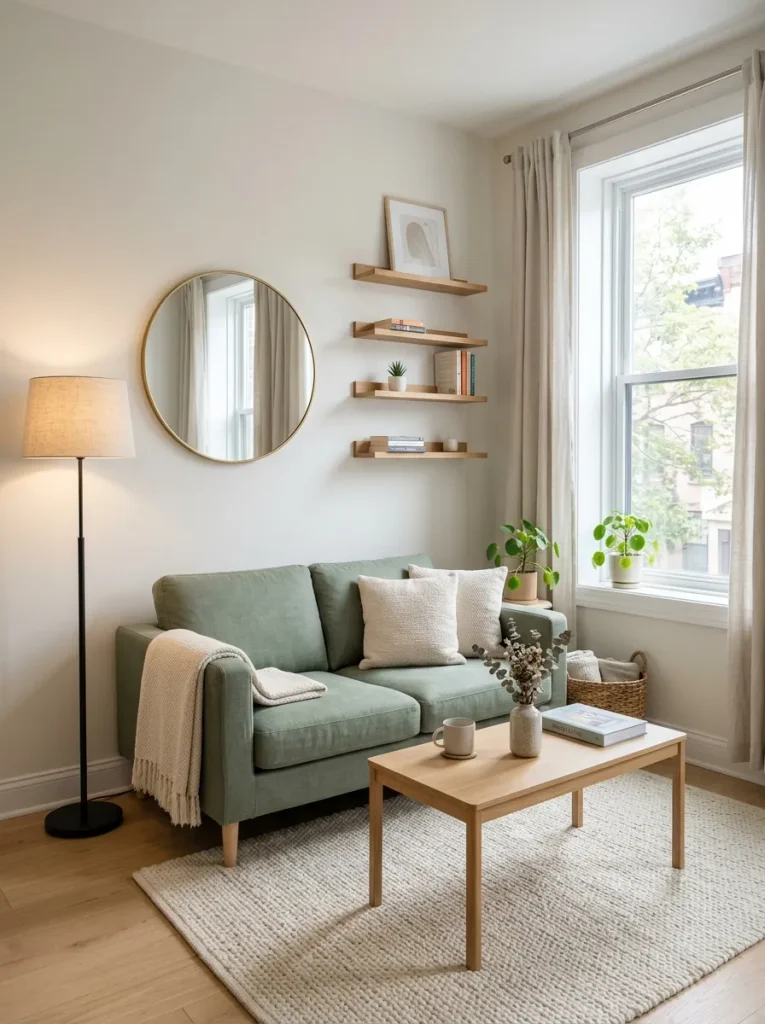
Cost: Moderate | Time: One afternoon | Skill Level: Beginner
Best For: Apartments and small living rooms
Works In: Scandinavian, modern, organic styles
Result: More floor space and better visual flow
Small rooms benefit from furniture that leaves the floor visible around the green sofa. Choose a narrow coffee table, slim side table, and compact lighting rather than bulky pieces. I’ve seen this arrangement work especially well in apartments because the green couch adds personality without requiring many additional decorative elements.
Patterned Throw Pillows
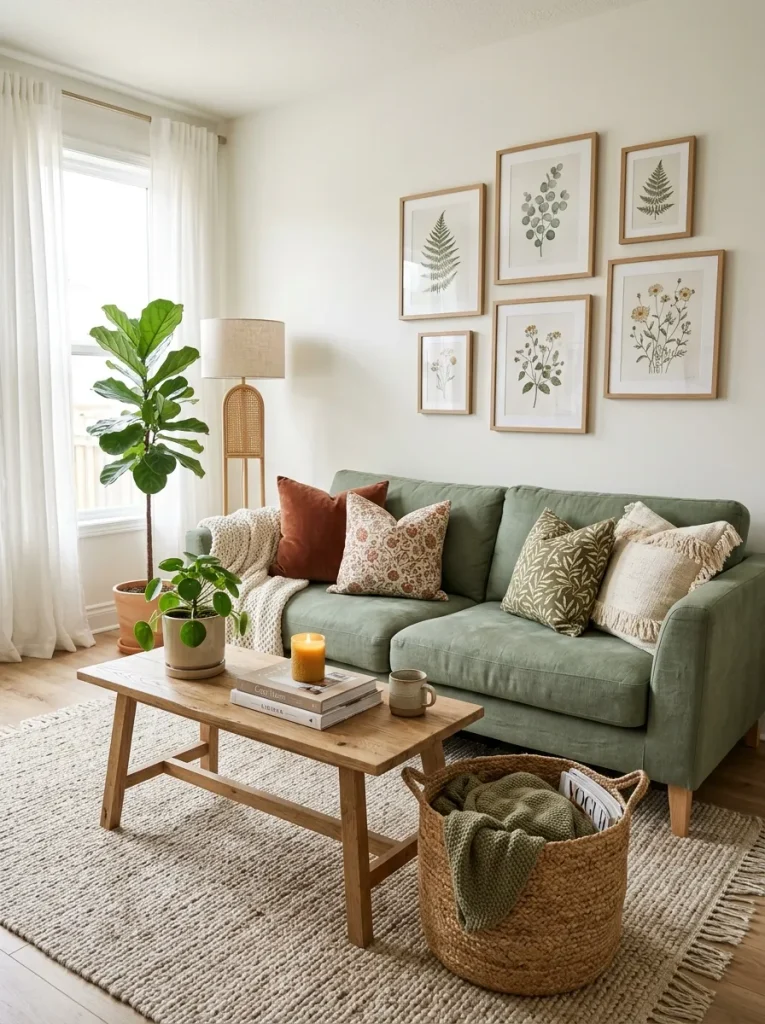
Pattern can make a plain green sofa feel more personalized without changing the furniture. Choose one patterned pillow as the starting point, then build around its colors with solid cushions in cream, rust, beige, or olive. Keep patterns varied in scale so the arrangement feels layered rather than visually crowded.
A simple formula works well: one larger pattern, one smaller pattern, and one solid texture. For example, pair a botanical cushion with a subtle stripe and a chunky cream pillow. This gives the couch visual interest while keeping the surrounding decor calm enough for everyday living.
Rattan Furniture Pairing
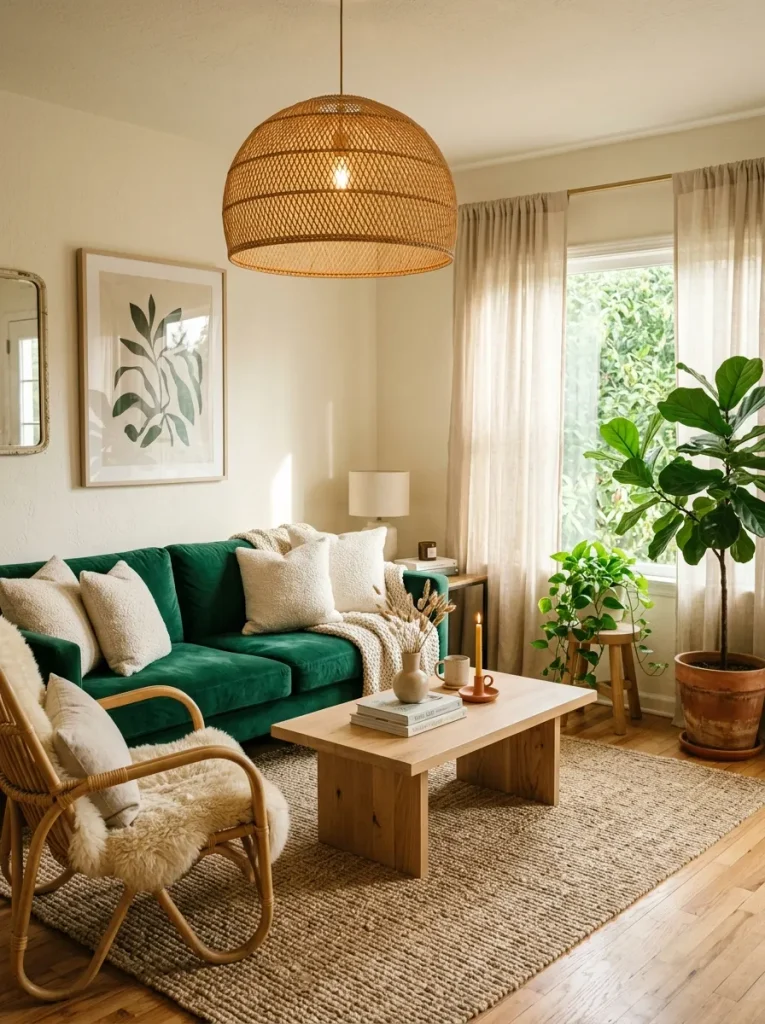
- Choose a rattan chair with a simple frame so the room does not feel overly rustic.
- Repeat woven texture through baskets, lampshades, or small decorative pieces.
- Balance the natural materials with smooth surfaces such as glass or painted wood.
- Keep the surrounding palette warm with cream, tan, beige, and muted green.
Rattan adds lightness beside a substantial green sofa, especially when the couch has deep or bulky upholstery. Place a woven chair opposite or beside the sofa to create a balanced conversation area. Natural fibers also introduce texture without adding another strong color, making them useful in neutral living rooms.
Gallery Wall Above Sofa
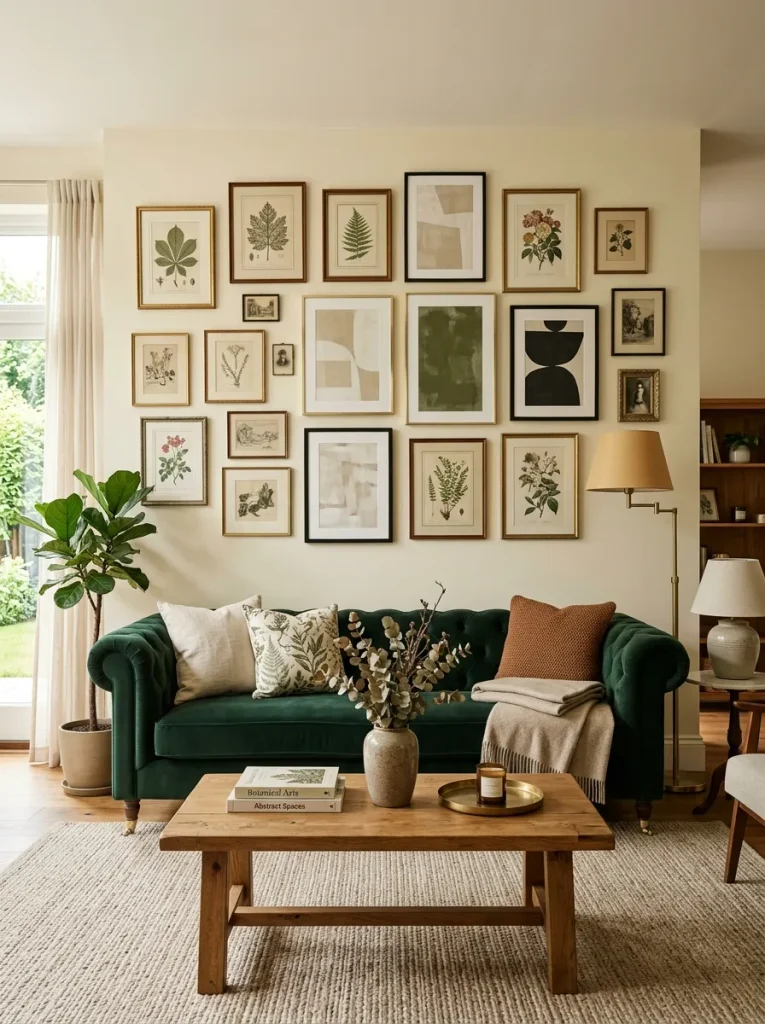
Quick Tip:
Keep the gallery wall connected to the sofa through color rather than identical artwork. Choose prints containing small touches of green, cream, beige, or warm brown. Lay the frames on the floor first to test spacing and arrangement before making holes in the wall.
Artwork can give a green sofa a stronger visual backdrop while making the entire seating area feel intentional. Start with one larger central print, then add smaller pieces around it. Leave consistent gaps between frames, and keep the lowest artwork comfortably above the sofa back for a polished arrangement.
Natural Linen Styling
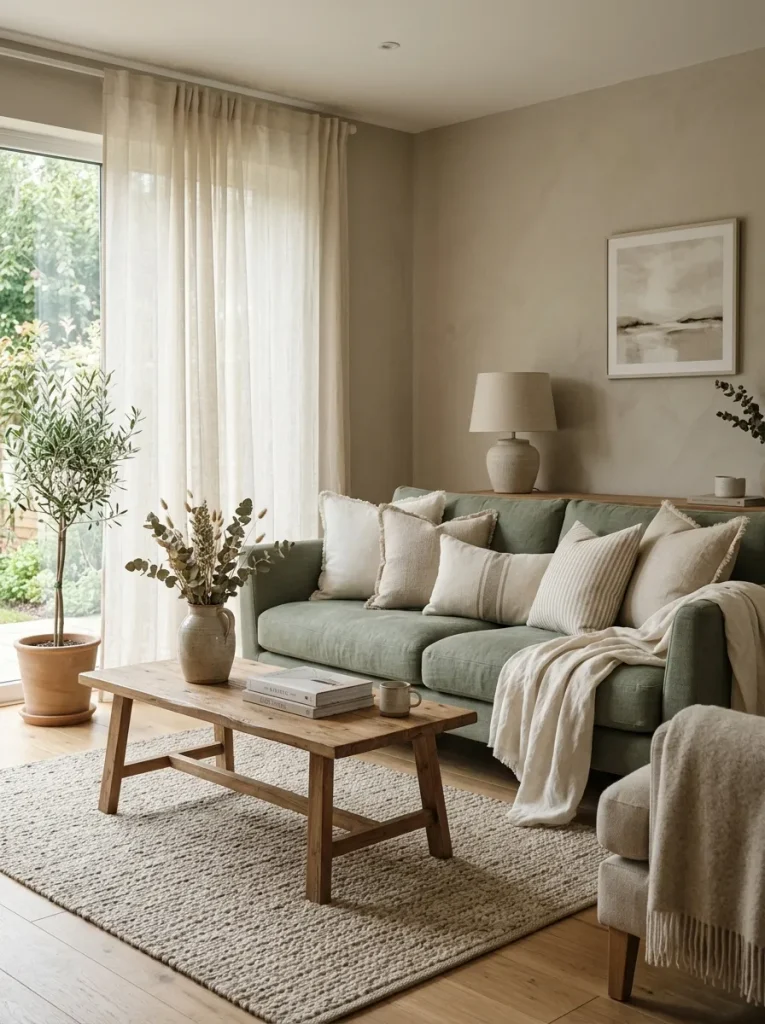
BEFORE:
A green sofa surrounded by glossy fabrics and heavy accessories can feel disconnected from a relaxed home. Too many smooth surfaces may also make the seating area look flat.
AFTER:
Linen cushions, cotton throws, woven rugs, and unfinished wood introduce softer visual texture. The green upholstery becomes part of a calm, natural palette instead of standing alone as the dominant feature.
Natural fabrics are especially useful for creating a comfortable everyday seating area. Choose slightly different neutral shades rather than matching every textile exactly. Cream, oatmeal, flax, and warm beige can sit together naturally, while the green couch provides enough color to keep the room from looking washed out.
Black Accent Contrast
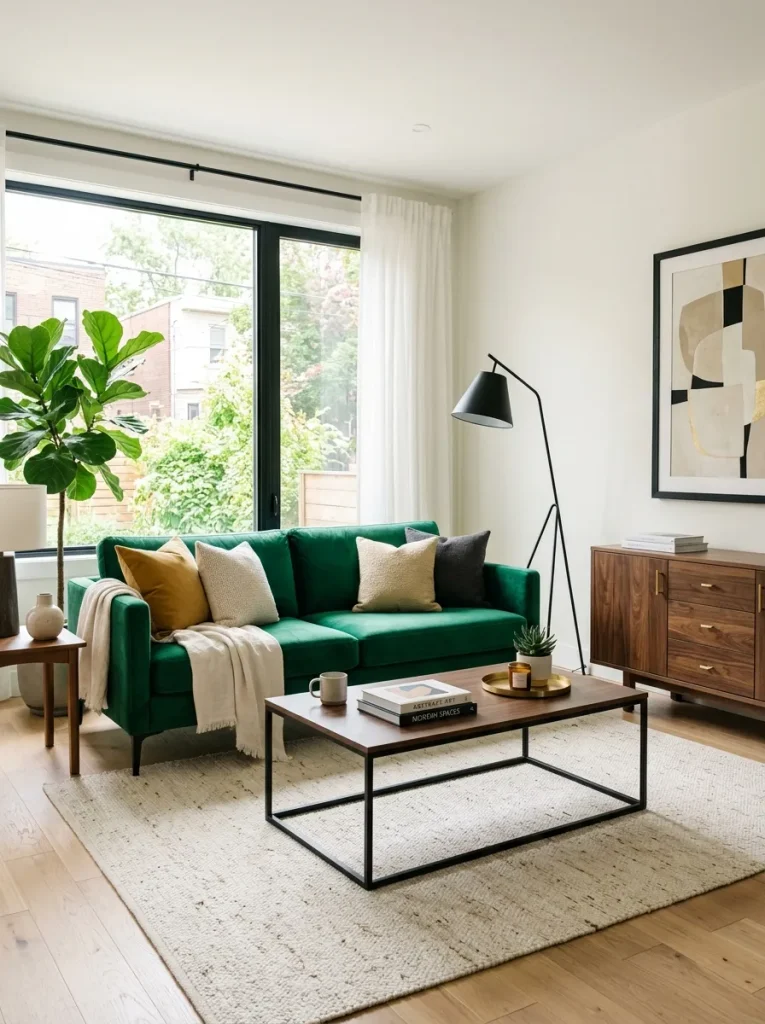
- DO: Add black through one or two structured pieces, such as a floor lamp or picture frame.
- DO: Balance dark accents with cream walls, light rugs, or pale textiles.
- DO: Use matte black finishes for a softer, modern appearance.
- DON’T: Cover the room in black accessories that compete with the green couch.
- DON’T: Combine several unrelated dark finishes without repeating them.
- DON’T: Use black accents as the only contrast in an already dark room.
Black details give green upholstery a sharper outline and can help modernize traditional furniture. The key is proportion. A black lamp, curtain rod, and frame can create enough repetition to make the room feel cohesive. Keep larger surfaces lighter so the green sofa remains the main source of color.
Cozy Reading Corner
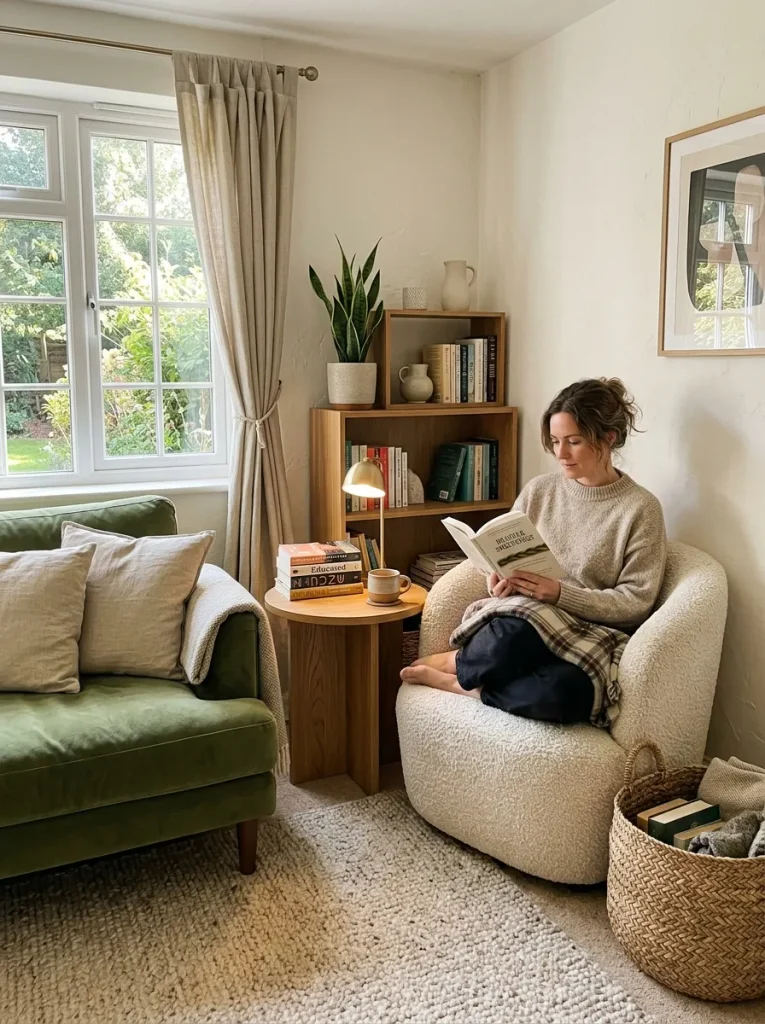
Cost: Moderate | Time: 2 to 3 hours | Skill Level: Beginner
Best For: Larger living rooms | Works In: Cozy and organic interiors
Key Pieces: Reading lamp, side table, chair, soft rug | Result: Defined relaxation zone
A reading corner gives the living room another useful purpose while complementing the green couch. Place a comfortable chair near a window or lamp, then add a small table for books and a drink. Keep the chair in a neutral shade so the green sofa remains the stronger visual anchor.
Textured Area Rug
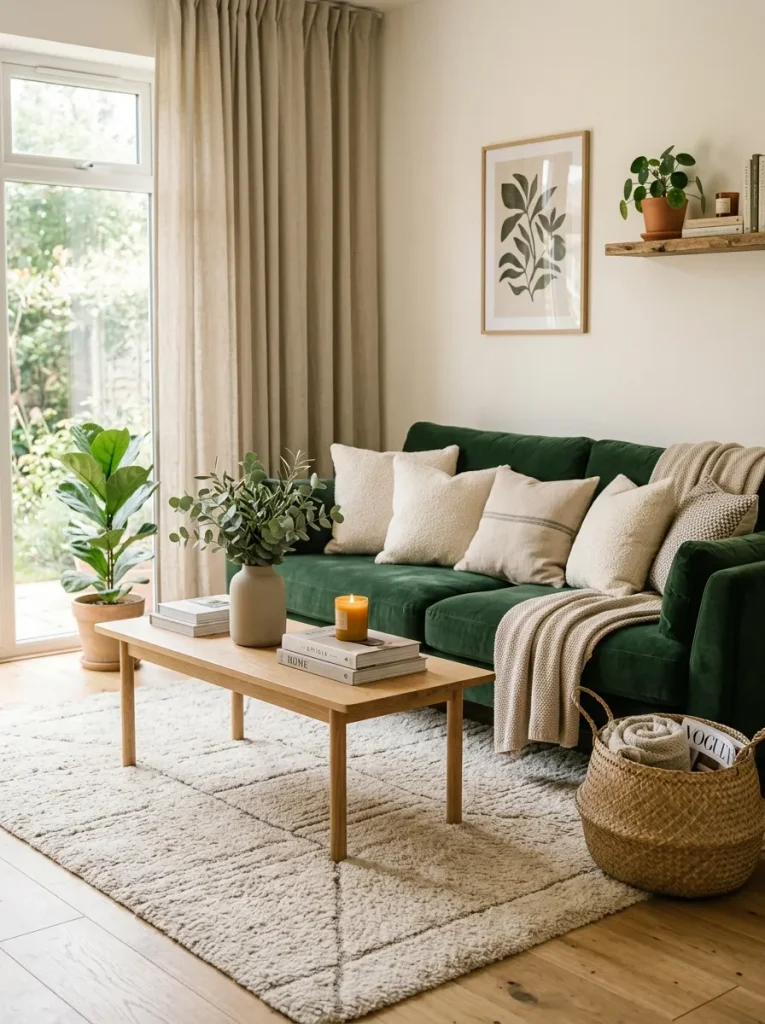
The rug under your seating arrangement should extend beyond the front legs of the green sofa whenever possible. This simple sizing choice makes the furniture feel connected rather than scattered. For a bold green couch, cream, oatmeal, taupe, and softly patterned rugs provide contrast while keeping the overall palette comfortable.
Texture matters as much as color here. A flat rug creates a cleaner modern effect, while a high-pile or woven design adds warmth and softness. I’ve found that subtle patterns are especially practical because they hide everyday marks while still giving the seating area more visual depth.
Wood Slat Feature Wall
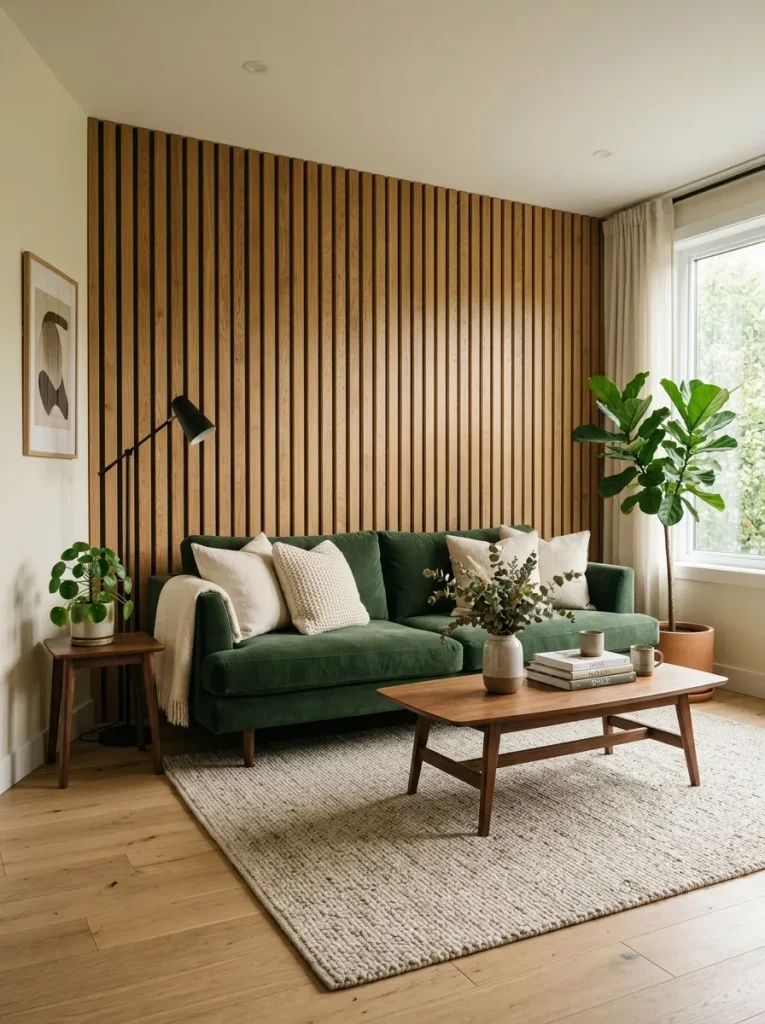
- Choose the wall: Select the wall behind the sofa so the slats create a defined visual backdrop.
- Pick a warm finish: Oak, walnut, or natural wood tones work well beside green upholstery.
- Keep furniture simple: Use a low coffee table and neutral seating accessories to avoid visual competition.
- Add soft contrast: Introduce cream textiles and muted artwork to balance the strong wall texture.
A slatted wood wall gives a green sofa architectural interest without requiring bold artwork. Keep the wood tone consistent with other furniture where possible. For smaller rooms, use slats on only part of the wall rather than covering the entire surface, which preserves a sense of openness.
Vintage Modern Mix
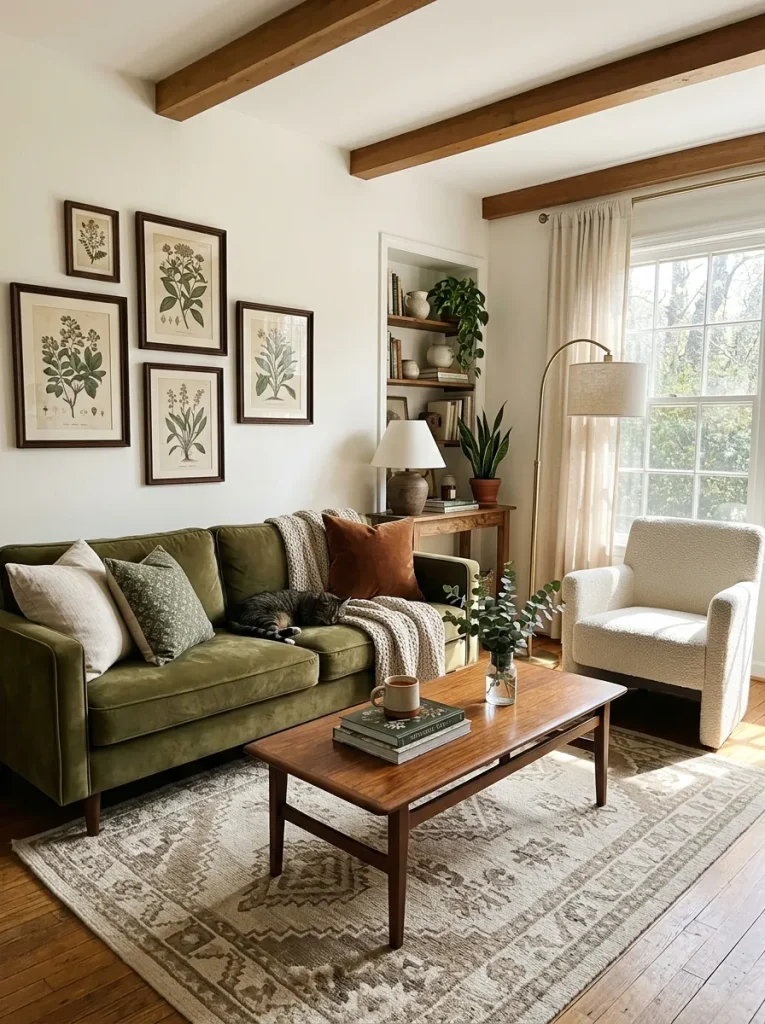
| Feature | Option A | Option B |
| Coffee table | Vintage wood | Modern glass |
| Lighting | Antique brass | Matte black |
| Artwork | Botanical prints | Abstract art |
| Accent color | Rust | Cream |
| Overall effect | Collected and warm | Clean and contemporary |
Mixing vintage pieces with modern furniture keeps a green couch from looking overly matched. Choose one or two older-looking pieces, then balance them with cleaner contemporary shapes. A vintage wooden table or brass lamp can add character while neutral upholstery and simple accessories keep the room practical.
Layered Lighting Scheme
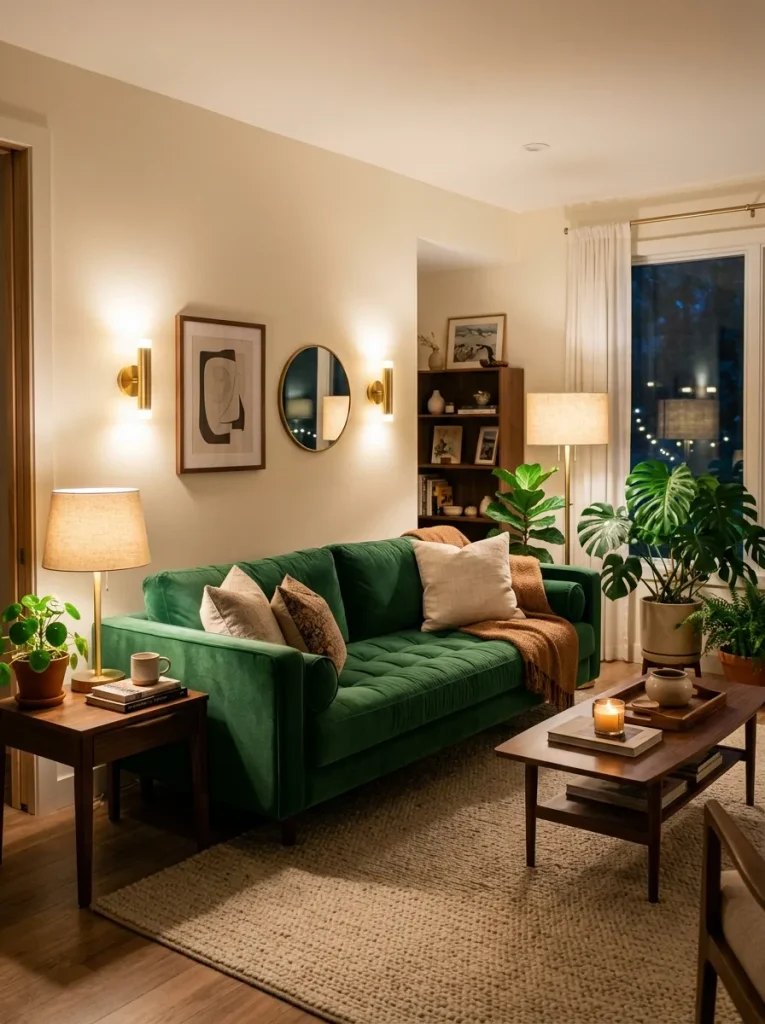
DO:
- Place a floor lamp beside the sofa for focused evening light.
- Add a table lamp to create a softer secondary glow.
- Use warm-white bulbs around 2700K to complement green upholstery.
- Keep overhead lighting dimmable when possible.
DON’T:
- Rely on one bright ceiling fixture for the entire room.
- Mix noticeably different bulb colors in nearby fixtures.
- Position lamps where cords create a walking hazard.
- Use harsh cool-white lighting that makes earthy colors look flat.
Good lighting can change how green upholstery looks throughout the day. Layer ambient, task, and accent lighting so the couch remains inviting after sunset. A warm floor lamp beside the seating area is particularly useful because it adds function while highlighting the texture and depth of the fabric.
Open Shelf Styling
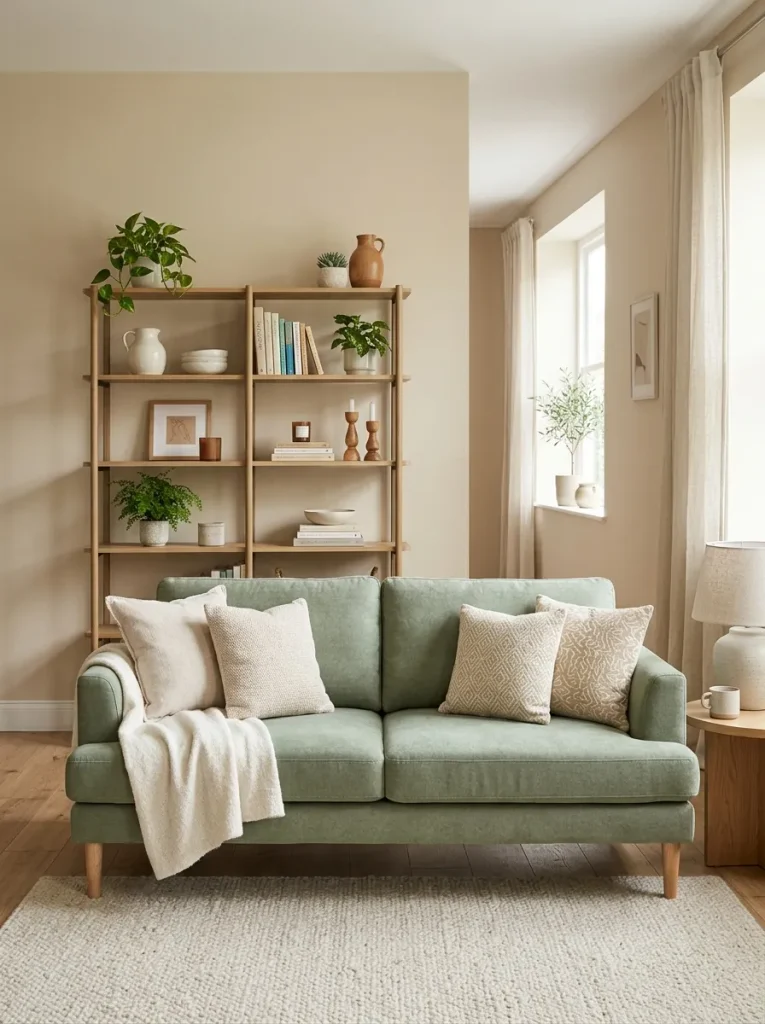
Cost: Low to Moderate | Time: 2 hours | Skill Level: Beginner
Best For: Small and medium living rooms | Works In: Modern, Scandinavian, organic styles
Key Focus: Balanced shelf styling | Result: More personality without visual clutter
Open shelving gives you a practical place to repeat colors found around the green couch. Start with cream ceramics, natural baskets, books, and a few plants. Leave some shelves partially empty so the display has breathing room. The goal is variation in height and texture, not filling every available space.
Soft Curtain Layers
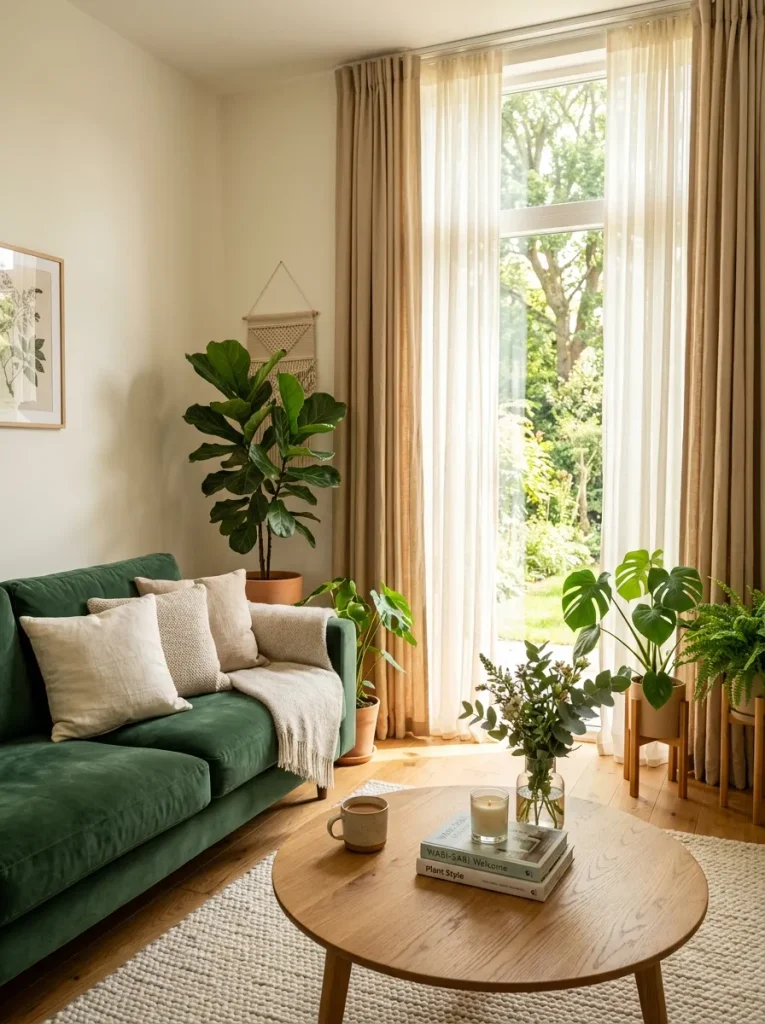
Window treatments can soften the strong color of a green sofa while making the room feel more finished. Hang curtains close to the ceiling and let them reach the floor for a taller visual effect. Choose ivory, oatmeal, or warm beige fabrics to keep the palette light and cohesive.
Sheer curtains allow daylight to spread across darker green upholstery, while heavier linen panels provide privacy in the evening. For rooms with limited natural light, avoid very dark curtains that can make the seating area feel enclosed. A light layered treatment keeps the space airy without looking bare.
Round Coffee Table
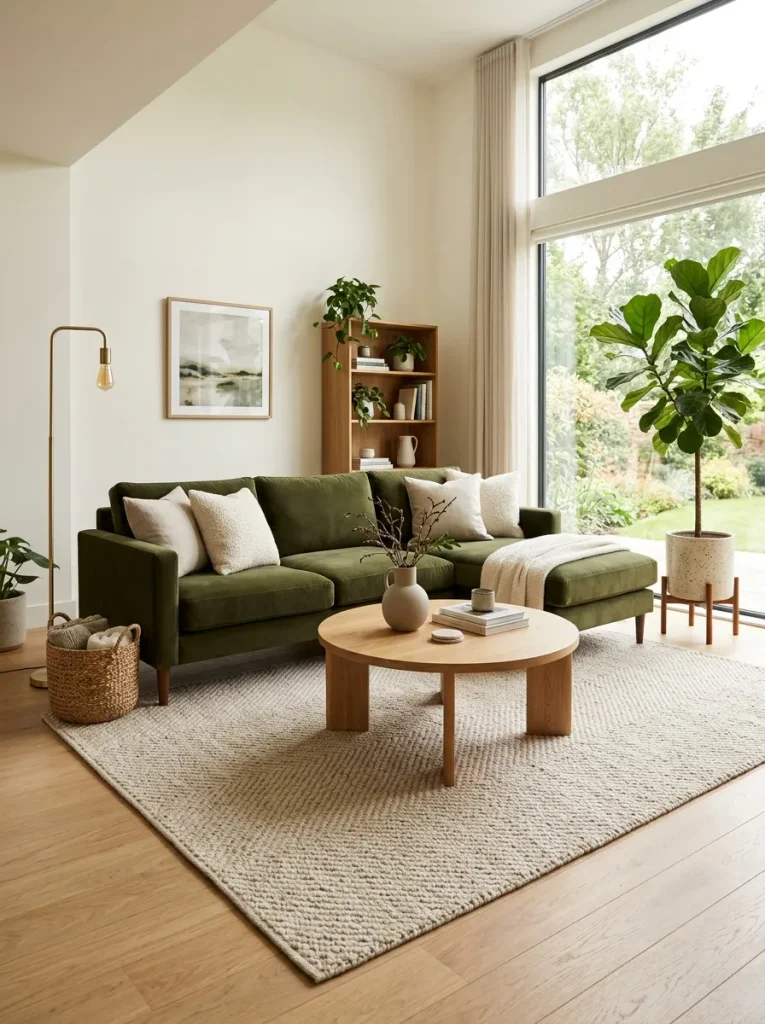
A round coffee table can make a seating arrangement feel easier to move through, especially when the room has several furniture pieces. Position it centrally with enough space around the edges for comfortable walking. Light oak or warm walnut provides a natural contrast against green upholstery.
For a smaller living room, choose a table with a slim base and modest diameter rather than a bulky design. Keep the tabletop lightly styled with one tray, vase, or stack of books. The open shape and uncluttered surface help the green couch remain the focal point without crowding the room.
Conclusion
I hope these ideas help you see how versatile a green couch can be. From neutral textures and warm wood to plants, patterned pillows, layered lighting, and practical layouts, small styling choices can make the whole room feel more balanced. These living room ideas with a green couch give you plenty of directions to explore without copying one exact look. I’ve seen how small changes like swapping a rug or adding warmer accents can completely shift the way a space feels. Save this post on Pinterest for your next decorating project, try the idea that fits your room, and share it with someone looking for fresh inspiration. Start small, trust your style, and enjoy the process.