

21 Daylight Savings Time Tips for a Smoother Spring
Losing an hour sounds small, but daylight savings time can leave mornings feeling rushed and nights feeling restless. A few calm steps before the change can help your body adjust with less stress and more steady morning energy each day.
This guide shares simple sleep, light, food, and routine tips you can start a few days ahead, plus quick fixes for the first mornings after the shift. I learned the hard way after one rough week of late nights and groggy starts that small steps work better than one big change. These ideas suit busy parents, students, shift workers, and anyone who wants a gentler start to brighter spring mornings at home without buying special tools or following a strict plan every single day, with clear steps you can repeat each year with ease.
Shift Bedtime Gradually

Start three or four nights before the change by moving bedtime fifteen minutes earlier each night. Keep wake time moving earlier too, so the shift feels gradual. This slow pace helps your body clock settle without a sudden jump that leaves you tired and foggy the next morning at home.
Dim the lights during the last hour and keep the same calm routine each night. A warm shower, soft music, and a book can signal sleep. By the night before the change, your usual bedtime will feel natural, and waking up will feel easier for the whole family.
Reset Bedroom Light

- Open curtains as soon as you wake up
- Use a warm lamp in the evening instead of bright ceiling light
- Keep the bedroom dark with simple blackout curtains at night
- Turn off hallway lights one hour before bed
Light tells your body when to feel awake and when to feel sleepy, so use it on purpose each day. Bright light early supports alert mornings, while softer light at night helps you wind down. Keep the pattern steady for a week and your sleep rhythm will settle without extra effort or cost.
Use Morning Sunlight

Quick Tip: Step outside within thirty minutes of waking, even on a cloudy day, and stay out for ten to twenty minutes.
Natural light in the morning is one of the simplest ways to reset your inner clock after the time shift. A short walk, coffee on the porch, or opening every blind at home all count. Cloudy light still helps, so do not skip gray days. Pair the light with gentle movement and your energy will lift naturally through the morning.
Check All Clocks
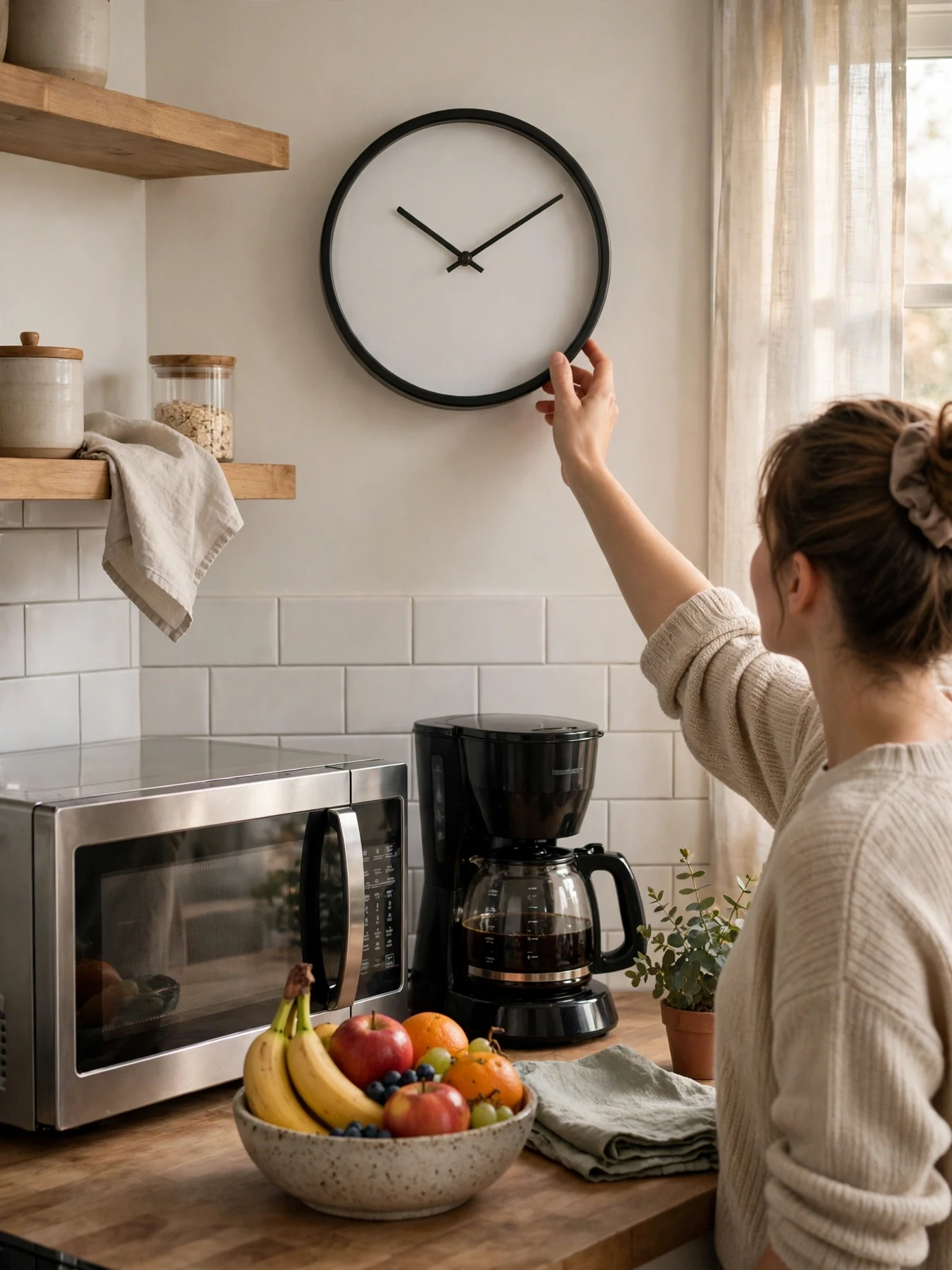
BEFORE: The stove, microwave, and wall clocks all show different times, and everyone guesses which one is right.
AFTER: Every clock in the home shows the same correct time, and the morning routine runs on one clear schedule.
Phones and laptops update on their own, but many home clocks do not. Walk through each room the night before the change and set ovens, microwaves, wall clocks, and car clocks by hand. This small check prevents missed alarms and late starts, and it makes daylight savings time feel organized instead of rushed at home.
Prep Kids Early

- Move dinner fifteen minutes earlier for three nights
- Shift bath time and story time earlier by the same amount
- Wake your child a little earlier each morning
- Keep the same order of steps every night
Kids adjust best when the whole evening moves together, not just bedtime alone. Keep mornings bright and active, and keep evenings quiet and predictable. If your child feels tired for a few days, that is normal. Stay patient, keep naps at the usual length, and a steady routine will help everyone settle within about a week.
Adjust Pet Routines

| Routine | Old Time | New Plan |
|---|---|---|
| Morning feed | Usual bowl time | Ten minutes earlier each day |
| Walk | Usual door time | Shift with the feed |
| Evening feed | Usual bowl time | Move in small steps |
Pets notice feeding and walk times more than the clock itself, so shift their routine in small steps over four or five days. Keep walks at the new times even on weekends. A few early mornings of waiting by the door are normal. Small steps keep your pet calm and protect your own sleep schedule too.
Plan Lighter Dinners

DO:
- Choose grilled, baked, or fresh meals in the evening
- Eat dinner a little earlier for a few nights
- Drink water with your meal
DON’T:
- Eat a heavy, rich meal late at night
- Snack on sweets right before bed
- Drink coffee or strong tea with dinner
A heavy late meal can keep you awake and make the lost hour feel worse the next day. Lighter dinners digest more easily and leave you comfortable at bedtime. Pair an earlier dinner with a short walk and your body will rest better through the night.
Limit Evening Screens

Cost: Free
Time: 30 to 60 minutes before bed
Skill Level: Easy
Best For: Adults and teens with late screen habits
Bright screens late at night can delay sleep and make early waking harder after the shift. Set a clear screen cutoff and charge phones outside the bedroom if you can. Fill the last hour with reading, music, stretching, or a warm shower instead. This one habit supports deeper sleep on busy nights for the whole household.
Create Calm Evenings

Build a short evening routine you can repeat every night, like a warm shower, soft pajamas, and ten minutes of reading. Keep the order the same so your brain links each step with sleep. Lower the lights and keep voices calm during the last hour at home each evening.
If your mind stays busy, write tomorrow tasks on paper and leave the list outside the bedroom. A cool, quiet room also helps most people fall asleep faster. After a few nights, this calm pattern becomes a cue, and falling asleep will feel simpler even when the clock has just changed.
Update Alarm Settings

- Check that phone alarms use the new time
- Set a backup alarm across the room
- Test alarm volume the night before
- Place work and school alarms ten minutes apart
Alarms cause the most stress on the first morning after the change, so check them twice the night before. A backup alarm gives peace of mind and helps deep sleepers wake on time. Keep the plan simple and written down, and your first morning will run smoothly without panic or rushing around the house.
Move Exercise Earlier

Quick Tip: Move hard workouts to the morning or afternoon for the first week after the change.
Late evening exercise can leave some people wide awake at bedtime, right when sleep matters most. Morning movement pairs well with daylight and supports steady energy all day. Gentle stretching at night is still fine. Start with short sessions and build up slowly, and your body will adjust faster to the new daily rhythm.
Keep Naps Short

BEFORE: A long late afternoon nap leaves you groggy and pushes bedtime later and later.
AFTER: A short early rest leaves you refreshed and keeps bedtime at the usual hour.
Naps can help during the first tired days, but long or late naps often steal sleep at night. Keep naps near twenty minutes and finish them by mid afternoon. Set a gentle alarm so you do not oversleep. If you can, rest in a chair instead of your bed, and your nighttime sleep will stay stronger through the whole adjustment week.
Hydrate Throughout Day

- Drink a full glass of water when you wake
- Keep a bottle with you through the day
- Drink water with each meal
- Slow down fluids one hour before bed
Tiredness can feel worse when you drink too little water, so steady hydration supports energy after the shift. Spread drinks across the day instead of drinking a lot at night, which can break sleep with bathroom trips. Add lemon or mint if plain water feels dull, and you will feel more alert by the afternoon.
Review Tomorrow Schedule

| Check | Night Before | Morning Of |
|---|---|---|
| Alarms | Set and tested | Confirm once |
| Outfits | Laid out ready | Dress and go |
| Bags | Packed by door | Pick up only |
Five quiet minutes with your schedule the night before can save a rushed morning. Check meeting times, school start times, and travel plans against the new clock. Note anything that moved or needs a call. This habit clears mental clutter before bed and gives you a calmer start the next day without last minute surprises at home.
Set Coffee Cutoff

DO:
- Enjoy coffee in the morning hours
- Switch to herbal tea in the afternoon
- Keep your cutoff at the same time daily
DON’T:
- Drink coffee late to push through tiredness
- Have energy drinks in the evening
- Add a second late cup on busy days
Coffee late in the day can linger for hours and delay sleep, which makes the lost hour hit harder. Set a clear cutoff, such as early afternoon, and hold it for the full first week. You might feel tired at first, but your nights will improve quickly and mornings will soon feel normal again.
Brighten Morning Rooms

Cost: Free to low cost
Time: 10 minutes each morning
Skill Level: Easy
Best For: Dark homes and slow starters
Open every blind, turn on bright lights, and play upbeat music while you get ready. Light rooms signal daytime to your brain and lift mood on slow mornings. Add small cheerful touches like fresh flowers or a bright cushion. These simple cues work together and help you build a brighter morning routine at home that lasts well beyond the first week.
Wind Down Earlier

Start your wind down thirty minutes earlier for the first few nights after the change, even if you do not feel sleepy yet. Quiet activities tell your body that bedtime is near. Keep the room cool and dark, and wear comfortable sleep clothes that help you relax fully at night.
Skip messages and news in the last half hour, since both can keep your mind alert. A short stretch or breathing can ease tension from the day. Within a few nights, the earlier rhythm feels normal, and sleep will come more easily without forcing it or lying awake.
Charge Devices Early
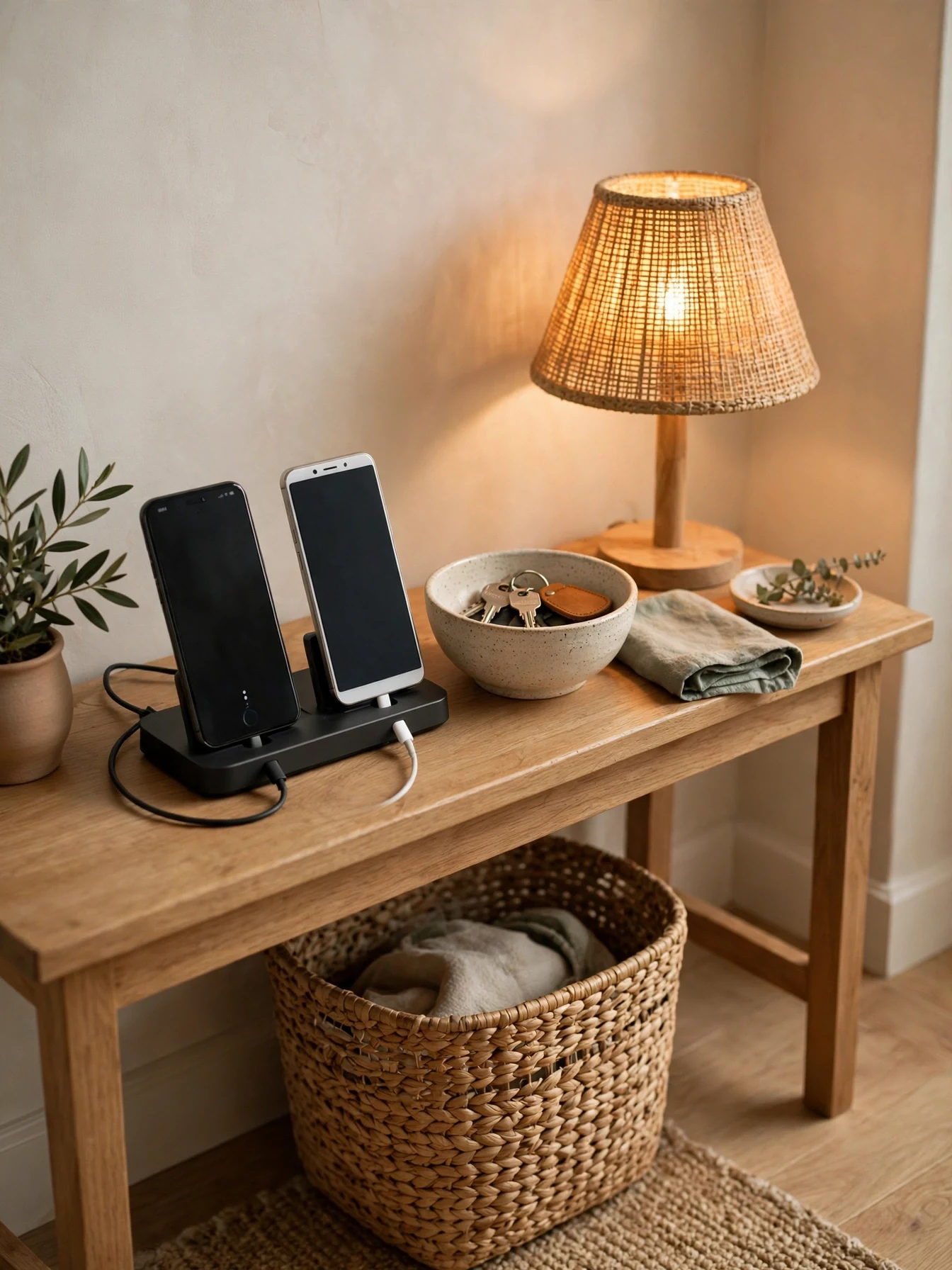
- Plug phones in right after dinner
- Keep chargers in one shared spot
- Set do not disturb before bed
- Leave tablets in the living room overnight
Charging devices early removes the habit of scrolling in bed, which often steals the sleep you need after the shift. A shared charging spot keeps cables tidy and mornings simple, since every device is full and easy to find. Give it three nights, and your evenings will feel calmer and less rushed than before.
Prepare Tomorrow Outfit

Quick Tip: Lay out full outfits, shoes, and bags by the door the night before the change.
Mornings feel harder when every small choice waits until you are already tired and short on time. Picking clothes, packing bags, and setting out breakfast items the night before removes friction. Kids can join in and choose their own outfits too. This is where daylight savings time prep pays off most, giving you extra calm minutes each morning when you need them most at home.
Practice Patient Mornings

BEFORE: Everyone rushes, voices rise, and small delays turn into stress before the day even starts.
AFTER: The home wakes a little earlier, tasks are ready, and the morning feels slow and kind.
Most people need a few days to feel normal again, so plan a gentle pace for the first mornings. Wake a little earlier than needed, keep breakfast simple, and leave extra travel time. Lower your expectations for perfect focus at work or school. Kindness at home matters most, and a patient start helps everyone adjust without tears or tension.
Recheck Sleep Routine

- Note your bedtime and wake time for one week
- Mark which mornings felt easy or hard
- Keep the habits that helped the most
- Drop steps that felt forced or unhelpful
After the first week, look back at what actually helped your sleep and energy. Keep the best habits, like morning light, a screen cutoff, or an earlier dinner, and let the rest go. A short review turns a rough week into a useful plan for next time, and your next change will feel easier with lessons you already trust.
Conclusion
A smoother start comes from small steps taken early, not one late night of worry. With steady sleep, bright mornings, and calm evenings, daylight savings time feels less like a jolt and more like a fresh spring morning routine you can handle with a little patience each day this week.
In my home, the first bright morning after the change now feels calm because we start early and keep evenings simple. Tonight, pick one tip from this list and set it up before bed. If this guide helped you, save it on Pinterest and share it with a friend who dreads the clock change every single spring season.
