
23 Kitchen Organization Ideas for a Fresh New Year Start
A fresh year feels better when your kitchen works with you, and these kitchen organization ideas for new year help you reset without buying much. Start small, clear one area at a time, and enjoy a calmer space for cooking every day.
This guide covers cabinets, drawers, pantry, fridge and sink areas with simple steps you can finish in an afternoon. I tried a full kitchen reset last January and found that small zones and clear labels made the biggest difference. You will find storage fixes, sorting ideas and low cost tools that suit small kitchens, busy family homes and renters who need flexible, no drill options. Each idea uses items most homes already own, so you can begin today without waiting for a big shopping trip or delivery. Pick your first spot now.
Cabinet Zones
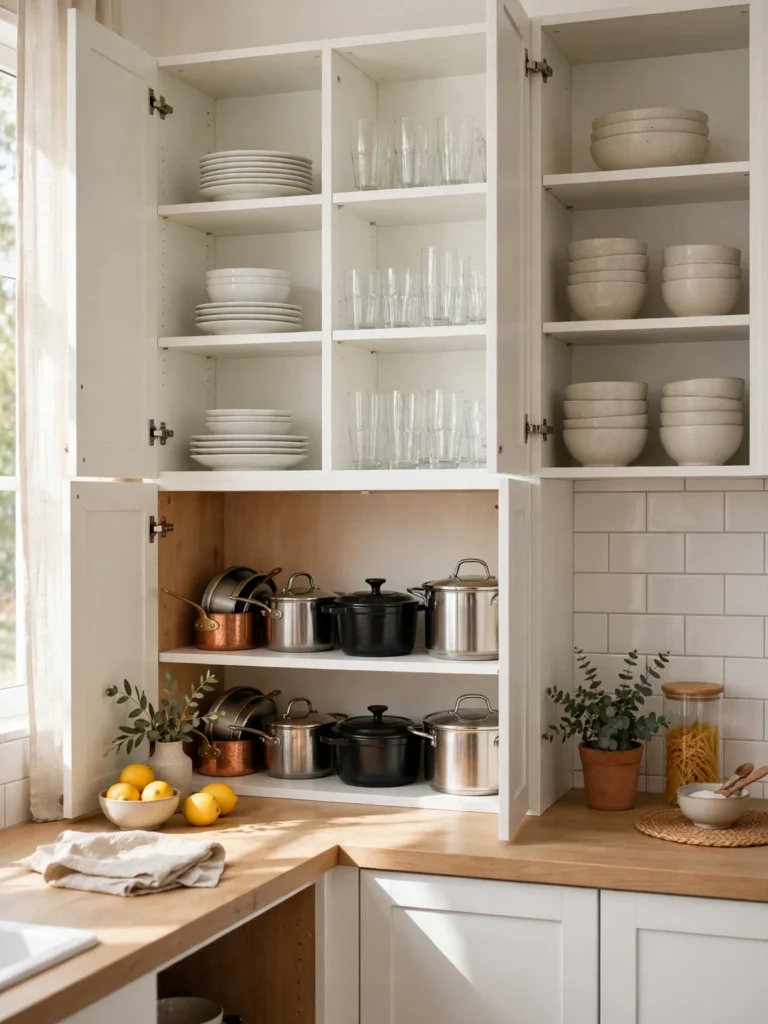
Group your cabinets by job instead of by size. Keep plates and glasses near the dishwasher, pots near the stove, and baking items in one spot. This simple layout is one of the most useful kitchen organization ideas for new year resets because it cuts daily searching and reaching.
Empty one cabinet at a time, wipe the shelves, and only put back what fits the zone. Use one zone per cabinet to stop clutter creeping back. If an item does not match the zone, move it right away instead of squeezing it in and starting the mess again.
Drawer Dividers
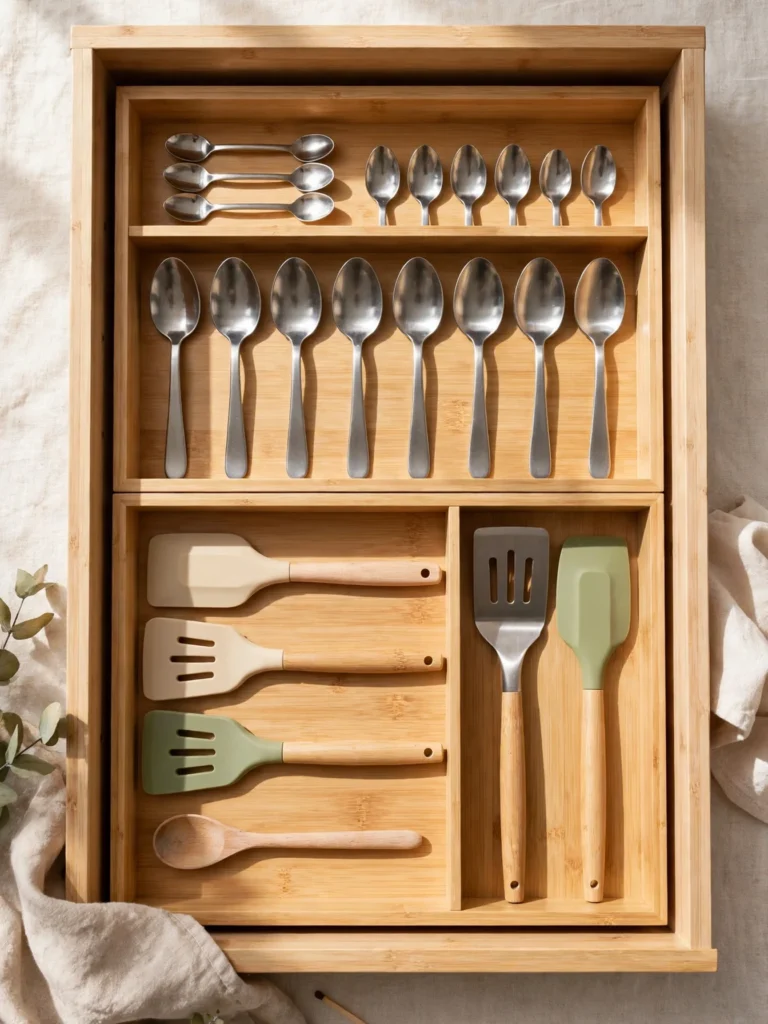
- Measure each drawer before you buy any inserts
- Group forks, spoons and knives in separate slots
- Keep daily tools near the stove and sink
- Leave one small slot for odd shaped tools
- Wipe dividers weekly to stop crumbs building up
Adjustable dividers work best because drawers differ in size. Start with your cutlery drawer, then move to utensils. When every tool has a slot, drawers stay tidy longer and cooking feels calmer. You will also spot duplicates quickly and can pass extras to the donation box.
Pantry Jars
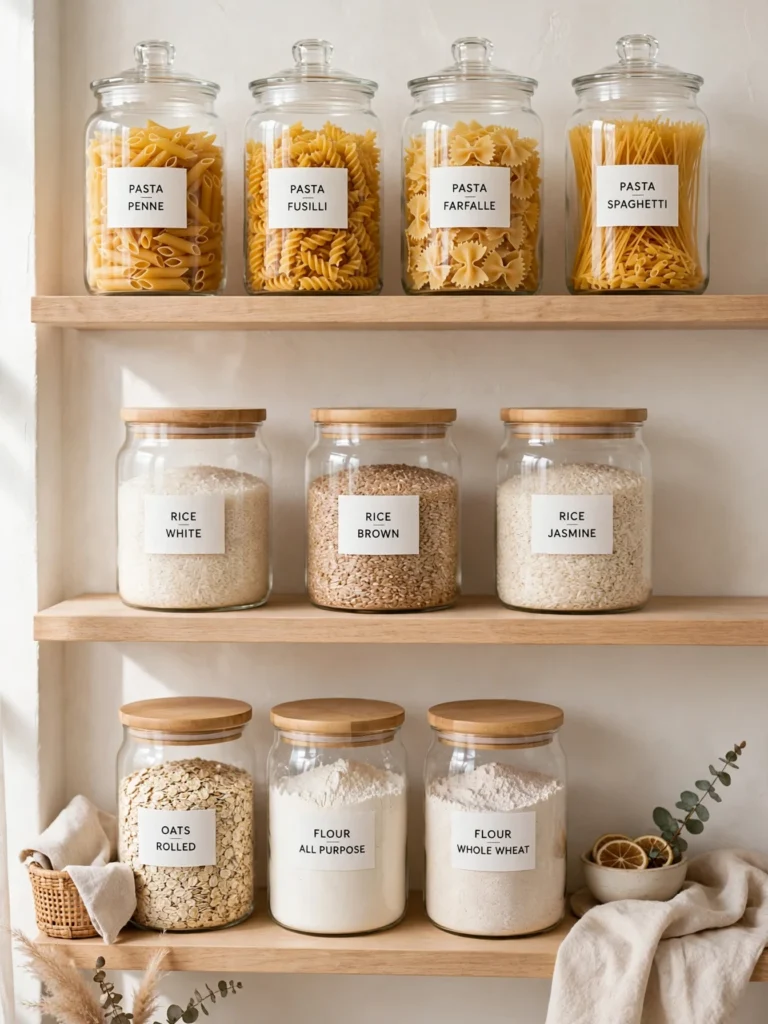
Quick Tip: Decant dry goods into jars the day you buy them so packets never pile up.
Clear jars let you see what you have at a glance, which stops double buying. Choose same size jars for shelves where you can, and keep labels facing forward. Store rice, flour and pasta in large jars, and use small jars for seeds, nuts and baking extras. Keep a small list on the pantry door and note anything running low, so shopping stays simple and waste stays low all year.
Fridge Bins

BEFORE: Loose bottles, bags and leftovers crowd every shelf, and food gets hidden at the back until it spoils.
AFTER: Clear bins group drinks, dairy, fruit and leftovers, so everything is visible and easy to reach.
Bins also catch small spills before they spread. Give leftovers their own bin and place it at eye level so nothing gets forgotten at back. Wash one bin each week on rotation, and your fridge will stay fresh with very little effort from you.
Under-Sink System
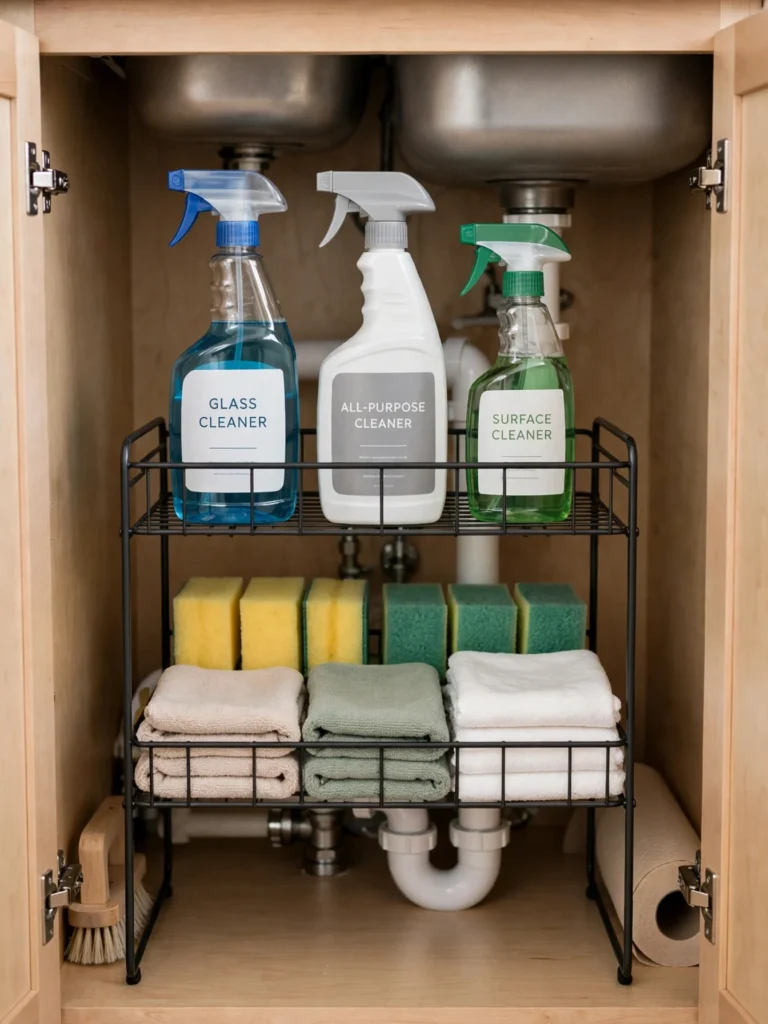
- Empty the cabinet and wipe it dry
- Check pipes for drips and fix any leaks
- Add a waterproof mat to protect the base
- Place a two tier rack for bottles and cloths
- Keep only daily cleaning items in this spot
Move spare products to a hall cupboard so this small space stays workable. A small rack adds extra shelf space without any fitting work. Keep bin bags at the front where you can grab them fast, and store gloves on a simple hook inside the door.
Spice Storage

| Option | Cost | Best For |
|---|---|---|
| Drawer insert tray | Low | Flat drawers near stove |
| Tiered shelf rack | Low | Deep cupboards |
| Door mounted rack | Medium | Very small kitchens |
Pick one system and stick with it, rather than mixing three. Keep spices near the stove but away from direct heat and steam. Sort jars in letter order or by how often you use them, and check dates twice a year so old spices do not dull your cooking.
Counter Clearing
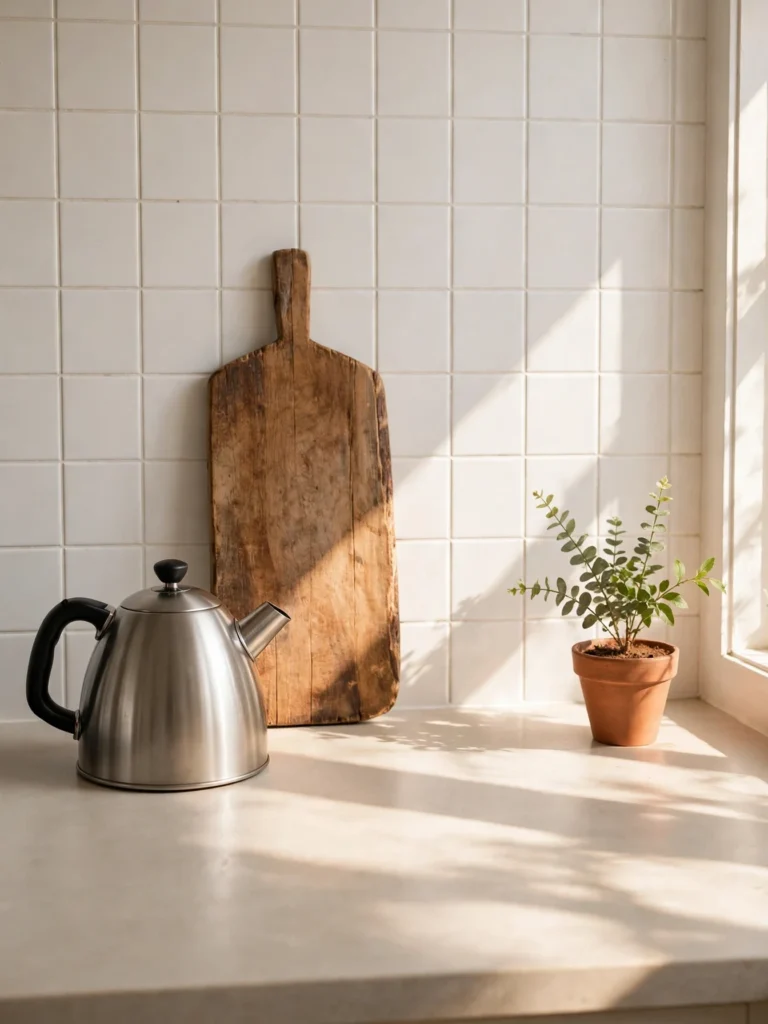
DO:
- Keep only daily items on the counter
- Give each appliance a fixed home spot
- Wipe counters fully clear each evening
- Use one tray to group oils and salt
DON’T:
- Store post, papers or bags on counters
- Line up gadgets you rarely use
- Leave dishes drying there all day
A clear counter gives you room to cook and makes the whole kitchen feel larger. Start by removing everything, cleaning the surface, then returning only the items you use daily. Keeping counters clear every single evening builds a habit that protects your prep space all year long.
Appliance Garage
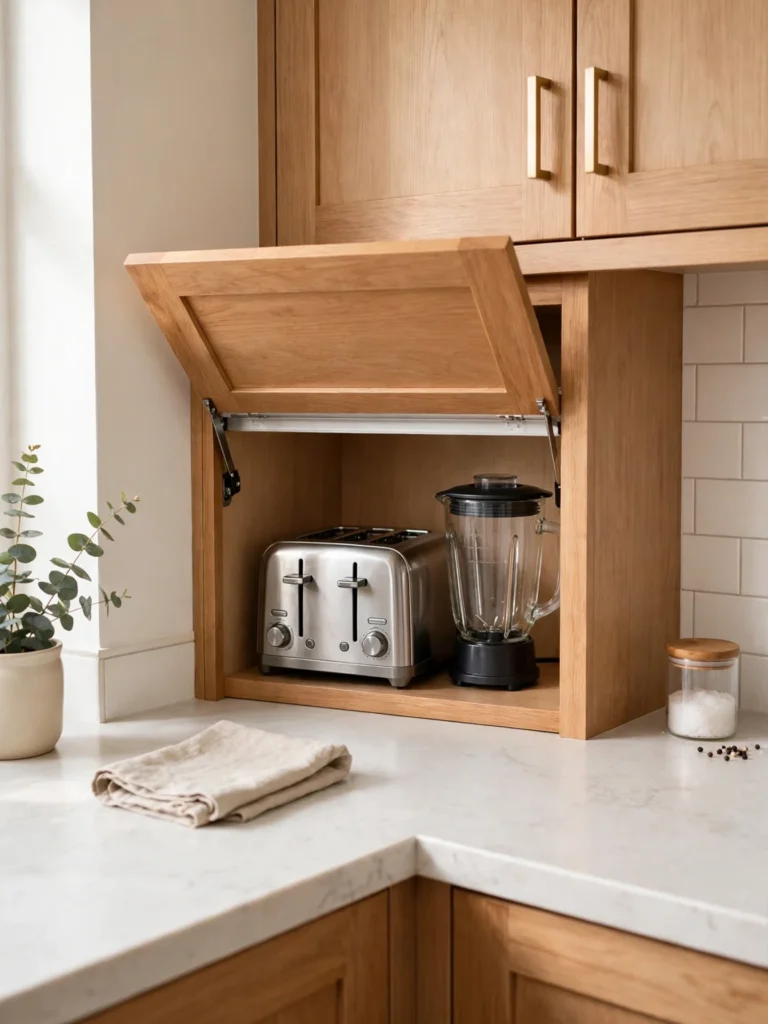
Cost: Medium, depending on cabinet style
Time: One to two hours
Skill Level: Beginner to medium
Best For: Toasters, blenders and coffee makers
An appliance garage hides bulky gadgets behind one door while keeping them plugged in and ready. You can use a spare corner cabinet or a simple lift up unit. The key benefit is hidden gadgets, clear work surface every day. Measure your tallest appliance first, leave air space around it, and keep cords tidy with a small clip at the back.
Lid Storage

Pot lids cause chaos when they lie flat in a pile. Stand them upright in a rail, rack or file style holder and they take up far less room. You can also fix simple rails inside a cabinet door, which uses dead door space really well for storage.
Sort lids by size so the one you need is easy to grab. Keep lids near the pots they match, and check for lids with no matching pot. Those spare lids can go straight to the donation box and free up even more space.
Pan Storage
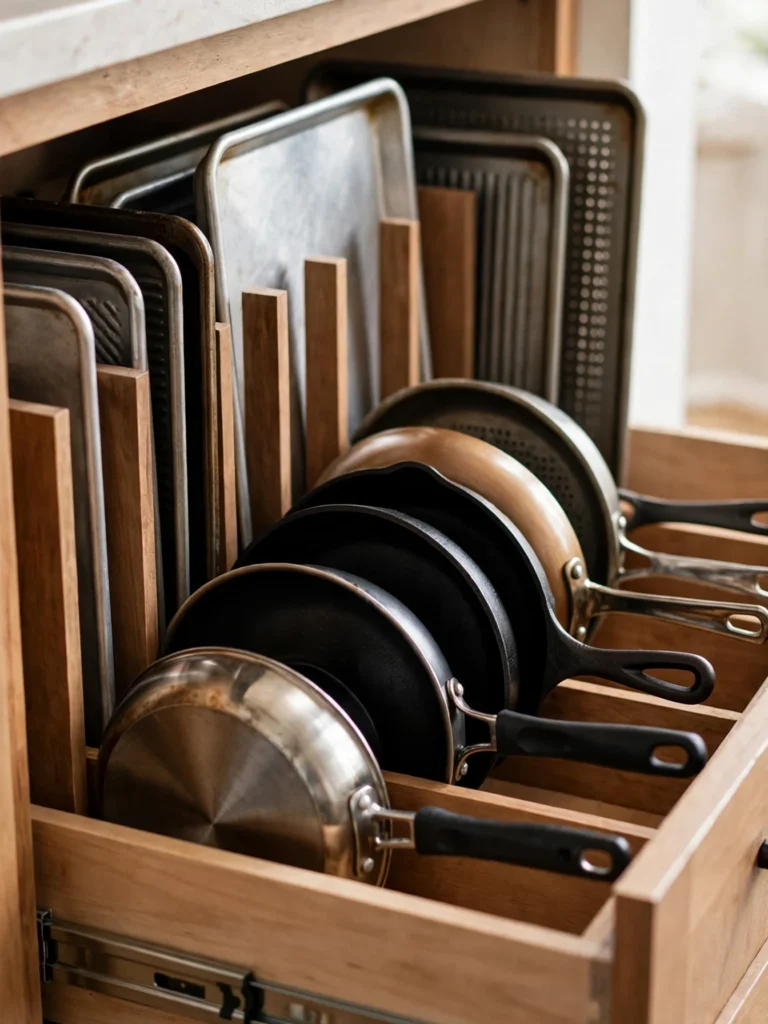
- Store pans upright with simple dividers
- Keep heavy pans in low drawers or cabinets
- Place protectors between non stick pans
- Hang two daily pans if wall space allows
- Keep baking trays together in one slot
Flat stacks scratch pans and waste your time. Filing pans upright means grab one pan without lifting the whole pile. If you prefer hanging, use strong hooks on a rail near the stove. Either way, keep the pans you use weekly at the front and move special pans to a higher shelf.
Food Containers

Quick Tip: Keep only containers that have a matching lid, and recycle the rest today.
Matching containers stack well and save a lot of shelf room. Choose one shape, square if you can, since square boxes waste less space than round ones. Store lids upright in a narrow box so they never scatter. A set of matching containers with snug lids also helps leftovers stay fresh longer in the fridge. Start with one shelf, sort it fully, and count how many containers your home really uses in a week.
Cleaning Caddy
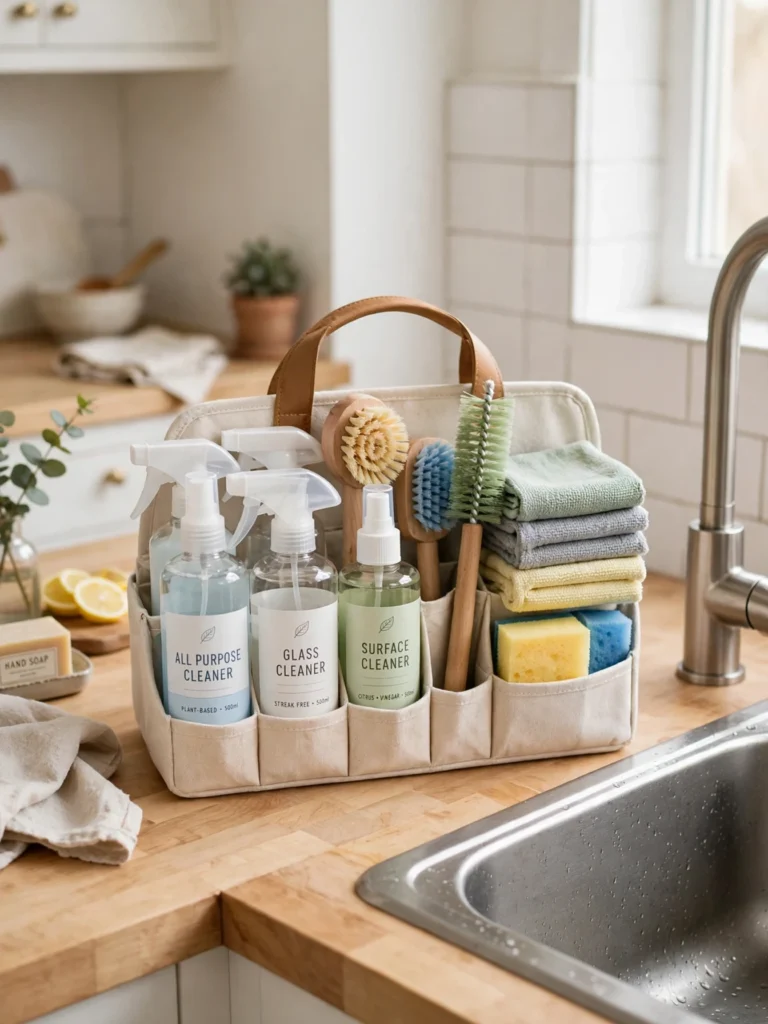
BEFORE: Cleaning bottles, brushes and cloths are spread under the sink, in cupboards and beside the tap.
AFTER: One caddy holds everything for daily kitchen cleaning, ready to carry from sink to stove to table.
A caddy stops you hunting for spray or a clean cloth. Keep it small so it stays light, and refill it each Sunday. Using one caddy for daily cleaning also shows you which products you truly use, so you can stop buying extras and keep the under sink area much calmer.
Donation Box
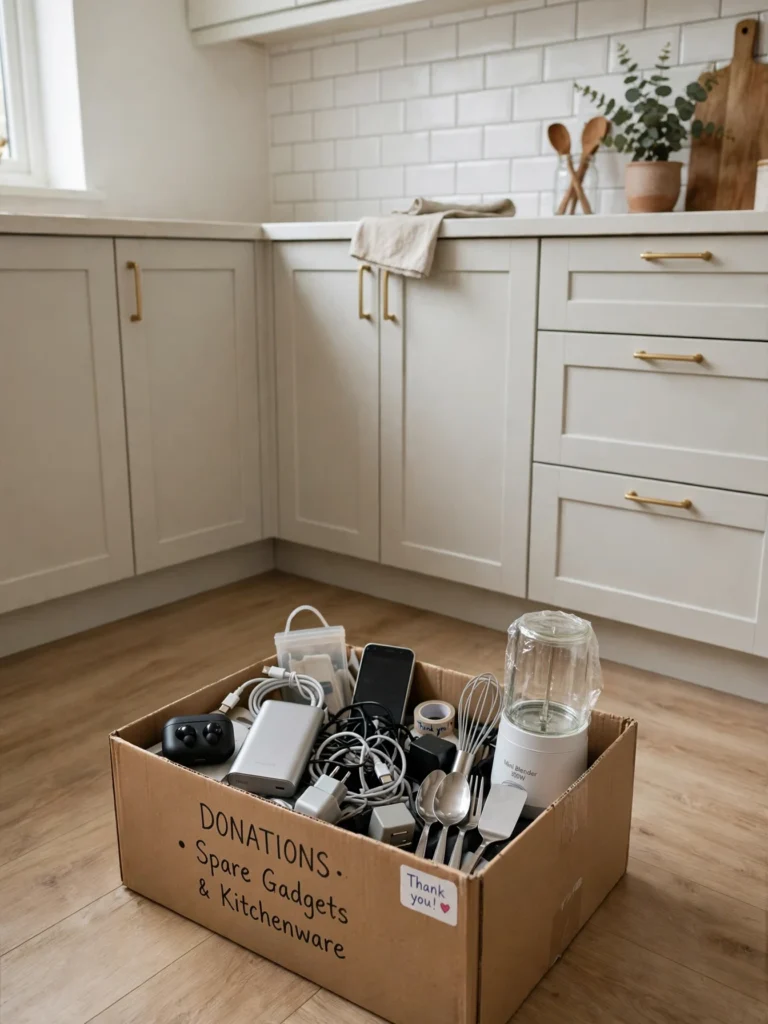
- Place an empty box in a kitchen corner
- Walk around and collect duplicate tools
- Add gadgets you have not used in months
- Check drawers for broken or spare items
- Close the box and donate it this week
Most kitchens hold tools that never get used. A box in the corner gives them a clear exit path. If you feel unsure about an item, keep the box for one week before donating, and note if you missed it. Most people find they do not miss anything, and the extra drawer space feels far more useful.
Glassware Sorting
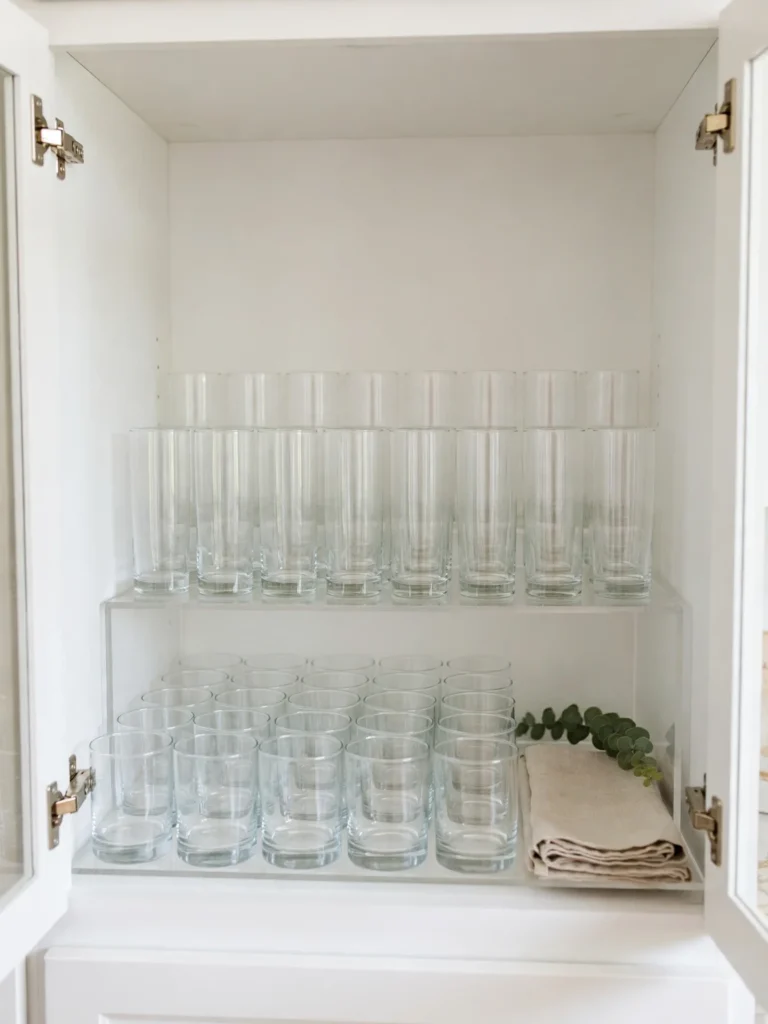
| Group | Keep | Store Elsewhere |
|---|---|---|
| Daily tumblers | 6 to 8 | Near the sink |
| Tall glasses | 4 to 6 | Upper shelf |
| Special glasses | One set | High cabinet |
Glasses build up fast through gifts and offers. Keep daily glasses within easy reach and move special sets higher up. A small shelf riser gives you two levels in one cabinet and stops glasses hiding behind each other. Wash and check for chips as you sort, and let go of any glass your family never picks.
Baking Station
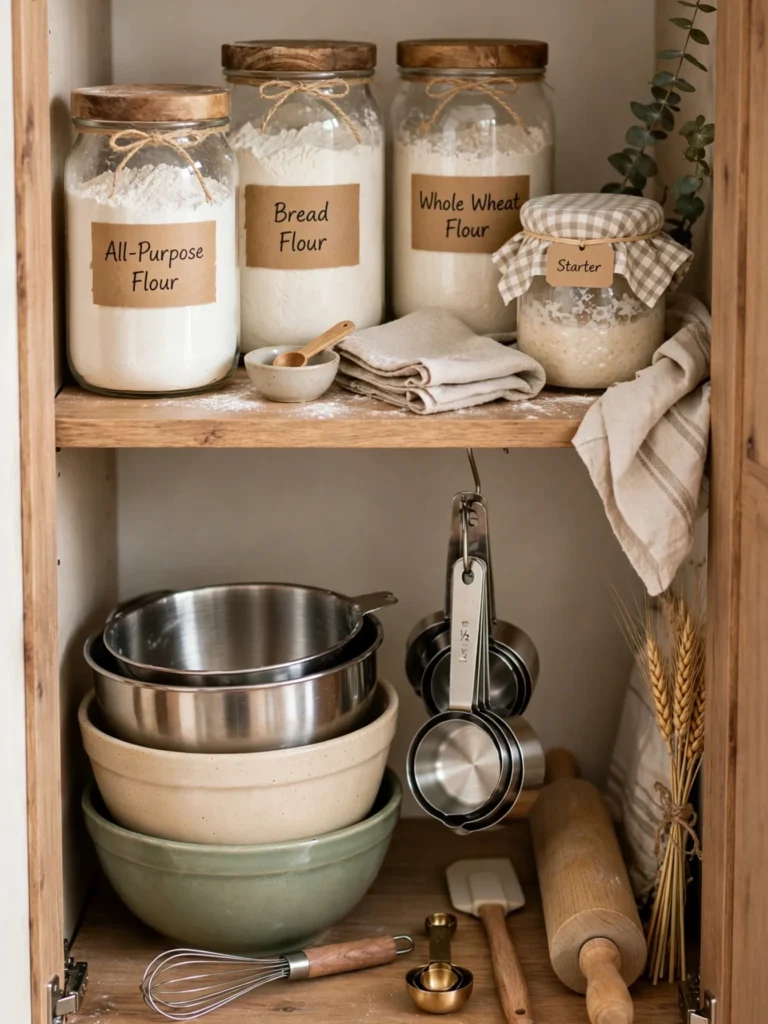
DO:
- Store flour, sugar and cocoa together
- Keep bowls and measures in the same cabinet
- Place baking trays upright beside the station
- Keep cupcake cases in one small box
DON’T:
- Scatter baking items across three cabinets
- Store heavy mixers on high shelves
- Keep out of date baking powder
One baking station means you can start baking without hunting through the whole kitchen. Pick a cabinet near your main work surface and move everything baking related into it. This setup gives everything baking in one place, which saves time on busy days and makes it easy for family members to help you bake too.
Cutting Board Slot
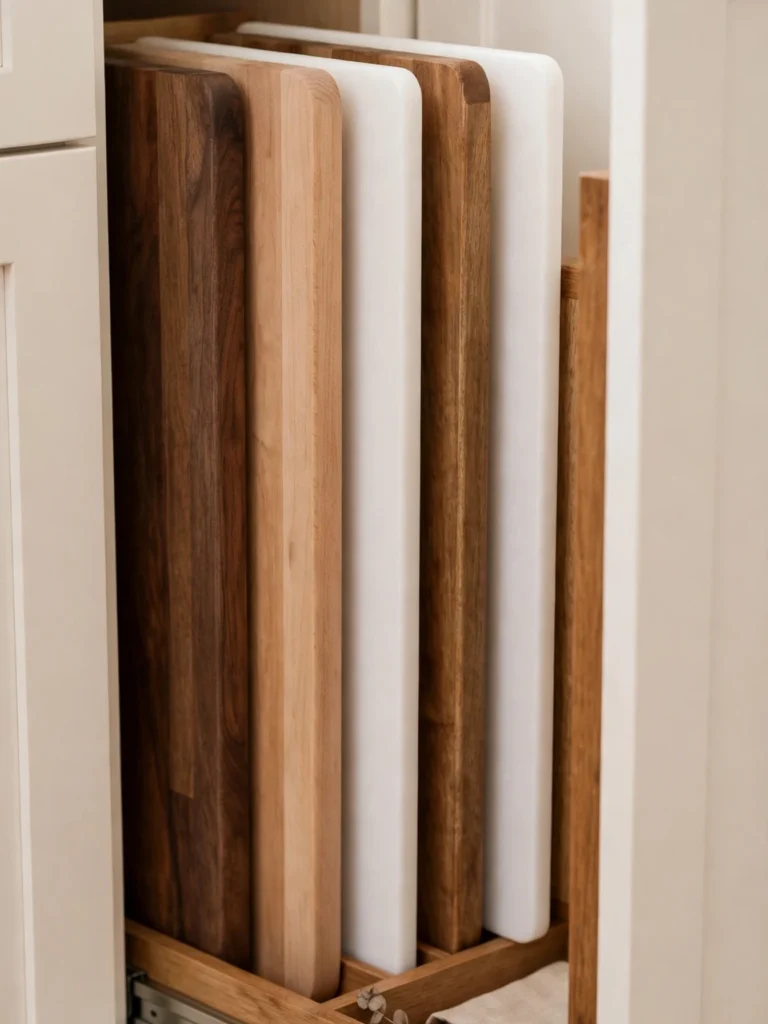
Cost: Low
Time: 15 to 30 minutes
Skill Level: Beginner
Best For: Wooden and plastic cutting boards
A narrow slot or a simple tension divider keeps boards upright and dry. Store boards near your prep area, not beside the sink where they stay damp. Standing boards upright means boards dry faster between uses and take up very little room. Keep your biggest board at the back, daily boards at the front, and wash the slot area weekly to stop crumbs collecting there.
Label Everything
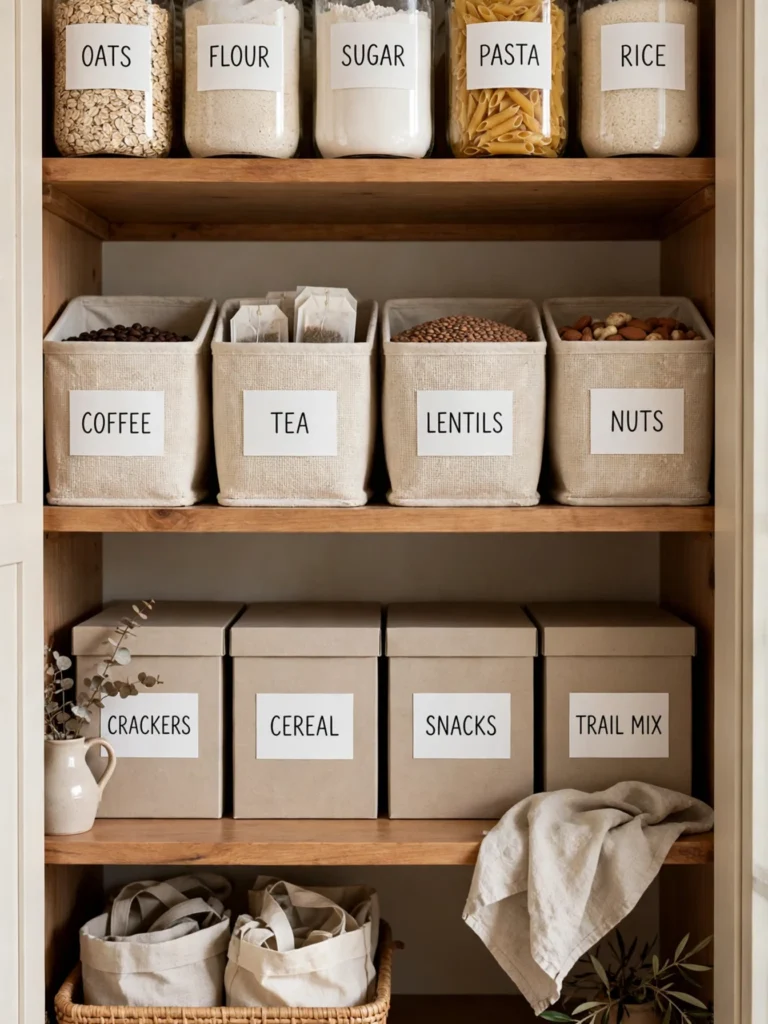
Labels stop the slow slide back into clutter. When a jar, bin or shelf has a clear name, everyone in the home knows where things live and where they go back. You do not need a fancy maker; plain labels work just fine and cost very little to replace.
Label pantry jars, fridge bins, baskets and shelf edges. Keep wording short, like rice, pasta or snacks, so it is fast to read. Update labels when you change a zone, and remove old ones fully so shelves stay clean and the system stays easy to follow.
Corner Cabinet Fix

- Add a pull out shelf or turntable
- Store only bulky items in this deep space
- Keep a small torch nearby for dark corners
- Use one large basket for loose items
- Check the back corner every month
Corner cabinets often become a hiding place for forgotten items. A turntable or pull out shelf brings everything within easy reach again. If you cannot fit a shelf, use one large basket that slides in and out. Keep items you use monthly here, and move rarely used pieces to storage outside the kitchen.
Coffee Station

Quick Tip: Keep mugs, coffee and filters within one arm reach of the maker.
A small coffee station stops morning clutter spreading across the kitchen. Use a tray to mark the zone and keep the maker, mugs and jars on it. Hooks under a cabinet hold mugs well and free counter room. A compact tray keeps the station contained, so stray spoons and packets stay in one place. Wipe the tray weekly, refill jars on shopping day, and your mornings will start in a calmer, tidier spot.
Sink Area Setup
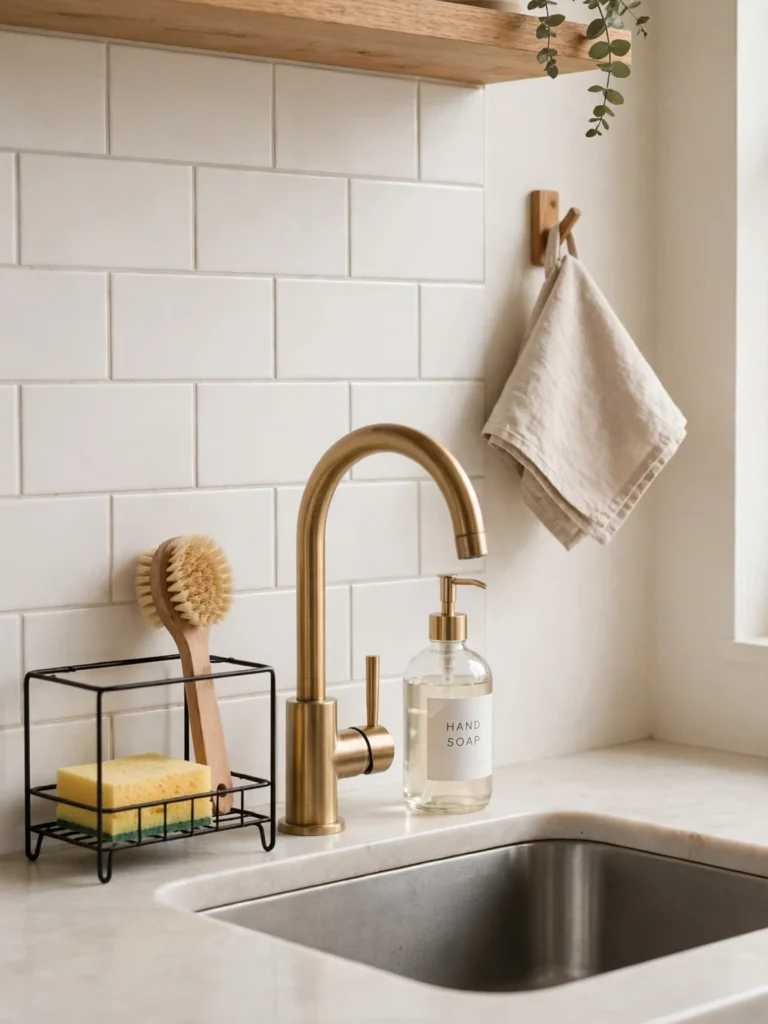
BEFORE: Wet sponges, bottles and cloths crowd the sink edge and leave puddles on the counter all day.
AFTER: A small rack holds washing items above the sink, soap sits in one dispenser, and the counter stays dry.
Good sink setups are small and simple. Choose one sponge holder that drains well and one soap dispenser you refill. Hang cloths on a hook to dry fully. Keeping the sink edge clear and dry stops smells, saves wiping time, and makes washing up feel much less of a chore each evening.
Trash Recycling Bins
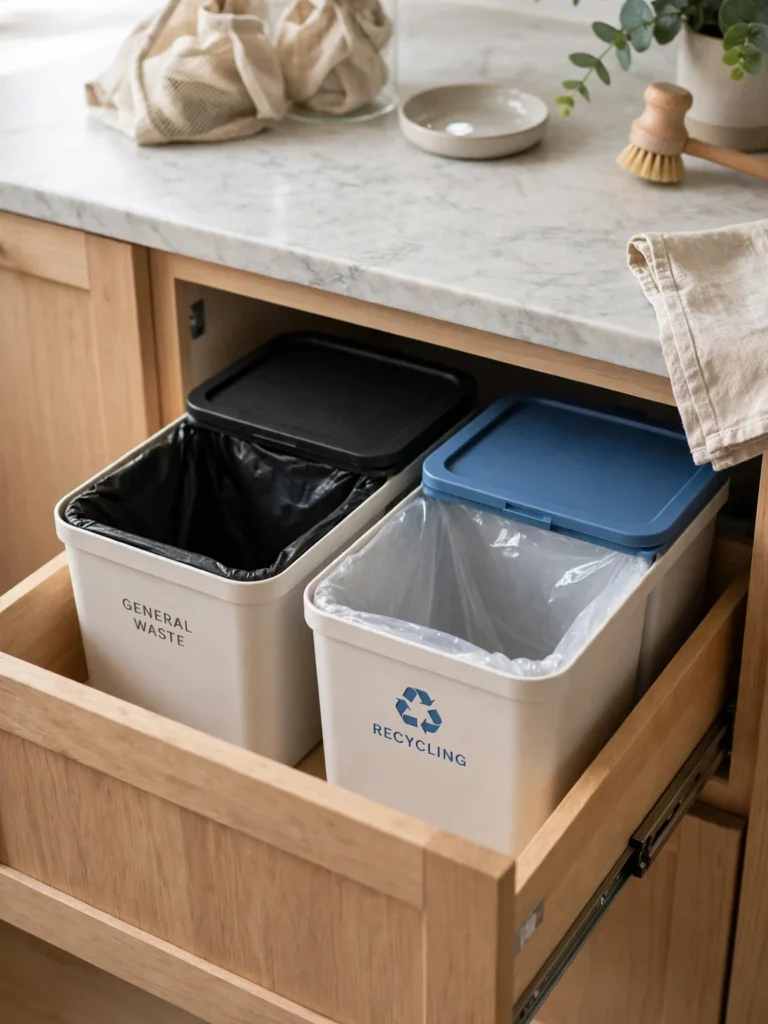
- Measure your cabinet or floor space first
- Choose two bins that fit side by side
- Label each bin clearly for your family
- Keep spare bags at the bottom of each bin
- Empty recycling before it overflows and spills
Two clear bins make sorting waste simple for everyone. If space is tight, a slim bin beside the cabinet works well too. Place bins near your prep area so food scraps go straight in. A clear label on each bin helps guests and kids sort correctly without asking, and keeps your recycling clean and accepted.
Weekly Reset Routine
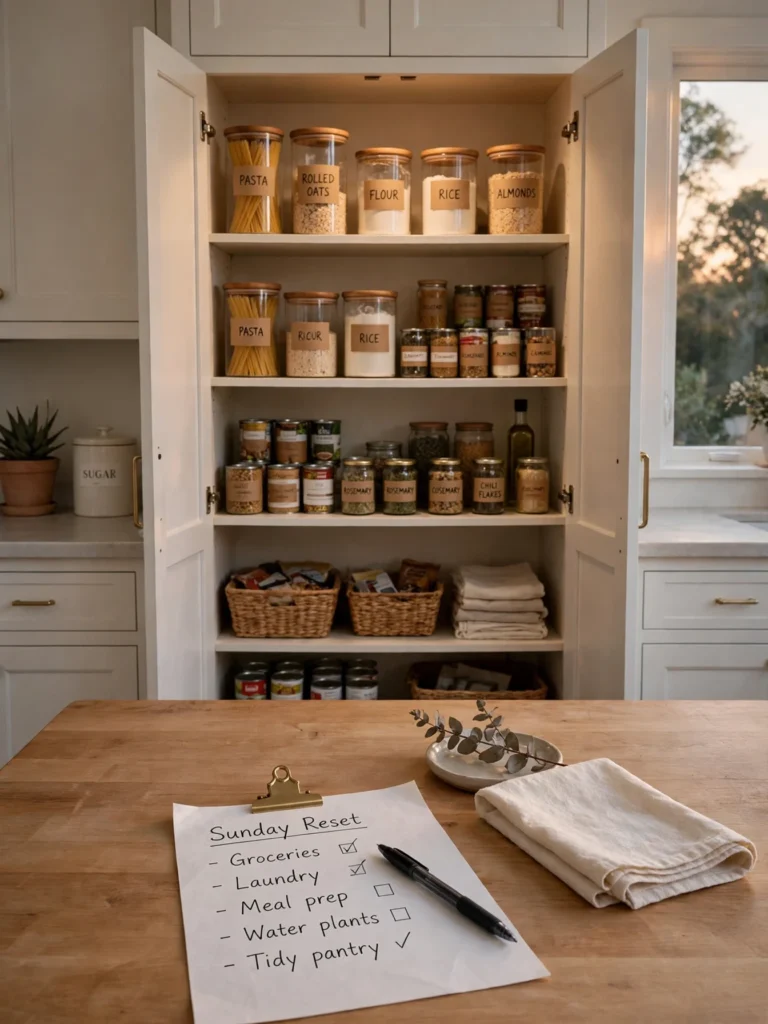
| Task | Time Needed | When |
|---|---|---|
| Wipe shelves and handles | 10 minutes | Sunday |
| Check fridge leftovers | 5 minutes | Sunday |
| Restock jars and caddy | 10 minutes | Shopping day |
A short weekly reset protects all your hard work. Pick one fixed time, work through the same small list, and stop when the timer ends. Over a month, this routine keeps small messes from growing back into big jobs. It also pairs well with any kitchen organization ideas for new year plans you set in January, keeping them alive in spring.
Paper Clutter Tray

DO:
- Keep one tray for letters and notes
- Sort the tray every Friday evening
- File or recycle each item right away
- Keep pens and a small pad in the tray
DON’T:
- Let papers spread across counters
- Store bills beside food prep areas
- Keep old leaflets and expired coupons
Kitchens attract paper, from letters to school notes and takeaway leaflets. One tray gives paper a limit. When the tray is full, it is time to sort. This small habit supports one tray, one tidy limit for the whole family, and it keeps your cooking surfaces free for food, not paperwork and clutter.
Conclusion
Starting with one cabinet or drawer keeps these kitchen organization ideas for new year feeling really doable instead of overwhelming. Pick the fix your kitchen needs most, finish it fully, and you will notice cooking, cleaning and shopping all feel a little easier each day.
I still keep a small reset on Sunday evenings, and it takes less than fifteen minutes now that everything has a home. Choose one idea from this list to try this weekend, then move to the next when you are ready. Save this guide on Pinterest and share it with a friend who loves a tidy kitchen.