
20 Living Room Ideas for Too Many Doors – Genius Fixes
If you are looking for living room ideas for rooms with too many doors, you already know the problem well. Extra doors can chop up your walls, limit where furniture can go, and make a room feel busy even when it is tidy. The good news is that you do not need to remove a door or start a big renovation to fix it.
With smart layouts, matching finishes, and a few clever visual tricks, those extra openings can start to feel like a planned part of the design. This guide shares 20 practical ideas that work in rentals and family homes alike. You will learn how to angle furniture, dress doors, use mirrors and rugs, and create calm focal points that pull the eye away from door clutter. Pick the ideas that fit your room, try one change at a time, and enjoy a living room that feels open, balanced, and easy to live in.
Angled Sofa Layout
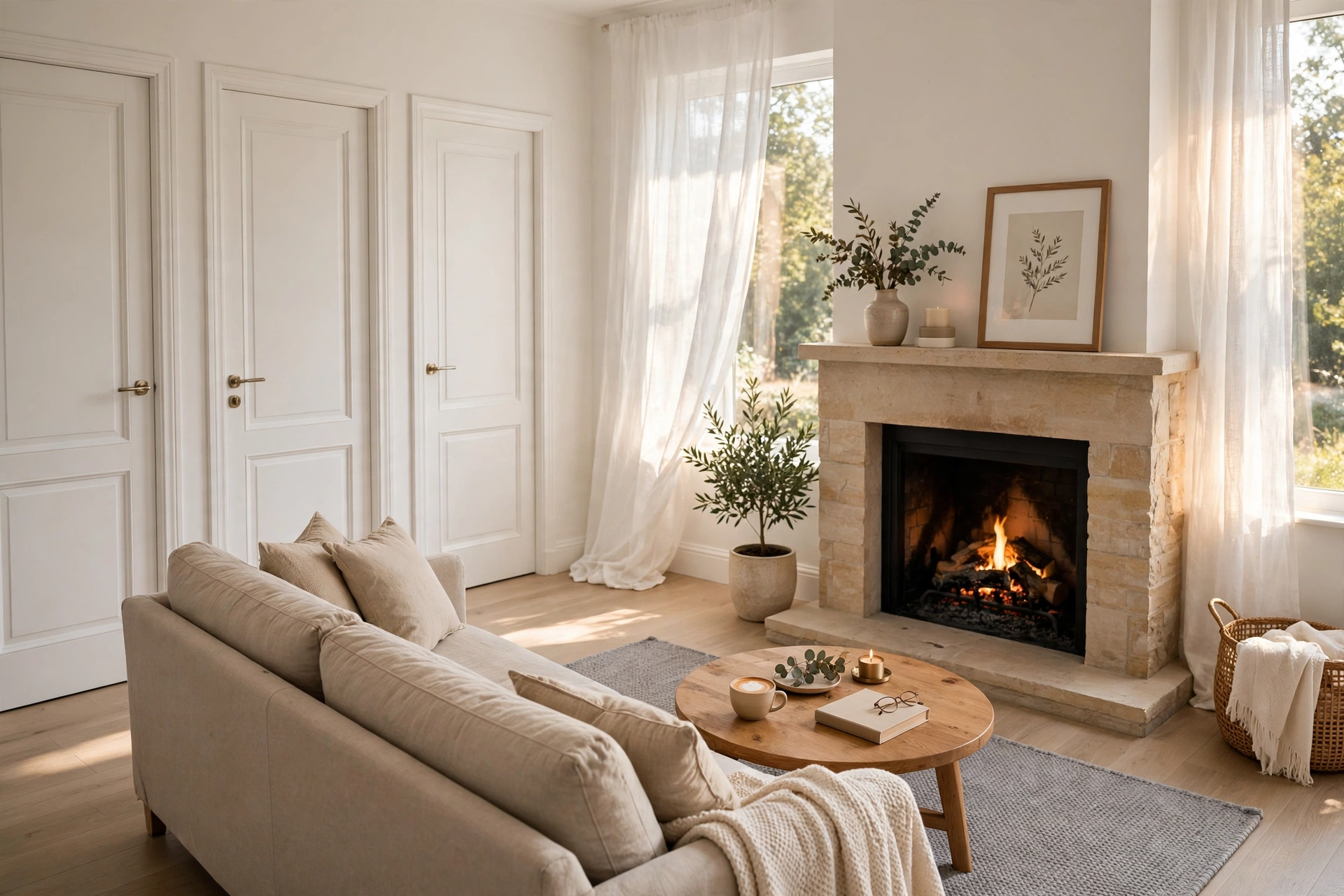
Angle your sofa away from the busiest wall so the seating area feels like its own zone. When the sofa sits at a slight angle, it creates a natural path behind it and stops the room from feeling like a hallway with doors on every side. A round coffee table suits this layout well, since it softens the angles and leaves room to walk around it.
This is one of the simplest living room ideas for rooms with too many doors, because it costs nothing to try and you can move the sofa back in minutes if it does not suit you. Keep the walkways clear, leave at least a comfortable gap behind the sofa, and place a floor lamp at one end to anchor the new arrangement.
Sliding Door Panels
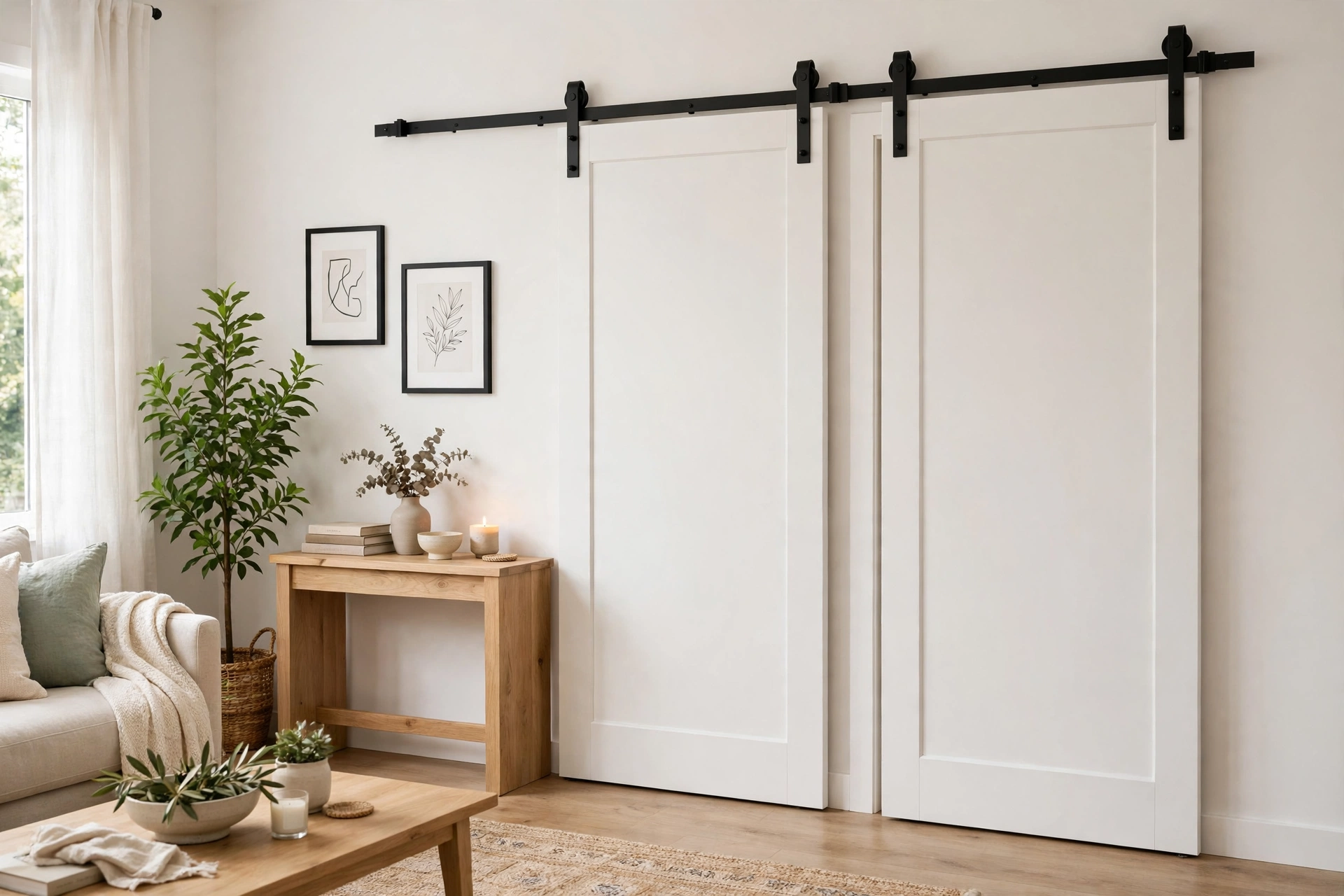
- Choose sliding panels that match your wall colour for a calm, quiet look.
- Keep the track level and the panels light enough to slide with one hand.
- Add soft close fittings so doors do not slam in a busy family room.
- Leave a small gap at the floor so rugs and robot vacuums can pass.
Sliding panels cover an unused doorway without blocking it for good, and they add a strong horizontal line that calms a wall full of openings. When a doorway is rarely used, a panel turns it into a design feature instead of a distraction, and you can slide it open whenever you need the room beyond.
Pocket Door Swap

Quick Tip: Before you choose a pocket door, check that the wall has no pipes or wires in the way, since a clear wall cavity is what lets the door slide away neatly.
A pocket door frees up floor space that a swinging door would need, which matters a lot when several doors open into one room. Without a door swinging into the seating area, you can place a chair, a plant, or a small table much closer to the wall. This change suits a main doorway that gets used every day, and it makes the room feel larger the moment you walk in.
Double Door Dressing

BEFORE: The double doors looked plain and lost against a long wall, and guests were never quite sure which door to open first.
AFTER: Matching handles, a slim console, and a small vase give the doors a clear purpose, and the wall now reads as one styled feature instead of two spare openings.
Treat a pair of doors as one piece of furniture by giving them matching hardware and a shared frame colour. This simple dressing stops double doors from looking like two separate holes in the wall. Add one slim piece beside them, not two, so the arrangement stays balanced and the walkway stays clear.
Curtain Door Cover

Hang a curtain over a doorway you rarely use to soften the hard lines of the frame. Choose a fabric that matches your sofa or window curtains, and hang the rod a little wider than the doorway so the fabric falls in soft folds. This trick works well in rentals, since it needs only a rod and a few hooks.
To make it look planned, follow these steps:
1. Measure the doorway and add extra width on each side for the folds.
2. Fix the rod high, near the ceiling, to make the wall feel taller.
3. Pick a washable fabric that you can take down and clean easily.
4. Keep the curtain tied back when you need the doorway open for guests.
Mirror Wall Trick

| Mirror Choice | Best Spot | Why It Works |
|---|---|---|
| Round mirror | Between two doors | Softens straight lines |
| Tall mirror | Beside a single door | Adds height to the wall |
| Mirror pair | Over a console | Creates a balanced focal point |
A mirror between doors draws the eye to a bright reflection instead of the door frames. It also bounces light around the room, which helps a room with many doors feel less boxed in. Keep the mirror at eye level, choose a frame that matches your other hardware, and avoid placing it where it reflects clutter from another room.
Corner Reading Chair

DO:
- Place the chair at an angle so it faces into the room.
- Add a small side table and a lamp for evening reading.
- Keep a basket nearby for books and a soft throw.
DON’T:
- Push the chair flat against a door frame.
- Block the doorway swing with a large footstool.
- Choose a chair so wide that it crowds the walkway.
A reading chair gives a door heavy corner a clear job, so the corner stops looking like spare space. It also creates a cozy spot that guests will use, which makes the whole room feel more welcoming. Pick a chair with slim arms if the corner is tight, and keep the floor around it clear.
Doorway Bookshelf Fill

Quick Facts: Cost: Low to medium, depending on shelf size. Time: One afternoon to fit and style. Skill Level: Beginner friendly. Best For: Narrow wall gaps between doors that are too small for furniture.
A narrow bookshelf turns dead wall space between doors into useful storage and a pretty display. Books add colour and warmth, and the vertical lines draw the eye upward, which makes the wall feel taller. Mix books with a few small objects, keep heavy books low for stability, and leave one shelf partly empty so the display does not look crowded.
Rolling Storage Bench

A rolling bench is a flexible fix for a wall with several doors, since you can move it when a door needs full access. Use it for blankets, games, or shoes, and top it with a cushion so it doubles as extra seating. Choose castors that lock, so the bench stays put when someone sits on it, and pick a size that leaves the doorways clear.
When guests arrive, you can roll the bench to one side to open up the room, then roll it back after they leave. For readers looking for living room ideas for rooms with too many doors, this kind of movable furniture suits rooms that change use during the day, from a quiet reading spot to a busy family gathering space.
Unified Paint Flow

- Paint doors, trim, and walls in the same soft shade for a seamless wall.
- Use a satin finish on doors so they wipe clean easily.
- Keep one accent wall if you want colour, and keep door walls plain.
- Test the paint in daylight, since white shades can look warm or cool.
When doors match the walls, they blend in and the room feels calmer at once. This trick does not remove any doors, but it stops each frame from shouting for attention. It works best with a light, warm shade, and it pairs well with natural wood and soft textiles.
Statement Door Hardware

Quick Tip: Swap all the handles in the room at once, even on doors you rarely open, since mixed hardware is one of the first things that makes a door heavy room look untidy.
New handles are a small change with a big visual payoff. Matte black, brushed brass, or warm bronze can tie all your doors together and link them to lamps, picture frames, or curtain rods. Choose levers over knobs if anyone in the home finds knobs hard to grip, and keep the style the same on every door for a tidy result.
Gallery Wall Balance

BEFORE: The wall between the doors stayed bare, so the doors stood out and the room felt plain and unfinished.
AFTER: A balanced gallery fills the gap with art at eye level, and the doors now feel like part of a styled wall rather than the whole story.
A gallery wall gives the eye something to rest on between doors. Start with one large frame in the middle, then build outward with smaller frames, keeping the gaps even. Use art with a shared colour or frame style, and hang the lowest frame above furniture height so nothing gets knocked when a door opens.
Slim Console Anchor

Place a slim console on the wall between doors to anchor the space. A console that is too deep will crowd the walkway, so look for one with a depth of about 30 centimetres or less. Top it with a lamp for soft evening light, a small vase, and a stack of books, and keep the surface mostly clear so it does not collect clutter.
To style it well, follow these steps: 1. Measure the wall gap and the walkway before you buy. 2. Centre the console between the doors. 3. Add one lamp for height on one side. 4. Finish with two or three small objects, and stop there.
Rug Zone Definition

| Rug Size | Room Size | Best Layout |
|---|---|---|
| Large rug | Open room | Front legs of all seats on the rug |
| Medium rug | Small room | Sofa front legs on the rug only |
| Runner rug | Long room | Along the main walkway |
A large rug tells the eye where the living area starts and ends, even when doors break up the walls around it. When all the main seats sit on the rug, the seating group feels like one room within the room, and the doors fade into the background. Choose a pattern that hides everyday marks, and add a rug pad so the rug stays flat and safe underfoot.
Hidden Door Blend

DO:
- Paint the door and the wall in the exact same shade and finish.
- Use a flush handle or a push latch for a clean look.
- Add wall panels that run across the door for a built in effect.
DON’T:
- Mix the door paint with a different trim colour.
- Fit a bold handle that draws the eye back to the door.
- Hang art on the hidden door itself, since it needs to open freely.
A hidden door is a smart fix for a doorway you want to keep but rarely need to highlight. When the door blends into the wall, the room gains a long, calm stretch of wall that is perfect for a sofa or a bookshelf. This works best for a storage room, a utility door, or a guest room door.
Plant Screen Softener

Quick Facts: Cost: Low, starting with one large plant. Time: Under an hour to place and pot. Skill Level: Beginner friendly. Best For: Door frames that look stark against a plain wall.
Plants soften hard door frames with leaves and natural shape, and they add life to a corner that might otherwise feel bare. A tall plant beside a door draws the eye upward and breaks up a long run of flat wall. Choose plants that suit your light, water them on a set day each week, and use pots that match your room for a tidy finish.
Arched Doorway Accent

An arched accent turns one doorway into a feature, which helps the other doors fade back. Paint the arch in a soft colour that links to your cushions or art, and keep the rest of the doors plain white so the arch stays the star. This trick needs only paint and a steady hand, plus masking tape for a clean curve.
You can also add a slim arch shelf or a small wall light near the arch to make it feel like a planned design choice. Keep the colour soft and muted, so the arch adds charm without making the room feel busy again.
Lighting Path Guide

- Place wall lights at even gaps along the main walkway.
- Use warm bulbs so the path feels welcoming at night.
- Add a dimmer so you can lower the light for film nights.
- Keep light away from direct glare on the television screen.
Good lighting guides people through a room with many doors, since the eye follows the warm pools of light instead of counting door frames. Wall lights and lamps create a clear path from the entrance to the seats, and they make the room feel cozy after dark. Choose one style of light fitting and repeat it for a calm, planned look.
Symmetrical Furniture Pair
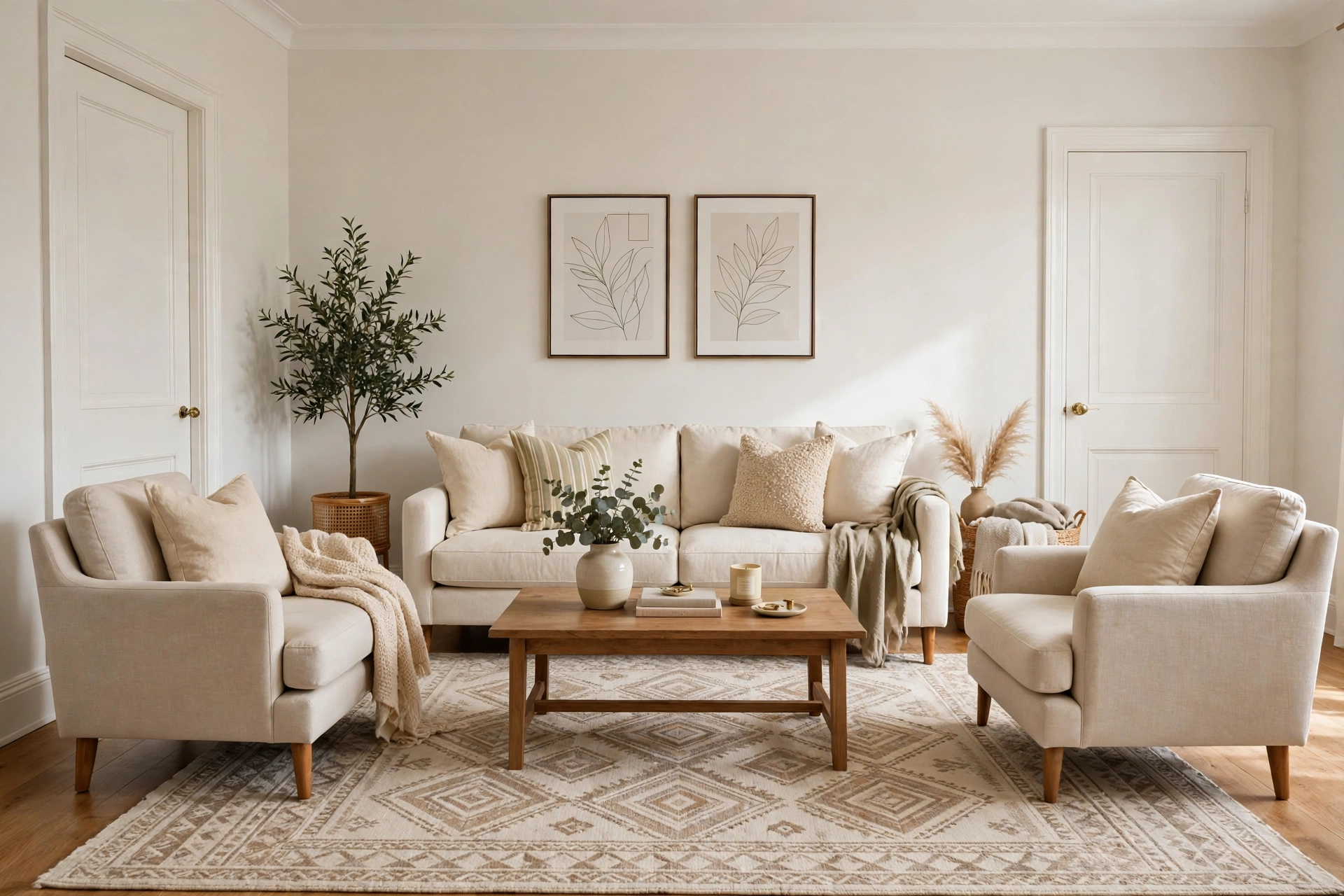
Quick Tip: Match the chairs, cushions, and side tables on both sides, since symmetry is what makes a busy room feel calm and ordered.
A matching pair of chairs creates balance that competes with the doors for attention, in a good way. When the seating group is symmetrical, the room feels ordered even if the doors are not evenly spaced. Place a coffee table in the centre, keep the chairs at the same distance from it, and add matching lamps or side tables to complete the pair.
Seasonal Door Styling

BEFORE: The spare doors looked plain and a little dull, especially in winter when the room felt flat and grey.
AFTER: A simple wreath and seasonal cushions give one door a warm focal point, and the room feels fresh and welcoming without any permanent change.
Seasonal styling lets you dress one door at a time, so the room changes through the year without a big project. A wreath, a garland, or a simple hanging sign adds charm, and you can swap it in minutes when the season changes. Pick one door to style, keep the rest plain, and match the colours to your cushions for a pulled together look.
Conclusion
A room with extra doors does not have to feel busy or hard to furnish. With the right layout, matching finishes, and a few calm focal points, living room ideas for rooms with too many doors can turn a tricky space into a room you love to spend time in. Start with one simple change, such as angling the sofa or painting the doors to match the walls, then add another idea when you are ready. Each small fix makes the doors fade a little more into the background, and the seating area becomes the true star of the room.
Save this guide, share it with a friend who has the same door dilemma, and enjoy a living room that finally feels open, balanced, and easy to live in.