25 Small Walk-In Pantry Ideas for a Blissful Tidy-Up
Is your tiny pantry overflowing with groceries, mismatched containers, and forgotten snacks? These small walk-in pantry ideas will help you reclaim precious storage space and create an organized, inviting corner of your kitchen.
A limited pantry doesn’t have to mean messy shelves or frustrating grocery searches. With smart shelving, stackable containers, clever corner solutions, and budget-friendly organizers, even the smallest walk-in pantry can feel spacious and functional.
Whether you’re organizing a narrow pantry, refreshing outdated storage, or planning a complete makeover, these 25 inspiring ideas offer practical solutions for different layouts and budgets. You’ll discover simple ways to maximize vertical space, keep everyday essentials accessible, and create a beautiful pantry that’s easier to maintain.
1. Adjustable Wall Shelving
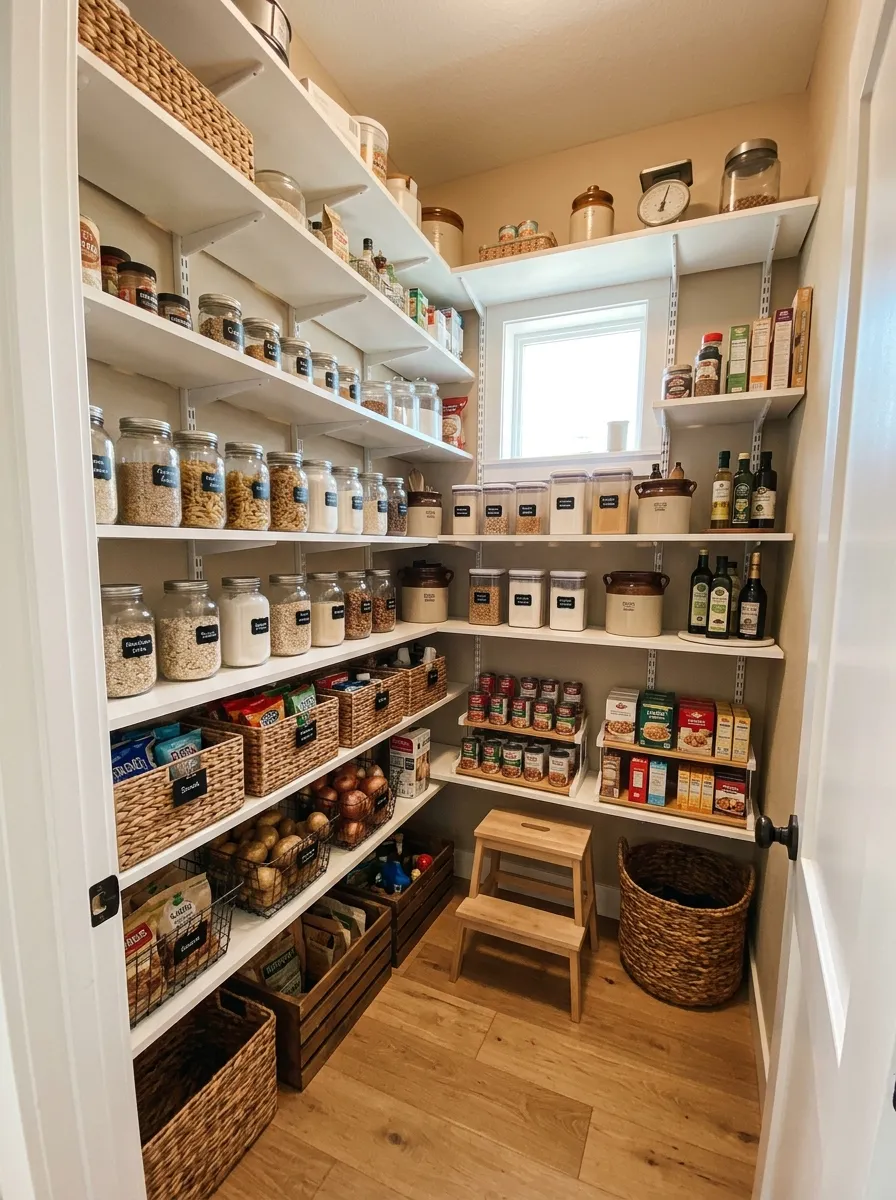
Cramped pantry shelves can quickly turn grocery shopping into a frustrating puzzle. Adjustable wall shelving solves this problem by letting you change shelf heights to fit cereal boxes, tall bottles, and small jars. Install sturdy shelf tracks and movable brackets to create flexible storage that accommodates your changing kitchen supplies.
Keep frequently used ingredients between waist and eye level, while reserving upper shelves for lightweight extras. Place heavier appliances on lower shelves for safer lifting. Before installation, measure your tallest containers and check wall anchors and shelf weight ratings. This simple arrangement makes every inch more useful without crowding the walking area.
2. Clear Container Organization
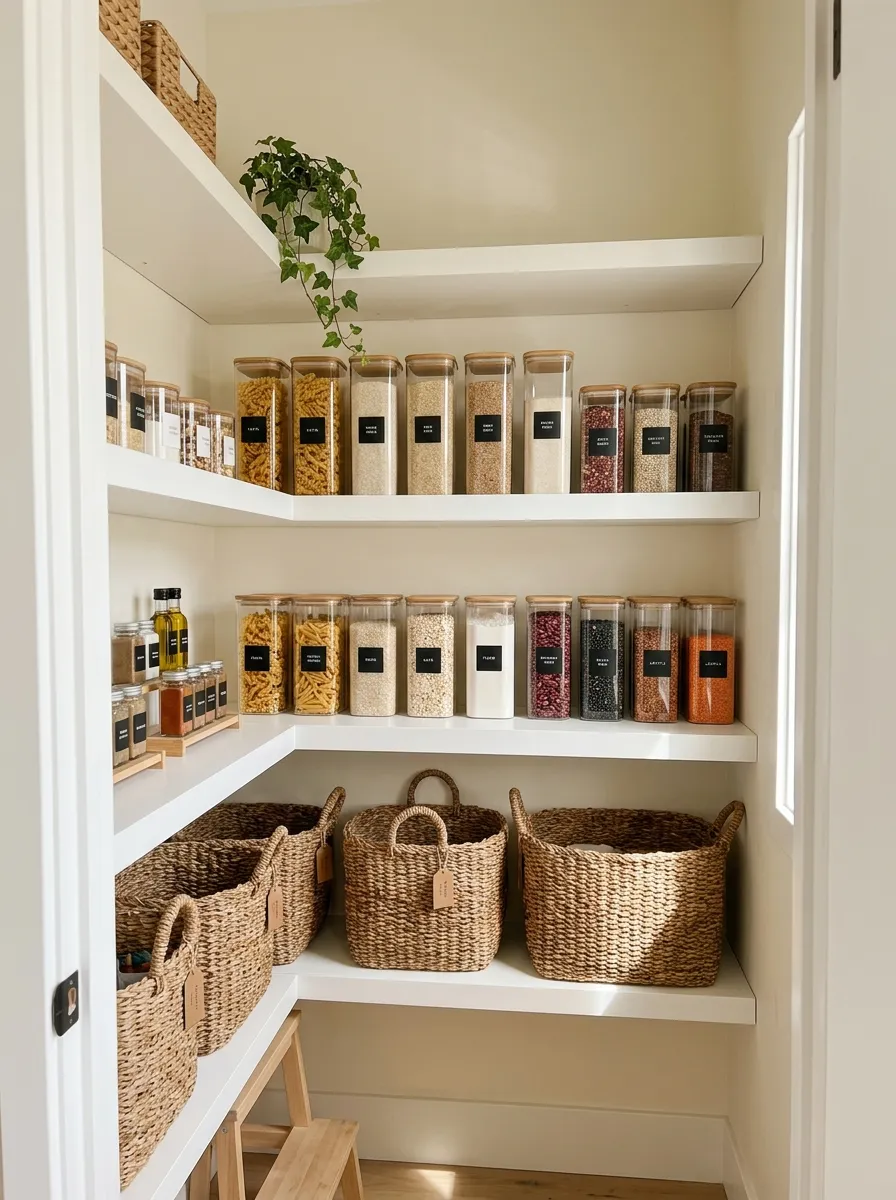
Messy food packaging can make even spacious shelves feel overcrowded. Clear containers bring visual order while helping you spot what needs restocking.
- Group similar ingredients: Keep baking essentials, breakfast foods, and dry snacks together for quicker meal preparation.
- Choose airtight containers: Use food-safe containers with secure lids to protect dry ingredients from moisture and pests.
- Select stackable shapes: Rectangular containers often use shelf space more efficiently than round jars.
- Add readable labels: Include ingredient names and expiration dates so everyone knows what belongs inside.
- Measure before buying: Check shelf depth and container height to avoid wasted space.
For practical small walk-in pantry ideas, matching containers are helpful, but expensive sets are unnecessary. Start with flour, sugar, rice, and other ingredients you use weekly. Keep original packaging information or transfer important dates onto labels. You’ll enjoy cleaner shelves without losing track of food storage instructions.
3. Over Door Storage Racks
Quick Tip:
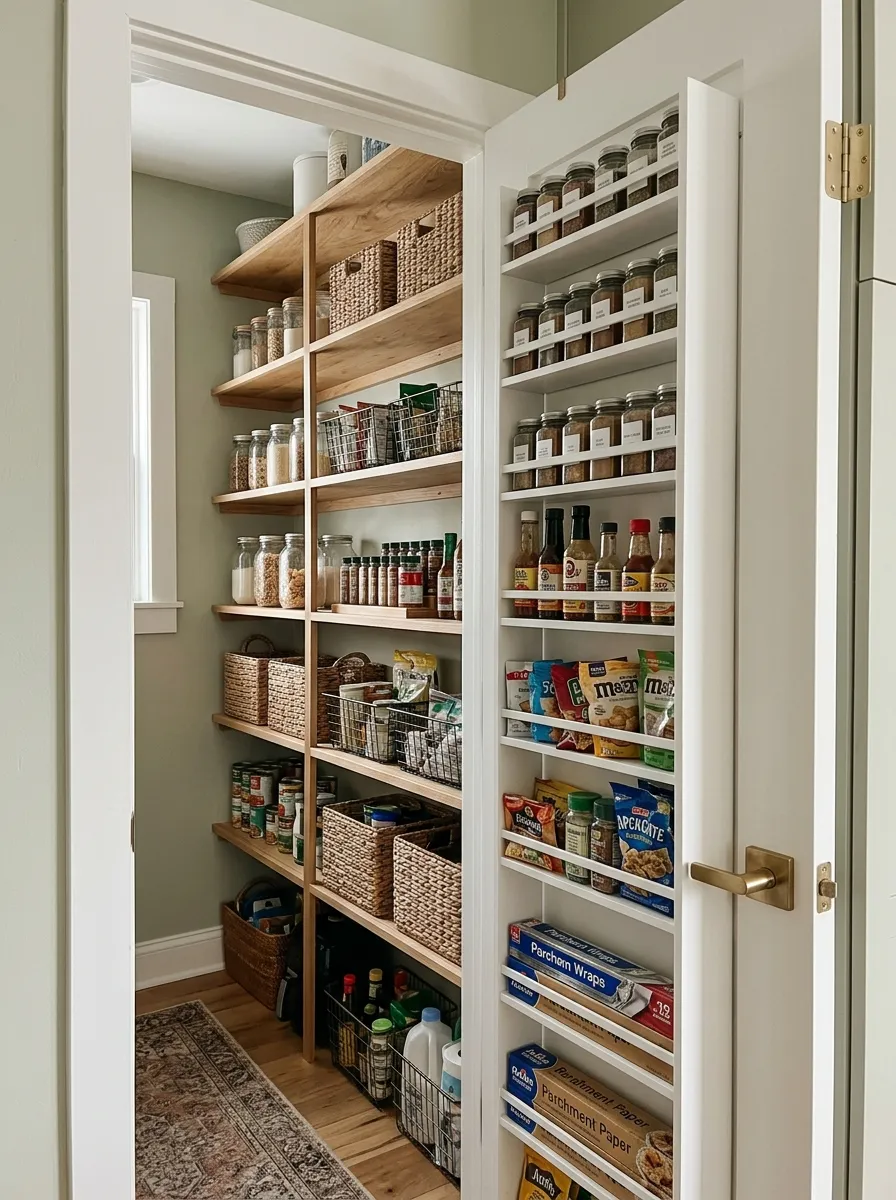
Check the clearance between your pantry door and nearby shelves before installing an over-door organizer. Choose shallow baskets with secure edges, and confirm that the hardware fits your door thickness.
A pantry door offers valuable storage without taking up additional floor space. Use its racks for lightweight items such as seasoning packets, sandwich bags, snack bars, and small spice containers. Place frequently used supplies at comfortable reach height. Avoid heavy glass bottles that could strain the door or cause rattling.
4. Corner Lazy Susan Shelves
BEFORE:
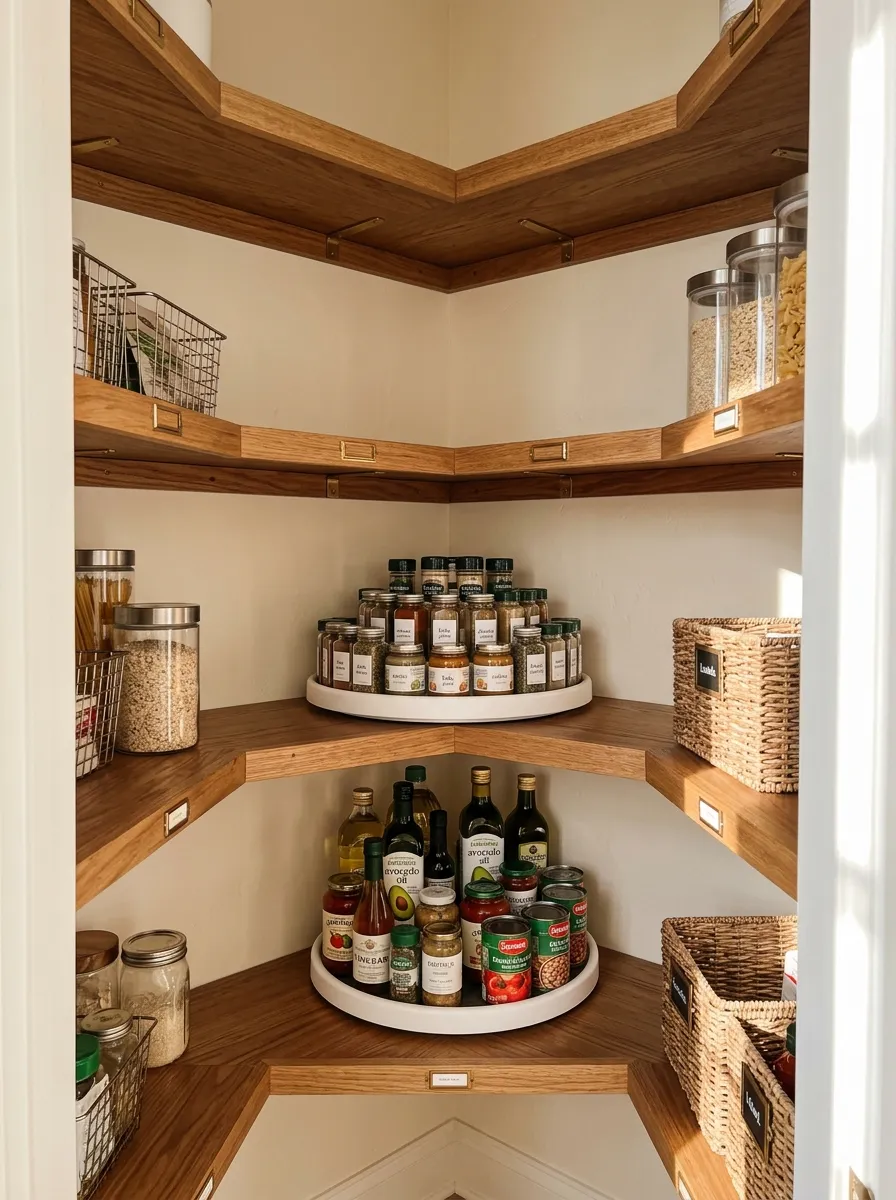
Deep pantry corners often become cluttered with forgotten jars, sauces, and canned goods. Reaching items at the back means moving everything in front, creating unnecessary mess during meal preparation.
AFTER:
Rotating Lazy Susan trays bring hidden ingredients into view with a simple spin. Every bottle becomes easier to reach, while the surrounding shelves stay organized and visually balanced.
Choose turntables slightly smaller than your shelf depth so they rotate without hitting nearby containers. Group cooking oils on one tray and everyday condiments on another. Look for raised edges that prevent bottles from slipping. This practical setup works especially well in narrow pantry corners where reaching supplies feels awkward.
5. Floor to Ceiling Shelving
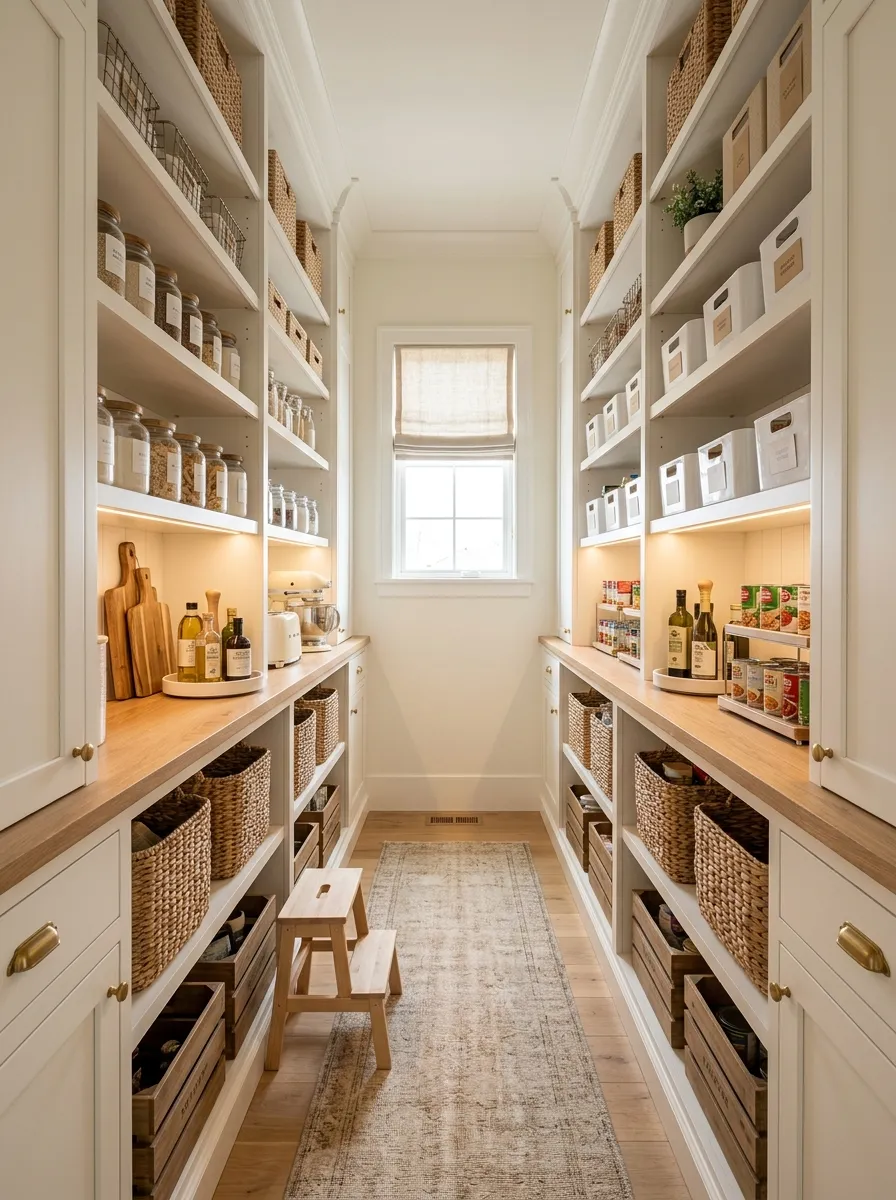
Tall pantry walls offer valuable storage potential, even when floor space is limited. Make the most of unused vertical space with these simple steps.
- Measure your pantry walls: Record the ceiling height, available wall width, and shelf depth before planning your layout.
- Install sturdy shelving: Secure adjustable tracks or built-in shelves to appropriate wall supports, following manufacturer weight limits.
- Organize by frequency: Keep everyday groceries at eye level and occasionally used supplies on higher shelves.
- Use matching storage baskets: Place lightweight seasonal supplies and extra paper products in labeled upper baskets.
- Keep a folding step stool: Store a stable, nonslip step stool nearby for safely accessing higher shelves.
Vertical shelving gives a compact pantry more usable storage without sacrificing its central walkway. Reserve lower shelves for heavy appliances and bulk ingredients, keeping lightweight extras above. Avoid stacking containers too close to the ceiling, especially near lighting fixtures. The result feels organized, accessible, and thoughtfully arranged.
6. Pull Out Storage Baskets
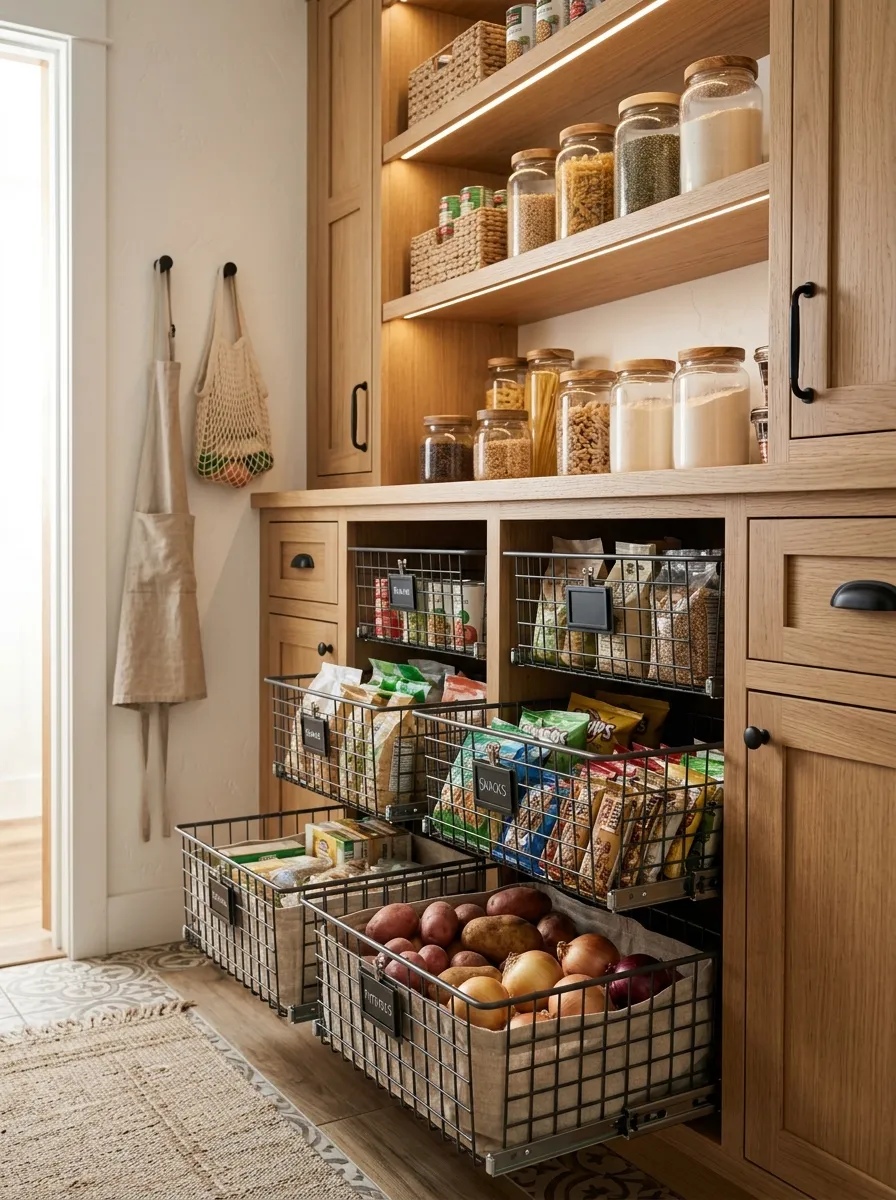
Pull-out baskets make lower pantry shelves easier to use by bringing stored items directly toward you. Instead of kneeling and searching through deep cabinets, you can slide a basket forward and see its contents immediately.
| Feature | Fixed Storage Baskets | Pull-Out Storage Baskets |
| Accessibility | Items at the back require reaching | Contents slide forward |
| Organization | Baskets may need removing | Categories remain visible |
| Installation | Usually no hardware needed | Requires tracks or compatible frames |
| Best Use | Lightweight occasional supplies | Frequently used packaged groceries |
For a small pantry makeover, consider installing pull-out baskets on the bottom two shelves first. Use separate baskets for snack packets, baking supplies, and canned foods within their rated capacity. Choose smooth sliding mechanisms and leave enough clearance for handles. Your daily cooking routine becomes noticeably more convenient.
7. Slim Rolling Storage Cart
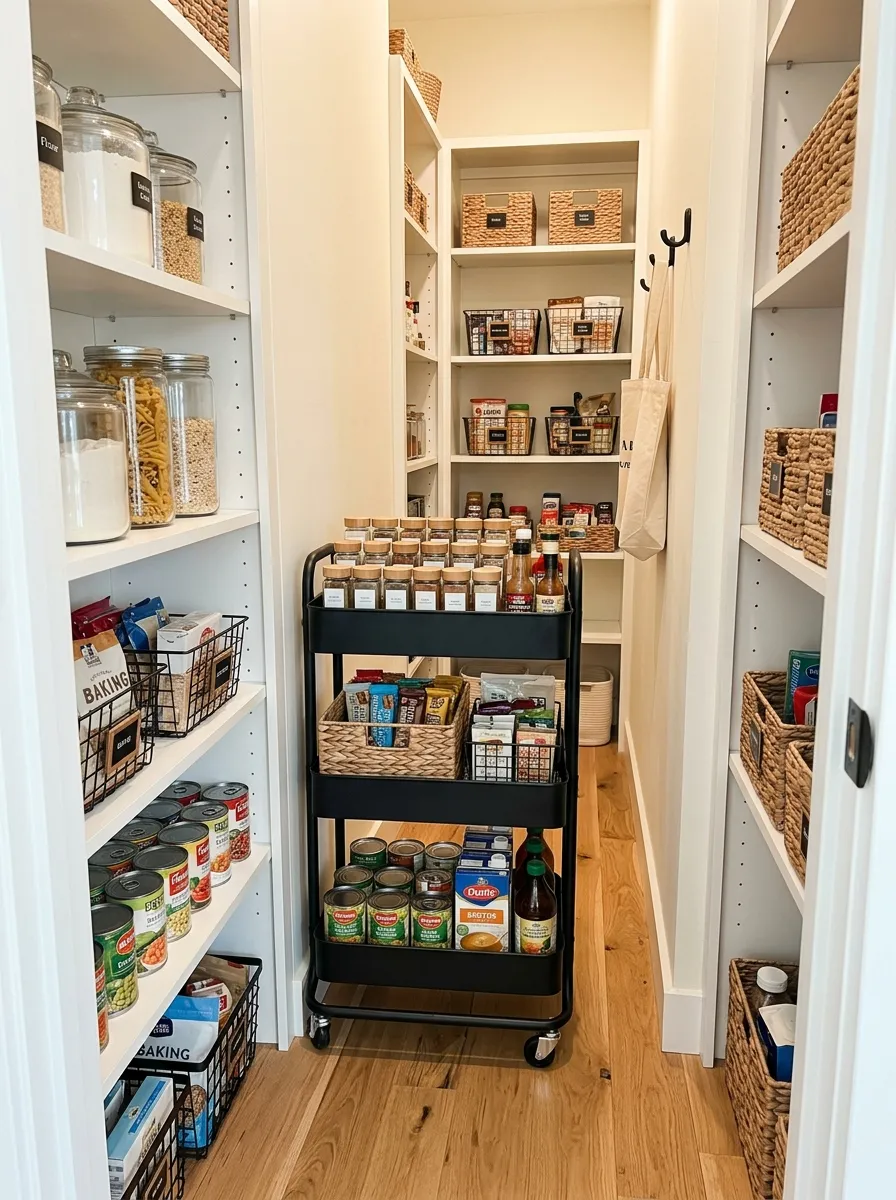
That awkward gap between pantry shelves could become your most convenient storage spot. A slim rolling cart turns unused floor space into practical storage for everyday cooking essentials.
DO:
- Measure the available gap before purchasing a cart.
- Choose smooth wheels with locking mechanisms.
- Store heavier canned goods on the bottom tier.
- Group lightweight snacks and spices on upper tiers.
DON’T:
- Buy a cart that blocks the pantry doorway.
- Overload shelves beyond their weight capacity.
- Store fragile glass bottles on unstable carts.
- Position the cart where it obstructs walking space.
A rolling cart works especially well in narrow walk-in pantries with small gaps beside fixed shelving. Choose a model with raised edges to keep items secure while moving. Keep frequently used ingredients on the middle tier for easy access. Simply roll it out when preparing meals.
8. Woven Basket Organization
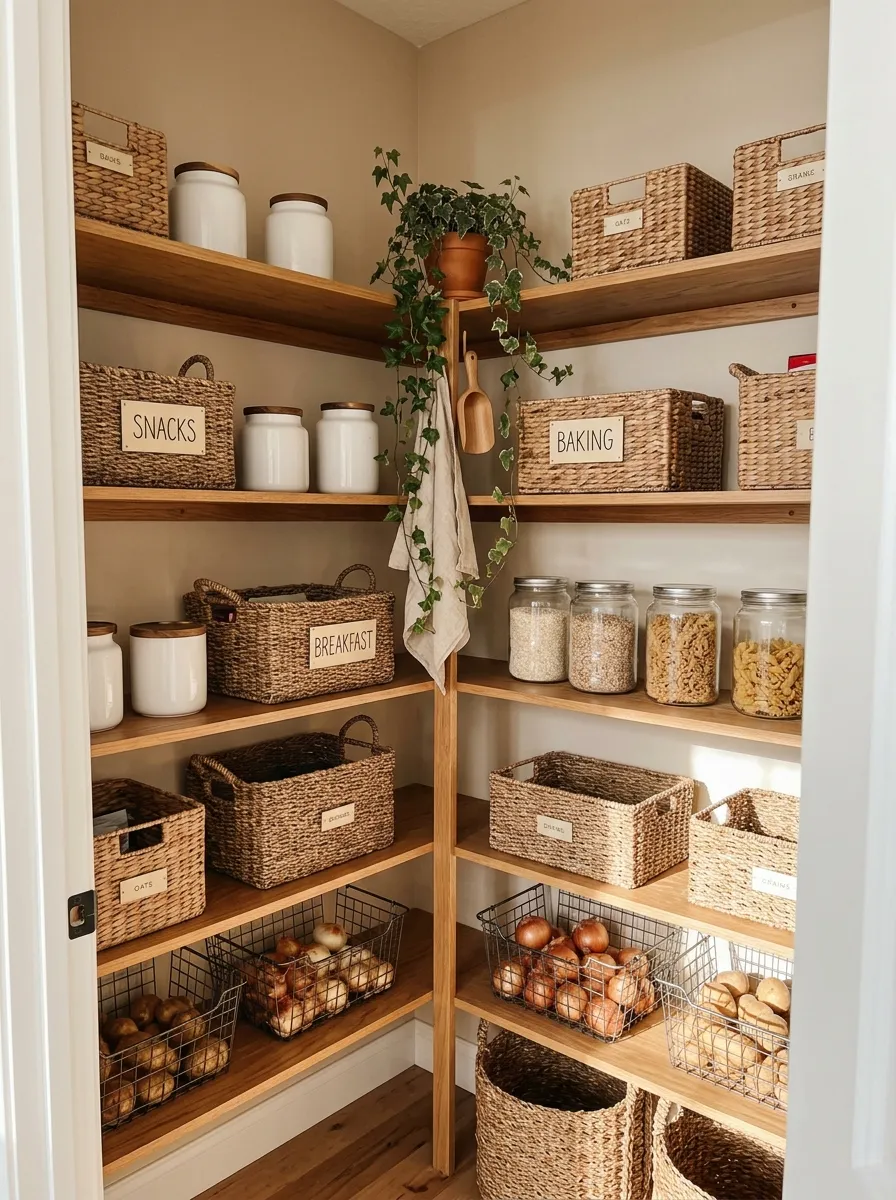
Cost: Low to moderate, depending on basket material and size.
Time: Approximately one to two hours for sorting and arranging.
Skill Level: Beginner, with no installation required.
Best For: Snack packets, packaged foods, napkins, and lightweight pantry supplies.
Woven baskets bring warmth and texture to shelves while hiding colorful packaging that can make a pantry feel visually busy. Choose rectangular baskets that fit your shelf depth without hanging over the edges. Add simple labels for quick identification. Avoid placing loose, unwrapped foods directly inside porous baskets, since cleaning can be difficult.
9. Under Shelf Storage Baskets
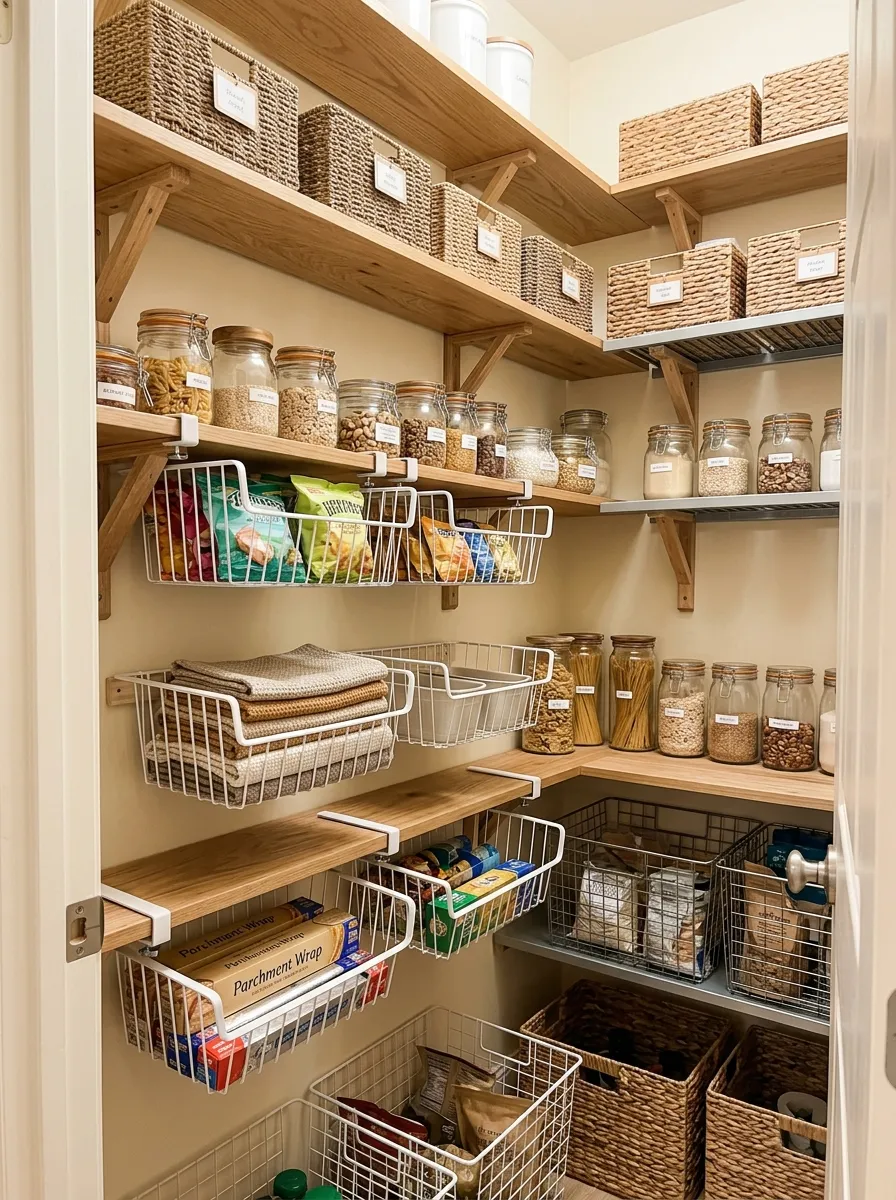
Unused space beneath pantry shelves can quietly limit your storage potential. Under-shelf baskets turn these overlooked gaps into convenient compartments for lightweight essentials. Choose sturdy slide-on wire organizers that match your shelf thickness, leaving enough clearance below for easy access. They’re especially useful for sandwich bags, napkins, and small snack packets.
For a cleaner arrangement, position the baskets beneath shelves that hold everyday ingredients. Keep similar supplies together so you can quickly find what you need while cooking or packing lunches. Check the organizer’s weight rating before loading it, and avoid placing heavy cans or glass jars inside. This simple addition increases usable storage without requiring permanent renovations.
10. Labeled Pantry Storage Zones
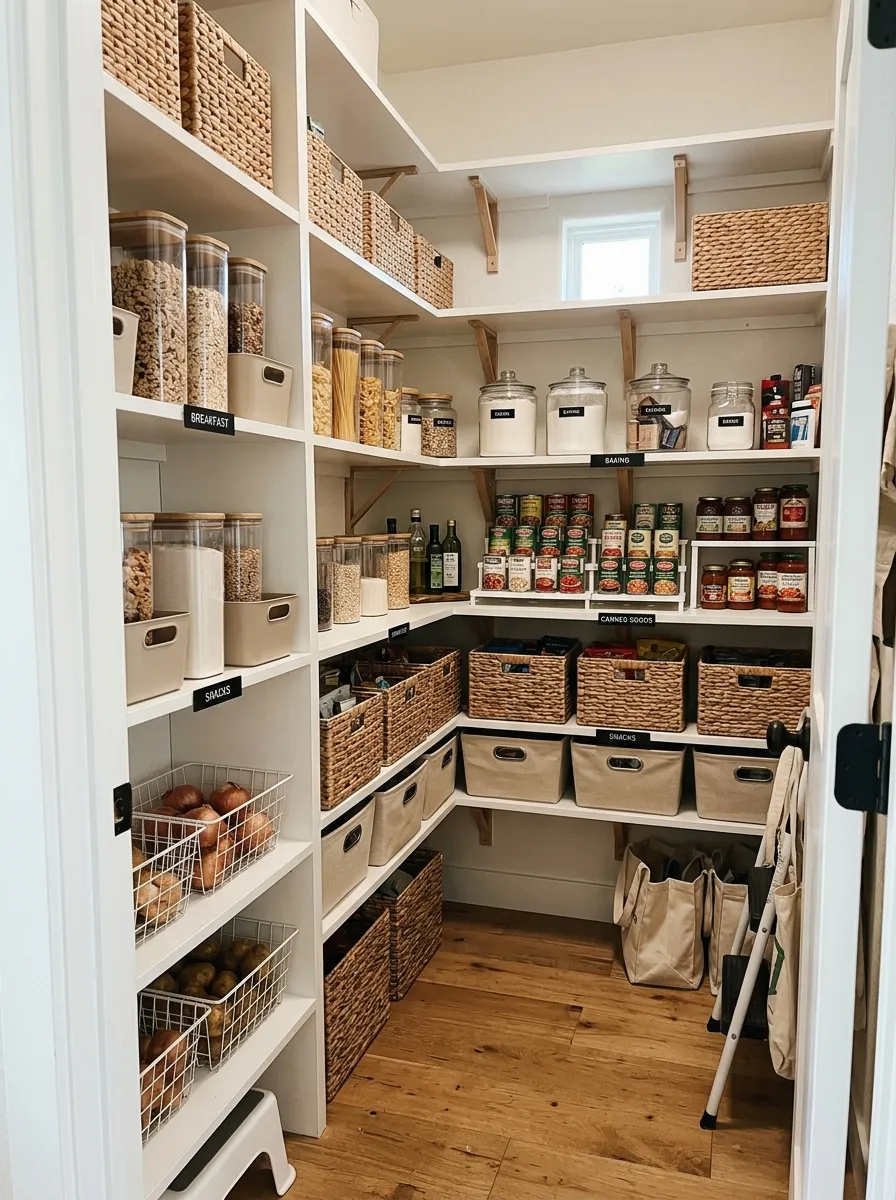
A pantry feels much easier to manage when every grocery item has a designated home. Creating labeled storage zones prevents random clutter and makes daily cooking more convenient.
- Breakfast Zone: Keep cereal, oats, pancake mixes, and breakfast essentials together on an accessible shelf.
- Baking Zone: Arrange flour, sugar, baking powder, and decorating supplies in clearly labeled containers.
- Snack Zone: Use open baskets for crackers, granola bars, and individually packaged treats.
- Cooking Zone: Group pasta, rice, canned vegetables, and everyday ingredients near the pantry entrance.
- Backstock Zone: Reserve an upper shelf for unopened replacements and extra household supplies.
Label each zone using simple printed tags or reusable chalkboard labels. Place frequently used ingredients between waist and eye level to reduce unnecessary reaching. This approach also helps family members return groceries to the correct shelves. Keep the categories flexible as your shopping habits change throughout the year.
11. Tiered Can Organizers
Quick Tip:
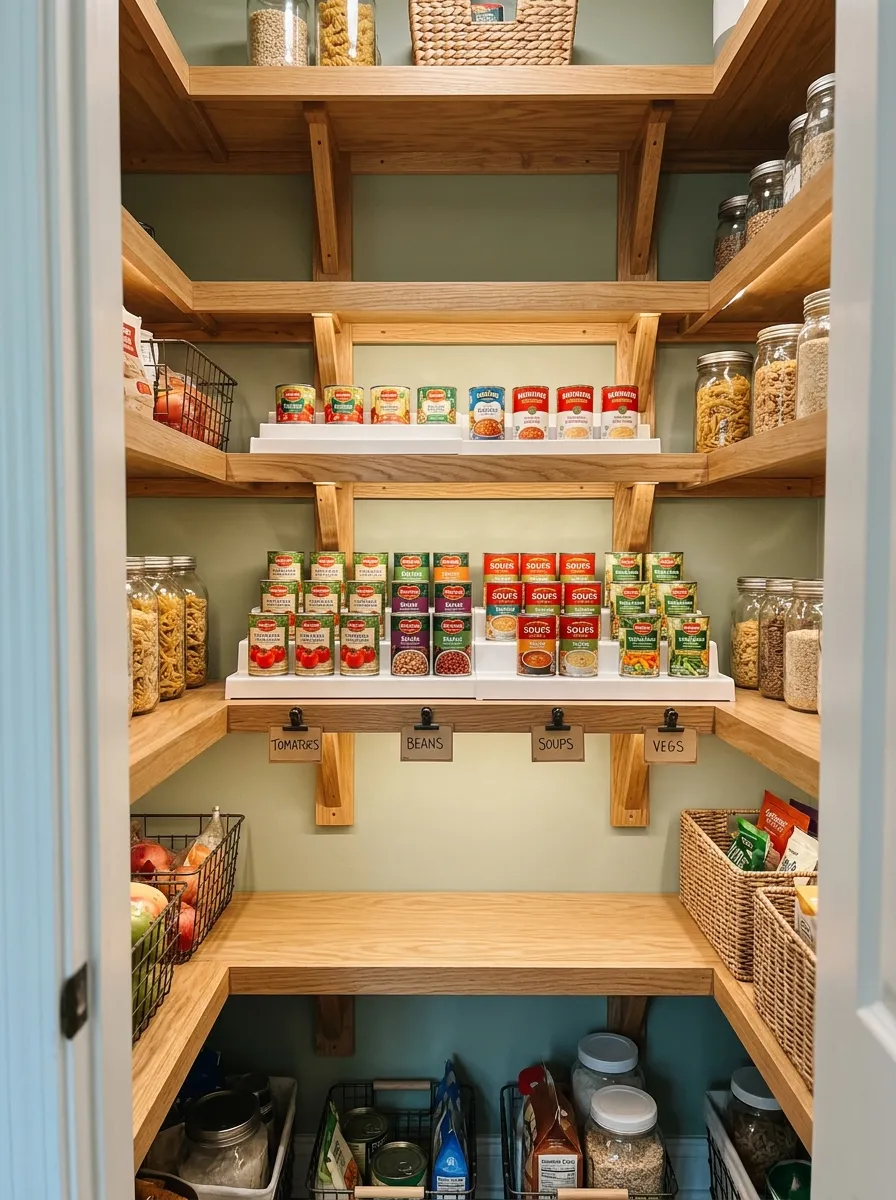
Choose a stepped organizer that fits your shelf depth while leaving enough room to remove cans comfortably. Arrange identical products together and place older cans toward the front so they are used first.
Crowded canned goods become easier to identify when arranged at different heights. Tiered risers keep rear labels visible without requiring you to move several cans during meal preparation. Choose sturdy, nonslip organizers suitable for the weight of your groceries. Avoid stacking cans too high, especially on narrow or unsupported shelves.
12. Built In Countertop Station
BEFORE:
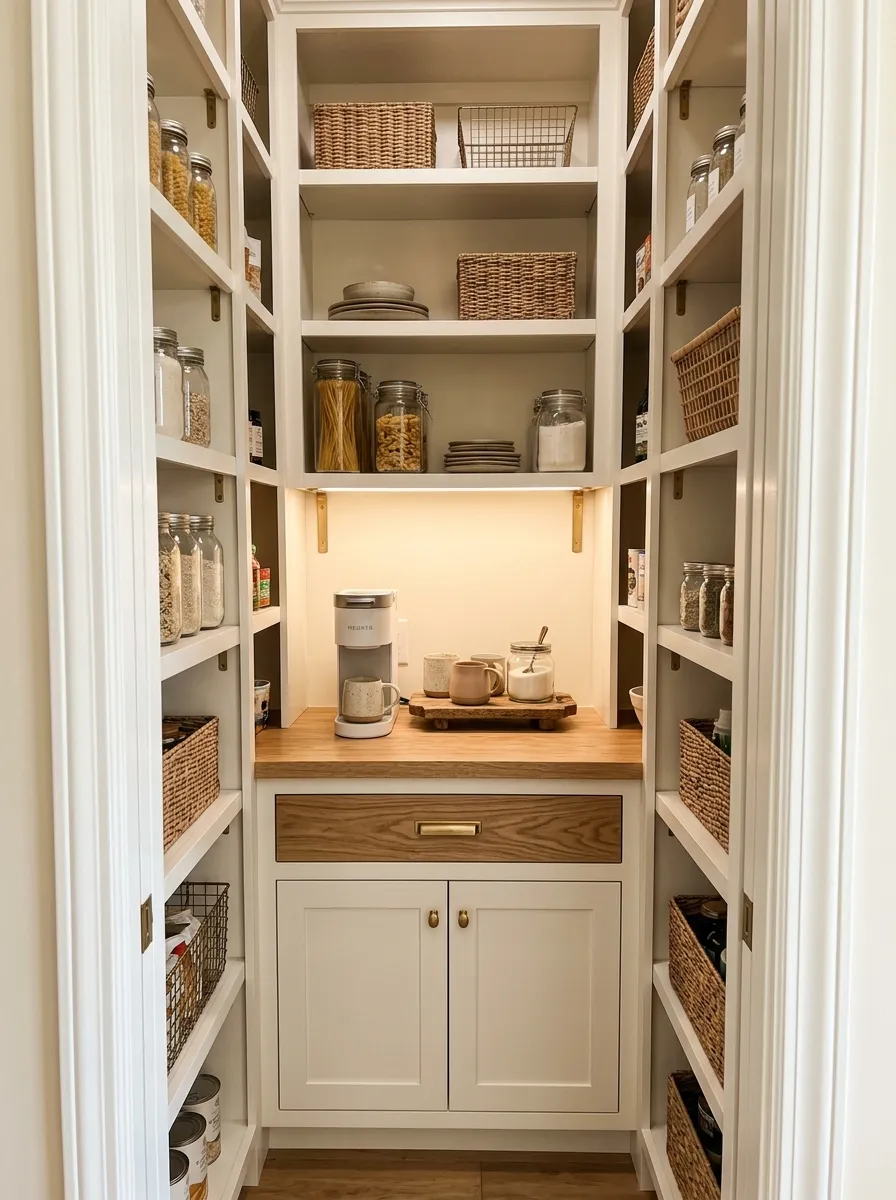
Small kitchen appliances crowd the main countertop, leaving little room for chopping vegetables or preparing meals. Coffee supplies, serving trays, and everyday accessories become scattered across several cabinets.
AFTER:
A dedicated pantry countertop creates a convenient preparation station while keeping the kitchen visually uncluttered. Matching shelves above provide organized storage for mugs, dry ingredients, and lightweight accessories.
Install a shallow countertop only if your pantry has enough clearance for comfortable movement. Choose a moisture-resistant, easy-to-clean surface and keep appliances near properly installed electrical outlets. Allow ventilation around heat-producing equipment and follow manufacturer instructions. Even a short counter can provide useful space for organizing drinks and assembling snacks.
13. Vertical Baking Sheet Dividers
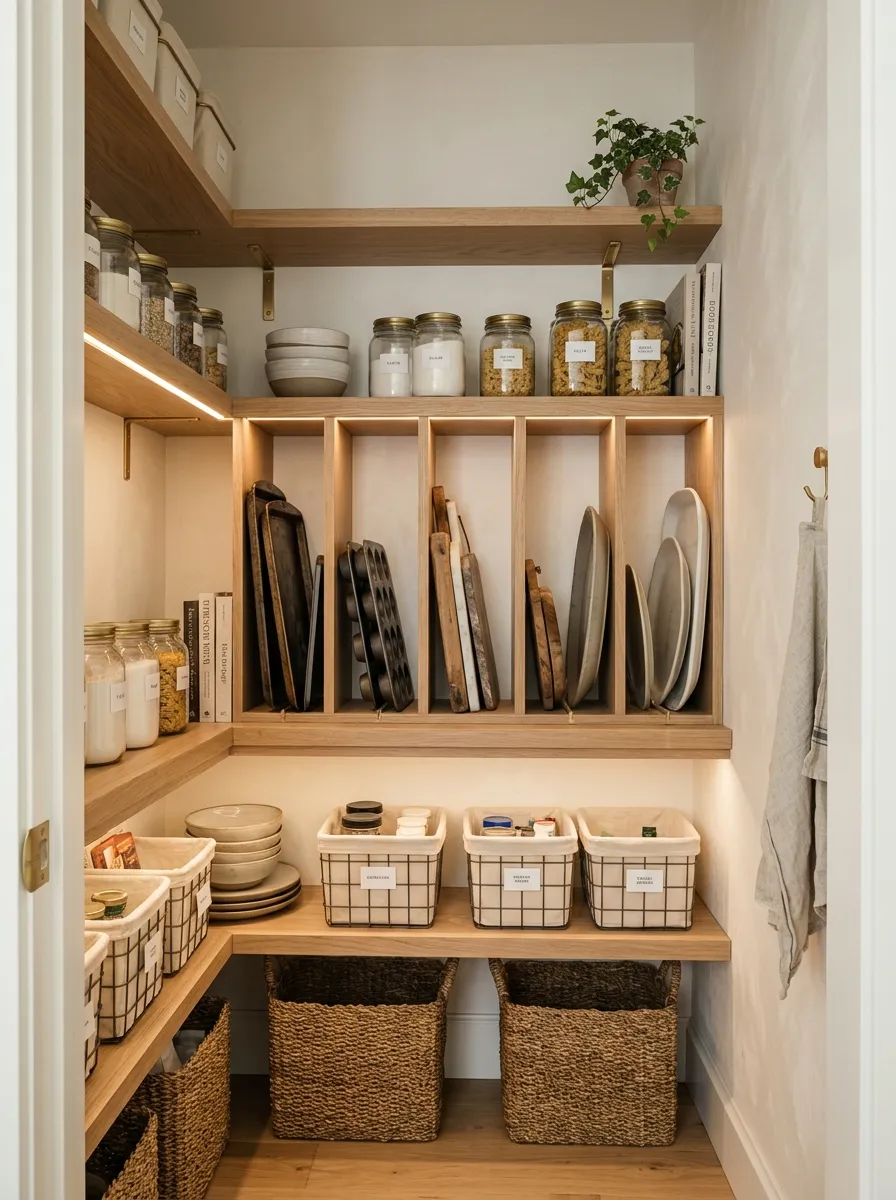
Tired of pulling out an entire stack of baking trays just to find one? Vertical dividers keep flat kitchen essentials upright, separated, and easy to grab without creating a mess.
- Choose a lower shelf: Select an accessible area with enough height for your largest baking sheet.
- Measure your cookware: Check the width and height of cutting boards, trays, and baking pans.
- Install sturdy dividers: Use adjustable metal racks or secured wooden partitions to create individual storage slots.
- Arrange by size: Place larger baking sheets toward the back and frequently used cutting boards near the front.
- Leave breathing room: Avoid squeezing too many items together so each piece slides out smoothly.
Vertical storage prevents heavy cookware from becoming an unstable pile. It also makes finding the right baking tray easier during busy cooking sessions. For renters, freestanding dividers offer a practical alternative to permanent installations. Keep heavier trays on sturdy lower shelves and check that the organizer stays stable when items are removed.
14. Open Wooden Pantry Shelves
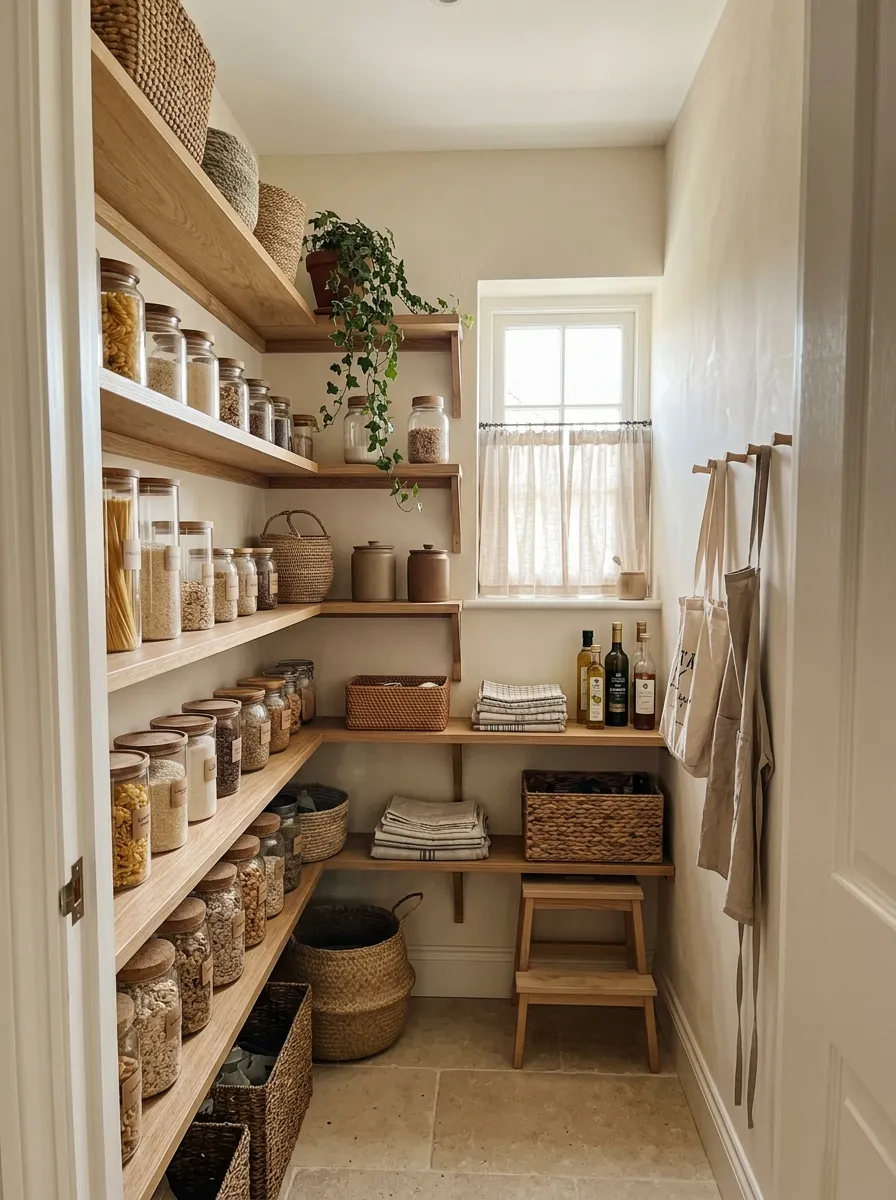
Open wooden shelving brings natural warmth into a compact pantry while keeping frequently used ingredients within easy reach. Unlike bulky enclosed cabinets, exposed shelves create a lighter visual appearance and make it easier to spot supplies.
| Feature | Closed Cabinets | Open Wooden Shelves |
| Visibility | Contents remain hidden | Ingredients stay visible |
| Accessibility | Doors require opening | Everyday supplies are immediately accessible |
| Appearance | Creates a solid cabinet wall | Offers a lighter, more open look |
| Maintenance | Contents collect less dust | Shelves need regular dusting |
Choose moisture-resistant finished wood and use sturdy brackets or properly supported built-ins. Keep heavier containers on lower shelves and leave small gaps between storage baskets for easy handling. For a cohesive look, repeat two or three materials, such as clear glass, natural wicker, and warm oak, throughout the pantry.
15. Hidden Appliance Storage
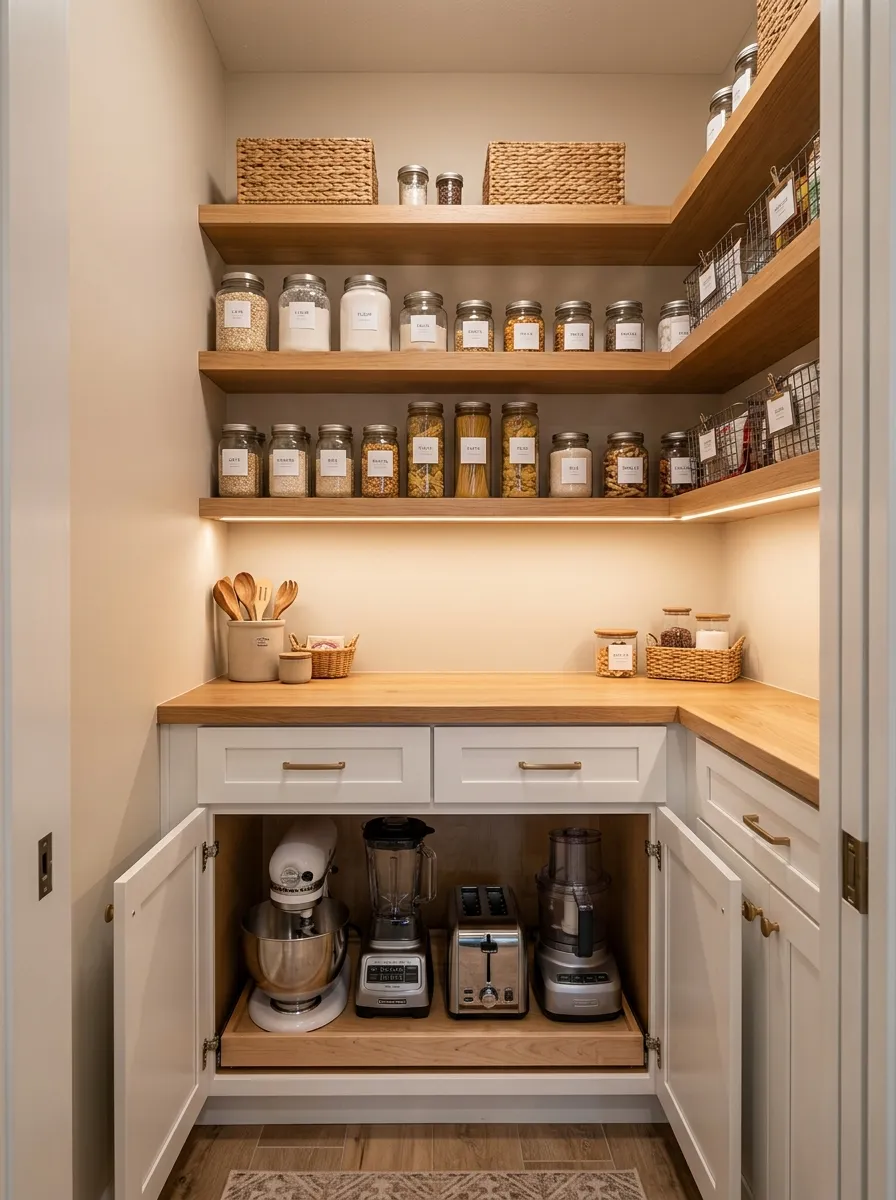
Bulky kitchen appliances can quickly overwhelm a small pantry, especially when they compete for space with everyday groceries. A dedicated appliance cabinet keeps countertops clear while protecting equipment from dust and accidental bumps.
DO:
- Store heavy appliances on sturdy lower shelves.
- Group accessories beside their matching appliances.
- Measure cabinet dimensions before assigning storage spaces.
- Keep regularly used equipment within comfortable reach.
DON’T:
- Stack heavy machines on unstable shelving.
- Block ventilation openings during appliance operation.
- Leave electrical cords tangled around equipment.
- Operate heat-producing appliances inside closed cabinets.
A dedicated appliance zone works best near the pantry entrance, where lifting equipment requires less effort. Consider pull-out shelves rated for the appliance weight if your budget allows. Keep removable attachments in labeled containers nearby. This arrangement reduces kitchen counter clutter without making your favorite appliances difficult to access.
16. Stackable Pantry Storage Bins
Cost: Low to moderate, depending on bin size and material.
Time: Approximately one to two hours for sorting and organizing.
Skill Level: Beginner, with no installation required.
Best For: Packaged snacks, lightweight groceries, and extra pantry supplies.
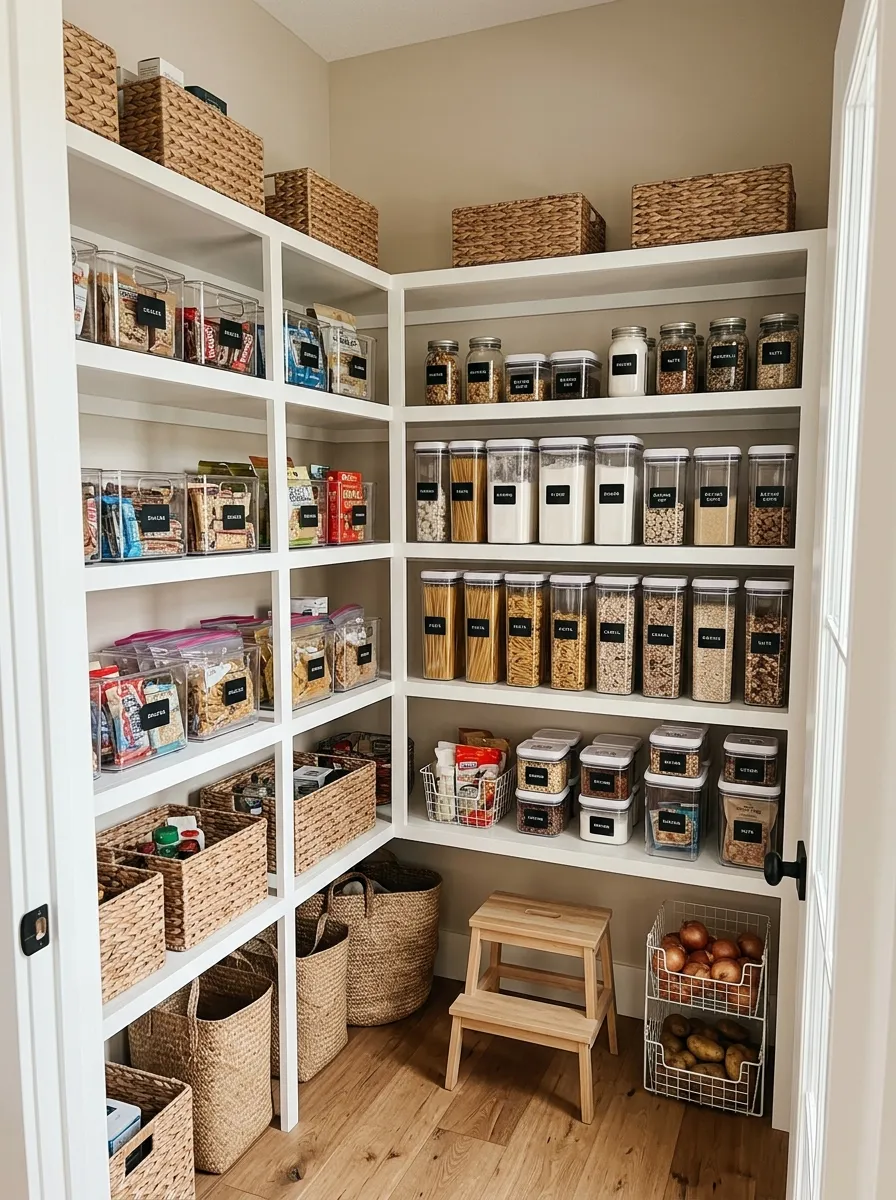
Stackable storage bins help maximize vertical shelf space without requiring expensive renovations. Choose containers with flat lids and compatible shapes that stack securely. Keep heavier supplies in bottom bins and lightweight packets above. Transparent sides make grocery inventory easier to check, while simple labels help maintain order after shopping trips.
17. Narrow Pull Out Shelves
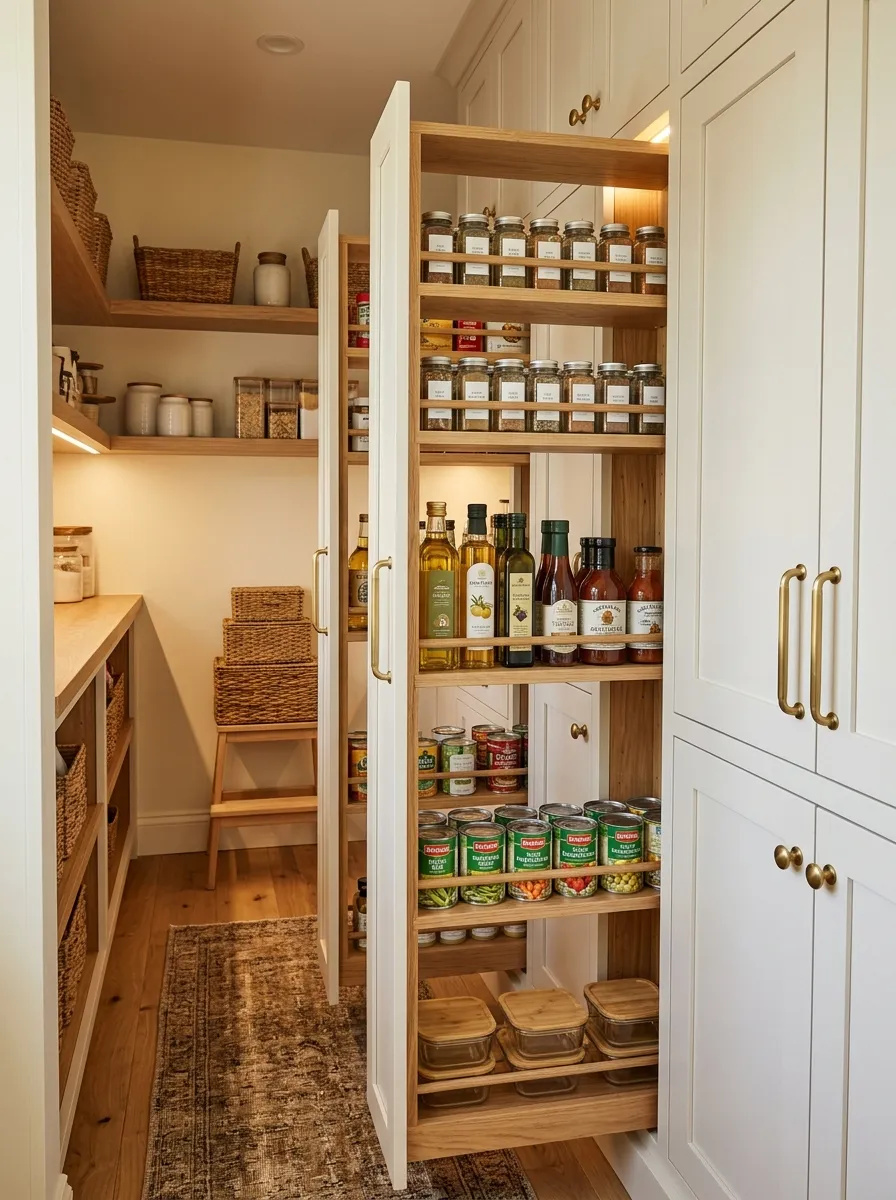
Even a few inches of unused space between pantry cabinets can offer valuable storage. Narrow pull-out shelves turn these awkward gaps into accessible compartments for spices, canned goods, and small cooking essentials. Choose sturdy sliding hardware with full-extension tracks so items at the back remain easy to reach without removing everything in front.
For a practical layout, place heavier bottles on lower levels and lightweight spice containers near eye level. Install raised shelf edges to prevent supplies from falling when the unit moves. Measure both the opening and surrounding clearance before buying hardware. A slim pull-out system keeps essentials organized while preserving precious walking space.
18. Under Shelf LED Lighting
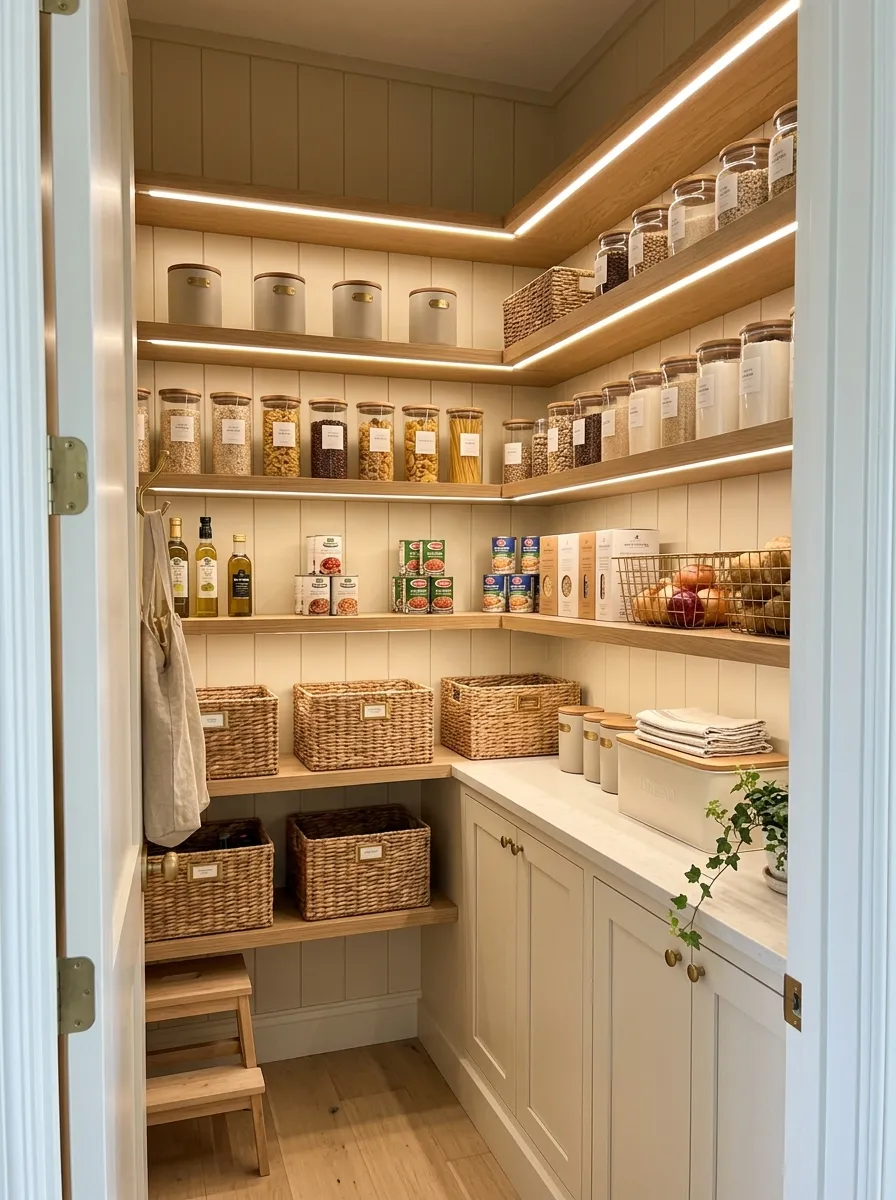
- Warm LED Strips: Install low-profile LED strips beneath shelves to illuminate ingredients and create a soft, welcoming atmosphere.
- Motion Sensor Lights: Choose battery-powered motion lights that automatically brighten the pantry when someone enters.
- Adhesive Light Bars: Use removable adhesive fixtures for renter-friendly lighting without drilling into cabinetry.
- Concealed Wiring: Hide compatible low-voltage cables along shelf edges for a cleaner, more finished appearance.
- Energy Efficient Bulbs: Select efficient LED fixtures that produce minimal heat and provide comfortable visibility.
Poor lighting makes even an organized pantry difficult to navigate, especially when shelves are deep or tightly spaced. Under-shelf LEDs brighten labels and reveal items tucked into corners. Choose fixtures suitable for enclosed spaces, follow electrical safety instructions, and position lights where they will not interfere with stored groceries.
19. Wall Mounted Spice Racks
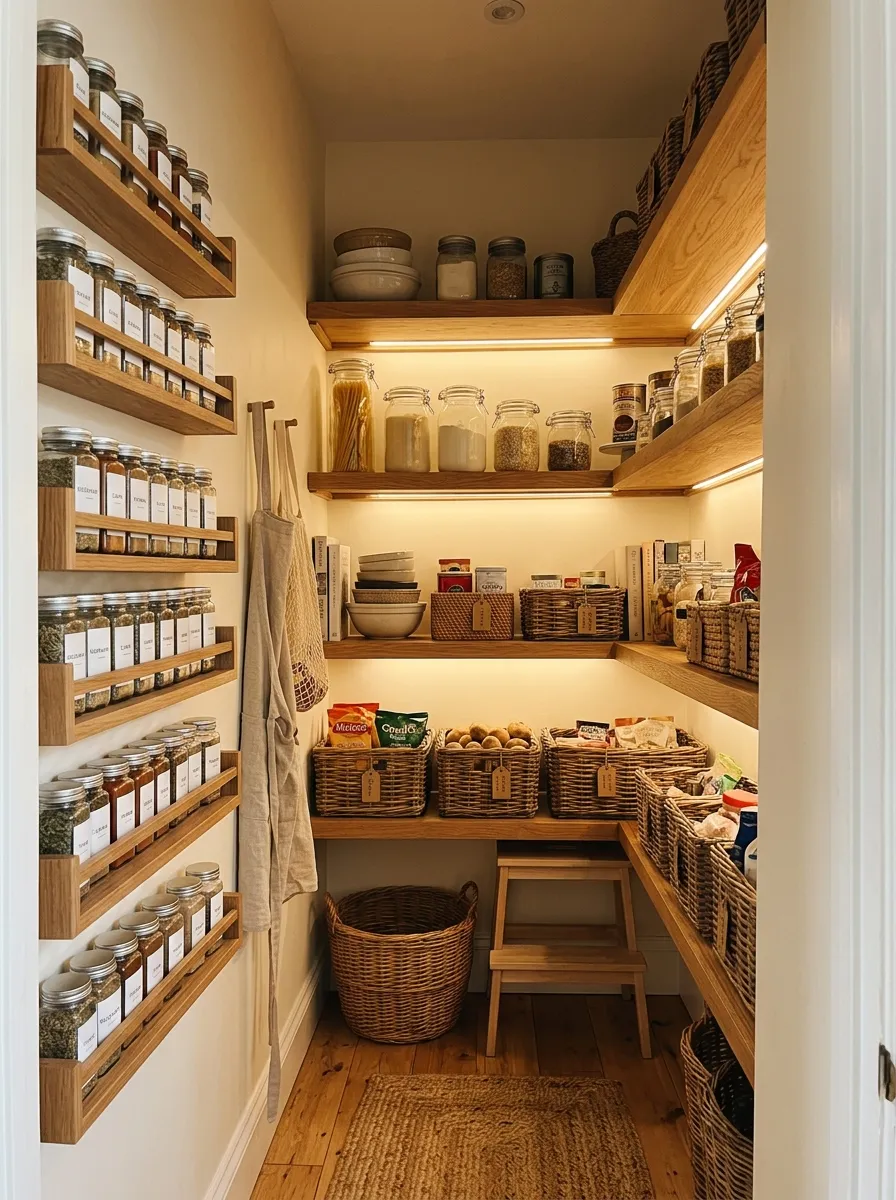
Quick Tip:
Mount shallow spice racks on an unused pantry wall where they won’t obstruct the walkway. Arrange everyday seasonings at eye level and keep heavier glass containers on sturdy, properly secured racks.
Scattered spice jars can make meal preparation unnecessarily frustrating, especially in a compact pantry. Wall-mounted racks free up valuable shelf space while keeping seasonings visible and accessible. Choose racks with raised front edges to prevent slipping. Label jar lids or fronts clearly, and group spices by cooking frequency for quicker access.
20. Clear Pantry Drawer Organizers
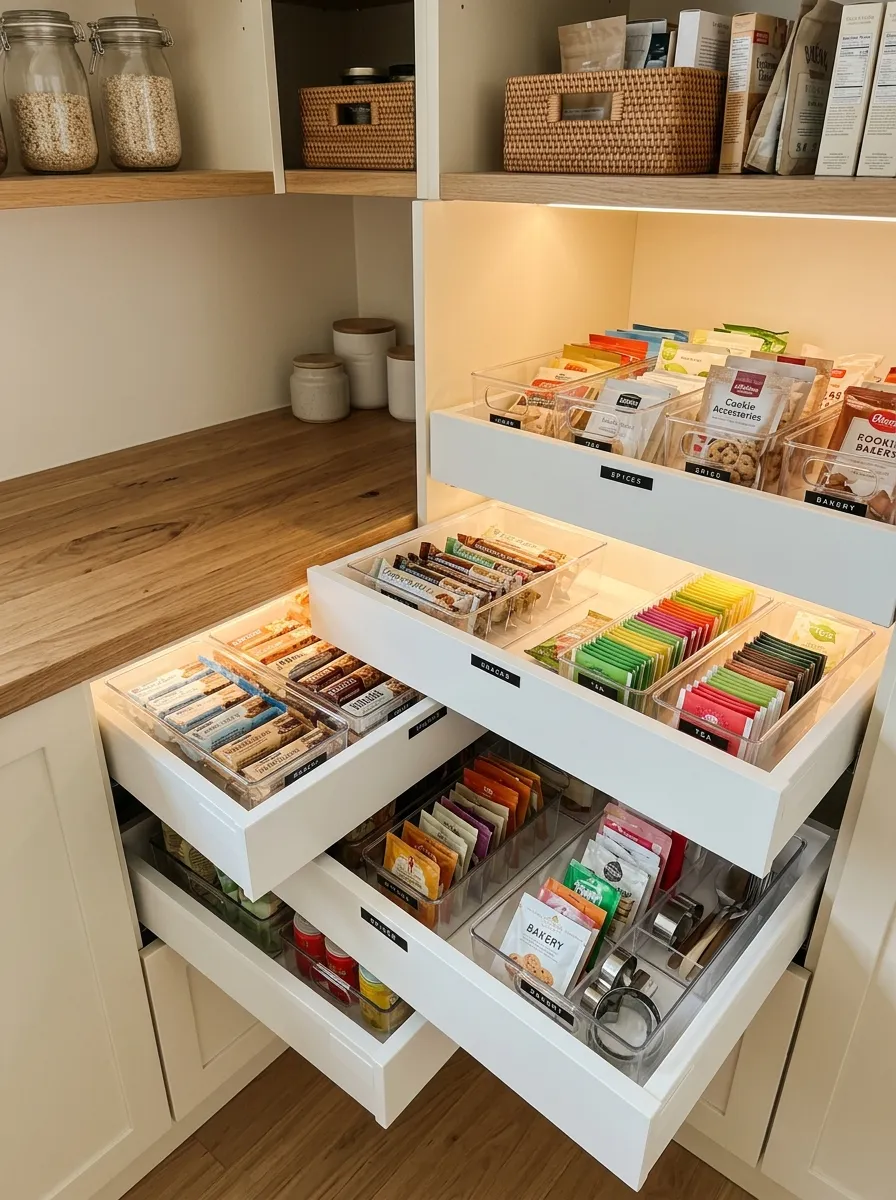
BEFORE:
Small pantry supplies collect in cluttered drawers, making it difficult to locate tea bags, seasoning packets, or snack bars. Items shift whenever drawers open, leaving categories mixed together and frequently used essentials buried underneath.
AFTER:
Clear drawer organizers create dedicated compartments that keep small supplies separated and visible. Each category stays in place, allowing you to find ingredients quickly without searching through loose packaging.
Measure drawer interiors before purchasing organizers, including the available height beneath the drawer opening. Choose removable, washable compartments that accommodate your everyday supplies. Position frequently used items toward the front and occasional extras behind them. Clear organizers also help you notice when quantities are running low, making grocery planning simpler.
21. Foldable Pantry Step Stool
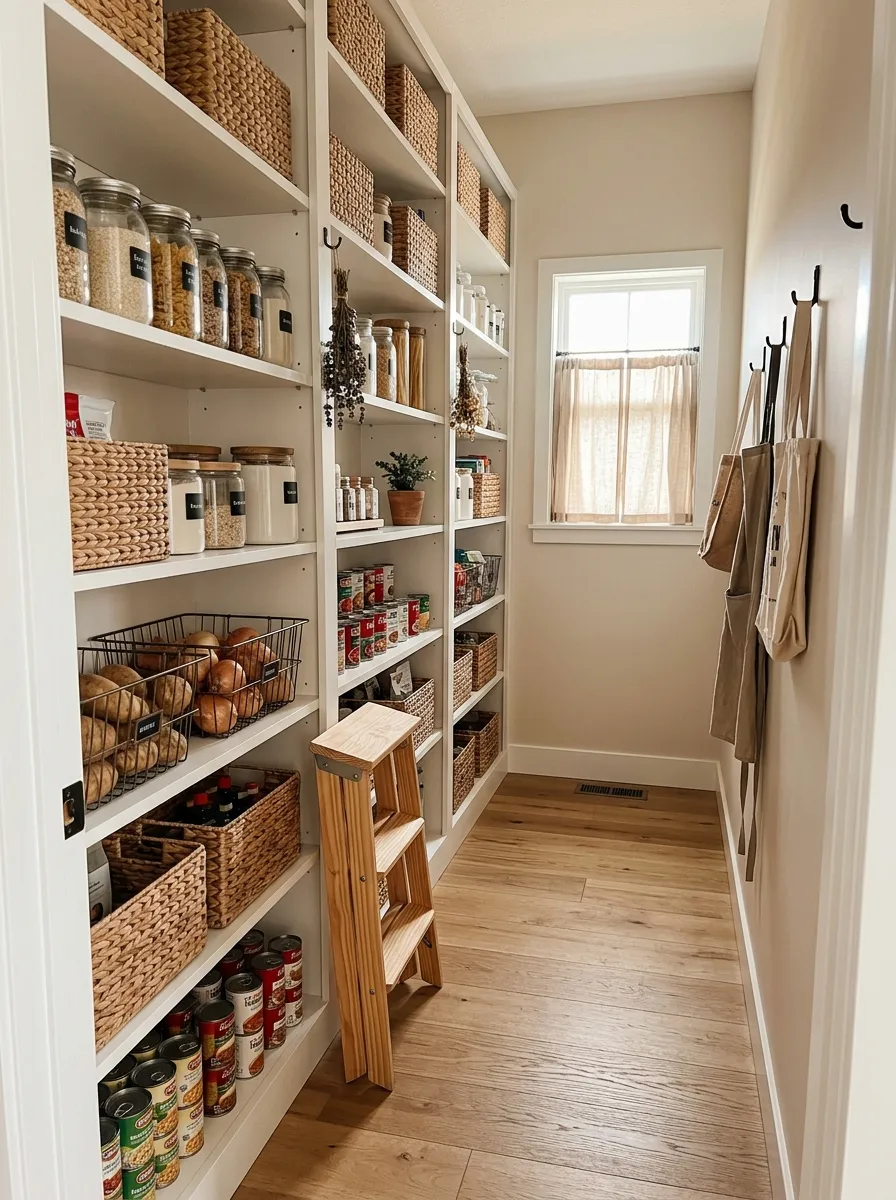
- Choose a sturdy model: Select a folding step stool with nonslip feet, stable steps, and an appropriate weight capacity.
- Measure storage clearance: Find a narrow space beside the shelving where the folded stool will fit without blocking the doorway.
- Check the floor surface: Use the stool only on level, dry flooring to reduce slipping risks.
- Keep upper shelves lightweight: Store occasional-use supplies above and frequently used groceries within normal reach.
- Fold after use: Return the stool to its designated storage spot to maintain a clear walking path.
High pantry shelves are useful only when their contents can be reached safely. A compact folding stool provides convenient access without requiring permanent ladders or bulky equipment. Avoid standing on the top cap unless the manufacturer specifically permits it. For small pantries, choose a lightweight design that folds flat.
22. Sliding Barn Pantry Door
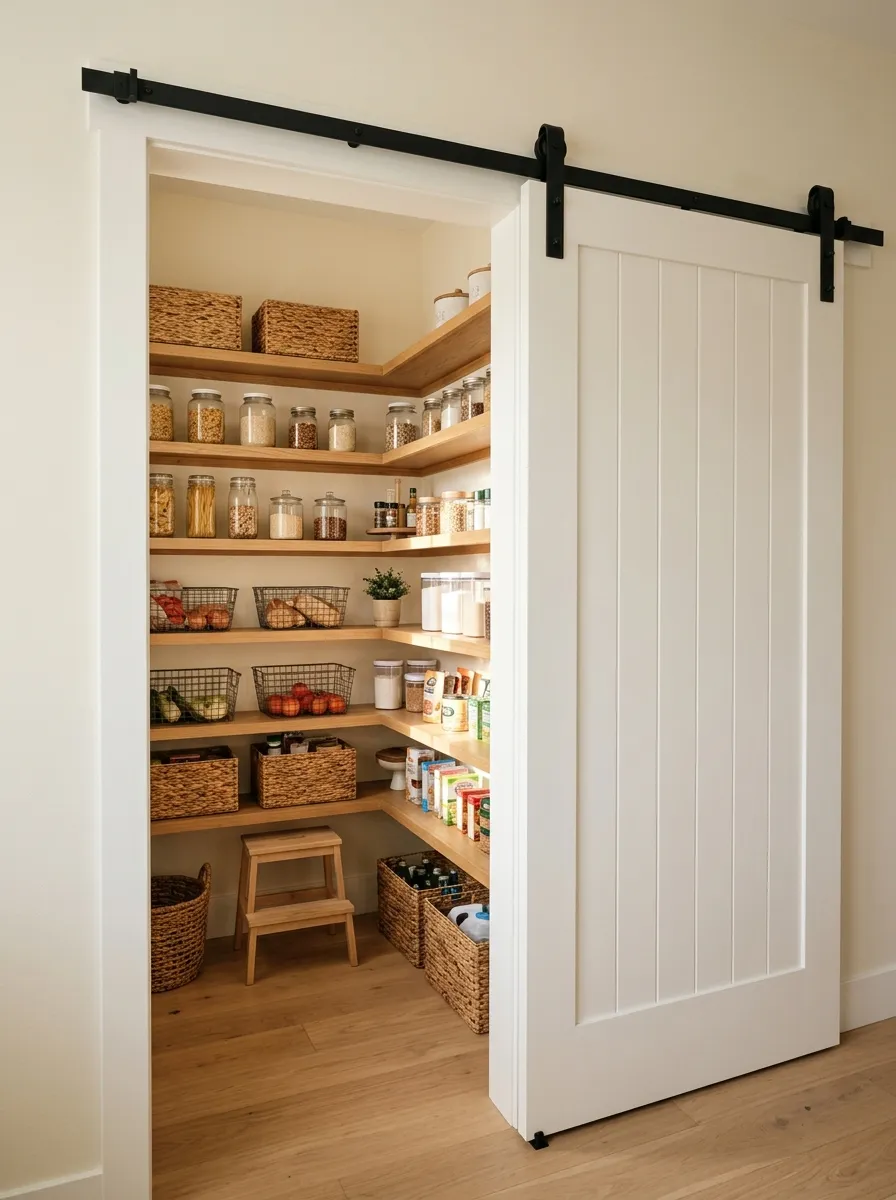
A swinging pantry door can waste valuable space in a narrow kitchen. A sliding barn door eliminates the inward door swing while creating a charming focal point that complements farmhouse and modern interiors.
| Feature | Traditional Hinged Door | Sliding Barn Door |
| Door Movement | Swings inward or outward | Slides along the wall |
| Space Requirements | Needs clear floor space for swinging | Requires unobstructed wall space |
| Visual Style | Classic and understated | Decorative farmhouse appearance |
| Installation | Standard hinges and frame | Wall-mounted track and secure hardware |
For homeowners exploring small walk-in pantry ideas, a sliding door can improve access when the surrounding wall has enough clearance. Measure the doorway and available wall space carefully before installation. Choose quality tracks and secure mounting hardware. Remember that sliding doors usually provide less sound and odor isolation than properly fitted hinged doors.
23. Pantry Inventory Chalkboard
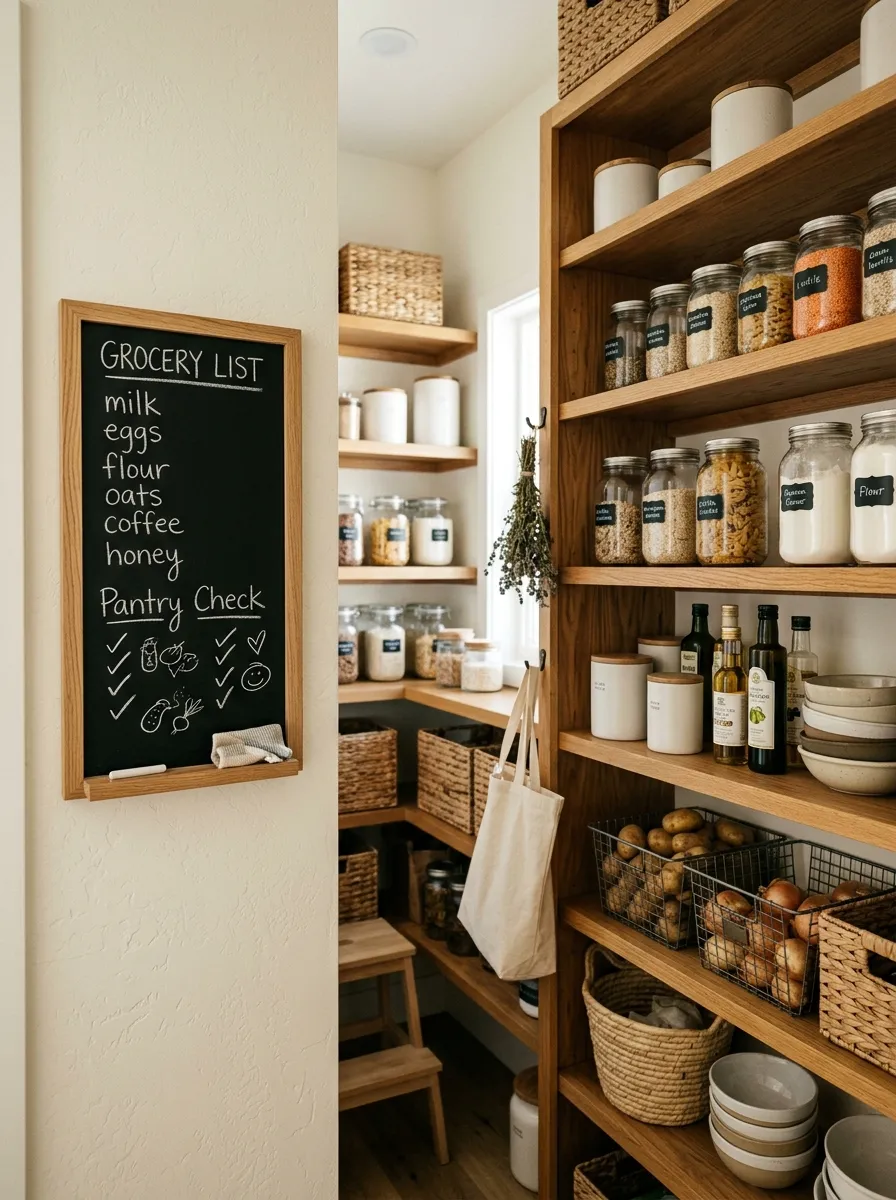
DO:
- Mount the chalkboard near the pantry entrance.
- Create separate grocery and inventory sections.
- Update quantities when opening replacement packages.
- Use readable lettering and simple categories.
DON’T:
- Write long lists that become difficult to scan.
- Record only purchases without tracking usage.
- Place the board behind shelves or stored appliances.
- Rely on the chalkboard for food expiration dates.
A pantry chalkboard makes grocery planning more convenient by keeping essential reminders visible. Divide the surface into sections for low-stock groceries, meal ingredients, and household supplies. Keep chalk or a compatible marker nearby for quick updates. This simple system helps reduce duplicate purchases and forgotten shopping items.
24. Minimalist Pantry Color Palette
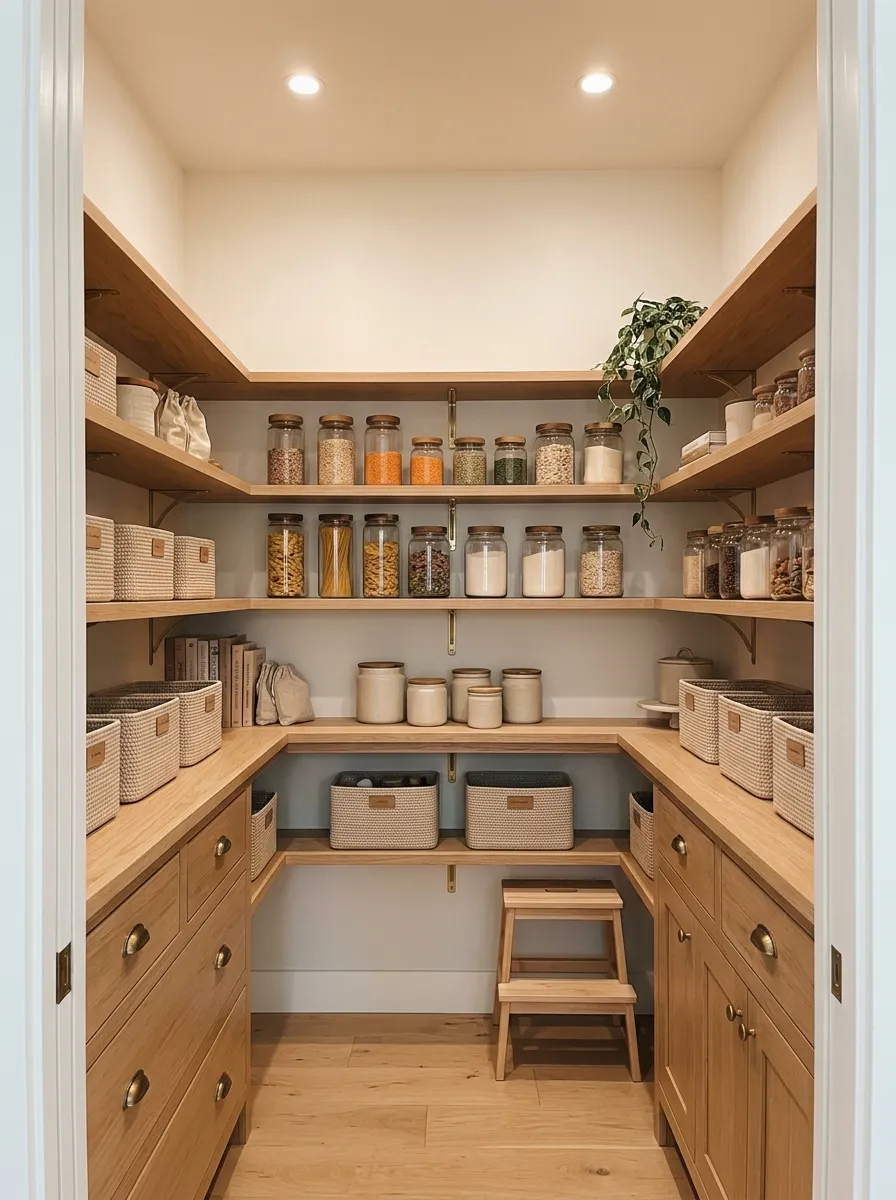
Cost: Low to moderate, depending on paint and storage accessories.
Time: One weekend for painting and reorganizing.
Skill Level: Beginner-friendly, with basic decorating skills.
Best For: Creating a cohesive appearance in narrow, visually crowded pantries.
A coordinated color palette can make small pantry shelves feel calmer and less cluttered. Choose warm white walls, natural wooden shelving, and neutral storage baskets for a consistent appearance. Limit decorative accessories to preserve useful storage space. Repeat similar materials throughout the pantry while keeping labels readable and everyday essentials accessible.
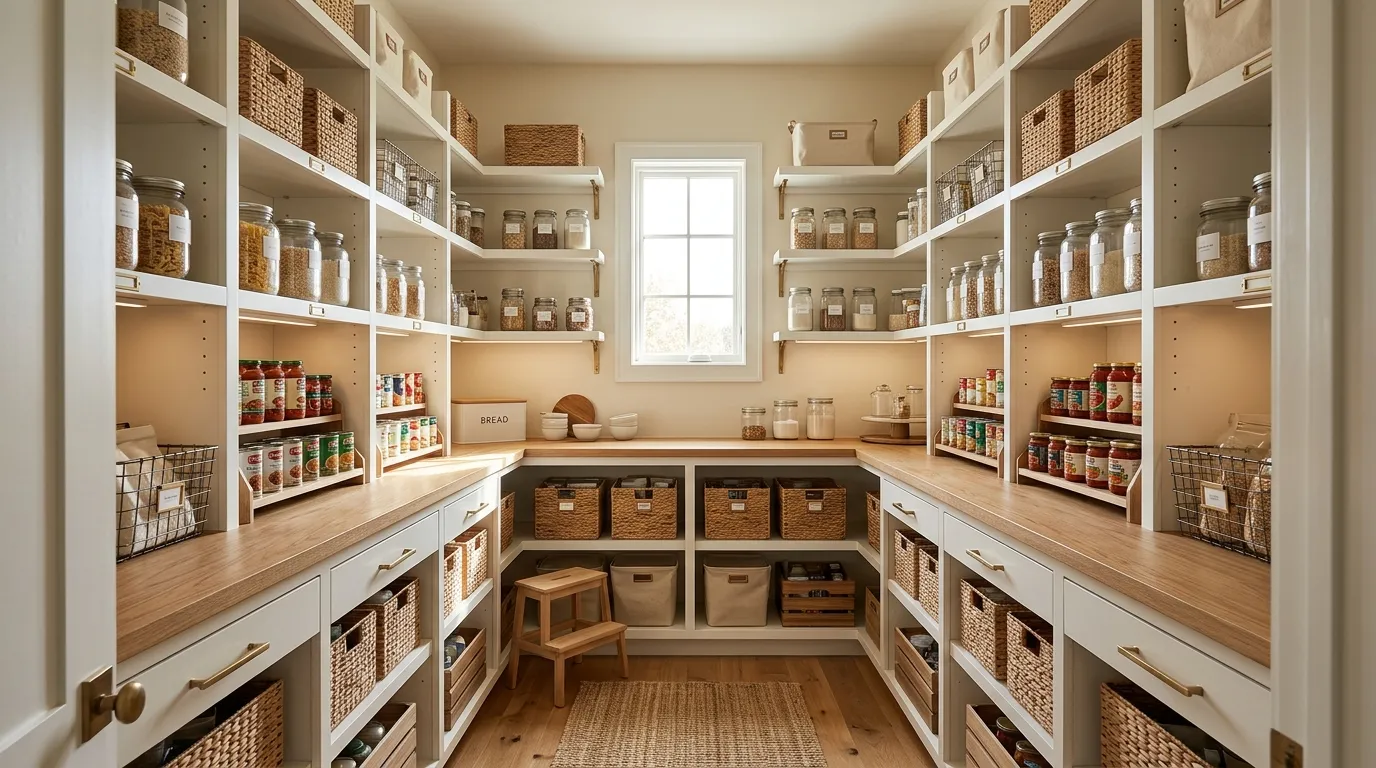
25. Compact U Shaped Shelving
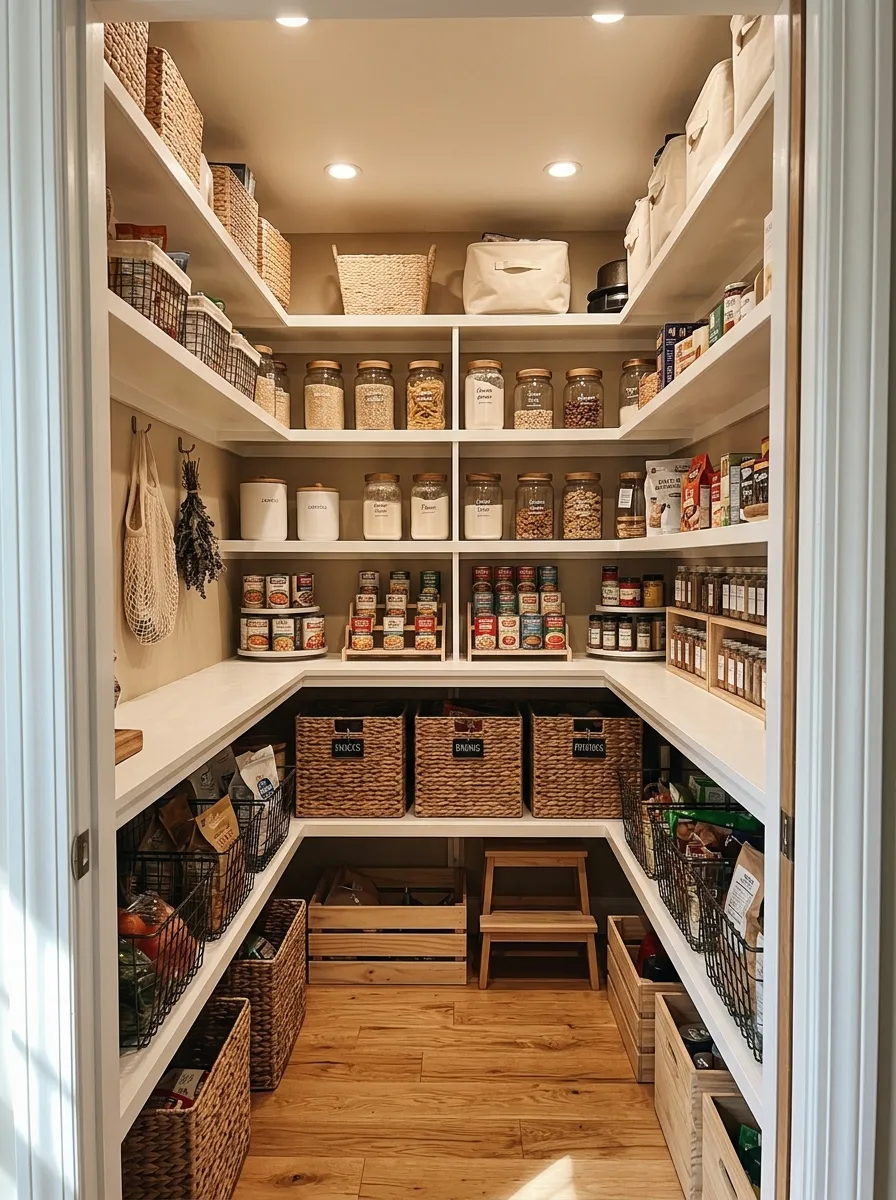
A U-shaped shelving layout makes excellent use of three pantry walls while keeping everyday groceries within easy reach. This arrangement creates dedicated storage areas for dry ingredients, snacks, and kitchen supplies without requiring additional cabinets. Choose shallow side shelves to preserve a comfortable central walkway and prevent the space from feeling crowded.
For efficient organization, reserve the back wall for frequently used ingredients and use the side shelves for grouped pantry essentials. Install adjustable shelving to accommodate different container heights. Keep heavy supplies on lower levels and avoid overcrowding corners. Proper measurements are essential to maintain easy movement throughout the pantry.
Conclusion
Creating an organized pantry doesn’t require a huge budget or a complete renovation. These small walk-in pantry ideas show how thoughtful shelving, clever storage solutions, and simple organizing habits can make your kitchen feel more functional and welcoming.
Start with one manageable improvement, whether that’s adding labeled containers, installing corner organizers, or creating dedicated grocery zones. Small changes can make everyday cooking and shopping much easier.
Save your favorite ideas on Pinterest for your next pantry makeover, and share this article with anyone struggling with limited kitchen storage. Choose your favorite idea and start creating a pantry you’ll love using every day!