22 Japandi Living Room Ideas for a Serene Style Guide
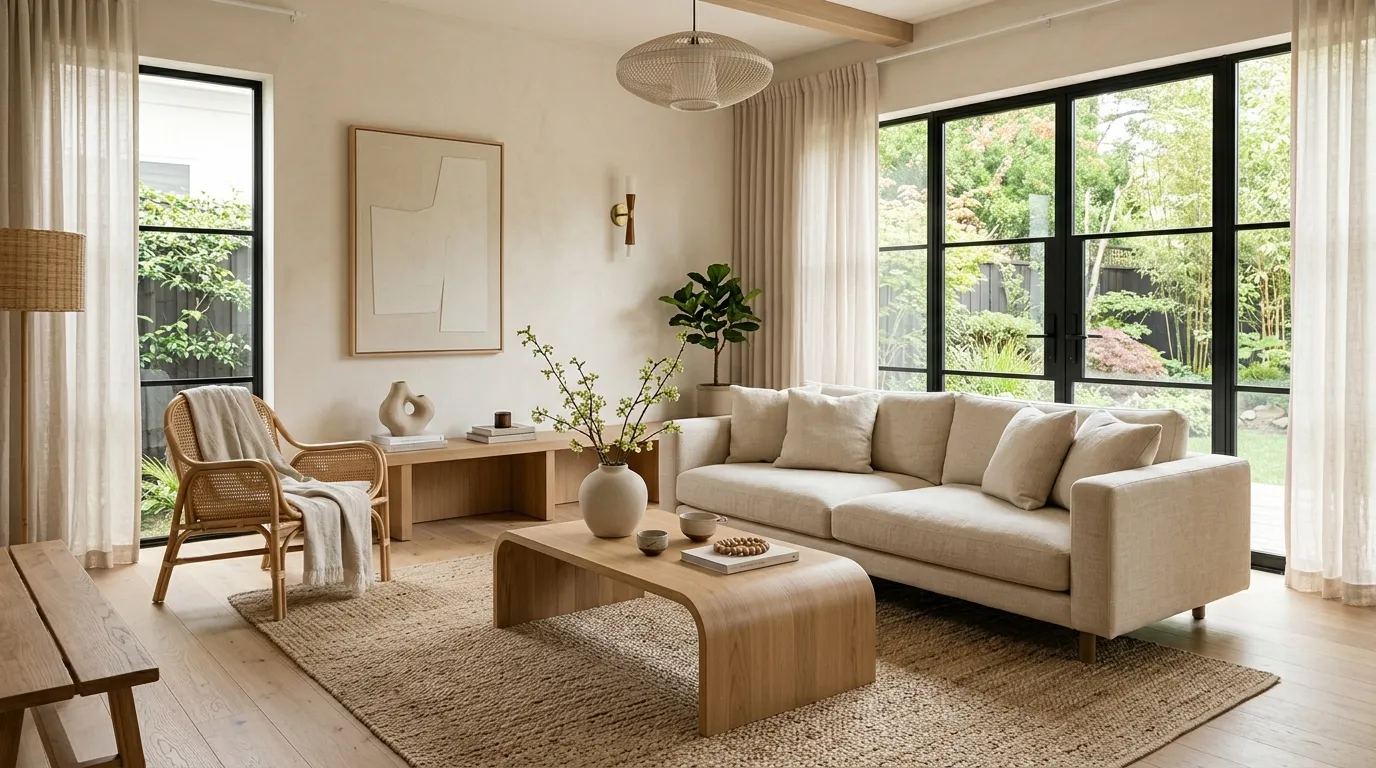
Japandi living rooms bring together the calm simplicity of Japanese interiors and the warm functionality of Scandinavian design. The result is a space that feels uncluttered without becoming cold, minimalist without feeling empty, and stylish without trying too hard.
The beauty of this aesthetic lies in its balance. Natural wood, neutral colors, soft textures, organic shapes, and carefully chosen decor work together to create a room that feels peaceful and welcoming. Whether you have a spacious home or a small apartment, Japandi principles can make your living space feel more intentional.
If you’re looking for Japandi living room ideas that feel practical as well as beautiful, these designs offer plenty of inspiration for creating a serene home with warmth, character, and timeless appeal.
What Is a Japandi Living Room?
A Japandi living room combines the understated elegance of Japanese design with the cozy practicality of Scandinavian interiors. Both styles value simplicity, natural materials, functional furniture, and a strong connection with nature, which makes them work especially well together.
Instead of filling the room with decorative objects, Japandi interiors focus on choosing fewer pieces that serve a purpose and contribute to the overall atmosphere. Light or medium-toned wood, linen, cotton, rattan, stone, ceramics, and other organic materials are common choices.
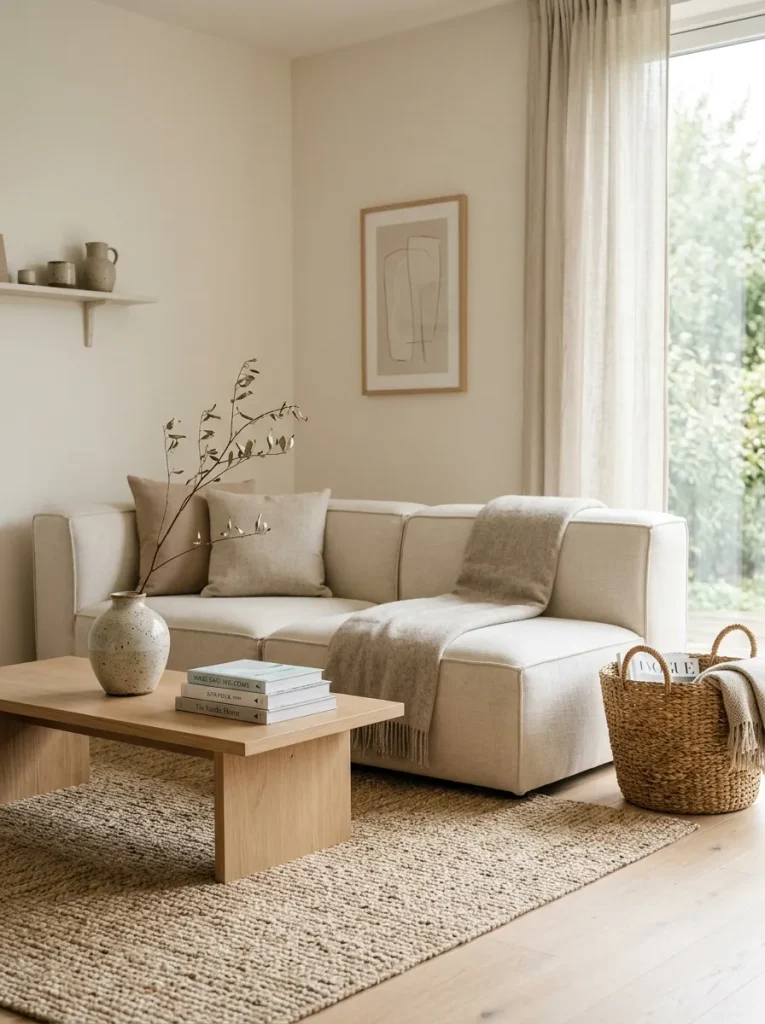
Furniture is generally low-profile and uncomplicated. A comfortable Japandi sofa, a simple wooden coffee table, curved seating, and minimal storage can establish the look without making the room feel overly designed.
Most importantly, Japandi style is about creating a feeling rather than following a strict decorating formula. A successful Japandi living room should feel calm, functional, warm, and easy to live in.
1. Create a Warm Japandi Foundation With Natural Wood
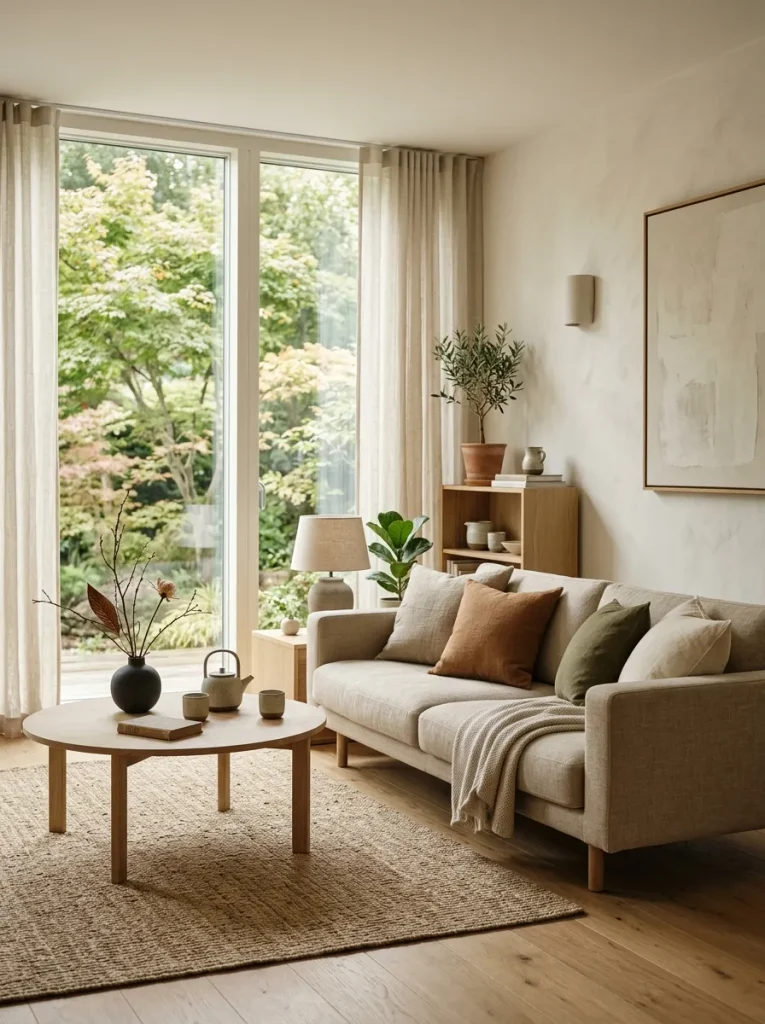
Natural wood is one of the easiest ways to establish a warm Japandi atmosphere. It introduces the organic quality associated with Japanese design while adding the cozy character often found in Scandinavian living spaces.
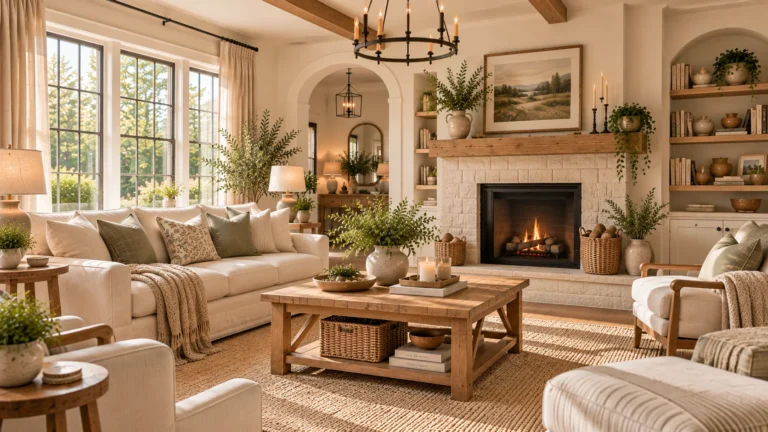
Choose wood furniture with simple silhouettes rather than heavily carved or ornate pieces. A light oak coffee table, wooden media console, open shelving, or a simple side table can immediately make the room feel more grounded.
You don’t need to cover every surface in wood. In fact, keeping the material balanced with soft upholstery and neutral walls creates a more relaxed look. Pair pale or medium wood with cream, beige, warm white, or muted taupe to maintain the understated character of the room.
For a more contemporary Japandi design, combine different natural textures instead of introducing lots of colors. A woven rug, linen curtains, ceramic vase, and wooden furniture can provide plenty of variation while keeping the palette restrained.
This approach works particularly well in smaller homes because natural wood can make a space feel warm and finished without relying on excessive decoration.
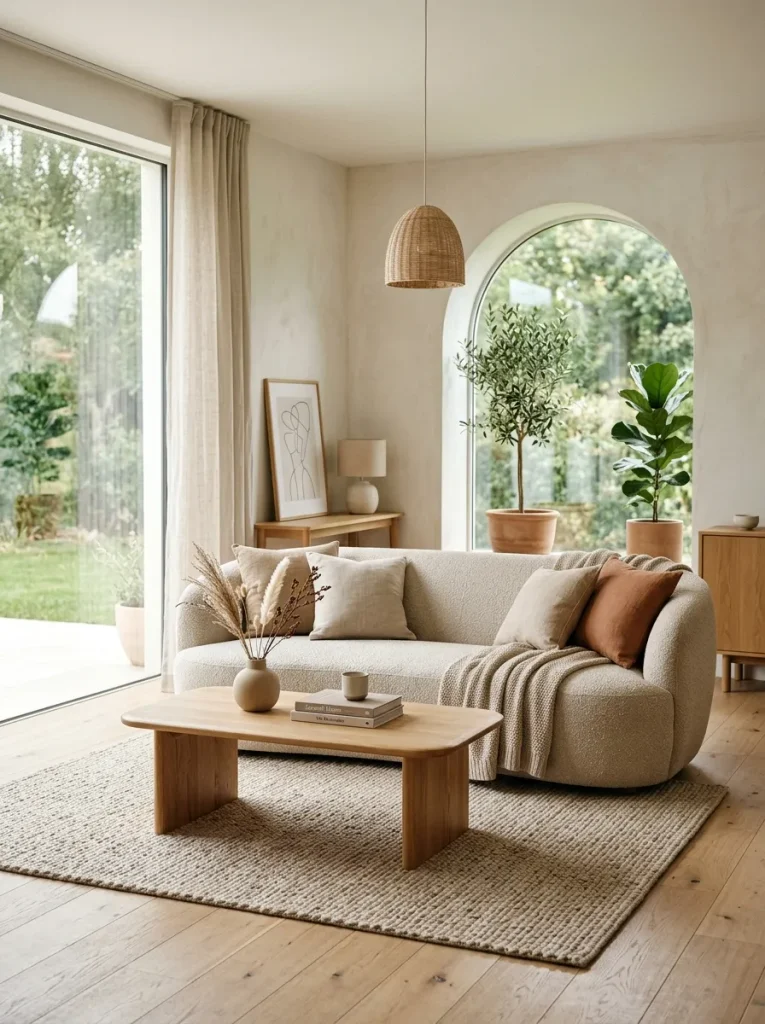
2. Choose a Low-Profile Japandi Sofa for a Calmer Look
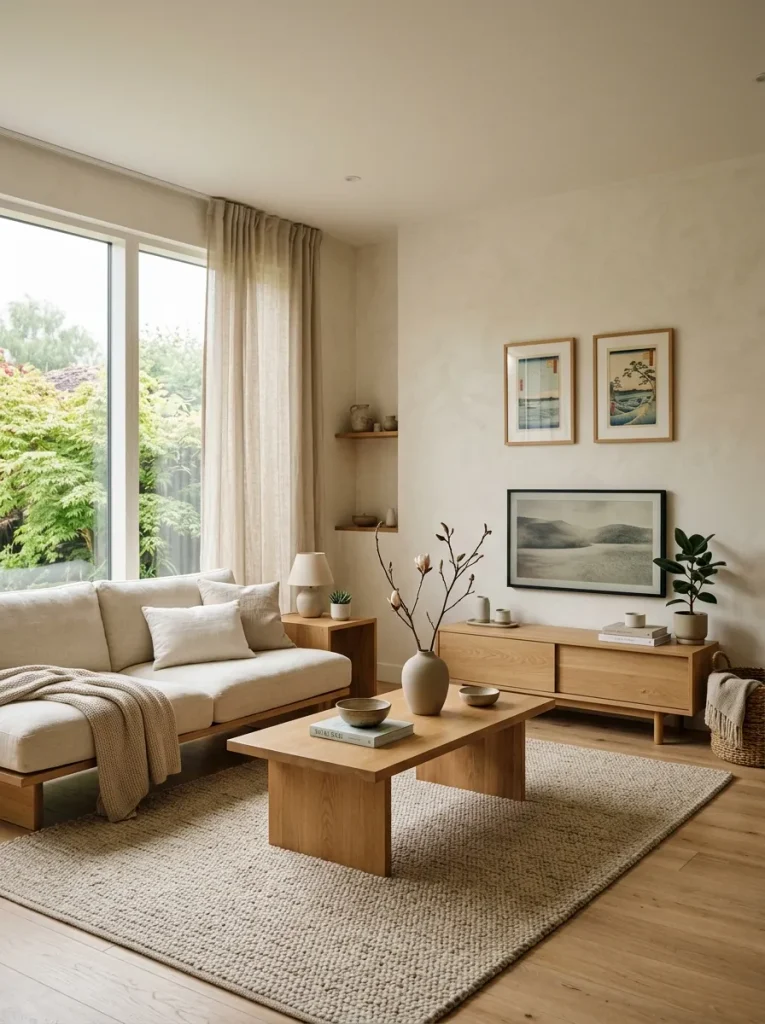
The sofa is usually the visual anchor of a living room, so choosing the right silhouette can make a major difference. For a Japandi living room, look for a sofa with clean lines, a relatively low profile, and comfortable proportions.
A neutral Japandi sofa in beige, oatmeal, cream, warm gray, or muted brown can create a soft foundation for the rest of the room. Upholstery with a visible linen-like or woven texture is especially useful because it adds depth without introducing a busy pattern.
Curved furniture can also work beautifully here. A gently rounded sofa or softly curved armchair brings an organic quality to the space and prevents a minimalist interior from feeling too rigid.
Keep the surrounding furniture simple. Instead of pairing the sofa with multiple accent tables and decorative objects, consider one understated coffee table, a textured rug, and a small selection of cushions or throws.
For a small living room, a compact sofa with raised or streamlined legs can help maintain visual openness. This is especially useful when working with a small apartment layout where every piece of furniture needs to earn its place.
The goal isn’t to make the seating area look empty. It’s to create enough breathing room around the sofa that the entire room feels calm and intentional.
3. Add a Japandi Wood Slat Wall for Subtle Texture
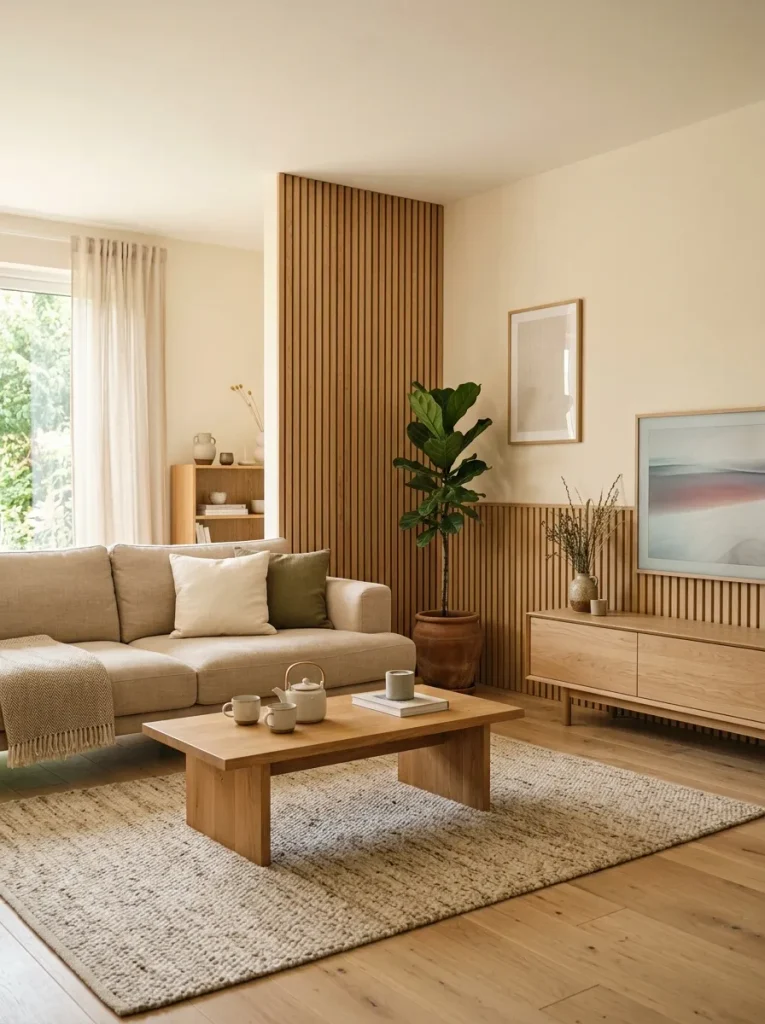
A wood slat wall can add architectural interest to a Japandi living room without overwhelming its minimalist character. The repeated vertical lines create texture and warmth while keeping the overall design visually simple.
You can use slats behind the sofa, around a television, or on a partial accent wall. For a softer appearance, choose natural oak or another light wood rather than a heavily stained finish. Leaving some of the wall visible between the slats can also prevent the feature from making the room feel too enclosed.
A slatted wall works especially well when the rest of the room remains restrained. Pair it with a neutral sofa, simple coffee table, soft rug, and limited wall decor so the natural wood remains the main architectural feature.
For smaller spaces, consider using slats only on a narrow section of the wall instead of covering the entire surface. This creates the same visual effect while preserving a sense of openness.
You can also combine a wood slat wall with hidden storage or a streamlined media unit. This keeps practical elements integrated into the design rather than allowing technology and clutter to dominate the room.
4. Bring in Organic Ceramics and Handmade Decor
Japandi decor doesn’t need to be completely bare. Small handmade pieces can give a minimalist living room personality while preserving its peaceful atmosphere.
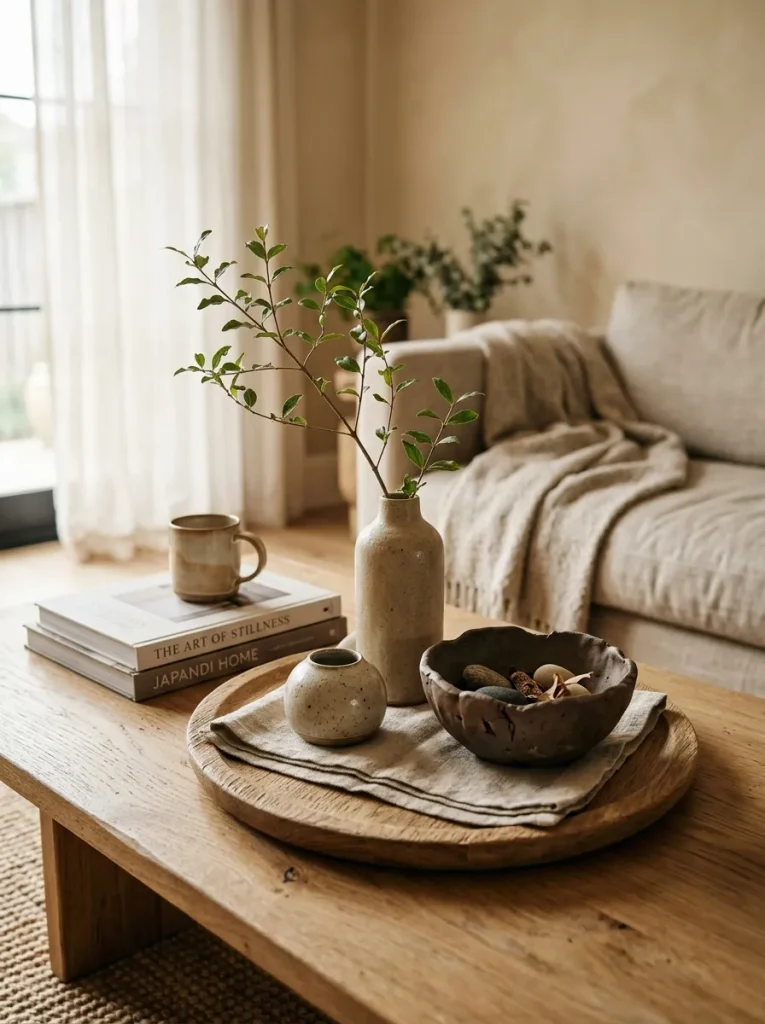
Organic ceramics are particularly suited to this style because their imperfect shapes and earthy finishes create a connection with traditional craftsmanship. Try adding a simple ceramic vase, sculptural bowl, handmade planter, or small pottery piece to a coffee table or open shelf.
Look for pieces in muted shades such as off-white, clay, sand, stone, or warm gray. Matte and slightly irregular finishes tend to work better than highly polished decorative objects because they reinforce the natural character of Japandi interiors.
The key is restraint. Instead of placing several accessories on every available surface, create a few intentional arrangements. For example, a single ceramic vase with delicate branches can become a quiet focal point on a console.
You can also combine ceramics with other natural materials. A handmade bowl beside a wooden tray or a ceramic planter placed on a rattan surface creates subtle contrast without requiring bold colors or patterns.
This approach allows the room to feel personal and lived-in while maintaining the simplicity that defines a Japandi style interior.
5. Use Rattan to Soften a Minimalist Living Space
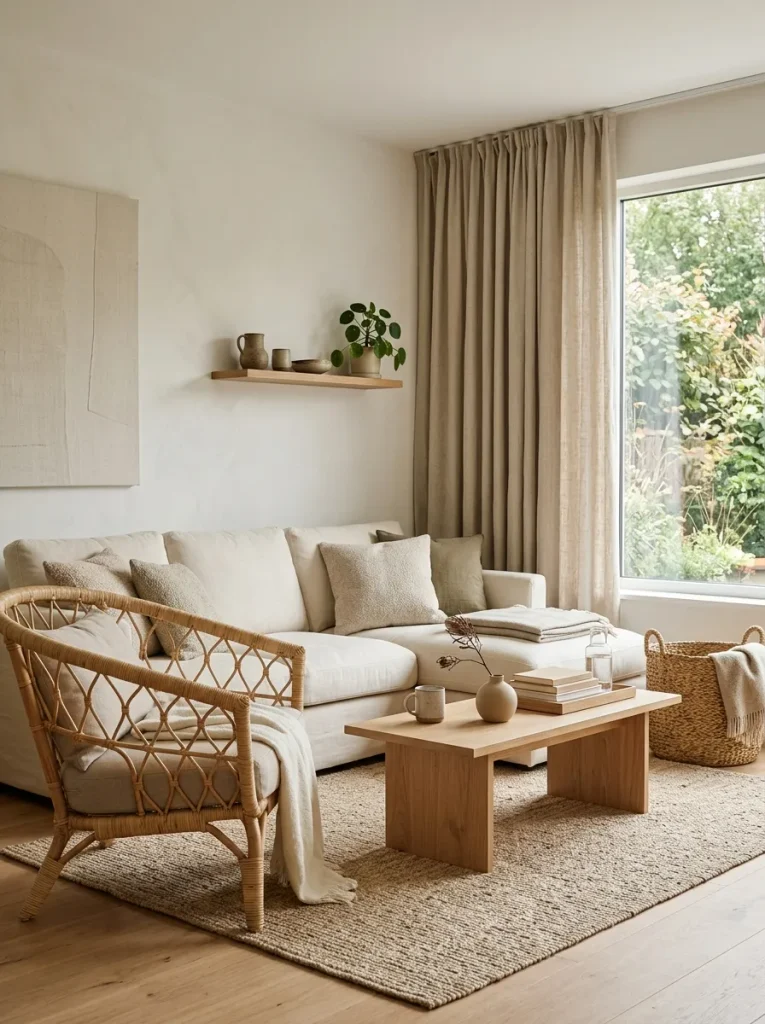
Rattan is an excellent material for adding warmth and texture to a Japandi home. Its woven surface introduces visual detail while remaining closely connected to the natural-material palette used throughout this design style.
You can bring rattan into the room through an accent chair, storage basket, pendant light, cabinet doors, or small decorative accessories. Even one or two woven elements can make a neutral living space feel more relaxed and inviting.
For a cohesive look, combine rattan with pale wood, linen, cotton, and warm neutral upholstery. These materials complement each other without creating the visual clutter that can happen when too many contrasting textures are introduced.
Rattan can be particularly helpful in an organic modern small living room because its open woven structure feels lighter than many solid decorative materials. A rattan accent chair, for example, can provide additional seating without making the room appear visually heavy.
Avoid using rattan everywhere. Japandi design depends on balance, so let the woven material act as a textural accent rather than the dominant theme.
6. Keep the Color Palette Soft and Earthy
Neutral colors are at the heart of many Japandi living rooms because they create a quiet backdrop for natural materials and simple furniture. Instead of relying on bright accents, build the room around a small group of warm, understated shades.
Start with a base of warm white, ivory, beige, sand, or light taupe. Then introduce slightly deeper tones through wood furniture, woven accessories, cushions, or a muted brown accent.
If you want more contrast, charcoal, deep brown, or soft olive can be used sparingly. These darker shades work particularly well when they appear in small details rather than covering large areas.
The goal is to create visual continuity throughout the room. Walls, furniture, textiles, and accessories don’t need to match exactly, but they should feel like they belong to the same natural palette.
Layering similar neutral shades is also an easy way to prevent a minimalist interior from looking flat. For example, combine a warm white wall with a cream sofa, beige rug, pale oak furniture, and taupe cushions. The differences are subtle, but the textures keep the room visually interesting.
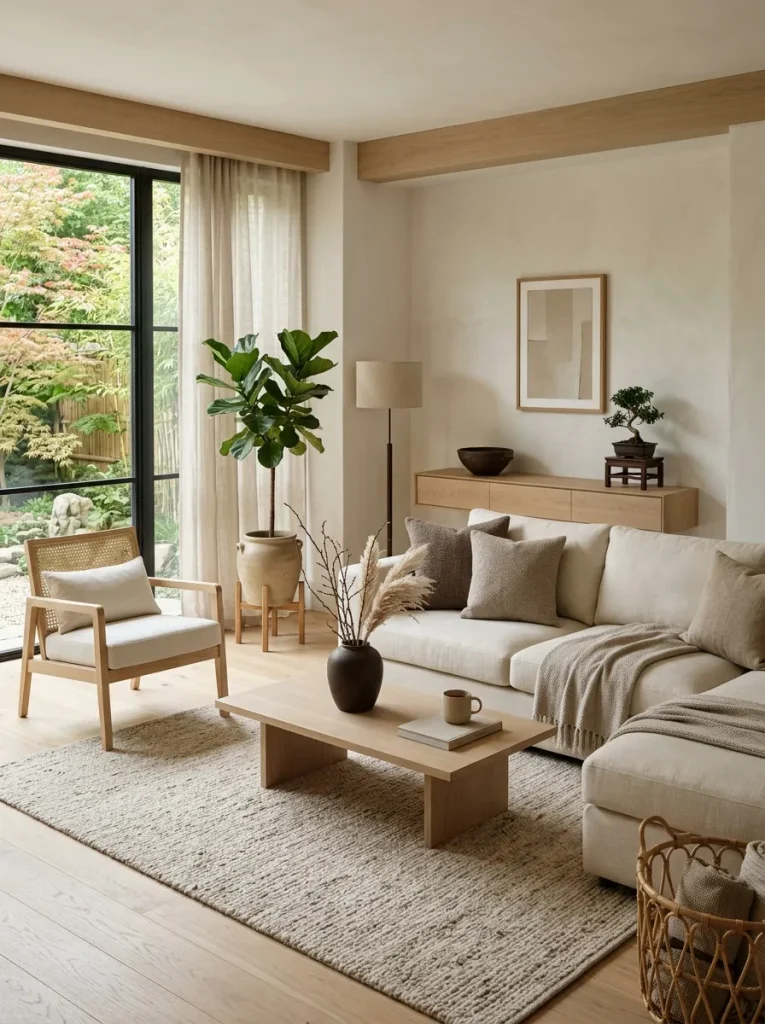
7. Make a Small Japandi Living Room Feel More Open
Japandi principles work naturally in compact spaces because they encourage thoughtful furniture choices and less visual clutter. With the right layout, even a small living room can feel spacious, comfortable, and intentional.
Start by choosing furniture that fits the scale of the room. A compact sofa, narrow coffee table, and streamlined storage unit can provide everything you need without consuming unnecessary floor space.
Keep pathways clear wherever possible. Rather than pushing multiple pieces into the room, leave enough open floor around the main seating area to create a sense of movement.
Furniture with exposed legs can also help. Seeing more of the floor underneath a sofa, chair, or cabinet creates visual breathing room and makes larger pieces appear lighter.
Use vertical space carefully as well. A simple wood shelf or narrow storage cabinet can provide function without taking up much floor area. Mirrors can also help reflect natural light, although they should be used selectively to preserve the understated character of the design.
For a small cozy apartment, the best Japandi interiors are often the ones that prioritize flexibility. Choose pieces that can serve more than one purpose and avoid decorative furniture that doesn’t contribute to how you actually use the room.
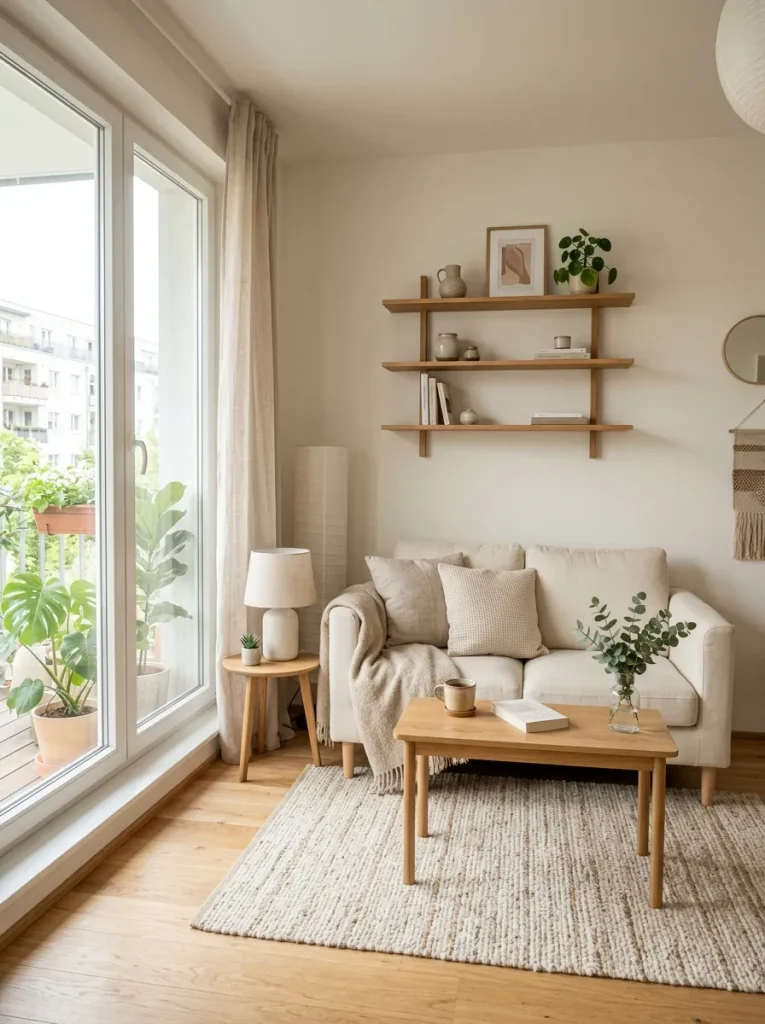
8. Add Curved Furniture for an Organic Feel
Straight lines are common in minimalist interiors, but introducing a few gentle curves can make a Japandi living room feel softer and more welcoming. Curved furniture brings an organic quality that complements the natural materials used throughout the style.
The trick is to use curves selectively. One prominent rounded piece can be enough to create contrast. For example, a curved Japandi sofa paired with a simple rectangular wood table can create a balanced combination of soft and structured forms.
Pair curved silhouettes with natural materials and neutral upholstery for the strongest connection to Japandi design. Bouclé, linen, cotton, light wood, and woven textures can all soften the appearance of contemporary furniture.
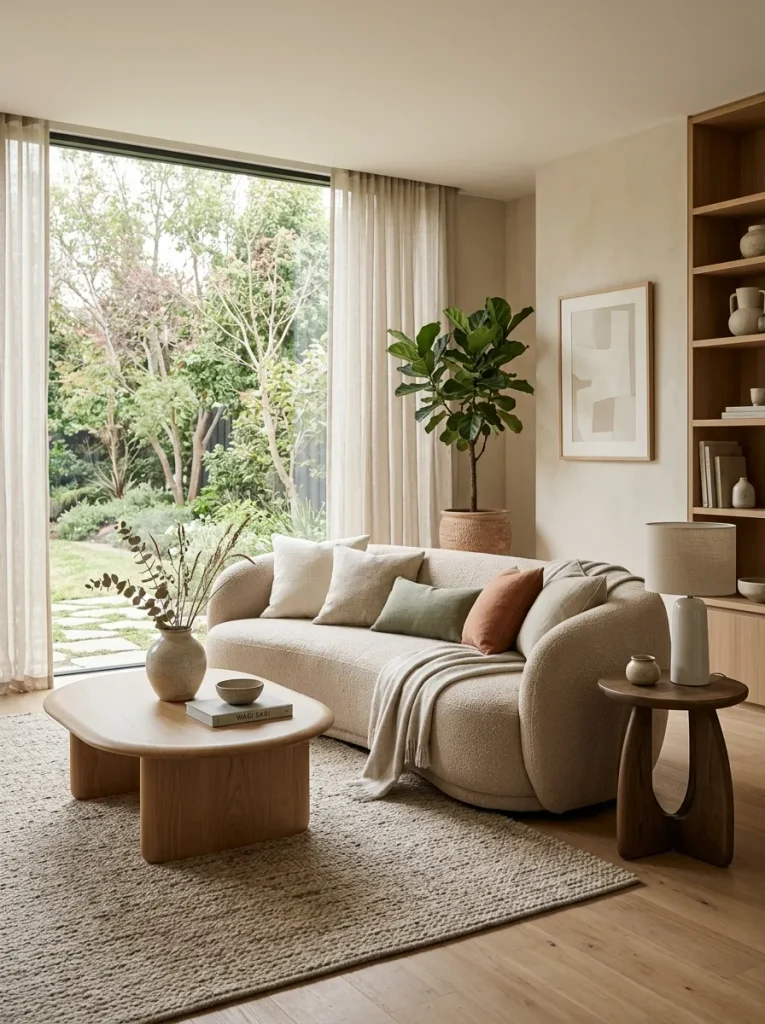
9. Let Natural Light Shape the Room
Natural light can make a Japandi living room feel significantly more peaceful and spacious. Rather than blocking windows with heavy treatments, use lightweight curtains that allow daylight to filter gently into the room.
Keep the area around windows relatively uncluttered. Avoid placing tall furniture directly in front of a primary source of natural light unless the layout requires it. This helps the room maintain an open and airy appearance.
If the room receives limited daylight, use warm off-white walls and reflective but natural-looking surfaces to make the available light feel brighter. Light wood furniture can also contribute to an airy atmosphere.
The aim is not to create a brightly decorated room, but to let natural light become part of the design itself.
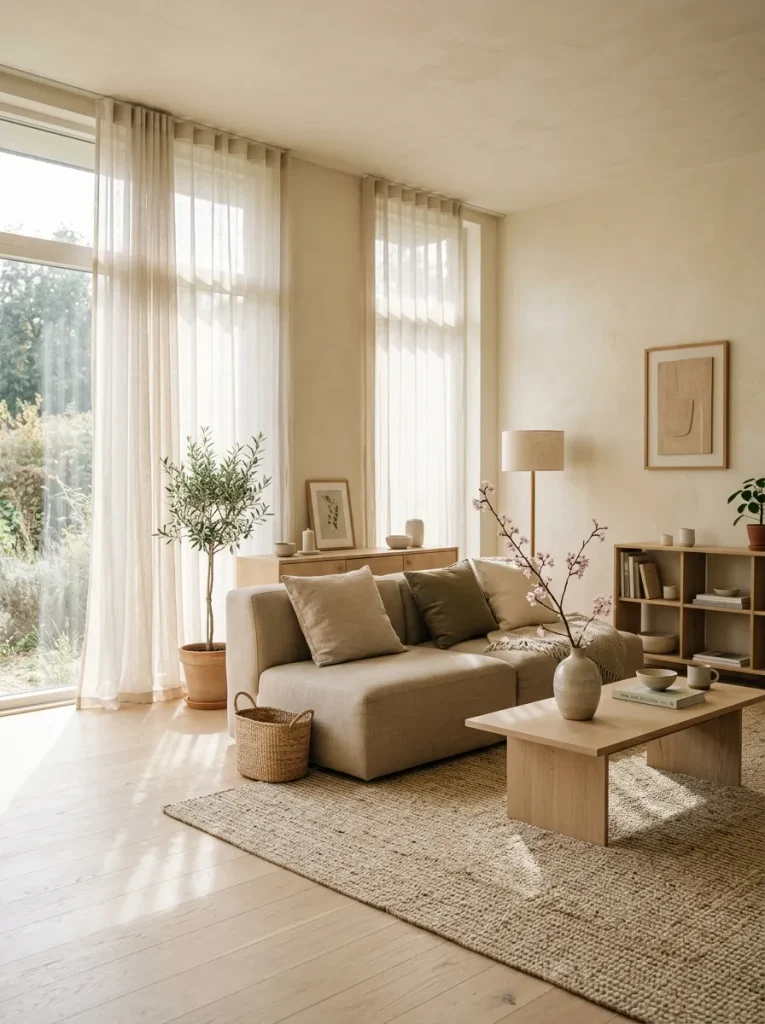
10. Layer Linen, Wool, and Natural Textures
A minimalist living room can sometimes feel visually plain when it relies too heavily on smooth surfaces. Japandi design solves this by using texture instead of excessive decoration.
Layer materials such as linen, cotton, wool, jute, wood, and woven fibers throughout the space. A linen sofa cushion, wool throw, textured rug, wooden table, and woven basket can create depth while keeping the overall palette simple.
Think about how each surface feels as well as how it looks. A slightly rough ceramic vase beside smooth wood or a chunky throw over a structured sofa creates subtle contrast that makes the room more inviting.
Keep the colors within the same neutral family so the different textures don’t compete with one another. This allows the material qualities to become the main source of visual interest.
Texture is especially useful for a warm Japandi living room because it adds coziness without requiring bright colors, elaborate patterns, or a large collection of accessories.
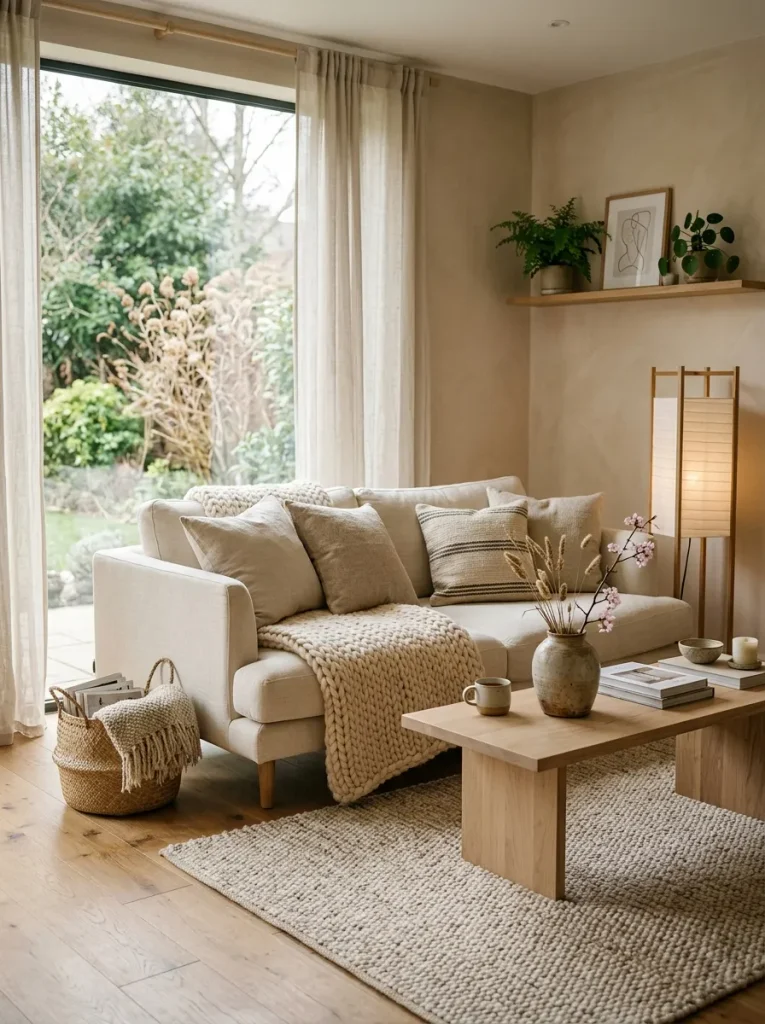
11. Choose Storage That Keeps Clutter Out of Sight
One of the simplest ways to maintain a peaceful Japandi living room is to give everyday items a designated place. Open surfaces can quickly become crowded with electronics, books, chargers, toys, and miscellaneous objects, so practical storage is essential.
Choose cabinets and consoles with simple fronts and minimal hardware. A low wooden storage unit can provide plenty of space while doubling as a visual anchor beneath a television or artwork.
Closed storage is particularly useful for maintaining the clean appearance associated with minimalist interiors. Keep frequently used items within easy reach while storing less attractive essentials behind doors or inside woven baskets.
If you have a small living room, look for storage that uses vertical or multifunctional space efficiently. Wall-mounted shelving, built-in cabinets, storage ottomans, and slim consoles can all reduce clutter without taking over the floor.
Avoid filling storage surfaces with decorative objects simply because there is room. Leave some negative space so the furniture itself can contribute to the calm character of the room.
A well-organized Japandi home should feel easy to maintain. When everything has a place, the room can remain visually quiet without requiring constant rearranging.
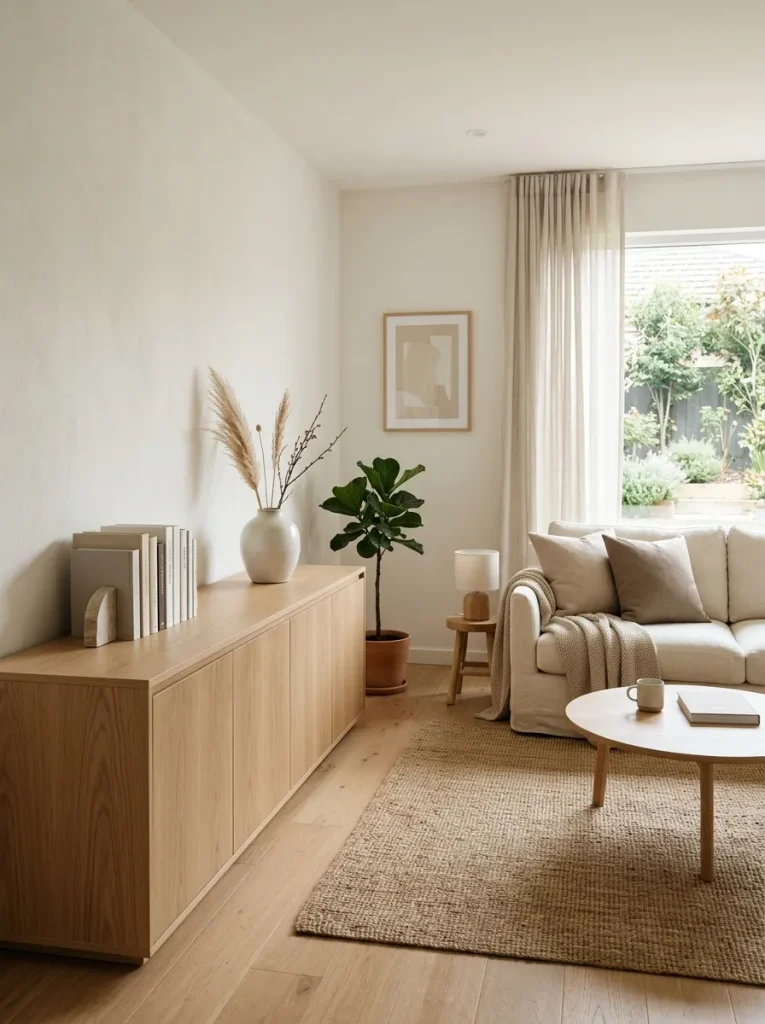
12. Use a Simple Japanese-Inspired Low Seating Arrangement
Low furniture can instantly bring a more grounded feeling to a Japandi living room. Inspired by Japanese interiors, lower seating creates a closer relationship between the furniture, floor, and surrounding space.
A low-profile sofa works especially well when paired with a simple coffee table and a generous area of open flooring. The lower visual height allows more of the wall and surrounding architecture to remain visible, which can make the room feel calmer and less crowded.
You don’t need to furnish the entire room with floor-level pieces. A low sofa combined with one lightweight accent chair can provide enough variation while keeping the overall composition relaxed.
Choose upholstery in natural neutral shades such as oatmeal, cream, beige, or warm gray. Wooden legs or a visible timber frame can reinforce the connection with natural materials.
This arrangement is also a good opportunity to keep the room visually simple. Instead of adding several small side tables, use one carefully positioned table and let the open space around the seating become part of the design.
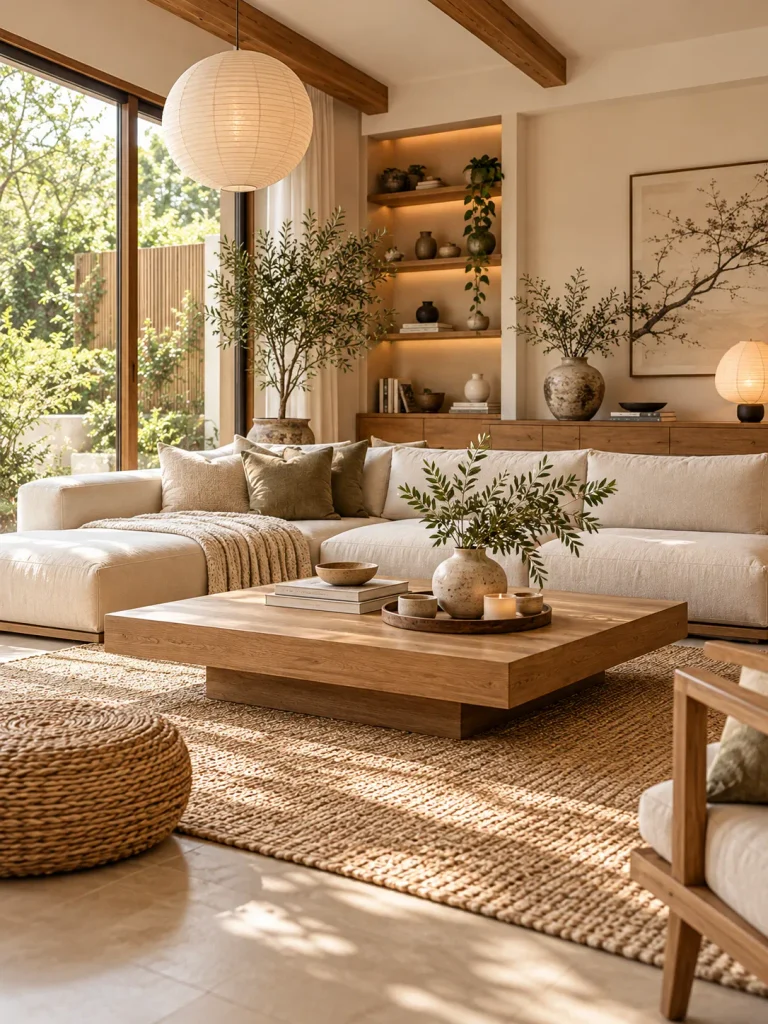
13. Bring Nature Indoors With Thoughtful Greenery
Plants can add life to a Japandi living room without disrupting its minimalist character. The key is choosing greenery that complements the room rather than turning it into a dense indoor garden.
A tall plant in a simple ceramic planter can fill an empty corner, while a small branch arrangement can provide a subtle focal point on a coffee table or console.
Choose containers made from natural-looking materials such as clay, stone, or matte ceramic. Their earthy surfaces work naturally with wood furniture and neutral textiles.
The plants themselves don’t need to be elaborate. Sculptural branches, leafy houseplants, bamboo-inspired greenery, or a simple arrangement of dried stems can all work depending on the atmosphere you want.
Keep the number of plants intentional. One large plant in an otherwise quiet corner can often have more impact than several small pots scattered around the room.
Greenery also introduces a natural color variation without forcing the room away from its neutral palette. Soft green leaves against warm wood and beige upholstery can make the space feel fresh while remaining understated.
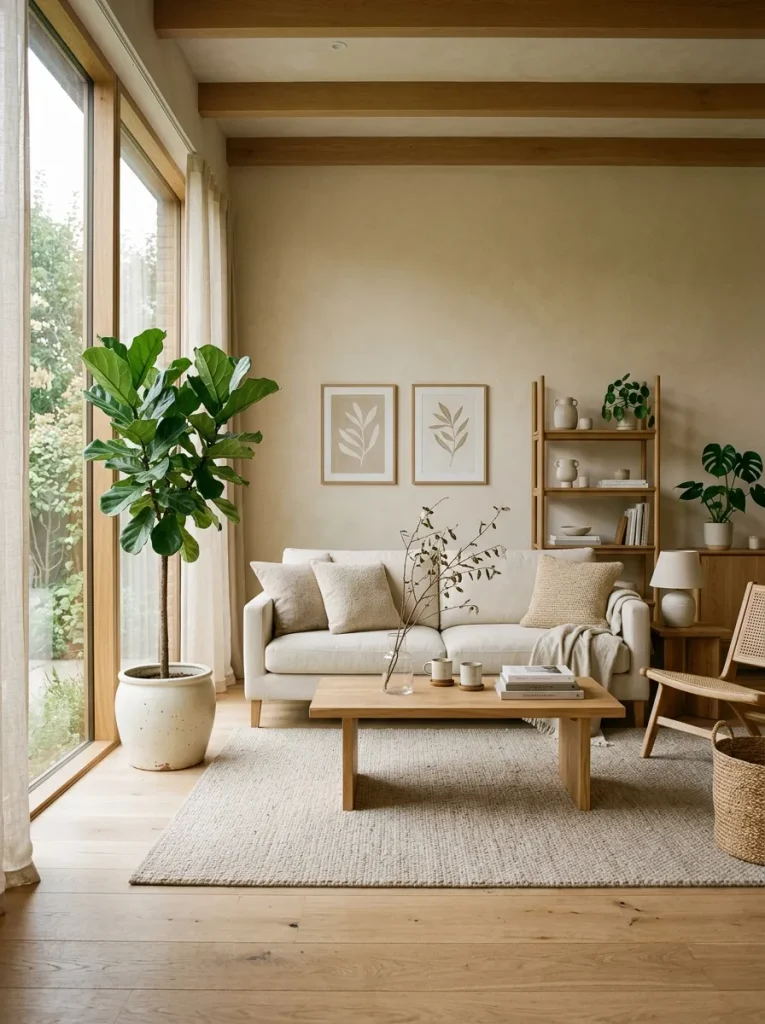
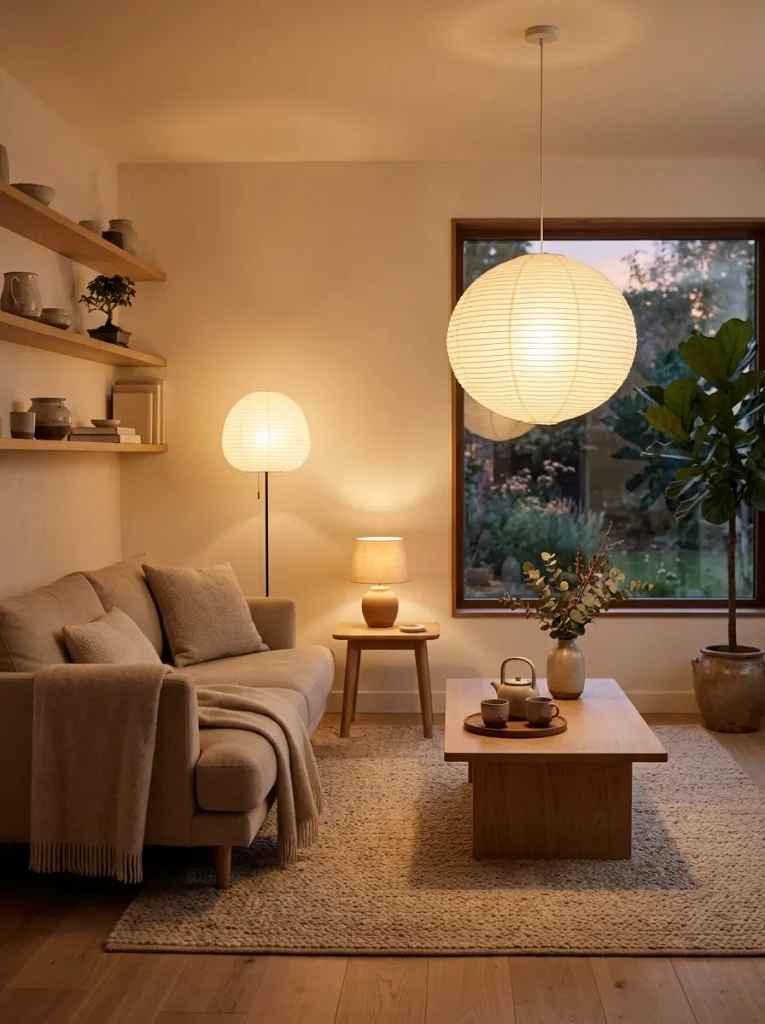
14. Create a Soft Evening Atmosphere With Layered Lighting
Japandi interiors look particularly inviting in the evening when warm, low-level lighting emphasizes their natural materials and soft textures.
Instead of relying on one bright ceiling fixture, combine several gentle sources of illumination. A simple floor lamp beside the sofa, a small table lamp on a console, and a warm pendant light can create different layers throughout the room.
Choose fixtures with uncomplicated silhouettes and natural materials whenever possible. Paper shades, fabric, wood, ceramic, and woven details can all complement a Japandi style interior.
The placement of the lights matters as much as the fixtures themselves. Use lighting to highlight areas where you read, relax, or socialize rather than trying to illuminate every corner equally.
Warm light works especially well with beige upholstery, oak furniture, woven accessories, and earthy ceramics. It brings out the texture of these materials and gives the room a more intimate feeling after sunset.
Keep the fixtures visually quiet. In a Japandi living room, lighting should support the atmosphere rather than become an overly decorative focal point.
15. Introduce Stone and Other Earthy Materials
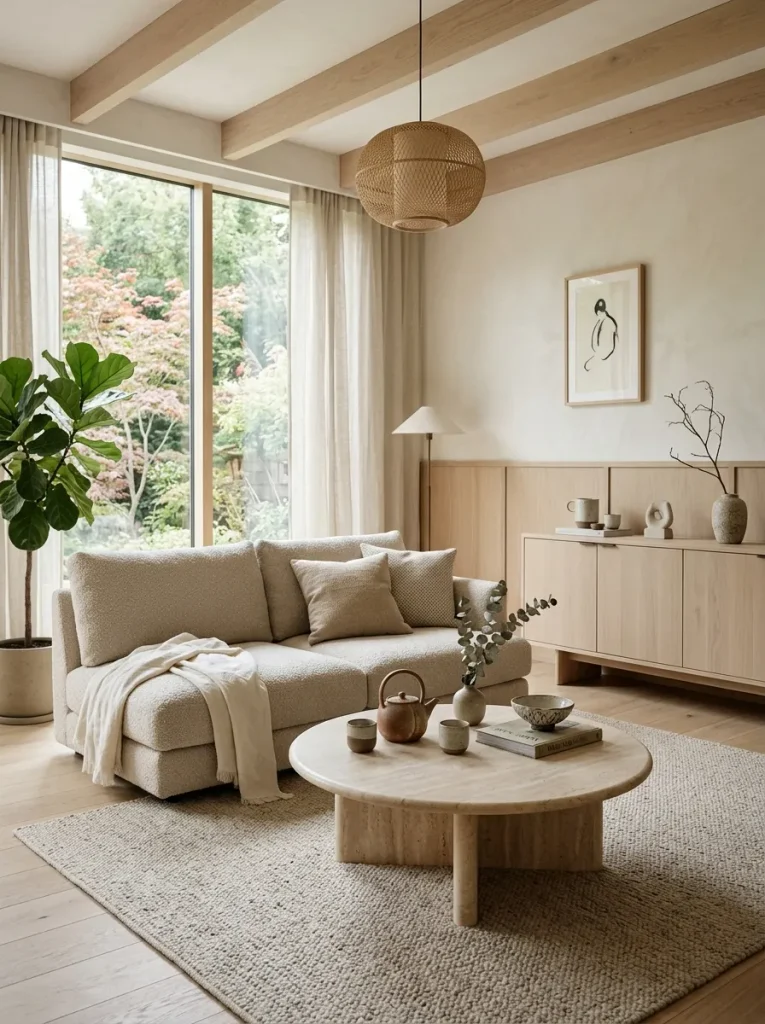
Wood is often the first material that comes to mind when decorating a Japandi living room, but adding a small amount of stone can bring another layer of natural character.
A stone coffee table, travertine side table, textured stone planter, or simple decorative object can introduce an earthy contrast against softer materials such as linen and wool.
Choose finishes that feel natural rather than highly polished. Subtle variations in color and texture can make the material feel more organic and authentic.
Stone also works beautifully with light wood. The warmth of oak or ash balances the cooler, solid appearance of stone, creating a combination that feels contemporary without losing the natural quality of Japandi design.
You don’t need many stone elements. One substantial piece can be enough to establish the contrast. For example, a rounded stone coffee table can become the central feature between a neutral sofa and a woven rug.
Keep the surrounding decor restrained so the material itself remains noticeable.
16. Keep Wall Decor Minimal and Intentional
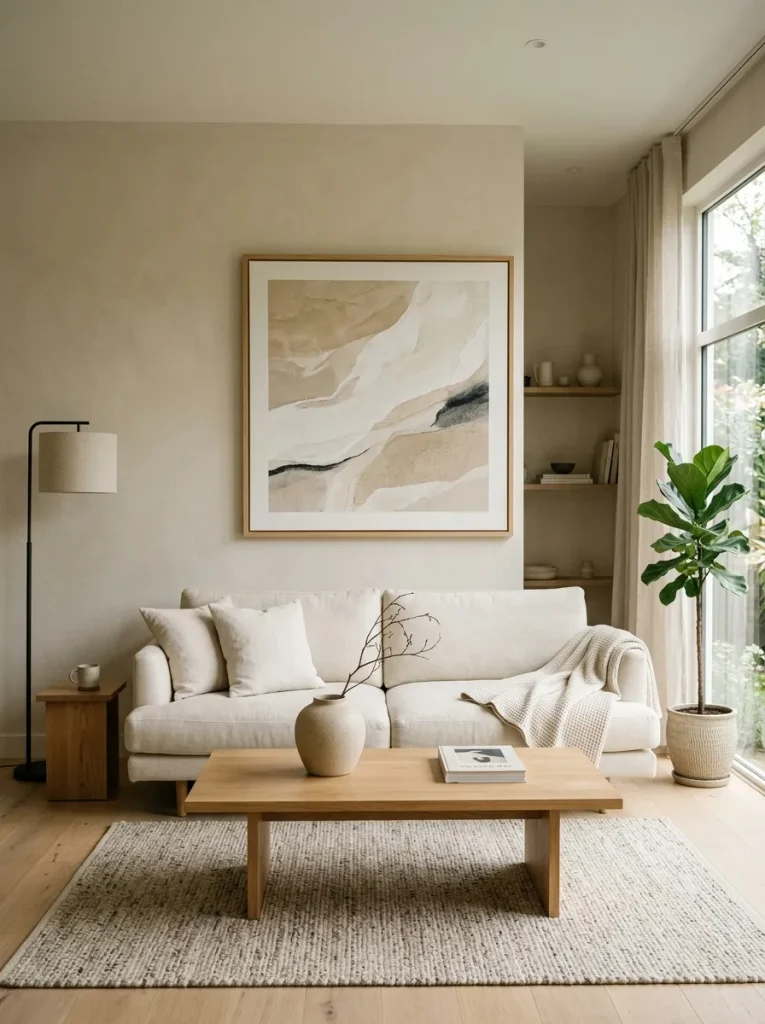
Walls in a Japandi home don’t need to be completely empty, but they benefit from a carefully edited approach. One thoughtfully selected artwork can have more impact than a crowded gallery wall.
Look for artwork with organic shapes, subtle brushwork, muted landscapes, abstract forms, or earthy colors. Japanese-inspired prints and understated Scandinavian artwork can both complement the style when they share the room’s restrained palette.
Natural wood frames are an easy way to connect wall art with the rest of the furniture. Alternatively, choose a simple black, charcoal, or neutral frame when you want a little more definition.
Consider the scale of the artwork as well. A single larger piece above a sofa can create a clear focal point without requiring multiple decorative objects.
Leave generous empty space around wall decor. Negative space is an important part of minimalist interior design because it allows individual elements to breathe.
The result should feel curated rather than unfinished. Every visible item should contribute something to the atmosphere of the room.
17. Make Furniture Work Harder in a Small Space
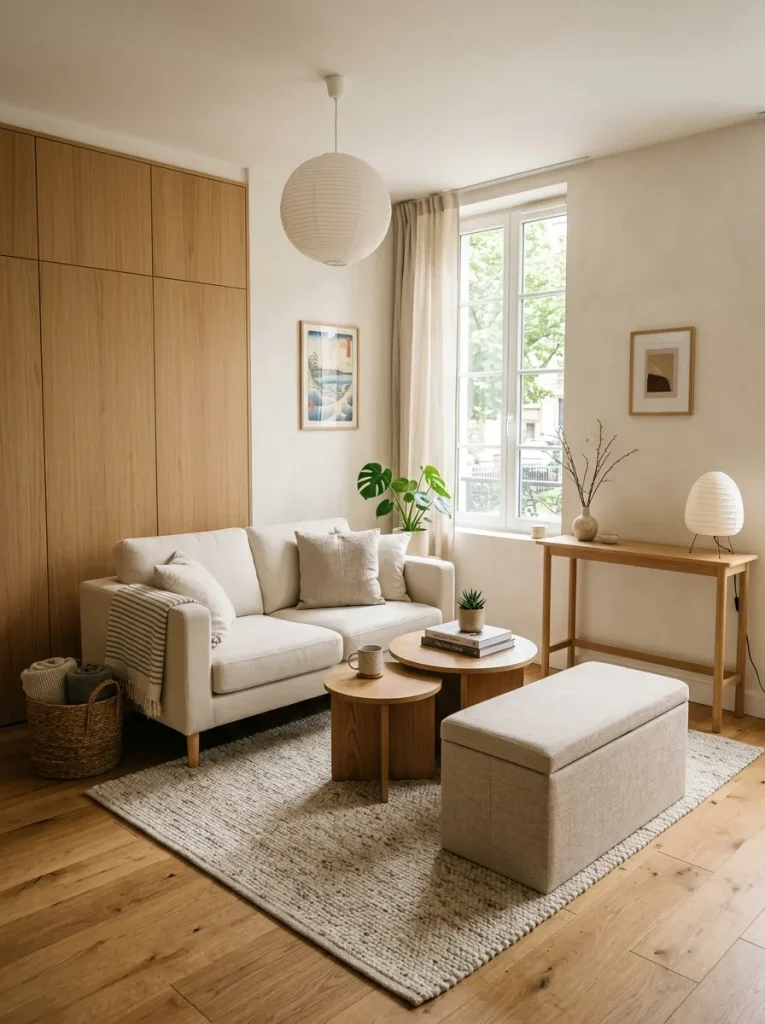
A Japandi living room doesn’t need a large footprint to feel functional. In smaller homes, choosing furniture that performs more than one role can help preserve both comfort and visual simplicity.
A storage ottoman can function as seating, a footrest, and hidden storage. A compact nesting table can provide additional surfaces when needed and tuck away when it isn’t being used.
A slim console can also double as a workspace in a small apartment, while a low cabinet can provide storage without visually dominating the room.
Prioritize pieces that are appropriately scaled. Oversized furniture can quickly make a compact room feel crowded, while furniture that is too small may leave the space feeling disconnected.
Keep multifunctional pieces visually simple. Japandi style works best when practical features are integrated quietly rather than emphasized as complicated mechanisms.
When planning a small apartment layout, leave enough open space between furniture zones. The goal is to make the room adaptable while still maintaining the peaceful, uncluttered feeling that makes Japandi interiors so appealing.
18. Build a Cozy Japandi Corner for Reading and Relaxing
A Japandi living room doesn’t have to be designed entirely around entertaining. Creating a small personal corner for reading, tea, or quiet relaxation can make the space feel more comfortable and lived-in.
Start with a comfortable accent chair in a neutral fabric. A wooden frame, woven seat, or softly curved silhouette can connect the chair with the rest of the room’s natural aesthetic.
Place a small side table nearby for a book, cup, or ceramic lamp. A floor lamp with a soft shade can provide focused lighting without introducing a visually heavy fixture.
Add one textured throw or a small cushion to make the area inviting, but avoid over-accessorizing it. The simplicity of the arrangement is what keeps it aligned with Japandi principles.
This type of corner is especially useful in larger living spaces where one seating area alone might leave awkward unused space. In a compact room, the same idea can be incorporated beside the main sofa without requiring a separate zone.
Think of the corner as a quiet pause within the larger living space.
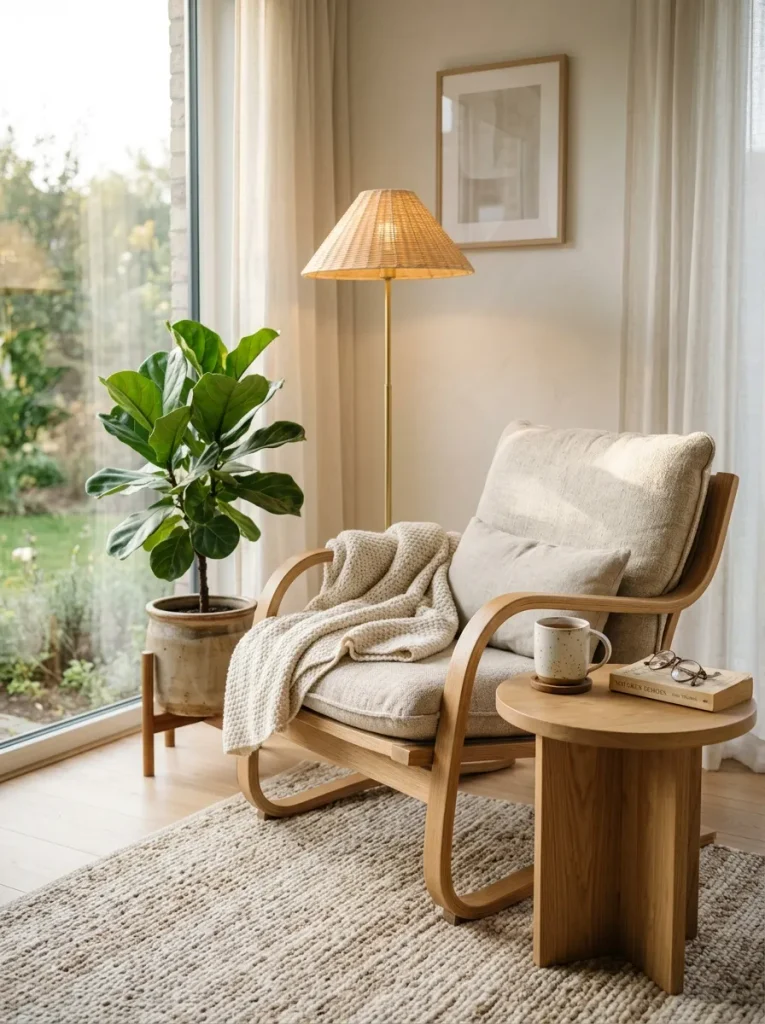
19. Style Open Shelves With Breathing Room
Open shelving can add personality to a Japandi living room, but the way you style it is important. Too many objects can quickly turn a peaceful display into visual clutter.
Start with a small collection of useful or meaningful pieces. Handmade ceramics, a few books, a small plant, a wooden object, or a simple sculptural accessory can create an attractive arrangement without filling every shelf.
Vary the height and shape of the objects while keeping the colors connected to the overall room. Neutral ceramics and natural wood pieces work particularly well against light-colored walls.
Leave empty sections between groups of objects. This negative space allows each item to stand out and prevents the shelving from becoming visually overwhelming.
You can also alternate practical items with decorative pieces. A stack of books beside a ceramic bowl, for example, can feel more natural than a shelf containing only ornaments.
For a stronger Japandi look, choose shelving with a simple timber frame or floating wooden construction. The storage itself then becomes part of the room’s natural material palette.
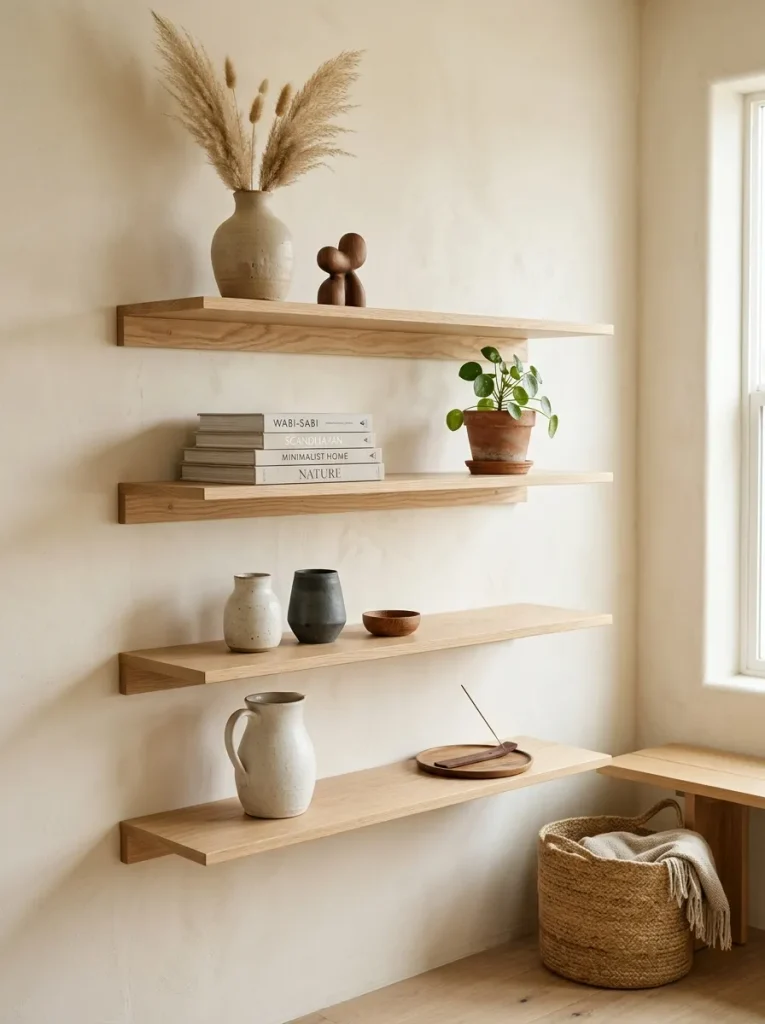
20. Balance Japanese Simplicity With Scandinavian Comfort
The most appealing Japandi living rooms usually avoid leaning too heavily toward either of their two influences. Japanese design brings restraint, simplicity, and appreciation for natural materials, while Scandinavian interiors contribute softness, functionality, and everyday comfort.
You can express this balance through furniture and accessories. Pair a clean-lined wooden coffee table with a plush neutral sofa. Add a simple ceramic vase alongside a soft wool throw. Combine an uncluttered layout with comfortable cushions and warm textiles.
Avoid making the room feel like a themed space. You don’t need obvious Japanese symbols or a collection of Scandinavian decor to communicate the style.
Instead, focus on the shared principles between both aesthetics: simplicity, craftsmanship, natural materials, practical furniture, and a calm relationship between objects and empty space.
This balance also makes the style easier to personalize. You can introduce regional artwork, family heirlooms, or handmade pieces as long as they work with the room’s overall palette and don’t create unnecessary visual noise.
A successful Japandi living room should ultimately feel like a real home rather than a showroom.
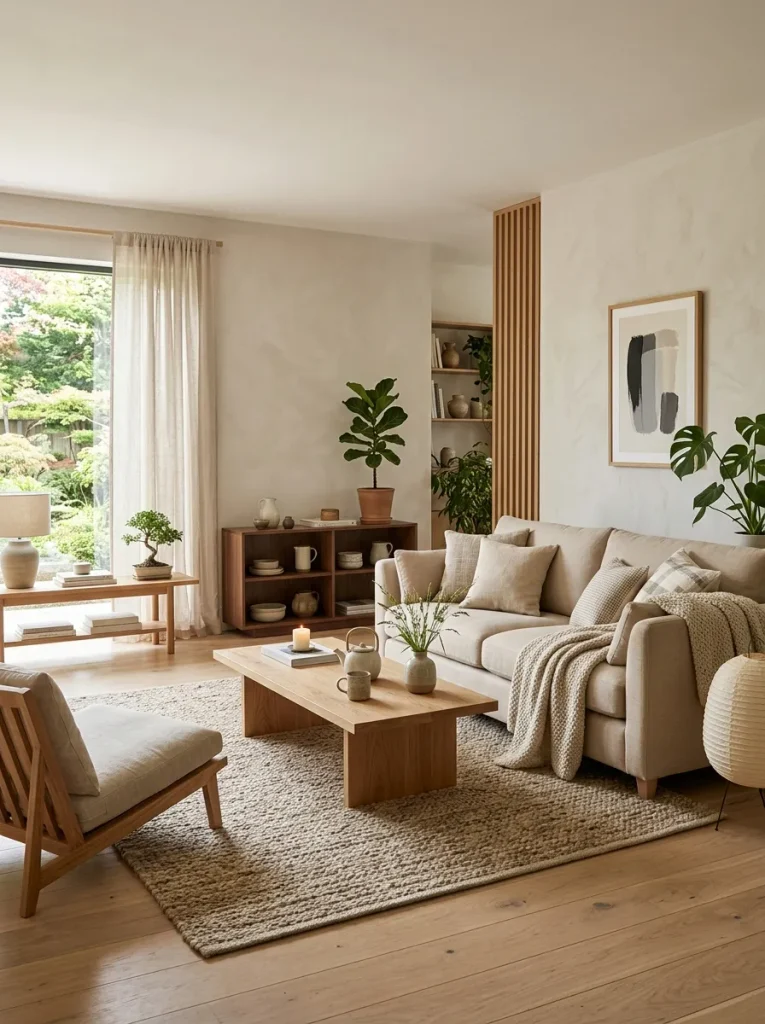
21. Use a Japandi-Inspired Accent With Darker Wood
Although light wood is common in Japandi interiors, darker timber can add depth and contrast when used thoughtfully. A walnut-toned cabinet, dark wooden side table, or deeper-toned coffee table can give a neutral room more visual definition.
The key is to keep the darker material limited. Too much dark wood can make a small living room feel heavy, while one or two carefully chosen pieces can create an elegant focal point.
Pair darker wood with warm white or beige upholstery to maintain a soft overall appearance. Natural woven materials can also help bridge the contrast between the darker furniture and lighter elements.
This approach works particularly well in rooms that already have plenty of natural light. Sunlight can highlight the grain of the wood while preventing the darker pieces from making the space feel closed in.
For a cohesive arrangement, repeat the darker tone subtly in another part of the room, such as a picture frame, ceramic detail, or small decorative object. This creates connection without making the color dominant.
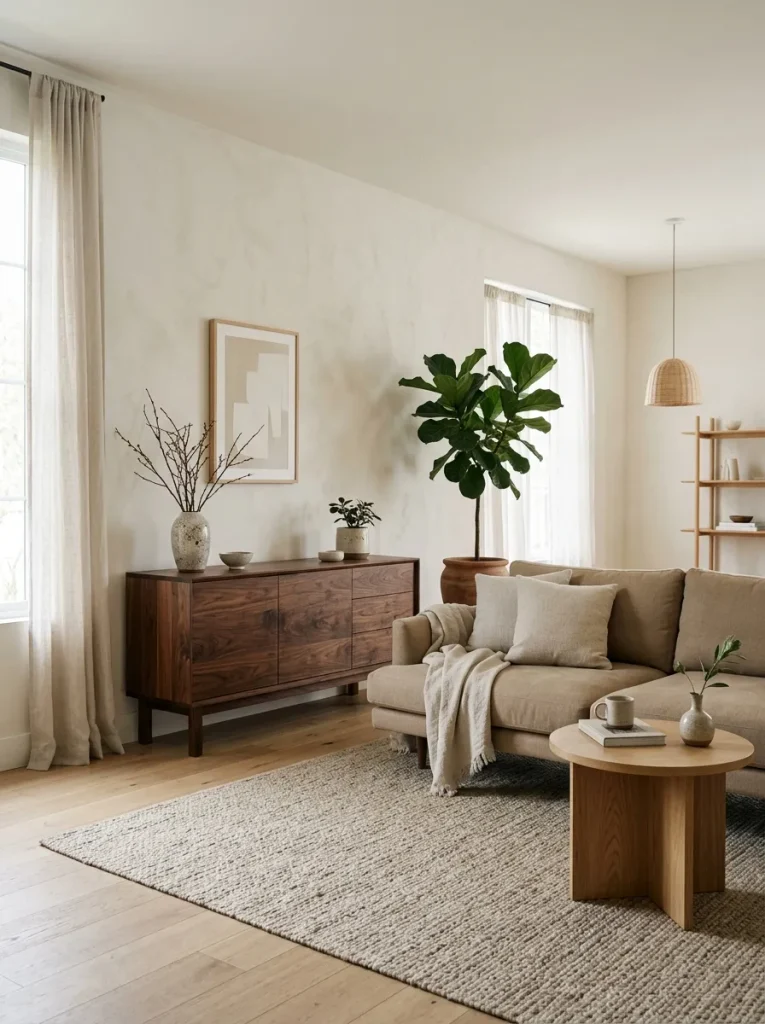
22. Finish With a Carefully Edited Japandi Decor Collection
The final layer of a Japandi living room is often less about adding more and more decor and more about deciding what truly belongs in the space.
Walk through the room and look at every visible object. Keep pieces that provide function, texture, craftsmanship, or personal meaning. Remove anything that feels repetitive or doesn’t contribute to the atmosphere.
A simple combination of organic ceramics, natural wood, woven textures, soft textiles, greenery, and understated artwork can be enough to finish the room beautifully.
Remember that empty space is part of the design. Leaving portions of a coffee table, shelf, wall, or floor open gives the room a sense of calm and allows the selected pieces to stand out.
The best Japandi decor doesn’t demand attention. It quietly supports the feeling of warmth, simplicity, and serenity that makes the style so appealing.
Whether you’re furnishing a large living space or a small cozy apartment, an edited collection of natural materials and meaningful objects can give your room a timeless Japandi character.
FAQs:
What colors work best in a Japandi living room ideas?
Warm neutrals such as cream, beige, ivory, taupe, sand, warm gray, and soft brown are ideal for a Japandi living room. Muted greens and darker wood tones can be added as subtle accents without disrupting the calm atmosphere.
How do you make a Japandi living room cozy?
Focus on comfortable furniture, natural textures, warm lighting, and layered textiles. A soft sofa, wool or linen throw, textured rug, wooden furniture, handmade ceramics, and a few plants can add warmth without making the room feel cluttered.
Can Japandi style work in a small living room?
Yes. Japandi design is particularly adaptable to compact spaces because it emphasizes thoughtful layouts, multifunctional furniture, and visual simplicity. Choose appropriately scaled furniture, keep pathways open, and use concealed storage to make the most of the available space.
What furniture is used in Japandi interiors?
Common choices include low-profile sofas, simple wooden coffee tables, streamlined storage cabinets, curved accent chairs, minimalist side tables, and functional shelving. Furniture generally has clean silhouettes and is made from natural-looking materials.
Create a Japandi Living Room That Feels Naturally Serene
Japandi style is ultimately about creating a home that feels intentional without feeling overly designed. Natural materials, neutral colors, comfortable furniture, thoughtful storage, and plenty of breathing room can work together to create a living space that feels both beautiful and easy to live in.
You don’t need to completely transform your room to achieve the look. Start with the elements that have the biggest impact, such as a simple Japandi sofa, warm wood furniture, soft textiles, or a more restrained color palette. Then gradually add organic ceramics, greenery, woven textures, and understated lighting.
Whether you’re designing a spacious home or working with a small apartment layout, the same principles apply: choose with intention, prioritize function, and leave enough open space for the room to breathe.
With the right balance of Japanese simplicity and Scandinavian comfort, your living room can become a peaceful everyday retreat that feels warm, timeless, and personal.