
24 Coastal Living Room Ideas for a Breezy Haven
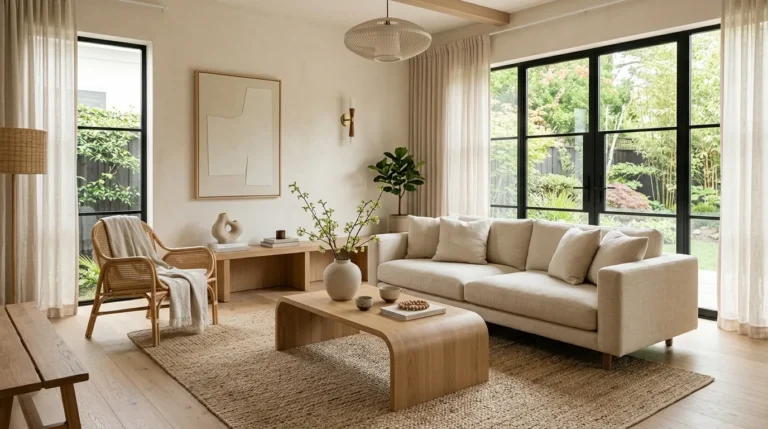
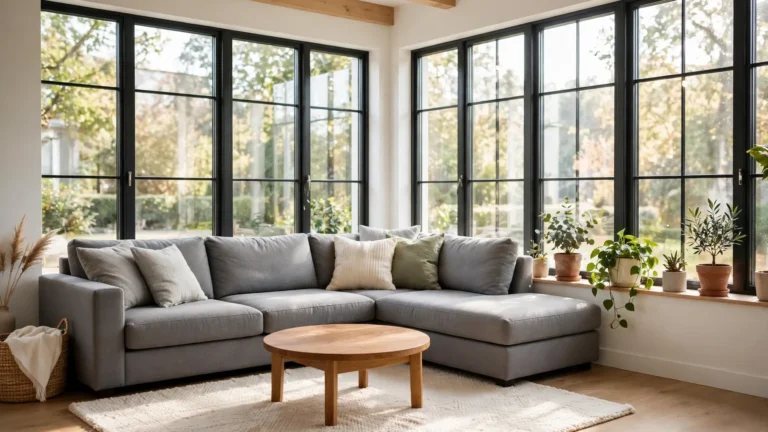
Good coastal living room ideas make a room feel like the windows are always open to the sea. Think soft white walls, sandy tones, woven textures and furniture you can sink into. You do not need a beach house, just a few calm, light filled choices.
Here you will find palette ideas, furniture swaps, texture pairings and small styling tricks that work in real homes, from tiny apartments to family beach houses. I learned the hard way that too many shell ornaments can tip a room into theme park territory, so every idea here keeps things calm and livable. If you love bright rooms, natural materials and a relaxed pace, these ideas will suit you whether you live by the water or miles from the nearest shore.
White And Sand Foundations

Start with walls in a warm white and large pieces in sand, oatmeal, pale stone and soft ivory. This quiet, layered base reflects daylight instead of absorbing it, so even a north facing room feels brighter. Keep the palette tight: two neutrals repeated everywhere beat five competing beiges. Add depth with texture rather than color, like a nubby throw or a grasscloth cushion. Test white swatches at noon and dusk, because coastal whites can turn grey or yellow with your light.
Slipcovered Sofas In Relaxed Linen
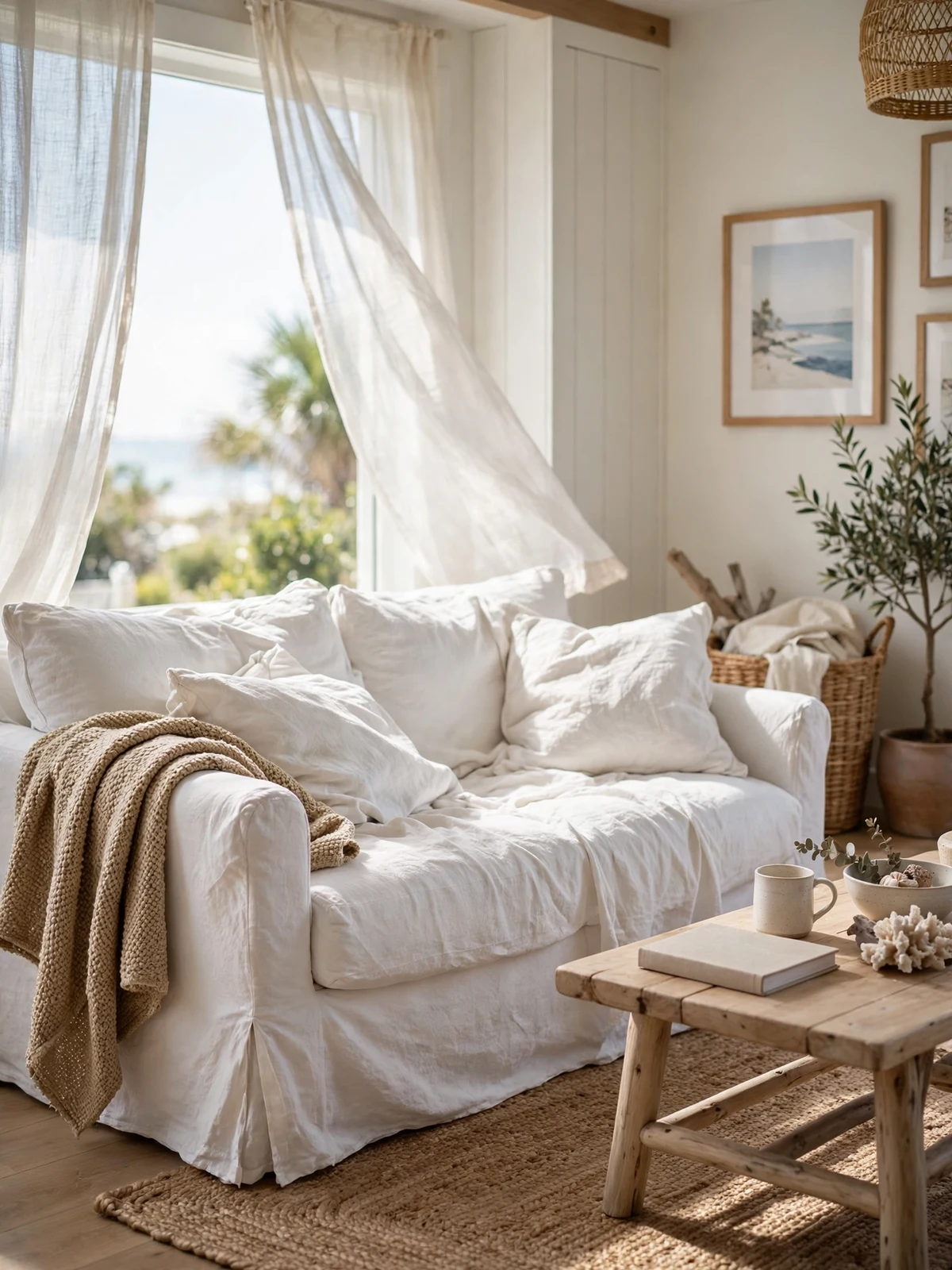
A washable slipcover in white or natural linen is the hardest working piece in any coastal room. It shrugs off sandy feet, spilled summer drinks and muddy paws, then goes straight into the wash. Choose a rumpled weave rather than a crisp one, since the relaxed drape is the whole point. If white feels brave, try a pale sand cover with white or oatmeal cushions. Keep a spare cover folded away so the sofa never sits undressed on laundry day.
Rattan And Wicker Layers
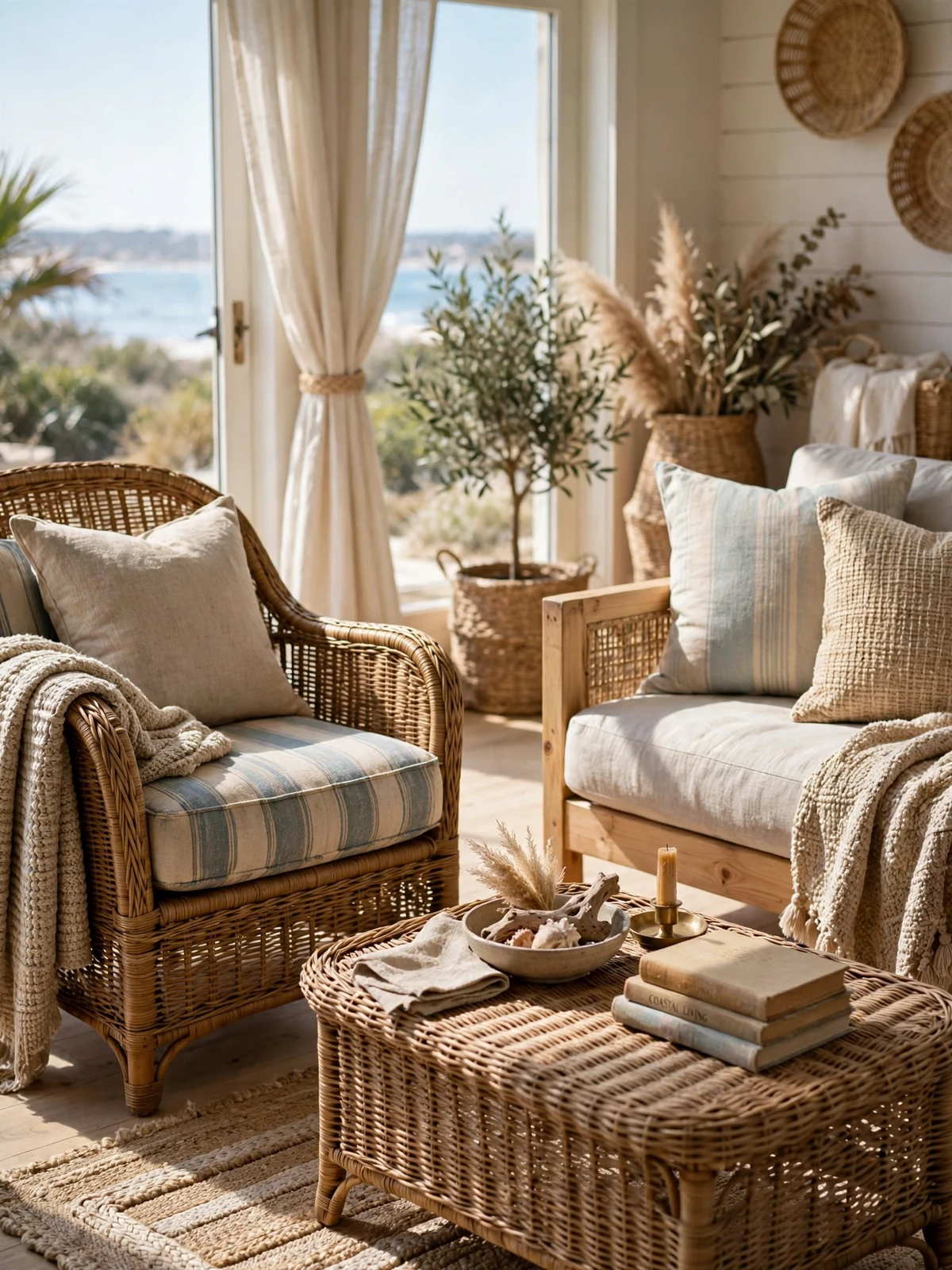
Woven furniture brings the handmade texture that makes coastal rooms feel collected instead of decorated. Pair one rattan armchair with a wicker storage trunk or a cane front cabinet, then ground them with simple wood pieces. What makes it work: mixing weave scales, tight cane beside chunky rattan, stops the set from looking matched. Keep the wood tones pale, matte and unstained looking. A quick dust with a soft brush keeps the weave clean, and a faded stripe cushion adds comfort.
Jute And Sisal Rugs
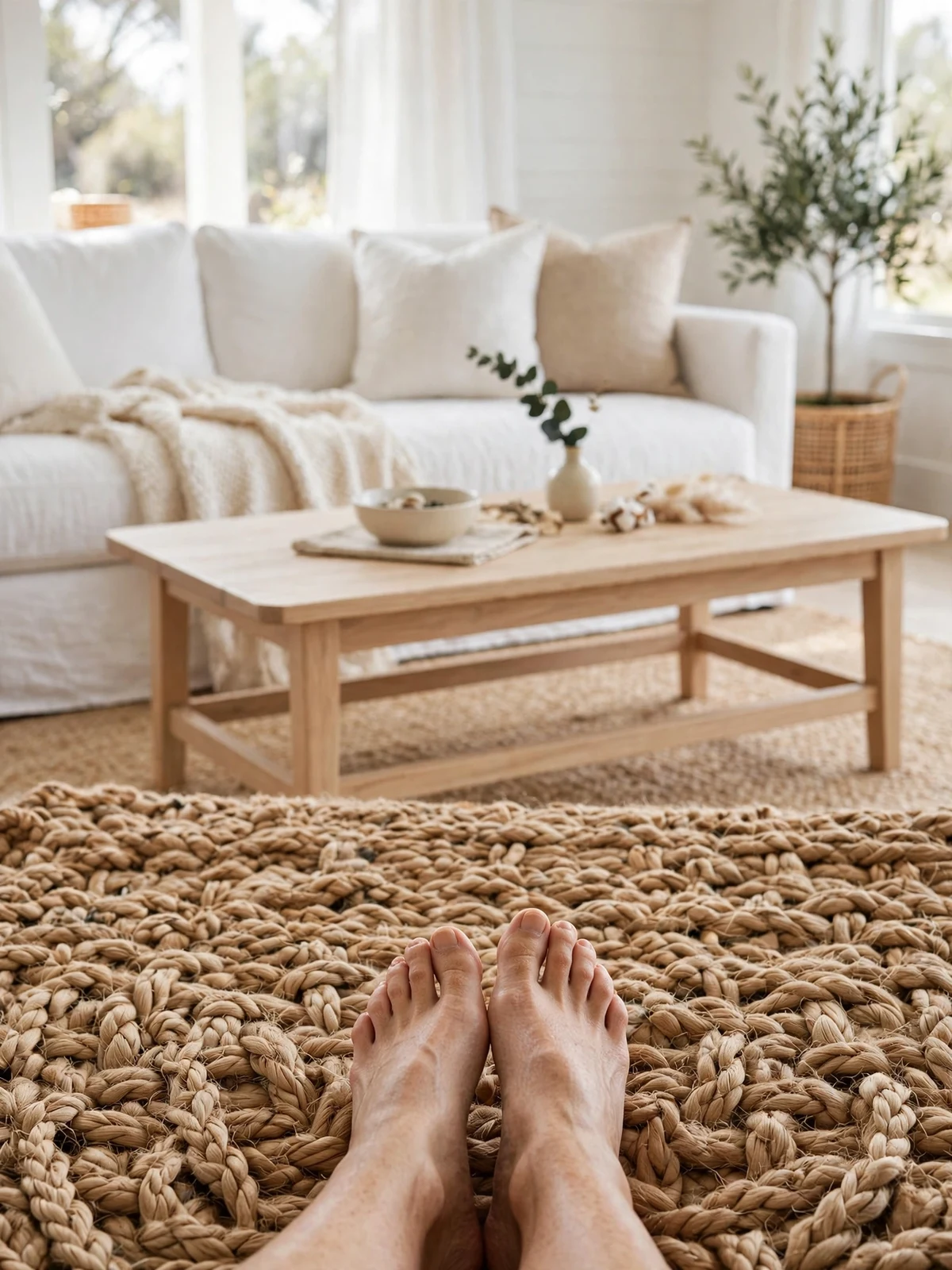
Natural fiber rugs add warmth and grit that flat cotton rugs cannot match. Jute is softer and chunkier, better for bare feet and lounging, while sisal is tighter and tougher near doors. Size up so at least the front legs of every seat sit on the rug, because a generous rug anchors the whole layout. Layer a small faded vintage rug on top in winter for softness. Shake the rug outside weekly; natural fibers shed dust and last for years.
Driftwood Accents
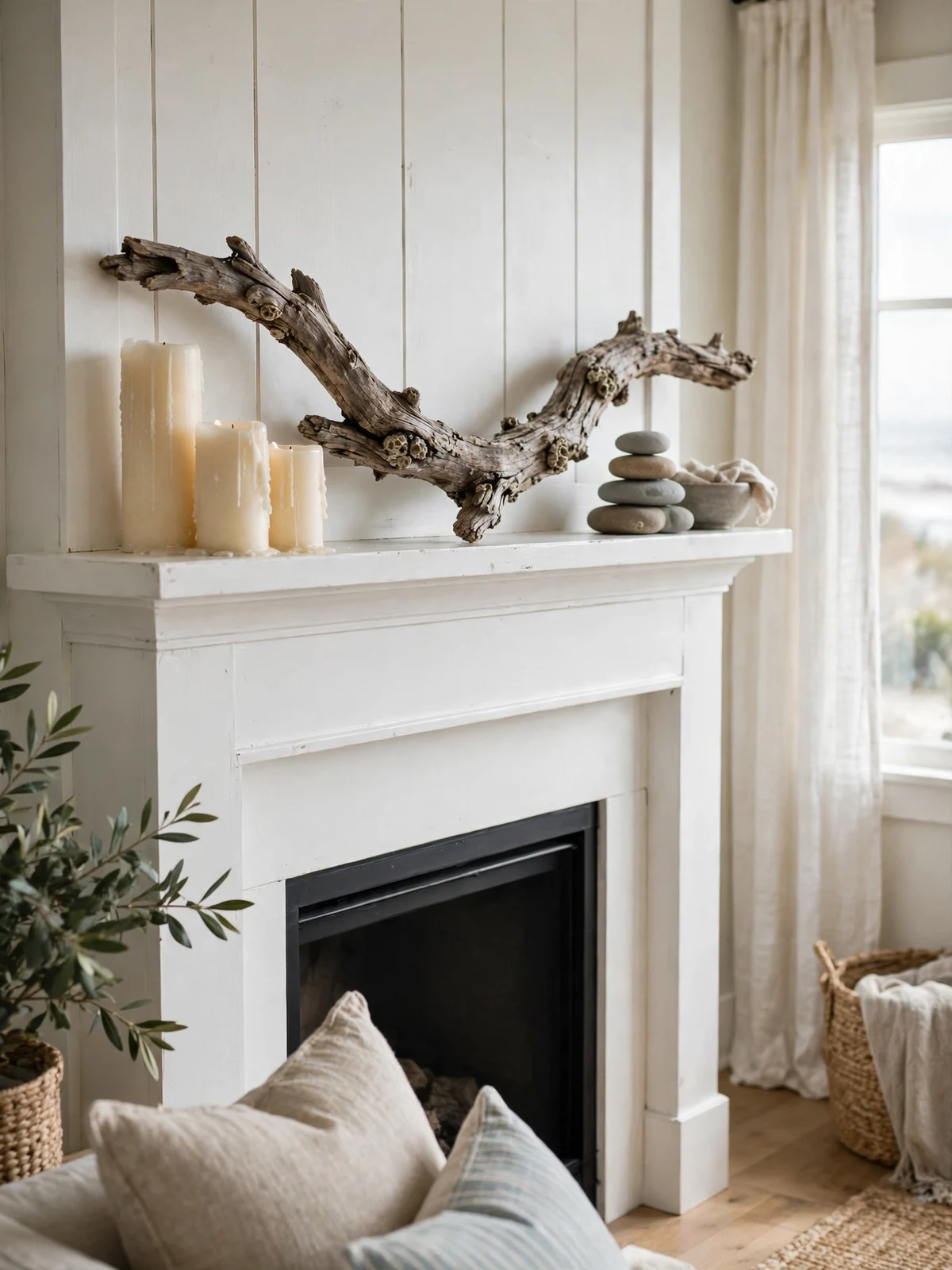
One or two pieces of driftwood bring real shoreline character that no shop bought ornament can copy. Use a long branch above a mantel, a small sculptural piece on a coffee table, or a driftwood lamp base beside the sofa. Keep the count low, since a single found piece reads as treasure while a pile reads as clutter. Rinse beach finds in fresh water and dry them in the sun before bringing them inside. They last for years without any care at all.
Sea Glass Color Accents

Sea glass tones, frosted aqua, pale green and cloudy blue, work best as accents against a calm neutral base of white and sand. Try a cluster of glass vases on a sideboard, a single aqua lamp, or cushions in two sea glass shades. Glass catches window light and throws soft color onto nearby walls, which is free decoration that changes all day. Keep the saturation low and chalky, and repeat each shade at least twice so it looks planned, not random.
Classic Navy And White Stripes

Stripes are the one pattern that always belongs by the sea, but restraint keeps them fresh. Limit stripes to two places, such as cushions and a throw, or a rug and one armchair. Navy works as the room’s single deep note against all that white, sand and pale wood. What makes it work: varying the stripe width between pieces so nothing looks like a uniform. A ticking stripe feels softer than a bold awning stripe, and mixing both adds character.
Soft White Shiplap Walls

Horizontal shiplap adds cottage character and subtle shadow lines that plain paint cannot give. Paint it a soft white with a hint of warmth so the grooves read as gentle texture, not stark contrast. One wall is usually enough, behind the sofa, around a fireplace or in an entry. Best for: rooms that feel boxy and plain, since the lines stretch the wall visually. If real boards are too much work, shiplap style wallpaper gives a similar rental friendly look.
Breezy Sheer Curtains

Sheer linen or cotton voile curtains soften hard window edges and turn plain daylight into a glow. Hang them high and wide so the fabric clears the glass when open, and let them puddle slightly or kiss the floor. In a breeze they move, and that gentle movement is pure coastal mood. Choose warm white over bright white to avoid a blue glare. If privacy matters at night, layer sheers in front of simple roller blinds that disappear by day.
Coastal Art Above The Sofa
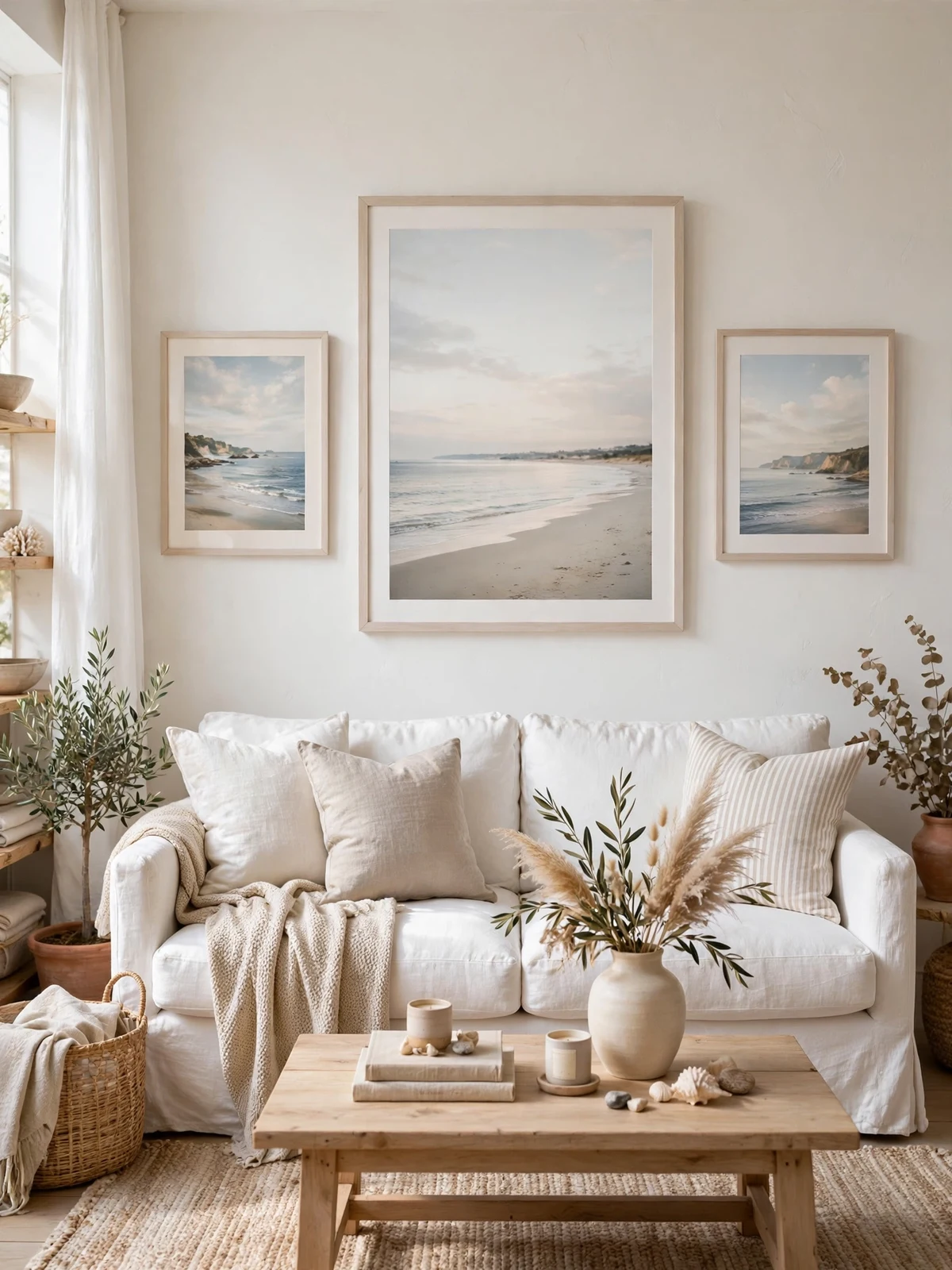
Art is where a coastal room gets personal. One large photograph of a favorite beach, printed soft and slightly faded, beats a gallery of tiny themed prints every time. Pale wood or white frames keep the wall light, and a matte finish stops glare on sunny afternoons. Hang the center at eye level, roughly 57 inches from the floor. What makes it work: choosing images with more sky than objects, which keeps the wall feeling open and airy instead of busy.
Tasteful Shell And Coral Displays
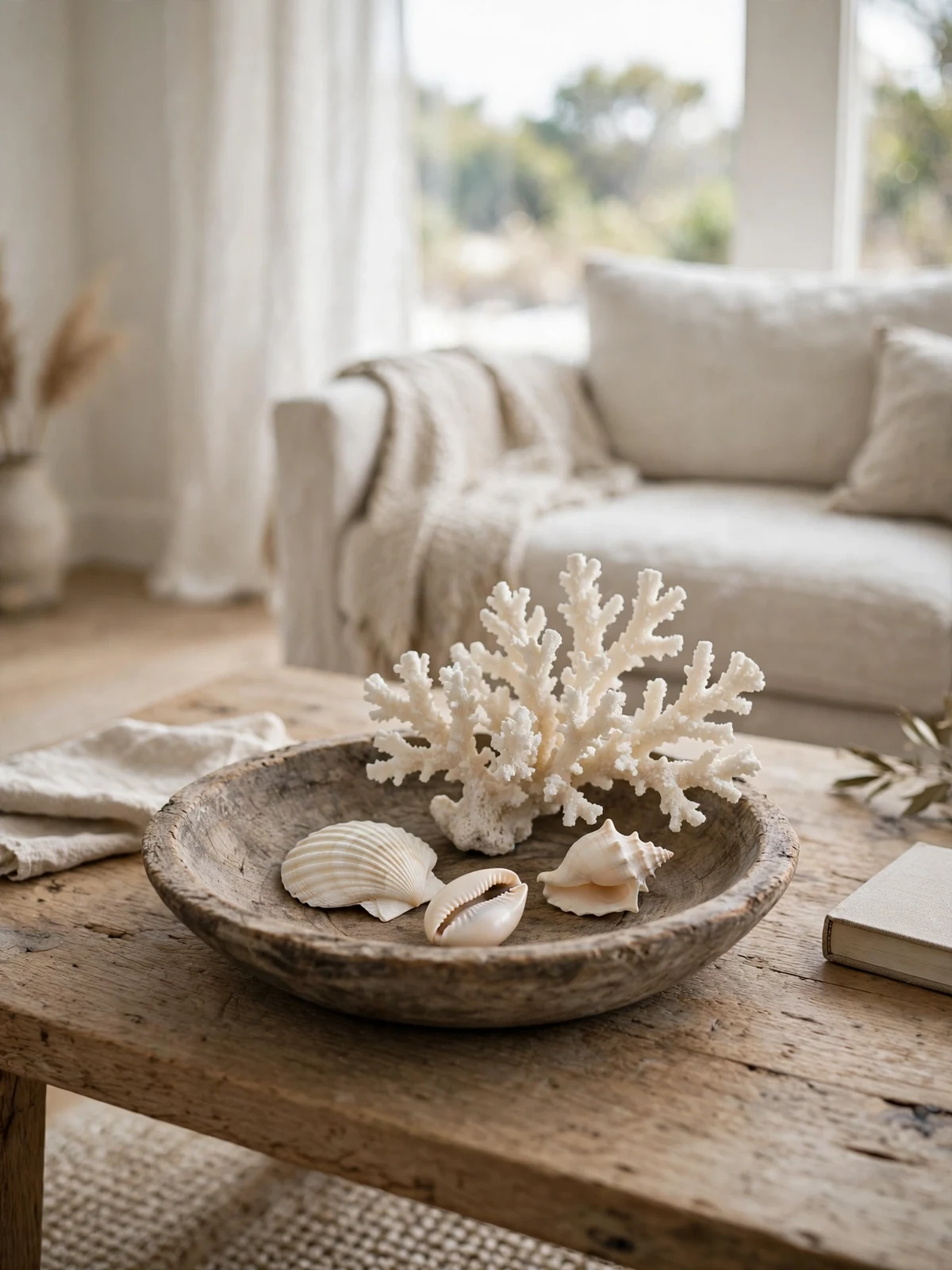
Shells and coral can look elegant when they are treated like sculpture, not souvenirs. Group three to five pieces in one shallow bowl or under a glass dome, as the only display in the room. White and cream specimens blend with any palette. Best for: coffee tables and mantels that need one quiet focal point. Editing is the skill here, so rotate pieces seasonally and store the rest. A child-found shell with a story behind it always earns its place.
Rope Accents Used Sparingly

Rope details hint at boats and docks without shouting about them. A rope wrapped lamp base, a coiled rope basket, or rope handles on a storage trunk are plenty for one room. Natural manila and jute tones blend with rattan and sisal, so the texture family stays consistent. Keep rope away from too many other nautical props, because one knot of texture goes a long way. If a piece feels like a gift shop souvenir, skip it; choose plain, chunky, un-dyed rope.
Weathered Wood Warmth

Sun and salt soften wood into silvery greys and warm taupes, and that weathered finish keeps an all white room from feeling cold. Look for a coffee table, bench or sideboard with a matte, slightly rough surface and simple lines. Pair it with smooth linen and glass so the textures contrast nicely. What makes it work: one weathered hero piece per room, repeated only in small echoes like a tray or frame. Avoid orange toned varnish, which fights the calm palette hardest.
Lantern Lighting

Coastal rooms live by daylight, but lanterns give them a warm evening mood. Glass hurricane lanterns on a mantel, a lantern style pendant over the coffee table zone, or candle lanterns grouped on a tray all work beautifully. Brass or black metal frames suit the look better than shiny chrome or plastic. Use warm white bulbs around 2700K so the glow stays golden after sunset. Cluster lanterns in odd numbers and vary the heights; a single lantern alone can look lost.
Plants That Suit The Coast
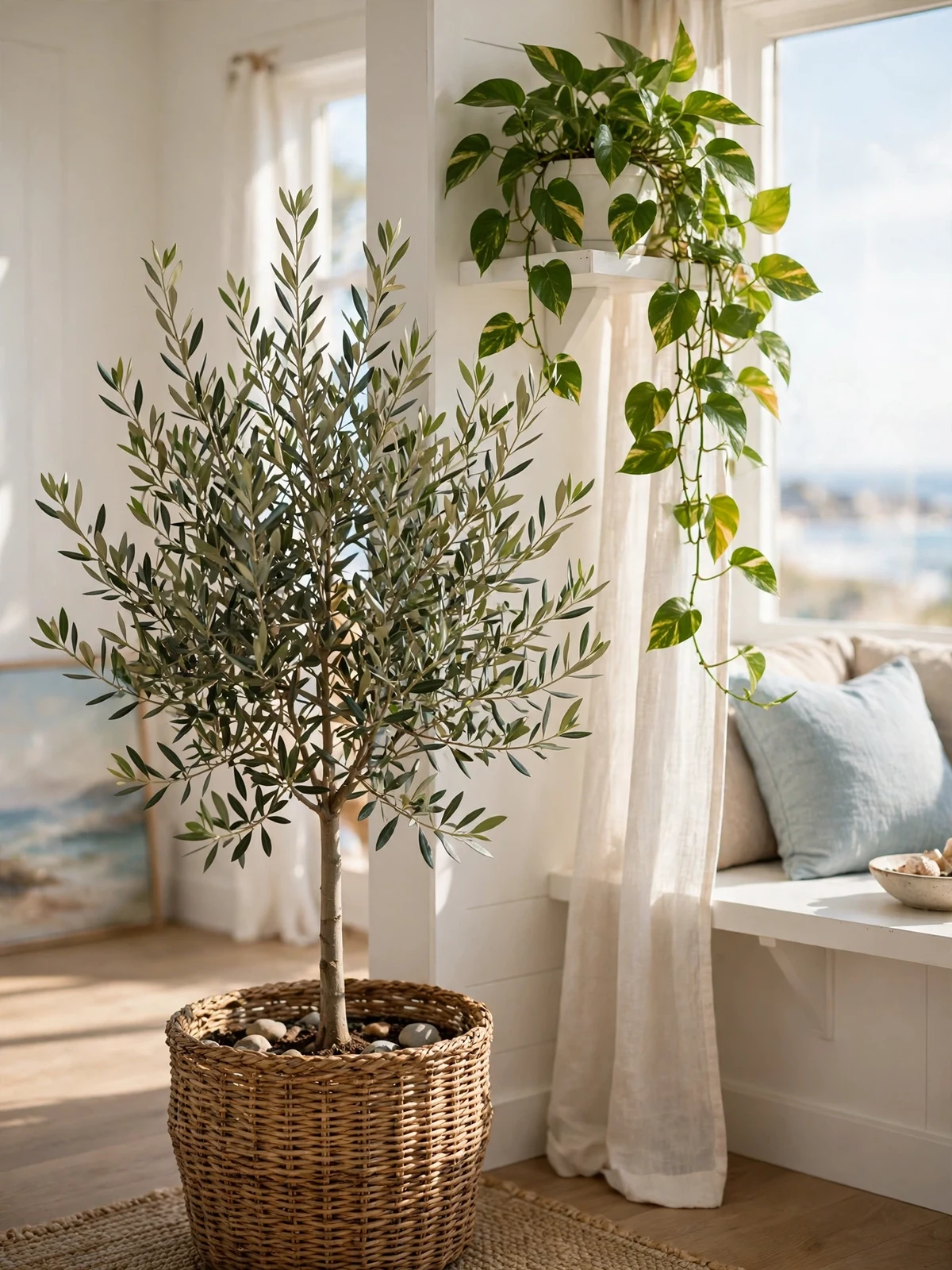
Greenery keeps a pale room alive, and some plants genuinely suit the coastal look. An olive tree in a woven basket, a snake plant in a white pot, or trailing pothos on a shelf all bring soft green tones. Place plants where real light reaches them, near bright windows rather than in dark corners. What makes it work: matte, natural pots, terracotta, stone and basket weave, never glossy plastic. Group three plants of different heights together in one sunny corner.
Coastal Style For Small Apartments

Small rooms suit coastal style because the palette is light and the furniture is low and simple. Swap heavy dark pieces for a compact sofa in pale fabric, one rattan chair and a glass coffee table you can see through. Mirrors opposite windows double the daylight, which is the cheapest space maker there is. Keep themed objects to almost none; in a small room, texture does the talking. A single striped cushion can carry the whole seaside suggestion on its own.
Clean Modern Coastal Lines
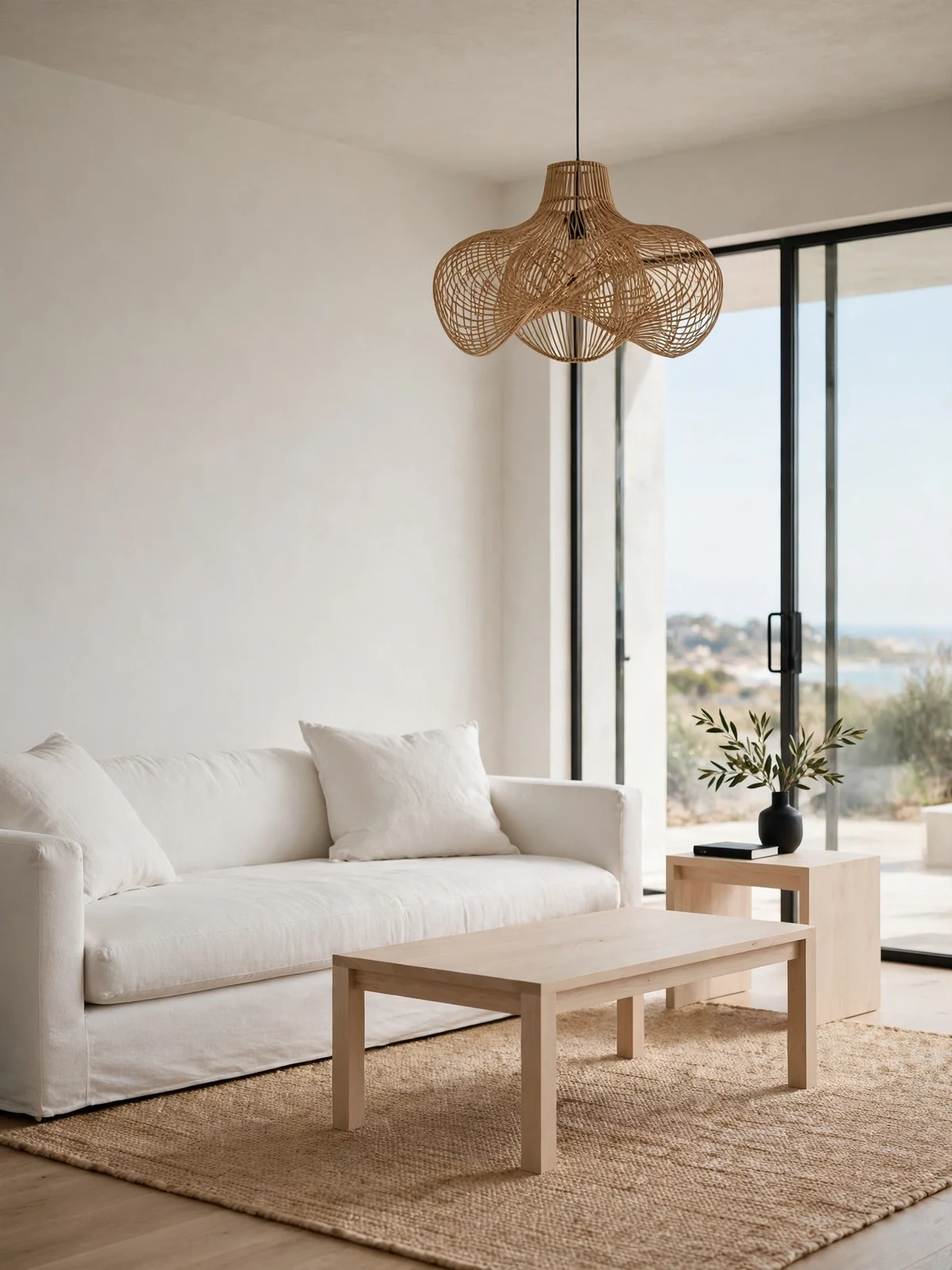
Modern coastal keeps the light palette and natural texture but drops the themed ornaments entirely. Think a low profile sofa, clean lined wood furniture, one sculptural rattan pendant, and plenty of empty space around each piece. Small black or bronze accents sharpen the softness. Best for: anyone who loves the calm of coastal rooms but not the beach house look. Negative space is a design element here, so if a surface does not need an object, leave it bare and calm.
Coastal Grandmother Touches

The coastal grandmother look adds softness and nostalgia to the breezy base: a floral cushion or two, hydrangeas in a blue and white vase, a skirted chair, and books stacked with a reading lamp nearby. It should feel like a beloved summer house, unhurried and comfortable. Keep florals small in scale and faded in tone so they whisper. What makes it work: mixing one pretty pattern with plain linens, never pattern on pattern. A needlepoint cushion adds the handmade note that defines the style.
Blue Green Glass Accessories

Bottles, vases and bowls in blue green glass bring the color of shallow water indoors. Group them where light passes through, on a windowsill or a side table near a window, so they glow during the day. Mix heights and let some stay empty; glass does not need flowers to earn its spot. Three pieces clustered beat ten scattered, because the eye reads a cluster as one calm moment. Vintage fishing floats and old bottles add gentle history if you find them.
Woven Basket Storage

Baskets solve the living room storage problem while adding the woven texture coastal rooms run on. Use a large lidded basket for throws, a low one for magazines and remotes, and a tall one for firewood, extra cushions and board games. Seagrass, water hyacinth and rattan all work, and mixing them looks collected and relaxed. Label nothing, match nothing too hard, and let the baskets be slightly imperfect. A basket by the door catches clutter before it lands on the sofa.
Beach House Reading Corner

Every coastal room deserves one corner built purely for slow hours. Choose the sunniest spot, add a deep armchair or chaise, a small table for tea and books, and a lamp for grey days. A washable throw and one firm cushion make it nap worthy. Face the chair toward the window if you can, because the view becomes part of the furniture. Keep a small basket of current reads nearby, and let this corner stay free of screens and chargers.
Built In Window Seat

A window seat turns dead space under a window into the most loved seat in the house. Build a simple bench with storage inside for blankets and games, then top it with a thick cushion in washable canvas. Pile on pillows in stripes and faded solids. Best for: wide windows, bay windows and any room short on seating. Use outdoor fabric for the cushion if the window gets strong sun, since it resists fading and wipes clean after sandy afternoons.
Sun Faded Linen Cushions
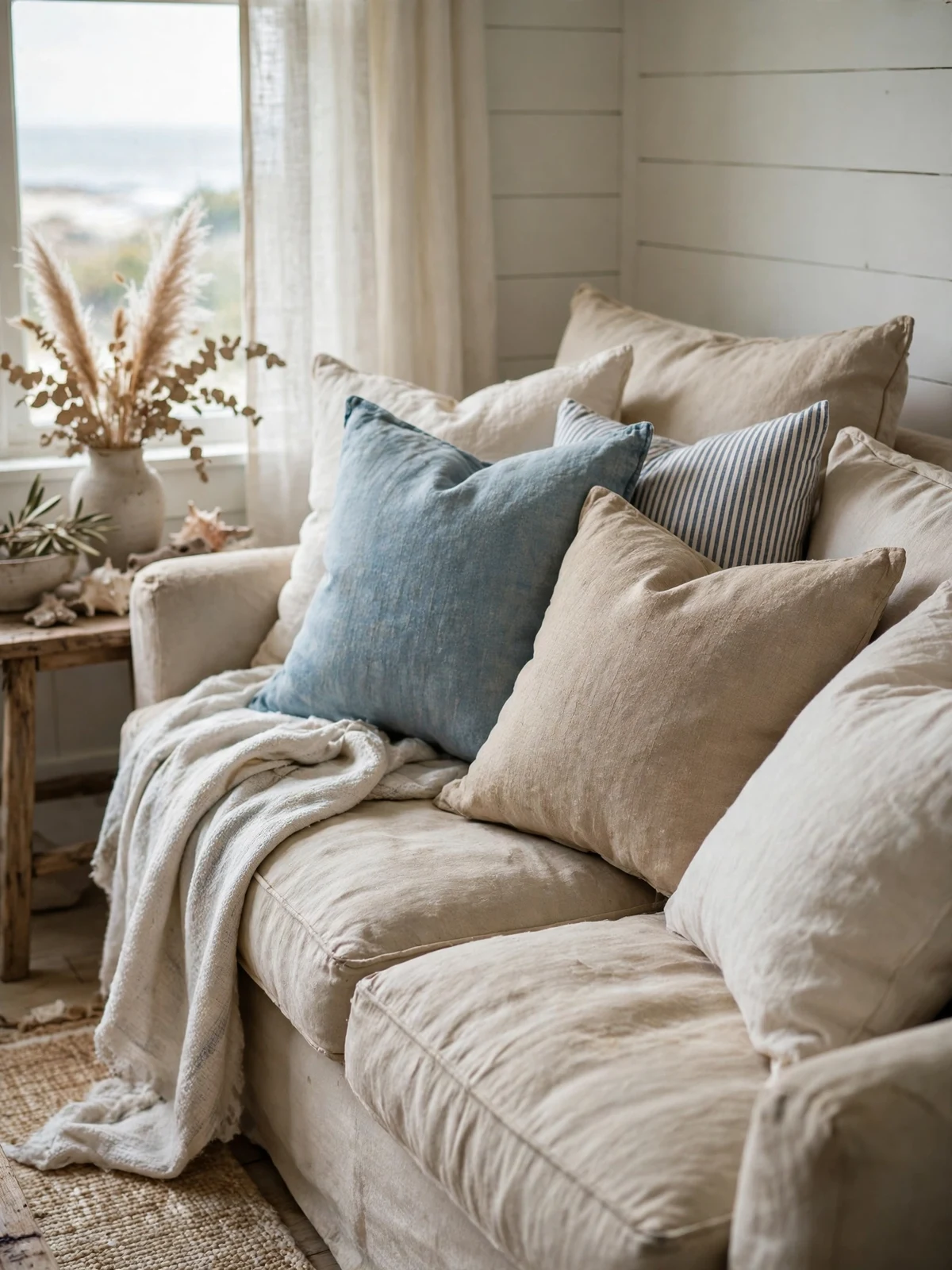
New fabric can look too crisp for a coastal room, while sun faded linen looks loved from day one. Choose cushions in washed blue, faded coral, sand and warm white, and mix plain weaves with one ticking stripe. A soft, worn throw over the sofa arm finishes the pile. What makes it work: tones that look bleached by real summers, never neon or jewel bright. Wash new linen covers twice before use to soften them into that easy, lived in feel.
Bare Floors And Open Windows
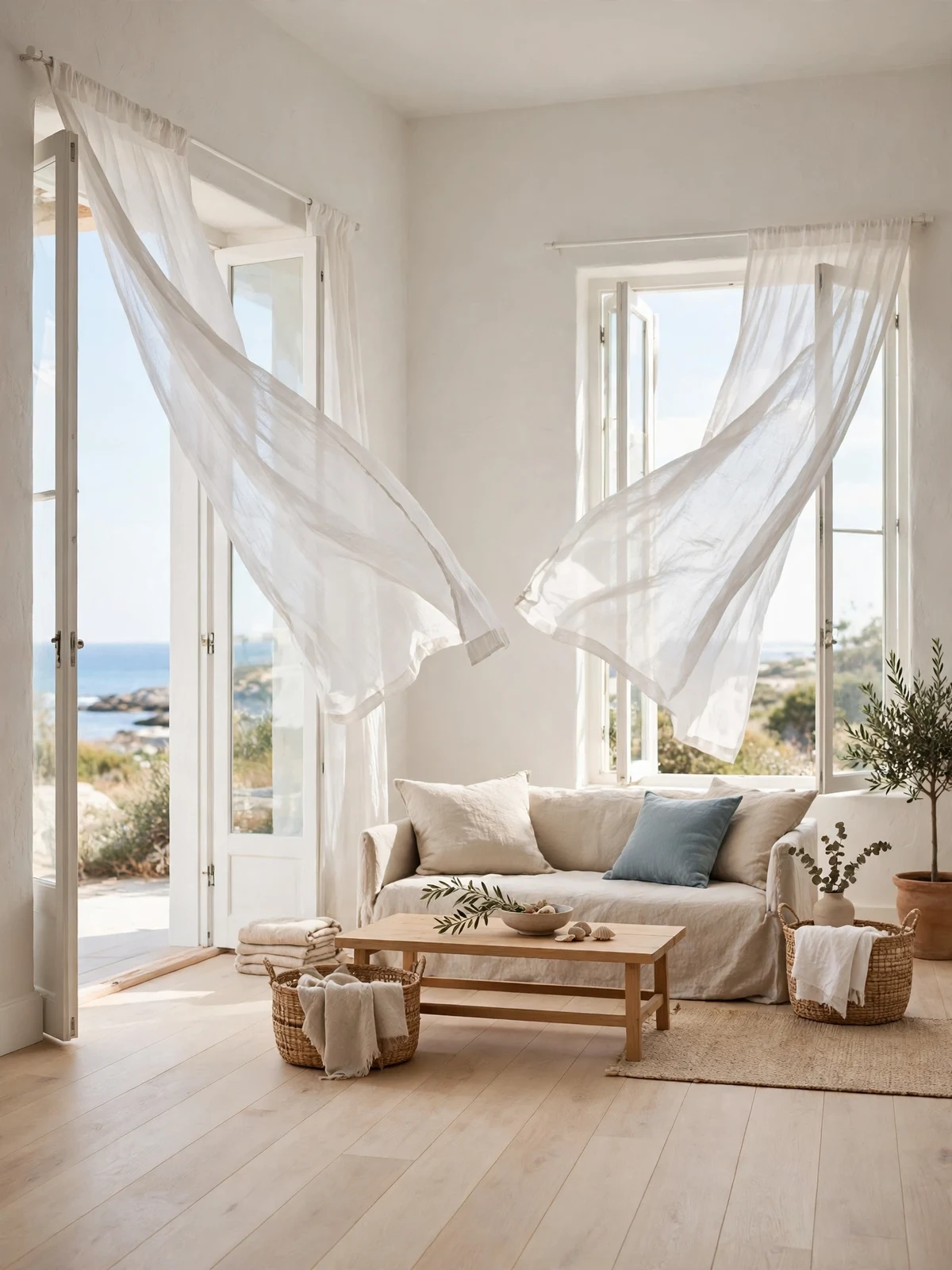
Sometimes the best coastal move is removing things. Lift heavy rugs in summer, clear the windowsills, and open windows wide to let air travel through. Pale wood or white floors reflect light upward and make the space feel washed clean. Keep only one light rug where feet land most. Airflow is a feature, not an accident, so arrange furniture low and away from window paths. The room will feel cooler and smell like outside, the whole point of coastal living.
Conclusion
The best coastal living room ideas are about light, texture and room to breathe. Start with a white and sand base, add natural fibers, then let a few sea inspired pieces do the talking. Small changes stack up, and soon the room feels calm, bright and easy to live in.
My favorite rooms never came from a full shopping trip; they grew slowly, one found piece at a time. Your next step is simple: pick one corner, clear it, and rebuild it with lighter fabrics and one woven texture. Save this list to your coastal board on Pinterest and share it with a friend who loves the sea.